Why Durban Effluent Is Not a Generic Problem
Durban's documented wastewater characteristics are not interchangeable with a generic "South African industrial" profile, and treating them as such is how effluent treatment plants (ETPs) get under-sized. A 2019 Durban University of Technology (DUT) thesis, drawing on 60 wastewater samples and 40 river samples collected from July 2016 to June 2017 across two Durban WWTPs, recorded influent total enterococci of 6.1–7.2 log10 CFU/100 mL and vancomycin-resistant enterococci (VRE) of 4.3–6.7 log10 CFU/100 mL — concentrations that any Durban ETP must be designed to handle before reuse or river discharge.
The same study showed two plants receiving comparable influents producing very different outcomes. Plant I effluent had no detectable TE or VRE; Plant II effluent still contained 1.5–4.4 log10 CFU/100 mL TE and 0.9–3.4 log10 VRE. Removal efficiencies in the two plants ranged from 95% to 100%, with chlorination identified as the decisive step. A Durban ETP specification that focuses on biological capacity and skips explicit disinfection performance is gambling on the same outcome gap the DUT study documented.
Antibiotic resistance is not a side issue. The 2019 DUT work confirmed 269 Enterococcus isolates (202 VRE and 67 VSE), with resistance to most of the 15 antibiotics tested (39–98%) and detection of van, tet and emeA resistance genes. WHO had already listed VRE among the highest-priority organisms for surveillance in 2017. Durban sites discharging to river or considering reuse cannot rely on dilution to manage this load. Local research also extends beyond disinfection: a February 2026 DUT study (Ezugbe, Rathilal and Tetteh, Membranes 16(3):86) demonstrated that forward osmosis (FO) on Durban oil refinery effluent can deliver 100% SO₄²⁻ rejection and 94.59 ± 0.32% CO₃²⁻ rejection under RSM-optimized conditions, confirming that membrane polishing is technically demonstrated on local refinery water.
The Four Stages Every Durban ETP Must Include
Every Durban ETP proposal should map to four process stages to ensure regulatory compliance.
Stage 1 — Equalization and screening. Durban's industrial catchments mix textile batch discharges with refinery continuous flows, so influent flow and load swing across the day. A rotary mechanical bar screen at the headworks protects downstream equipment, and an equalization basin sized to the site's 24-hour flow profile is non-negotiable before any biological reactor.
Stage 2 — Primary treatment and biological/chemical reduction. A DAF pre-treatment for FOG and suspended solids in Durban ETPs removes fats, oils, grease and floatables upstream of the biological step, which protects biomass and improves sludge handling. For high-COD loads, an MBR or anaerobic-aerobic configuration is the standard 2026 choice, sized to the influent characterization rather than a vendor template.
Stage 3 — Solid-liquid separation and sludge handling. Secondary clarifier or MBR membrane module delivers the clarified stream to disinfection. Waste sludge is routed to a plate and frame filter press for Durban ETP sludge dewatering to cut disposal volume — a material cost driver for any Durban site given KZN disposal tariffs.
Stage 4 — Disinfection. This is the Durban-specific non-negotiable. The DUT 2019 study attributed 95–100% removal to chlorination. A 2026 disinfection stage can be a ClO₂ generator as Durban ETP disinfection stage for lower DBPs than chlorine, or a UV sterilizer alternative to chemical disinfection for Durban ETPs where chlorinated residuals conflict with reuse. The choice depends on discharge destination: sewer, surface water, or reuse, and must be backed by enterococci or faecal coliform performance data, not just a dose spec.
Matching ETP Technology to Durban's Main Industrial Loads
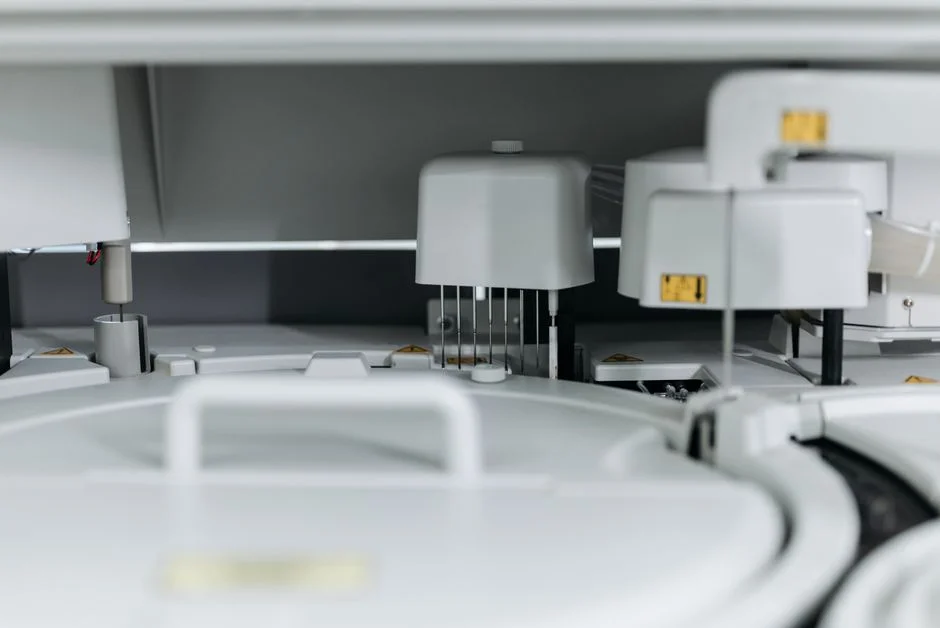
Durban's industrial mix is dominated by textile, food and beverage, oil refinery/petrochemical, and pharmaceutical/hospital loads. Each maps to a different biological-plus-polishing configuration. The table below summarizes the working fits based on the DUT data sets and standard process practice; supplier proposals should be evaluated against it.
| Durban industry | Influent challenge | 2026 ETP technology fit | Discharge target |
|---|---|---|---|
| Textile / dye | High COD, colour, salinity | MBR biological step + chemical colour dosing + UF/RO polish; see textile wastewater treatment in South Africa 2026 engineering guide | Reuse or DWS special limits |
| Food and beverage | High BOD, FOG, peak hydraulic loads | DAF pre-treatment + MBR or activated sludge; see South Africa DWS BOD discharge limit compliance guide | DWS general limits (sewer) |
| Oil refinery / petrochemical | High salinity, hydrocarbons, COD | Biological step + FO polishing per DUT 2026 (100% SO₄²⁻ / 94.59% CO₃²⁻ rejection on Durban refinery effluent) | Reuse with brine management |
| Pharma / hospital | Complex organics, antibiotic residues | MBR + advanced oxidation; see pharmaceutical wastewater treatment in South Africa 2026 guide | DWS special limits |
For Durban textile and pharmaceutical sites the biological step is typically an MBR membrane bioreactor for Durban industrial ETP biological stage or an MBR module retrofit into an existing activated-sludge tank. Reuse applications for any of the four sectors require a downstream reverse osmosis polishing step, and Durban refinery sites in particular have a peer-reviewed FO option to evaluate alongside RO where brine disposal is constrained.
Durban ETP Sizing: What Suppliers Must Ask Before Quoting
An ETP sized on flow alone will underperform on a Durban industrial catchment. Buyers should send suppliers the following inputs and refuse quotes that assume them.
- Daily and peak hourly flow (m³/h) with a 24-hour variability profile. Durban's mixed catchments produce peaking factors that a generic design factor of 1.5 will underestimate.
- Influent characterization: COD, BOD, TSS, FOG, pH, temperature, salinity/chloride, plus industry-specific parameters (colour for textile, hydrocarbons for refinery, ammonia for food). The DUT 2026 FO study worked with DS-C 20–50 g/L, DS-FR 7.5–9.4 L/h and FS-FR 7.5–9.4 L/h on Durban refinery effluent; equivalent input rigour is needed for industrial ETPs.
- Discharge destination: DWS general limits to municipal sewer, DWS special limits to surface water, or internal reuse. Each path changes the disinfection and polishing spec — buyers should confirm which one the quote is engineered against.
- Footprint and soil conditions: Durban coastal soils and high water tables affect buried or below-grade ETP choices. A package underground STP suits footprint-constrained Durban sites, while an integrated skid-mounted unit suits sites with limited civil works. The broader rural and small-catchment design considerations still apply at the headworks level even for industrial flows.
DWS Compliance, Cost Drivers and a 2026 Supplier Checklist
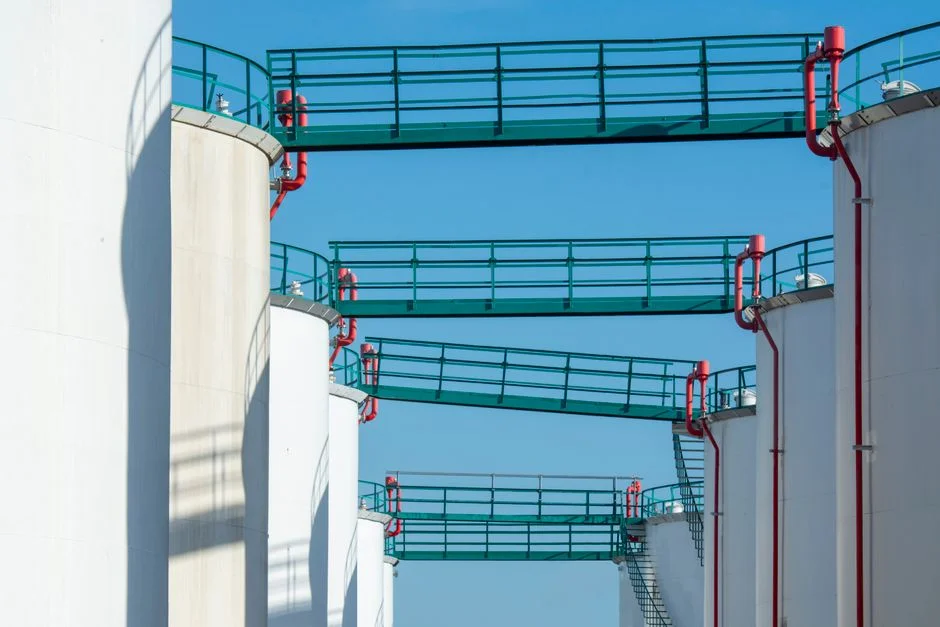
DWS general and special discharge limits govern ETP design across South Africa. For Durban sites discharging to municipal sewer, the BOD ceiling is the binding daily constraint; surface-water discharge triggers stricter special limits on nutrients, metals and microbiological indicators. The South Africa DWS BOD discharge limit compliance guide walks through the specific values and what they imply for sizing.
Cost drivers are not the equipment sticker price. The variables that move Durban ETP total cost of ownership are influent variability (driving equalization and chemical demand), disinfection chemistry demand (chlorine vs ClO₂ vs UV operating cost per m³), sludge disposal (dewatering performance and KZN landfill tariffs), energy per m³ treated (MBR aeration vs conventional activated sludge), and operator skill (automated PLC/SCADA reduces labour cost but raises control-system specification). Quotes should be normalized on these axes, not on CAPEX alone.
For capacity benchmarking, the Interwaste ETP in Germiston, designed for leachate and industrial liquid waste, is documented with a treatment capacity of over 43,000 m³ per annum. Durban industrial sites can use that figure as a single-stream scale reference when sizing proposals, with the caveat that influent characteristics — not just volume — determine whether a given plant configuration will hit DWS limits.
| Checklist item | What to verify on a 2026 Durban ETP supplier |
|---|---|
| Local project references | Documented Durban or KZN installations with comparable influent |
| Disinfection performance | Removal data against enterococci or faecal coliforms, not just a dose spec |
| Automation | PLC/SCADA with local support; integrate with an automatic chemical dosing system |
| Membrane supply | Local spares and RO/UF membrane filter elements lead time |
| Compliance documentation | Design basis aligned to DWS general or special limits; commissioning report template |
Frequently Asked Questions
What is a realistic budget for an effluent treatment plant in Durban in 2026?
No single price applies. Total cost of ownership is driven by influent variability, the disinfection chemistry (chlorine versus ClO₂ versus UV operating cost per m³), sludge disposal under KZN tariffs, energy per m³ treated, and operator skill — not equipment CAPEX. Buyers should request a normalized cost per m³ treated over a defined influent envelope, and compare Durban ETP quotes on that basis rather than on purchase price.
How do I size an ETP correctly for a Durban industrial site?
Size on more than daily flow. Send suppliers the peak hourly flow with a 24-hour profile, full influent characterization (COD, BOD, TSS, FOG, pH, temperature, salinity, plus sector-specific parameters such as colour or hydrocarbons), and the discharge destination. The DUT 2026 forward osmosis study on Durban refinery effluent used DS-C 20–50 g/L and flow rates 7.5–9.4 L/h as inputs; equivalent rigour is the minimum for industrial ETP design. A useful capacity benchmark is the Interwaste ETP at over 43,000 m³ per annum for a single industrial or hazardous-waste stream.
Which ETP technology fits which Durban industry?
Textile and dye loads typically need an MBR biological step plus chemical colour dosing and UF/RO polishing. Food and beverage loads need DAF pre-treatment for FOG plus MBR or activated sludge. Durban oil refinery effluent can be polished with forward osmosis (100