Why pharmaceutical wastewater in South Africa needs a dedicated train
Pharmaceutical wastewater in South Africa is typically handled by a multi-stage train rather than a single unit operation, and the 2023 review by Dawood, Aziz and Ismael in Environmental Protection Research lists more than 3,000 active substances in modern drugs — painkillers, antibiotics, contraceptives, corticosteroids and many more — whose combined complexity should not be underestimated when sizing a plant. A 2025 review in RSC Advances cites a global survey of 258 rivers across 74 countries in which pharmaceutical residues were detected on every continent, with 25% of sampling sites exceeding safe ecological thresholds, which is a directly relevant benchmark for any South African site discharging to a water-scarce catchment.
The same 2023 review documents the realistic technology menu: up-flow anaerobic sludge blanket (UASB) reactor, activated-carbon filtration, membrane bioreactor (MBR), microalgal bioremediation, ultraviolet-free surface reactor (UV-FSR) and solar or ferrioxalate photocatalysis — essentially the same shortlist a South African engineer would draw up in 2026. The local design drivers that push a manufacturer away from municipal sewer discharge are the Department of Water and Sanitation permitting pathway, the National Water Act and the National Environmental Management: Waste Act frameworks, and the practical reality that a continuous biological plant must be designed around Eskom load-shedding rather than treated as a steady-state system.
For an EHS manager, that combination — a multi-thousand-substance pollutant load, an evidence base of ecological exceedance, a regulator-driven permit pathway, and an unreliable grid — is enough to justify scoping a dedicated treatment train from the outset rather than retrofitting one after a discharge failure.
Influent characteristics that drive technology selection
Dawood, Aziz and Ismael (2023) describe pharmaceutical wastewater as bioactive, chemically complex, and variable in both flow and load, and these three adjectives are the working definition a process engineer should use before opening a supplier catalogue. The same review anchors design and comparison to four conventional parameters: chemical oxygen demand (COD), biochemical oxygen demand (BOD), total suspended solids (TSS) and total dissolved solids (TDS), which together describe almost every PWW characterisation table in the literature. Across surveyed technologies, Dawood et al. (2023) report removal efficiencies for COD, BOD, TSS and TDS ranging from 20% to 95%, and that wide band is not a confidence interval — it is the spread observed when the same parameter is measured on different substance classes, influent strengths and reactor configurations. A South African engineer should therefore treat that range as a sanity-check envelope rather than a single "average" performance figure to design against.
Beyond the conventional parameters, the site-specific inputs that have to be pulled together before any shortlist is finalised are the effluent flow profile, the peak-to-average load ratio, the residual solvent and cleaning-in-place signature, and the water-reuse duty the plant is being designed to meet. A site that intends to reuse polishing-stage effluent for cooling or wash-down cannot be designed against the same polish target as a site that is discharging to sewer, and the difference shows up first in the influent characterisation sheet.
Equalisation, screening and primary clarification
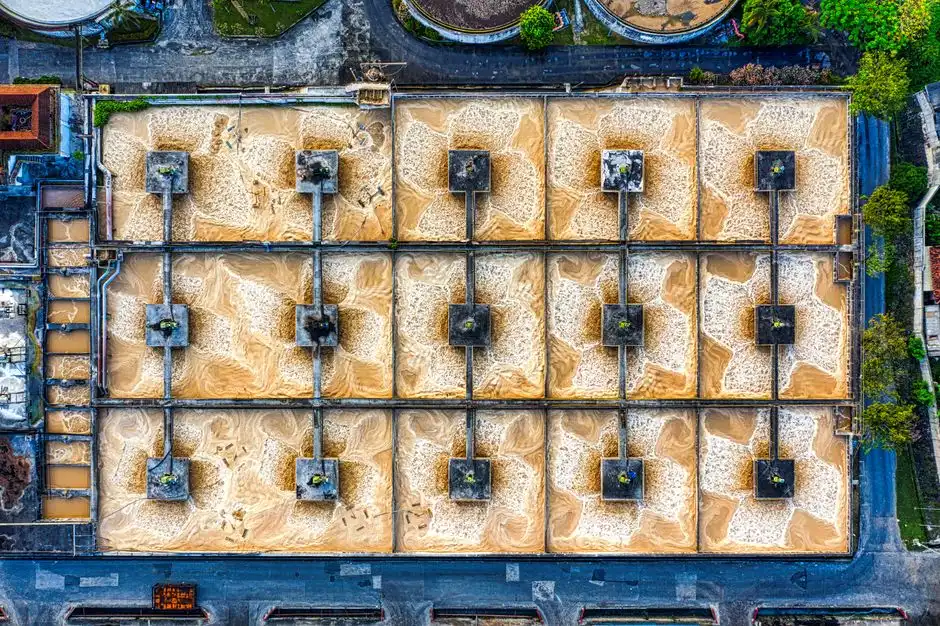
The front-end of a pharmaceutical train exists to protect every downstream unit operation, and the head-of-works steps are the easiest place to lose performance if they are underspecified. Dawood et al. (2023) include chemical coagulation and sedimentation in the documented PWW treatment options, which is the same role that equalisation, pH adjustment, and primary clarification play at the head of a modern train. Continuous-duty fine screening is the first physical step, and a GX Series rotary mechanical bar screen positioned ahead of the biological stage removes rags, plastics and fibrous debris that would otherwise damage downstream pumps, mixers and membranes. Dissolved air flotation is the standard primary step for industrial wastewater, and a DAF vs sedimentation comparison published as a 2026 data piece walks through when each is the better fit; for a pharmaceutical front-end after pH adjustment, the DAF path typically wins on footprint and on suspended-solids, oil and grease, and colloidal-matter capture in the 4–300 m³/h range. A correctly sized equalisation tank ahead of the DAF is what converts a batch-fed API suite into a steady stream the biological stage can actually treat.
Biological treatment and the MBR workhorse
Biological treatment is where most of the COD and BOD removal happens, and the membrane bioreactor is the workhorse unit for pharmaceutical duty in 2026. Dawood et al. (2023) list the MBR as one of the documented PWW treatment options alongside the UASB reactor, which is the same conclusion the engineering community has reached through two decades of operating data: MBRs combine activated-sludge biology with submerged membrane filtration and hold biomass at concentrations that conventional activated sludge cannot reach. An MBR membrane bioreactor system specified for industrial process water and reuse projects delivers near-reuse-quality effluent at sub-micron filtration, in a footprint materially smaller than a conventional activated-sludge plant, with capacities from 10 to 2,000 m³/day to cover both small generics lines and full-scale API facilities. For modular or smaller duties, a DF Series flat-sheet MBR module with 0.1 μm PVDF membranes and integrated scour aeration, in 80–225 m² configurations delivering 32–135 m³/day with individually replaceable elements, keeps maintenance windows short and avoids the single-cassette failure modes that have historically hurt biological plant availability.
The 20–95% COD/BOD/TSS/TDS removal band reported by Dawood et al. (2023) is the sanity check to apply when a biological-only design is being proposed for a high-strength or refractory pharmaceutical stream: anything in the lower half of that range is a signal that polishing or AOP capacity has to be added before the train can meet a South African discharge limit.
Tertiary polishing, adsorption and advanced oxidation
Closing the train to a permit-compliant or reuse-quality effluent is the job of the tertiary step, and the 2025 RSC Advances review of hybrid photoelectrocatalytic advanced oxidation processes (PEC-AOPs) is the most useful 2025-anchored evidence base for that decision. Dawood et al. (2023) include activated-carbon filtration and solar/ferrioxalate photocatalysis in the documented PWW treatment options, which sit in the polishing band of a modern train. The RSC Advances review reports overall pharmaceutical removal of approximately 75–100% across hybrid PEC-AOPs, with representative results of 98% sulfamethoxazole in 90 minutes via PEC/PMS, 100% norfloxacin in 25 minutes, 91.3% tetracycline in 30 minutes, 95% tetracycline in 90 minutes via PEC/H₂O₂, ozone-assisted PEC at 96% cefadroxil with 57.6% TOC reduction, and a pilot-scale solar photoelectro-Fenton/ozone process delivering 60% pharmaceutical degradation and 41% COD removal on a four-drug mixture. The same review's bio-PEC hybrid data is 95–99.04% removal with up to 93% lower energy consumption than comparable AOPs, which is the figure that ties this technology to the South African grid-shedding problem.
For adsorption-based polishing on local feedstock, Kabuba and Mushwane (41st Cape Town CCBEE-24 conference, 2024) demonstrated clinoptilolite sourced from Pratley Minerals South Africa, modified with n-butyl amine, hydrochloric acid or tetrahydrofuran, as a low-cost adsorbent for glucocorticoid removal, with adsorption confirmed by the Freundlich isotherm — directly relevant to any SA site handling corticosteroid-bearing effluent. Tertiary disinfection or oxidation staging can be reinforced with an on-site oxidant source such as a chlorine dioxide generator sized to the polishing duty, where the supplier is asked to confirm compatibility with the polish-step chemistry.
| Process / system | Reported removal or performance | Substance / target | Source |
|---|---|---|---|
| PEC / PMS (photoelectrocatalytic + peroxymonosulfate) | 98% removal in 90 min | Sulfamethoxazole | RSC Adv. review, 2025 |
| PEC / PDS | 65.0% → 85.9% degradation in 60 min | Bisphenol A | RSC Adv. review, 2025 |
| PEC / H₂O₂ | 95% removal in 90 min | Tetracycline | RSC Adv. review, 2025 |
| Ozone-assisted PEC | 96% removal; 57.6% TOC reduction | Cefadroxil | RSC Adv. review, 2025 |
| Pilot solar photoelectro-Fenton / ozone | 60% pharmaceutical degradation; 41% COD | Four-drug mixture | RSC Adv. review, 2025 |
| Bio-PEC hybrid | 95–99.04% removal; up to 93% lower energy | Mixed pharmaceuticals | RSC Adv. review, 2025 |
| Modified clinoptilolite adsorption (n-butyl amine / HCl / THF) | Freundlich isotherm confirmed | Glucocorticoids (pharma WW) | Kabuba & Mushwane, CCBEE-24, 2024 |
| COD / BOD / TSS / TDS across biological, adsorption and AOP systems | 20–95% (range across technologies and influents) | Bulk parameters | Dawood et al., 2023 |
Sludge handling and chemical dosing for a complete train
A treatment train is only as complete as its materials balance, and the biological and physico-chemical steps that drive removal into the upper end of the 20–95% COD/BOD band reported by Dawood et al. (2023) also generate a sludge stream that has to be dewatered before disposal. A plate and frame filter press with filtration areas from 1 m² to 500 m² and manual, hydraulic or fully automatic PLC control is a standard fit for the dewatering duty that follows a pharmaceutical-grade biological or physico-chemical step, and the PLC tier is what gives a site the repeatability an EHS audit will ask for. Holding the train together at the chemistry level is an automatic chemical dosing system that delivers PLC-controlled, skid-mounted injection of coagulants, flocculants, pH adjusters and any specialty oxidant or antifoam — the dosing repeatability a pharmaceutical plant needs to stay inside permit limits on a day the influent shifts.
Decision framework: which unit operations for which influent
Dawood et al. (2023) explicitly tie the 20–95% COD/BOD/TSS/TDS removal range to substance class, influent concentration and unit operation, which means the shortlist has to be built on the influent profile rather than on a quoted "average" performance figure. The 2025 RSC Advances review concludes that hybrid PEC-AOPs are "highly tunable platforms" for pharmaceutical wastewater treatment, but flags catalyst deactivation, oxidant consumption, mass-transfer limits, incomplete mineralisation, transformation-product toxicity, energy demand and the lack of standardised long-term stability data as the real barriers to scale-up — a supplier has to be asked about each of these, not only the headline removal percentage. For a typical South African generics plant with mixed API, formulation and cleaning-in-place effluent, the practical train is screening, equalisation, DAF or sedimentation, biological (MBR), AOP or activated-carbon polish, and sludge dewatering, with the biological step sized for grid-shedding tolerance and the polish step sized for the substance class driving the permit limit. Where water reuse is required, the bio-PEC hybrid data (95–99.04% removal with up to 93% lower energy consumption) is the strongest cited option for combining a reuse-quality effluent with a lower continuous-duty energy demand.
| Influent / driver | Front-end | Biological | Polish / AOP | Sludge & dosing |
|---|---|---|---|---|
| High-COD, mixed API, formulation + CIP, discharge to sewer (SA permit) | Bar screen → equalisation → DAF | MBR (10–2,000 m³/day range) | AOP or activated carbon (substance-class specific) | Filter press + PLC-controlled dosing |
| Corticosteroid-bearing effluent (SA site) | Bar screen → equalisation → DAF | MBR | Modified clinoptilolite adsorption (Pratley SA feedstock) | Filter press + dosing |
| Refractory API, water-reuse duty | Bar screen → equalisation → DAF | MBR (DF series for modular duty) | Bio-PEC or hybrid PEC-AOP (energy-constrained sites) | Filter press + dosing |
| Small / modular generics line | Bar screen → equalisation | DF Series flat-sheet MBR (32–135 m³/day) | AOP or activated carbon | Filter press + dosing |
What to request from a pharmaceutical wastewater equipment supplier in 2026
Dawood et al. (2023) anchor reported COD/BOD/TSS/TDS removal to substance class and influent concentration, so a credible supplier should be asked to quote performance against the site-specific influent rather than a generic range. Kabuba and Mushwane (2024) parameterise their South African adsorption work by pH, adsorbent dose, initial glucocorticoid concentration and starting wastewater concentration, which is the same level of detail a SA engineer should require a supplier to put in writing. The 2025 RSC Advances review lists energy, toxicity, mineralisation and long-term stability under real-water conditions as the gaps blocking scale-up of hybrid AOPs, so each of these needs to be a deliverable in the RFQ, not a footnote. The supplier should also be asked for local references on pharmaceutical duty, a documented commissioning plan, and a written statement on how the biological step is designed to ride through South African energy-shedding patterns without the plant tripping a permit limit.
Frequently Asked Questions
What size MBR do we need for a South African generics plant?
Sizing is driven by influent flow, peak-to-average load ratio and the discharge or reuse target, not by a generic "average" performance figure. Dawood et al. (2023) report that COD/BOD/TSS/TDS removal for PWW ranges from 20% to 95% across surveyed technologies, so a supplier should be asked to quote performance against the site-specific influent and to specify the MBR module configuration (such as the DF Series flat-sheet MBR's 32–135 m³/day range, or a larger integrated system up to 2,000 m³/day) against that envelope.
How do we choose between an AOP supplier and an activated-carbon polishing supplier in South Africa?
The 2025 RSC Advances review of hybrid PEC-AOPs reports 75–100% pharmaceutical removal, including 98% sulfamethoxazole in 90 minutes via PEC/PMS and 95–99.04% removal with up to 93% lower energy consumption for bio-PEC hybrids, but flags catalyst deactivation, oxidant consumption, mass-transfer limits, incomplete mineralisation and transformation-product toxicity as the scale-up barriers. A supplier should be selected on whether they can answer each of those barriers in writing for the actual substance class driving the permit limit, and whether they have local references on pharmaceutical duty under South African grid conditions. If the answer to any of those is vague, a carbon-polish fallback with documented exchange cadence is the lower-risk option for a 2026 procurement.
What is the South African compliance risk of running a continuous biological plant during Eskom load-shedding?
A continuous biological plant that trips or under-aerates during load-shedding risks a permit excursion on COD, BOD or ammonia, and the 2023 Dawood et al. review is explicit that the 20–95% removal range collapses toward the lower end when the biological stage is disturbed. The supplier should be asked for a written statement on how the proposed design (biological reactor sizing, aeration redundancy, and equalisation tank residence time) tolerates South African energy-shedding patterns, and the RFQ should require that statement as a deliverable, not a sales reassurance.
Do we need a DWS / NEMWA permit for a pharmaceutical wastewater treatment plant in South Africa?
The Department of Water and Sanitation permitting pathway and the National Water Act and National Environmental Management: Waste Act frameworks are the regulatory anchors any South African manufacturer has to plan around, and a dedicated treatment train will almost always require a water-use licence and a waste-management licence footprint before commissioning. A credible EPC or supplier should be asked to provide a permitting-scope note aligned to those acts, and to identify which unit operations (equalisation tank, DAF, MBR, AOP, sludge dewatering) trigger which licence condition before the equipment list is finalised.
Related Equipment
- DAF system — specifications, capacity range, and technical data