What a Constructed Wetland Actually Is
The US EPA defines a constructed wetland as a treatment system that uses natural processes involving wetland vegetation, soils, and their associated microbial assemblages to improve water quality. In practice, it is an engineered reactor — a planted bed of controlled depth, media grading, and hydraulic loading — designed to treat a defined influent rather than to mimic a natural marsh. The four functional components that every design must include are: a substrate or media bed (gravel, sand, soil, or engineered sorbents), rooted emergent vegetation (commonly Phragmites), a microbial community attached to media grains and root surfaces, and a controlled water flow path that distributes influent and collects effluent.
Because the system is engineered, it can be deployed as a secondary, tertiary, or polishing stage inside a larger treatment train; in most industrial contexts it is positioned after primary clarification and biological treatment rather than used to treat raw, high-strength wastewater on its own.
The Four Removal Mechanisms Working Together
Constructed wetlands remove pollutants through four mechanisms that operate simultaneously inside the same bed, and the dominant pathway depends on the target contaminant. Physical filtration is the first contact: as water percolates through the substrate, suspended solids are strained and settle onto media surfaces, which is why SSF systems with graded gravel are effective at TSS reduction. Chemical processes then act on dissolved species — sorption onto media (especially iron-rich or biochar-amended substrates), precipitation of metals as hydroxides or sulfides, and oxidation-reduction reactions that immobilise phosphorus, trace metals, and some nutrients. Plant uptake is the third pathway: emergent species such as Phragmites assimilate nitrogen, phosphorus, and trace contaminants into their biomass, with the plant–substrate interface (the rhizosphere) acting as the most reactive zone in the bed. Microbial activity is the dominant removal route for BOD, ammonia, and many recalcitrant organics — biofilms on media grains and root surfaces carry out nitrification, denitrification, and aerobic/anaerobic degradation of carbon compounds. The bed functions as a living reactor whose removal performance depends on hydraulic retention time, media selection, and plant health acting together.
Free Water Surface vs Subsurface Flow: The Two Main Designs
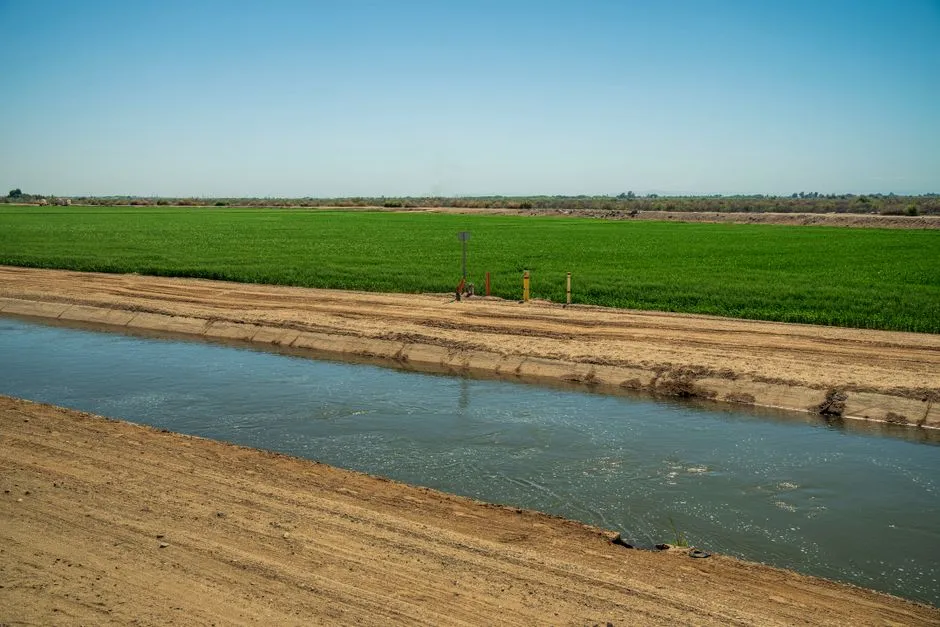
Most engineered systems fall into two families, with hybrid arrangements combining elements of both. Free water surface (FWS) systems hold a shallow layer of water above a soil or media bed planted with emergent vegetation, with the water surface open to the atmosphere; they tend to support wildlife habitat, need a larger land footprint, and are more exposed to mosquito, odour, and buffer-management issues. Subsurface flow (SSF) systems keep the water buried inside the media bed, flowing horizontally or vertically through gravel or engineered media below the surface; the theses.fr electroplating study explicitly used a subsurface-flow configuration to remove metals and cyanide from electroplating wastewater, and SSF systems are generally preferred where exposure risk, vector control, or smaller footprint matter. Hybrid constructed wetlands — typically a vertical flow (VF) stage followed by a horizontal flow (HF) stage, sometimes with biochar or other sorbent amendments — are an active research area; a 2025 Chemosphere paper describes rapid treatment of textile wastewater using a Phragmites-derived biochar-amended hybrid constructed wetland.
| Attribute | Free Water Surface (FWS) | Subsurface Flow (SSF) — VF and HF |
|---|---|---|
| Water location | Above substrate, open to atmosphere | Buried inside media bed |
| Typical flow path | Horizontal, shallow open channel | Vertical or horizontal through media |
| Dominant aeration | Atmospheric (aerobic surface) | Limited; VF beds are often unsaturated to promote aeration |
| Footprint for given load | Larger | Smaller (higher volumetric loading possible) |
| Odour, mosquito, exposure risk | Higher; requires buffer management | Lower; water isolated in media |
| Wildlife habitat value | High | Low |
| Example application in research | — | Electroplating polishing (theses.fr, EMSE / Silesian University of Technology) |
| Hybrid extension | Often combined as final polishing stage | Biochar-amended hybrid CW for textile wastewater (Chemosphere, 2025) |
How Water Moves Through a Constructed Wetland
The physical flow path is what makes a constructed wetland predictable to design. Influent enters an inlet distribution zone — a manifold, weir, or splash plate — that spreads flow evenly across the bed cross-section so the media does not short-circuit. From there, water percolates horizontally or vertically through the planted substrate, contacting root-zone biofilms and the full media depth; in vertical flow systems the bed is typically operated unsaturated to maintain oxygen transfer, while horizontal flow beds run saturated. Hydraulic retention time is governed by bed length, media porosity, and the design flow rate. Treated effluent leaves through an outlet collection zone, often with an adjustable weir to control the operating water level. For industrial polishing where contact time is the limiting factor, re-circulation and step-feeding are standard — a portion of the treated effluent is returned to the inlet to extend effective residence time without expanding the bed footprint.
Industrial and Municipal Use Cases Backed by Research
The deployment record is broader than the EPA's one-paragraph definition suggests. According to the Springer/CWA chapter, more than 1,200 constructed wetland systems are now documented in the UK, up from 154 beds in the original 1996 WRc/Severn Trent database, and the CWA database itself holds detailed records on more than 1,000 beds. Most of those sites treat sewage or domestic wastewater, but the database also includes systems for mine water, sludge, landfill leachate, industrial effluents, surface run-off, and road run-off. For industrial polishing, two peer-reviewed references are directly relevant. The theses.fr study (EMSE / Silesian University of Technology) is described by its authors as the first known investigation of metals and cyanide removal from electroplating wastewater using subsurface-flow constructed wetlands, framing the technology explicitly as a polishing step. The Chemosphere 2025 paper reports rapid treatment of textile wastewater using a Phragmites-derived biochar-amended hybrid constructed wetland, indicating that substrate amendment and hybrid staging are where current industrial research is concentrated. The CWA itself was formed in October 1999 specifically because earlier reed beds installed by inexperienced constructors had failed, which is a useful procurement signal: design and build quality matter as much as design choice.
Where Constructed Wetlands Fit — and Where They Don't
A constructed wetland is a strong fit where land is available, influent is already pretreated, and discharge standards are moderate rather than tight. The Springer/CWA chapter shows the technology working as tertiary sewage treatment, mine water polishing, landfill leachate management, and agricultural or surface run-off polishing — all streams where the bed is not expected to do the heavy lifting alone. It is a reasonable fit for industrial polishing once toxicity, suspended solids, and hydraulic shock loads have been removed upstream; the theses.fr work explicitly frames subsurface-flow constructed wetlands as a polishing step for electroplating effluent rather than as a primary treatment. It is a weak fit for raw high-strength industrial streams, for any process requiring very short hydraulic residence, or for sites where the available footprint is small — in those cases a packaged biological system such as an MBR membrane bioreactor wastewater treatment system delivers far higher volumetric loading per unit area. Buyer due diligence is critical, as the CWA's 1999 formation was driven by failed reed beds from inexperienced constructors; buyers should look for documented performance data, case studies, and references, and the same logic now extends to newer configurations such as IIT Guwahati's low-energy taro wetland research for piggery wastewater and other modular decentralized wastewater systems recognized by UNDP.
Frequently Asked Questions
What pollutants can a constructed wetland actually remove?
Constructed wetlands are documented to treat suspended solids, organic load (BOD/COD), ammonia via nitrification, total nitrogen via nitrification–denitrification, phosphorus (by sorption rather than mineralisation), and a range of metals and trace contaminants where the influent is already pretreated. The theses.fr electroplating study and the Chemosphere 2025 textile study both position the wetland as a polishing step rather than a primary reactor, so removal performance should be judged against the polishing duty it is designed for.
How much does a constructed wetland cost to build and operate?
The research supplied does not include capital or operating cost figures for constructed wetlands, and cost varies strongly with site conditions, media selection, and effluent target. A buyer should request an itemised quote covering earthworks, media, liner, plants, inlet/outlet structures, and a multi-year operating estimate, and ask the supplier to back the figure with at least one operating reference site treating a comparable influent.
How do I choose a reliable constructed wetland supplier?
Supplier failure is a documented industry problem — the Constructed Wetland Association was formed in 1999 specifically because earlier reed beds installed by inexperienced constructors had failed. Check that the supplier can show operating performance data from comparable sites, list the design parameters (media grading, HRT, loading rate) they will commit to, and provide client references for the specific configuration they are proposing.
When is a constructed wetland the wrong choice?
A constructed wetland is the wrong choice when the influent is raw high-strength industrial wastewater, when the discharge standard requires very low residual concentrations across a broad pollutant list, or when the available footprint cannot accommodate the hydraulic retention time the target loading requires. In those cases a packaged mechanical or membrane biological system is usually more appropriate, and a constructed wetland may still be added later as a tertiary or polishing step.