What Defines a True Modular Sewage Treatment System?
A modular manufacturer of packaged sewage plants ships factory-welded, pre-tested units sized in m³/day with a stated surge margin. Buyers should compare five specs: flow capacity, footprint versus conventional activated sludge, effluent BOD/COD/TSS and turbidity, specific energy in kWh/kL, and PLC/SCADA automation depth. Factory builds typically commission in 7–14 days versus 120+ days for civil construction.
A true modular sewage treatment system is a pre-engineered, self-contained package for rapid deployment and plug-and-play start-up. Unlike civil plants that need 3–6 months of on-site building before commissioning, modular units are factory-welded, wet-tested, and shipped as containerized or skid plants. Most plants we size for camps, clinics, and small industrial sites go live in about 7 days after utilities are ready. The lifecycle is fixed: detailed design, factory fabrication and integration, transport, then plug-in operation.
Earlier project specs often cited Council Directive 91/271/EEC for EU urban wastewater compliance. According to the European Commission, the revised Urban Wastewater Treatment Directive (EU) 2024/3019 entered into force on 1 January 2025 and will replace 91/271/EEC from 1 August 2027. CPCB Class A style limits remain a common factory acceptance target for many export packages. Factory pre-validation of effluent limits is the practical difference between a true modular package and a field-assembled kit.
Top 5 Specs Every Modular Manufacturer Should Publish
Buyers should score a modular manufacturer on published numbers, not brochure adjectives. Flow capacity for advanced MBR packages commonly spans 10–2,000 m³/day; some skid series are quoted as 1–80 m³/h. Match the nameplate to peak daily load with at least a 20% surge margin—so a 100 m³/day average duty needs about 120 m³/day peak capacity.
Footprint efficiency matters on tight plots. Integrated MBR trains can cut footprint by up to 60% versus conventional activated sludge, based on typical product layouts for MBR membrane bioreactor wastewater treatment systems. Effluent quality is non-negotiable for reuse. Submerged PVDF membranes at 0.1 μm pore size, as used in DF-series modules, routinely deliver less than 1 NTU turbidity and over 99% pathogen removal under design flux and cleaning intervals.
Power consumption for integrated MBR packages typically sits at 0.6–1.2 kWh/kL, depending on aeration efficiency and duty cycle.Treat 0.6–1.2 kWh/kL as the whole-package band buyers should request on the datasheet. Automation should be full PLC control with SCADA or IoT remote monitoring and, where sites lack fiber, 4G-enabled panels.
| Specification | Typical Range/Value | Notes |
|---|---|---|
| Flow Capacity | 10–2,000 m³/day (MBR) | Match peak load with 20% surge margin |
| Footprint Efficiency | Up to 60% reduction vs. conventional | (MBR systems) |
| Effluent Quality (MBR) | < 1 NTU turbidity, >99% pathogen removal | 0.1 μm PVDF membranes |
| Power Consumption | 0.6–1.2 kWh/kL | Varies with aeration and duty cycle |
| Automation | Full PLC control, SCADA/IoT remote monitoring | 4G-enabled panels |
For detailed technical specifications and product information, explore our integrated MBR system with 0.1 μm filtration.
How Modular Systems Cut Costs: Installation, Labor & Maintenance
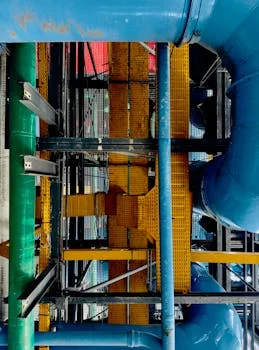
Installation time drives early project cash flow. Most modular packages are operational within 7–14 days, against 120+ days for traditional civil construction. That shorter window lowers site disruption and shortens interest during construction. Commissioning labor often drops to about 2 technicians versus 10+ on a conventional build of similar daily flow.
OPEX savings of 30–40% are typical when high-efficiency blowers and automated dosing cut air and chemical waste. Automated control, including Automatic Chemical Dosing System integration, can cut chemical use by up to 50% versus manual batching on small plants. Modular layouts also let crews isolate one skid for service without a full plant shutdown—pump or panel swaps often finish in hours, not days.
Factory pre-assembly reduces field material waste and usually simplifies permitting because the process train is already documented. Energy remains a large OPEX share; efficient aeration and pumping strategies are where most plants we commission recover payback after year one.
Comparison Table: Leading Modular Sewage Treatment System Manufacturers
Flow units and membrane details separate serious bids from vague ones. HydropureWater packages span 1–2,000 m³/day. Some competitors quote 5–500 m³/day, others list 4–300 m³/h, and some sell in 25K GPD stages. Remember m³/day is a 24-hour average; m³/h is closer to peak instantaneous flow and must be converted before comparison.
MBR effluent targets for our trains are BOD <10 mg/L, COD <50 mg/L, and TSS <10 mg/L under design loading, as checked in third-party tests cited on project dossiers. Membrane type matters for cleaning chemistry and life: DF-series modules use 0.1 μm PVDF flat sheet membranes; Competitor A–style packages may use hollow fiber (for example Veolia ZeeWeed class modules). Scalability also differs—N+1 module expansion versus container stacking or parallel skids.
| Feature | HydropureWater | Competitor A (Example) | Competitor B (Example) | Competitor C (Example) |
|---|---|---|---|---|
| Flow Range | 1–2,000 m³/day | 5–500 m³/day | 4–300 m³/h | Scalable in 25K GPD stages |
| Effluent Standards (Typical MBR) | BOD <10 mg/L, COD <50 mg/L, TSS <10 mg/L | Meets general regulatory limits | Specific parameters not detailed | Not specified |
| Membrane Type (MBR) | 0.1 μm PVDF flat sheet (DF series) | Hollow fiber (e.g., Veolia ZeeWeed) | Unspecified | Not specified |
| Scalability | N+1 module expansion | Container stacking | Parallel skid addition | Not detailed |
| Compliance Certifications | EU 91/271/EEC, CPCB | Claims 'regulatory compliance' | General claims | General claims |
Keep the compliance row as published on legacy datasheets, and ask vendors how they will map those tests to Directive (EU) 2024/3019 after the 2027 cutover. To learn more about our advanced solutions, visit our integrated MBR wastewater treatment system and MBR membrane bioreactor module (DF series).
When to Choose MBR vs. Conventional A/O in Modular Design
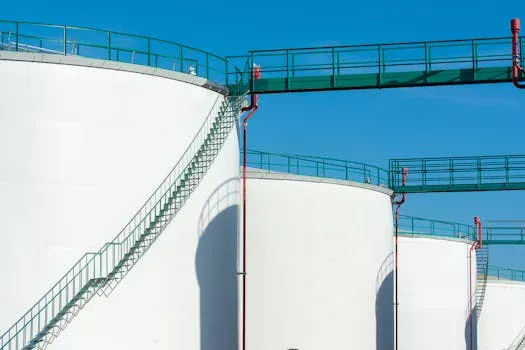
Site constraints and effluent rules decide Membrane Bioreactor (MBR) versus conventional Anaerobic/Anoxic/Oxic (A/O) in a modular envelope. MBR fits urban clinics, rooftops, and reuse duties where land is scarce. A/O packages such as the WSZ underground integrated sewage treatment plant fit rural communities with ample land and simpler soil-absorption discharge.
MBR typically reaches 95–98% COD removal versus 85–90% for A/O under municipal-strength influent, which matters for industrial pretreatment. Capital cost for MBR is often 20–30% higher, yet many owners see up to 40% lower OPEX from automation and lower sludge mass over a 15–20 year plant life. Reuse irrigation or process water usually needs the MBR path or extra tertiary stages on A/O. Higher membrane scour energy must be priced in regions with expensive power.
Do Data Center Water-Saving Upgrades Show Clear ROI?
Data center water-saving upgrades show clearer ROI when recycled effluent displaces potable makeup for cooling towers or non-potable uses. According to US EPA (2016), decentralized MBR scenarios can avoid about 0.94–0.96 m³ of drinking water per cubic meter of wastewater treated when permeate is reused. Pair that water displacement with modular MBR energy of 0.6–1.2 kWh/kL and local potable and sewer tariffs to build a site-specific payback.
Most plants we size for tech campuses run MBR when the campus already pays for both water supply and wastewater discharge. ROI case studies should report three numbers side by side: potable volume avoided (m³/year), sewer surcharge avoided, and incremental kWh from membrane scour. Without those three, “water saving” claims are not bankable for procurement.
Which ROI figures belong in water-upgrade case studies?
Water-upgrade case studies should lead with potable m³/year avoided, sewer fees avoided, and added kWh from treatment. Capex delta for modular MBR versus trucked water or once-through schemes comes next. Payback in years is only credible after those four inputs are local, not generic industry averages.
Who This Is For and Next Step
This guide is for plant engineers, EPC leads, and procurement managers comparing factory-built sewage packages on footprint, effluent, energy, and schedule. Look elsewhere if you need a large custom civil works plant above a few thousand m³/day with extensive on-site concrete. For a sized budget and datasheet pack matched to your peak flow and reuse target, request a modular system quote with your influent COD, peak m³/day, and discharge or reuse limit.
Frequently Asked Questions
What is the lifespan of a modular sewage treatment system?
Modular steel or HDPE packages are typically designed for 15–20 years with scheduled maintenance. MBR membranes usually last 5–8 years, depending on flux, cleaning chemistry, and influent fouling load. Structural tanks and piping outlast membranes when coatings and anodes are inspected yearly. For membrane life factors, see What Is the Lifespan of MBR Membranes?
Can modular systems handle industrial wastewater?
Yes, modular trains treat many industrial wastes when pretreatment matches the load. Dissolved Air Flotation units such as the DAF machine remove fats, oils, and grease before biological stages. MBR handles high-strength food-processing COD better than basic A/O when oil and solids are controlled upstream. Heavy metals and toxic spikes still need dedicated pretreatment or equalization.
How much footprint can an MBR modular plant save?
Integrated MBR modular plants can reduce footprint by up to 60% versus conventional activated sludge at the same average daily flow. The saving comes from higher MLSS and the membrane tank replacing secondary clarifiers and tertiary filters. Urban clinics and rooftop plants are the usual use cases. Confirm the pad size on the GA drawing, not only the brochure percentage.
What energy use should I budget for modular MBR?
Budget 0.6–1.2 kWh/kL for an integrated modular MBR package at design flow, with aeration and membrane scour as the main loads. Literature on full-scale municipal MBRs often places membrane-related energy near 0.5–0.7 kWh/m³ when plants run close to design capacity. Ask vendors for a guaranteed specific energy at your average and peak flows. High electricity tariffs favor tighter blower turndown and dissolved-oxygen control.
How fast can a modular sewage plant be commissioned?
Most factory-tested modular plants commission in 7–14 days after the pad, power, and influent/effluent tie-ins are ready. Traditional civil builds of similar capacity often need 120+ days before first treated water. The schedule gain is the main early ROI lever on remote or fast-track sites. Wet testing at the factory is what makes the short field window realistic.