Why Rural South African Sewage Treatment Is a 2026 Priority
Rural sewage works in South Africa are operating under a tightening regulatory microscope in 2026, even though most were designed for a lower-load era. The Environ Monit Assess review published 18 March 2026 documents that pharmaceuticals such as acetaminophen and diclofenac, and pesticides such as atrazine, endosulfan and chlorpyrifos, are reported as recurring South African micropollutants even where they are banned, and that the DALRRD and SAHPRA frameworks governing them are described in the review as insufficient for risk assessment and enforcement (Environ Monit Assess, 2026-03-18).
The BMC Microbiology study of the Alice WWTP at 32°50'36''S, 26°55'00''E found a 2,000 m³/day activated-sludge plant whose final effluent was non-compliant for turbidity, COD, nitrate and orthophosphate, with antibiotic-resistance genes still detectable downstream in the Tyume River (BMC Microbiology, 2010). Rural catchments lack the dilution, conveyance and operator cover of metropolitan networks, so the cost of an undersized or under-polished plant compounds across the receiving watershed. For this article, "rural" covers communities and small towns typically below ~5,000 m³/day, which aligns with the 1–80 m³/h and 10–2,000 m³/day package-plant envelope used in current procurement specifications.
What Rural South African Sewage Actually Looks Like: Influent and Effluent Data
The Polish Journal of Environmental Studies dataset from September 2015 to February 2016, covering three Eastern Cape municipal WWTPs, provides a defensible starting envelope for engineers: temperature 19–36 °C, electrical conductivity 60–1,095 mS/m, alkalinity 2.6–20.9 mg/L, and nitrate 0.24–26 mg/L (Polish J. Environ. Stud., 2015–2016). The date and scope are stated explicitly because a 2015–2016 dataset is a design baseline rather than a 2026 influent survey. The Alice WWTP study shows what those envelopes translate to at the discharge end, with published tests showing final effluent non-compliant for turbidity, COD, nitrate and orthophosphate (BMC Microbiology, 2010). The Environ Monit Assess 2026 review adds that Western Cape, Gauteng and KwaZulu-Natal carry the densest research on pesticide and pharmaceutical residues, so engineers in those provinces should expect a heavier micro-pollutant load on top of conventional parameters (Environ Monit Assess, 2026-03-18). Influent temperatures crossing 30 °C in the dataset affect aeration basin sizing and dissolved-oxygen set points; a site-specific alpha factor or clean-water oxygen-transfer test is the input the engineer should request from a supplier, since the published dataset does not include oxygen-transfer corrections.
| Parameter | Range (Eastern Cape, 2015–2016) | Source |
|---|---|---|
| Temperature | 19–36 °C | Polish J. Environ. Stud., 2015–2016 |
| Electrical conductivity | 60–1,095 mS/m | Polish J. Environ. Stud., 2015–2016 |
| Alkalinity | 2.6–20.9 mg/L | Polish J. Environ. Stud., 2015–2016 |
| Nitrate | 0.24–26 mg/L | Polish J. Environ. Stud., 2015–2016 |
| Final effluent compliance (Alice) | Non-compliant: turbidity, COD, nitrate, orthophosphate | BMC Microbiology, 2010 |
Process Choices for Rural South African Plants in 2026
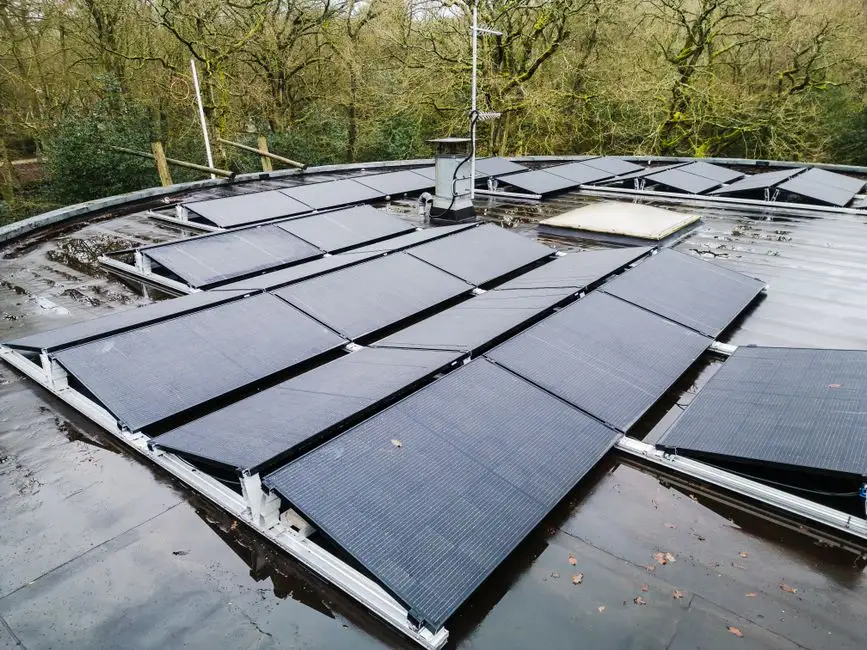
The underground A/O package sewage plant is the workhorse option for residential clusters, rural clinics, lodges and small-town catchments, rated at 1–80 m³/h with A/O biological contact oxidation, sedimentation and disinfection in a single buried package, fully automated with no operator required (HydropureWater WSZ catalog, accessed 2026). Where near-reuse effluent is needed or footprint is constrained, the submerged PVDF MBR system covers 10–2,000 m³/day with sub-1 μm filtration and a footprint roughly 60% of a conventional plant of the same daily capacity (HydropureWater MBR catalog, accessed 2026). Two lines of supporting evidence should temper both choices. The Durban microalgae pilot by Singh et al. (IICBEE) showed that algal polishing on local sewage is feasible at pH 8 with an 18 h:6 h photoperiod and a 2:2 BBM-to-sewage ratio, but the authors frame it as bench-to-30 L pilot scale and not a field deployment (IICBEE, 2022). The Johannesburg South sewage-sludge activated carbon work (MDPI Fermentation, 2023-08-18) showed that sludge-based adsorbents can be regenerated locally for polishing, but the BET surface area of SAC was 53 m²/g versus 481.37 m²/g for commercial GAC in that study, so a buyer should not assume parity with virgin activated carbon. No single source in the research set gives a head-to-head Rand cost for these options, so the comparison below is on footprint, operator grade and reuse potential.
| Process option | Capacity range | Operator requirement | Footprint / reuse |
|---|---|---|---|
| A/O biological contact oxidation package (WSZ) | 1–80 m³/h | None (fully automated) | Buried; landscaping above or trailer-mounted |
| Submerged PVDF MBR | 10–2,000 m³/day | Part-time process checks | ~60% of conventional footprint; near-reuse effluent |
| Microalgae polishing (Scenedesmus sp.) | Bench to 30 L pilot only | Research-grade | Not yet a field deployment (IICBEE, 2022) |
| Sludge-derived activated carbon (SAC) polishing | Batch / tertiary | Batch handling | BET 53 m²/g vs. GAC 481.37 m²/g (MDPI Ferm. 2023) |
Designing the Headworks: Screening, Flow Equalization and Grit
Headworks are routinely undersized on small rural plants because they are often viewed as a steel budget line rather than a process unit. A rotary mechanical bar screen with continuous-duty fine screening, stainless rake teeth, dual overload protection and a self-cleaning brush discharge is the right default for unattended rural sites where ragging and storm debris are the dominant failure modes (HydropureWater GX catalog, accessed 2026). Flow equalization is essential on rural catchments because the Eastern Cape dataset records 19–36 °C and a wide EC swing, both of which track sharp hydraulic peaks through the day. An equalization basin sized for ≥6 h retention is a defensible starting point; the engineer should request a site-specific hydrograph at feasibility, because the research set does not include a generic peak-to-average factor for South African rural sewers. The minimum influent dataset the engineer must compile at feasibility, drawn from the Eastern Cape and Alice WWTP studies, is: 24-hour composite of flow, COD, BOD, TSS, ammonia, nitrate, phosphate, temperature and EC. Without that envelope, neither the biological reactor nor the disinfection train can be sized accurately.
Disinfection That Closes the Compliance Gap
The disinfection train must perform active treatment rather than simply satisfy a checklist for rural South African plants already failing turbidity, COD, nitrate and orthophosphate at the secondary clarifier. Chemical-free UV disinfection is the default polish: the product catalog describes it as effective against chlorine-resistant Cryptosporidium and Giardia with no disinfection by-products, which is critical since the Alice WWTP study found resistance genes still detectable in chlorination-style final effluents (BMC Microbiology, 2010; HydropureWater UV catalog, accessed 2026). Where a long effluent pipeline needs a residual, an on-site chlorine dioxide generator in the 50 g/h to 20,000 g/h range provides an EPA/WHO-aligned barrier with a more stable residual than chlorine (HydropureWater ClO₂ catalog, accessed 2026). The Environ Monit Assess 2026 review flags atrazine, endosulfan, chlorpyrifos, acetaminophen and diclofenac as recurrent micropollutants; UV and ClO₂ degrade different fractions of that list, so a dual-barrier polish is the right default for any site whose receiving waterbody is used downstream for livestock watering, irrigation or domestic abstraction (Environ Monit Assess, 2026-03-18). Specific log-reduction claims for individual compounds should be requested from the supplier with pilot data, as the research set does not provide them.
2026 Compliance and Sourcing Checklist for Rural South African Projects
Before a purchase order is cut, the engineer should hold the supplier to a written response on the following: plant design capacity in m³/day at the design wastewater temperature; footprint in square metres at the proposed burial or slab depth; connected load and standby kVA; operator grade; effluent quality guarantees tied to the supplier's reference plant; and country of assembly for the skids and membranes. Compliance should be anchored to the AWARD Technical Report on Wastewater Treatment in South Africa (Association for Water and Rural Development, Hoedspruit, 2015), and the 2026 Environ Monit Assess review's call for stronger DALRRD and SAHPRA monitoring should be cited when scope includes pesticide- or pharmaceutical-affected catchments (Environ Monit Assess, 2026-03-18; MDPI Fermentation, 2023-08-18). The supplier's reference list must include at least one African or comparable-climate installation, because the Eastern Cape dataset's 19–36 °C operating envelope disqualifies cold-climate-only references. As a cross-check, the engineer can compare the proposal against the equipment ranges in our screw press energy efficiency guide and the constructed wetland design explainer to confirm the sludge and polishing trains are internally consistent. For a regional comparison on procurement patterns, the rural sewage treatment in Ghana guide documents similar off-grid driver sets in a neighbouring market.
Frequently Asked Questions
What capacity range covers most rural South African sewage plants?
The 1–80 m³/h and 10–2,000 m³/day envelope covers the bulk of small-town, clinic, lodge and rural-cluster works, which is also the envelope where a single skid can be specified, buried and commissioned without a full-time operator (HydropureWater WSZ and MBR catalog, accessed 2026). Plants above ~5,000 m³/day generally require a different procurement route.
How should we compare A/O package plants against MBR for a rural site?
Compare on three criteria: footprint, operator grade and reuse potential. The A/O package runs without an operator; the MBR produces near-reuse effluent at roughly 60% of the conventional footprint but requires part-time process checks and membrane maintenance (HydropureWater WSZ and MBR catalog, accessed 2026).
What should we ask a supplier before paying a deposit on a package plant?
Ask for the design capacity quoted in m³/day at your design wastewater temperature, the effluent quality guarantee tied to a reference plant, the operator grade, the connected load, and a reference list with at least one African or comparable-climate installation. Reject any proposal whose reference list is cold-climate only, because the Eastern Cape dataset shows 19–36 °C operating temperatures that cold-climate plants are not sized for (Polish J. Environ. Stud.,