Why Rural Ghana Needs a Different Sewage Treatment Playbook
Only about 14% of Ghana's total population used an improved sanitation facility as of 2010, and 23% practised open defecation nationally, rising to 72% in the Northern Region (S3, 2010). On the wastewater side, the Ghana Statistical Service reported in 2021 that nearly 71% of households disposed of wastewater by throwing it onto the ground, on the street, or outside the home (S3, 2021). The same compilation links roughly 70% of diseases in Ghana to inadequate water and sanitation (S3). The governance frame has been in place since 1994: rural WASH is decentralised to District Assemblies, communities elect gender-balanced water and sanitation boards, and one or two village-based caretakers are trained in repair and maintenance (S3).
Rural domestic sewage is dispersed, low in concentration, variable in quality, biodegradable, and contains meaningful nitrogen and phosphorus rather than heavy metals. This flow character is poorly suited to centralised trunk-sewer logic, as documented in a 2024 review of decentralised rural treatment (S2, 2024). When a village has 200–5,000 people spread across compounds with intermittent water supply, the cost of a sewer network usually exceeds the cost of the plant it feeds. The 2026 playbook for rural sewage treatment in ghana therefore starts with decentralised, modular or land-based units, not with replication of an Accra-scale trunk sewer.
The Three Decentralized Technologies That Work in Rural Ghana
Three technology families cover the realistic 2026 shortlist for a rural Ghanaian community. None of them is a novelty; all of them are proven somewhere and need Ghana-specific tuning.
Tier 1 is the stabilisation pond. It is low-capex, low-mechanical, and land-hungry, and it dominates in developing-country contexts where land is available and skilled operators are scarce; for example, roughly 40% of Malaysia's total industrial wastewater is treated in stabilisation ponds (S2, 2024). In rural Ghana it fits where the District Assembly can dedicate land outside the settlement, away from the prevailing wind, and where the receiving water is not a strict reuse class.
Tier 2 is the buried A/O package plant. The WSZ-series underground integrated sewage treatment plant combines anoxic/aerobic biological contact oxidation with sedimentation and disinfection in a single buried unit, is fully automated with no operator required, handles 1–80 m³/h, and can be installed below grade with landscaping above or mounted on a trailer for mobile deployment (S6, HydropureWater verified product catalog). That footprint, automation and trailer option map cleanly onto a 200–5,000-person community.
Tier 3 is the containerized MBR system. It integrates activated sludge with submerged PVDF membrane filtration rated below 1 μm, covers roughly 10–2,000 m³/day in a container form factor, and produces near-reuse-quality effluent with a much smaller footprint than conventional activated sludge (HydropureWater verified product catalog). It fits where the receiving water is sensitive, where reuse for school gardening or tree planting is a project goal, or where land and operator skill are both constrained.
Global data shows that 30–40% of sewage treatment plants in China with a daily treatment capacity under 50,000 m³ use the SBR method, illustrating how compact biological package units dominate below that threshold (S2, 2024). The following table provides a side-by-side comparison of these technologies.
| Parameter | Stabilisation pond | Buried A/O package (WSZ) | Containerised MBR |
|---|---|---|---|
| Indicative capacity range | Village to small-town scale (multi-pond systems) | 1–80 m³/h (S6) | 10–2,000 m³/day (catalog) |
| Footprint | Land-hungry; multi-pond layout | Buried below grade; landscaping above (S6) | Containerised; roughly 60% smaller than conventional activated sludge (catalog) |
| Effluent class | Basic BOD/suspended-solids removal; polishing needed for stricter reuse | Secondary biological with disinfection | Near-reuse quality; sub-micron membrane barrier (catalog) |
| Operator skill | Low; routine desludging and weed control | None required; fully automated (S6) | Membrane care and module replacement required |
| Power dependency | Minimal (gravity-driven) | Low continuous draw for aeration | Higher continuous draw (membranes + blowers) |
| Climate/site fit | Needs land outside settlement; evaporation losses in dry harmattan | Trailer option for redeployment (S6) | Containerised, trailerable; suited to constrained sites |
Side-by-Side Comparison: Pond vs. Buried A/O vs. Containerized MBR

The decision relies on six dimensions: community size, footprint, effluent class, operator skill, power dependency, and climate/site fit. The unit-cost and kWh figures are not provided in the underlying research, so they are excluded from this table; buyers should request them per site.
Stabilisation ponds sit at the low-capex, high-land, low-O&M end of the spectrum. They are the right call when the District Assembly controls land, the receiving water tolerates basic secondary effluent, and the village WASH board can sustain routine desludging and weed control. The buried A/O package sits in the middle on every dimension: secondary effluent, modest footprint, automated, and trailer-mountable when the site or the political situation changes. The containerised MBR sits at the high-effluent-quality, low-footprint, higher-power end, and is the right call when the receiving water is a drinking-water source downstream, when reuse is a contractual requirement, or when land and operator skill are both scarce.
Two Ghana-specific realities sharpen the choice. Rural Ghana often has intermittent grid power, which disfavours the most electromechanical option unless solar hybridisation or a generator backup is built in; the WSZ trailer option is a partial answer for redeployable intermediate loads (S6). Second, the community-owned WASH-board model with volunteer caretakers favours technologies with the lowest operator burden (S3, 2021). The following table summarizes these decision drivers.
| Decision driver | Stabilisation pond | Buried A/O package (WSZ) | Containerised MBR |
|---|---|---|---|
| Best-fit community size (qualitative) | Small village with available land | 200–5,000-person community or small town | Small town with sensitive receiving water or reuse target |
| Land available? | Yes, dedicated | Constrained sites OK | Very constrained sites OK |
| Effluent target | Basic secondary | Secondary with disinfection | Reuse-quality, sub-micron |
| Operator skill on site | Volunteer caretaker | None required | Trained caretaker for membranes |
| Grid reliability | Low sensitivity | Moderate sensitivity | High sensitivity; needs backup or hybrid power |
| Climate/site fit | Climate-aware sizing; harmattan evaporation | Buried or trailer-mounted (S6) | Containerised, weather-protected |
Sizing a Rural Ghana Plant: Per-Capita Flow and Peak-Factor Logic
Sizing a rural Ghana plant is a five-step workflow that any project engineer or district WASH officer can run before calling a supplier.
- Establish design population. Start with the current census population, add the planned design horizon (10–20 years is typical), and split the load between domestic flow and any institutional contributors (school, clinic, market, church). Ghana's population grew from approximately 19 million in 2000 to over 34 million by 2024, so rural growth assumptions must be stated, not assumed (S3, 2024).
- Apply a per-capita wastewater flow assumption. The underlying research does not provide a rural per-capita figure. The buyer should request the latest District Assembly or Community Water and Sanitation Agency (CWSA) guideline, and confirm it with a short flow campaign at the worst week (rainy season, market day) before locking the design.
- Apply a peak factor and a wet-weather ingress factor. Rural networks are rarely fully separated, and morning/evening peaks are sharp. Numeric peak and ingress values are not provided in the research and must be confirmed with the designer.
- Map the average and peak m³/day onto the chosen tier. Below ~50 m³/day typically points to a pond or a single WSZ; 50–500 m³/day typically sits in the buried A/O package range; 500–2,000 m³/day typically sits in the containerised MBR range, matching the catalog ranges (S6; HydropureWater verified product catalog). For a deeper urban-residential sizing walk-through, the Accra containerized MBR sizing guide covers the same logic for a higher-density case.
- Pre-check power, access road and crane pad. If any one fails, the trailer-mounted or below-grade options become decisive rather than optional, and that decision feeds back into the tier choice (S6).
Ghana Compliance, Community Governance and Procurement Checklist
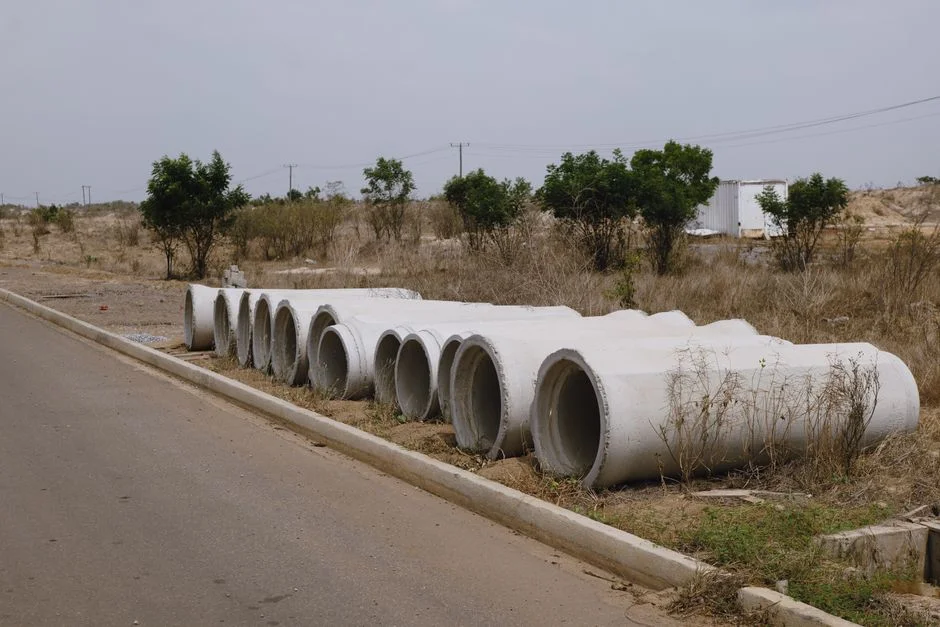
Most failed donor-funded rural WASH plants in Ghana are not engineering failures; they are procedural failures. The compliance, governance, funding and procurement layers must be addressed before the plant arrives on site.
On the compliance layer, the buyer must identify the applicable Ghana EPA effluent quality expectations for the receiving water (river, stream, lagoon, irrigation reuse) and confirm them in writing with the District Assembly and the Water Resources Commission before tender. The current limits must be requested in writing (S3). On the governance layer, rural systems are community-owned and operated by a gender-balanced WASH board with one or two trained village caretakers, so the technology chosen must be operable by that board (S3).
On the funding layer, the National Community Water and Sanitation Programme (NCWSP) model notes that these systems do not receive any cross-subsidies and 5% of investment cost is paid by the District Assembly, so the technology CAPEX profile has to be defendable to the Assembly (S3). On the procurement layer, the buyer should request from any supplier: containerised or skid-mounted configuration, a factory acceptance test video, a list of consumables for 24 months, a list of spare parts, the commissioning scope, an operator training plan, and a remote-monitoring option for sites with intermittent power (S6 and catalog). The commissioning duration guide is the right place to plan the weeks between container arrival and handover. Single-village systems have failed in rural sub-Saharan Africa when one part fails and the volunteer caretaker cannot clear it, so critical spares should be stocked and the supplier's local service reach confirmed before award.
Frequently Asked Questions
What cost band should a 2026 buyer expect for a rural Ghana sewage treatment plant?
The research does not provide a Ghana-specific unit-cost figure for stabilisation ponds, buried A/O packages, or containerised MBRs. The right action is to request a written, site-specific quotation from at least two suppliers with the same scope: containerised or buried configuration, factory acceptance test, shipping to site, commissioning, and 24 months of consumables and spares. That gives a defendable cost band for the District Assembly's 5% investment-cost share and for any donor co-financing (S3).
How should a District Assembly, NGO or EPC buyer select a supplier and what lead time should be planned?
Selection should be on documented Ghana experience, factory acceptance test evidence, the commissioning scope (the HydropureWater commissioning duration guide sets the realistic weeks-on-site expectation), and a confirmed local service reach for the volunteer caretakers. Lead time must be requested in writing from the shortlisted suppliers, broken into fabrication, shipping, site installation, and commissioning, so it can be sequenced against the District Assembly's budget cycle.
How is the design population decided for a 200–5,000-person rural community?
Start with the current population, apply