Why Cape Town's Sewage Problem Reshapes On-Site Treatment Decisions
Cape Town discharges more than 40 megalitres of raw sewage directly into the Atlantic Ocean every day, and a multi-year study by independent researchers at the University of the Western Cape and partner institutions describes the current water treatment infrastructure as unworkable for a city of over 5 million people (S3, The Conversation, 2025). Runoff from informal settlements and large volumes of poorly treated sewage enter rivers feeding both the Atlantic and Indian Oceans, so any on-site plant that ties into a stormwater-receiving watercourse now sits inside that contamination envelope (S3).
The City has also rescinded a 2021 by-law that had restricted independent water-quality testing, which means buyers should expect more transparent and more frequent regulatory scrutiny of on-site discharge quality in 2026 (S3). For a developer or consulting engineer, the practical consequence is that a packaged or containerised domestic sewage treatment plant must be designed defensively against municipal system shortfalls, not optimised to them — the design envelope is set by the worst credible upstream condition, not the average.
The Regulatory Envelope: South African Limits Your Plant Must Hit
Discharge of treated domestic sewage in South Africa is governed by the National Water Act, with site-specific limits issued through DWS General Authorisations or, for higher-risk sites, Water Use Licences. Coastal marine discharges, inland river discharges, and irrigation reuse have different quality targets under that framework, and a packaged plant for a Western Cape estate, hotel, school, or hospital must be designed to the specific receiving environment from day one. A 2020 survey of three municipal sewage treatment plants in the Eastern Cape (Agoro et al., Water, 2020-10) found that Cu and Zn removal was very poor across all three facilities, and that Cd exceeded hazardous levels in effluents and receiving surface waters at all three sites — a reminder that meeting DWS General Limits is not the same as a clean discharge, and that polishing steps may be required for sensitive catchments. The same study lists the heavy metals of primary concern in South African wastewater as As, Cd, Cr, Cu, Hg, Mn, Ni, Pb and Zn, so any site with commercial kitchens, salons, light-industrial tenants, or hospital inflow should run a metal-screening programme at design stage rather than discovering problems at commissioning. For a B2B buyer in 2026, the practical design question is therefore: does the plant discharge to a coastal outfall, an inland watercourse, or an irrigation scheme — each route carries a different compliance bar and a different downstream treatment train.
Process Options for Domestic Sewage: How the Main Technologies Compare
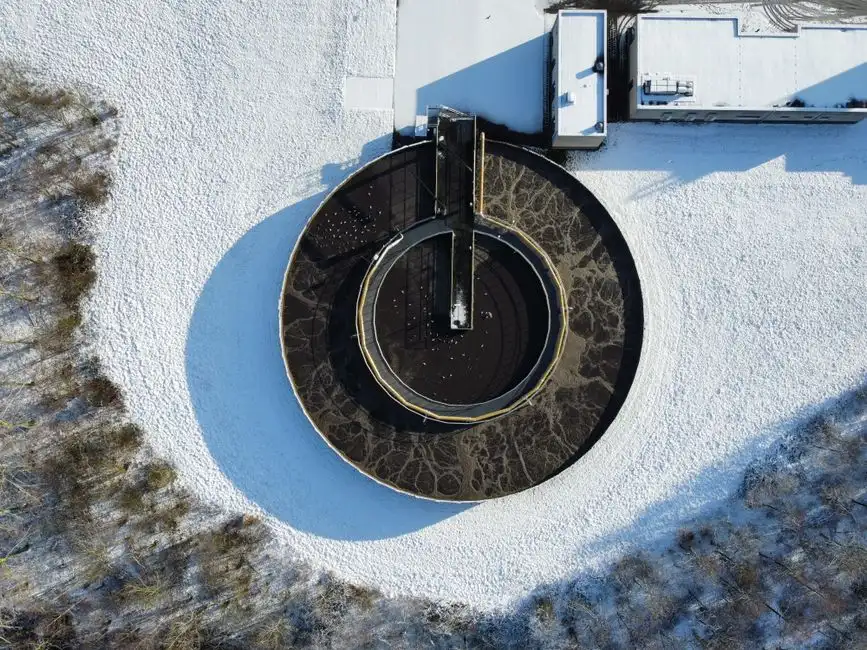
Biological processes documented in South African municipal practice include oxidation ponds, aerated lagoons, anaerobic lagoons, aerobic and anaerobic bioreactors, activated sludge, trickling filters, biological filters, rotating biological contactors, and biological nutrient removal (Agoro et al., Water, 2020-10). The same survey gives three valid South African reference configurations: WWTP-A at Alice uses activated sludge at 2 ML/d for 80,000 people; WWTP-B at Bedford uses an oxidation pond at 0.5 ML/d for 30,000 people; WWTP-C at Berlin uses a biofilter at 1 ML/d for 68,000 residents with roughly 40% industrial load (Agoro et al., 2020-10). Biological treatment produces far less sludge than chemical precipitation, but it is inefficient on toxic and non-biodegradable compounds — a constraint that has to be carried into any hospital, salon, or light-industrial inflow design (Agoro et al., 2020-10). For a packaged B2B plant, the realistic 2026 shortlist in Cape Town is an A/O package unit (WSZ-type), an MBR with submerged PVDF membranes, a conventional activated-sludge train with clarifier, and a biofilter or rotating biological contactor; oxidation ponds suit large rural sites but are usually not viable in Cape Town's urban land market. Pilot-scale work by Singh, Chetty and Rathilal at the Durban University of Technology (IICBEE, 2025) showed that scaling a biological reactor from 1 L to 30 L cut biomass productivity from 64 × 10⁴ to 46.89 × 10⁴ cells/mL/day at the same pH, light regime and medium ratio — full-scale BOD/ammonia design therefore has to be checked for mixing, aeration, and hydraulic retention at real reactor depth, not at bench scale.
| Process | Typical Cape Town duty | Footprint | Effluent quality | Best-fit site |
|---|---|---|---|---|
| A/O package unit (WSZ-type) | 1–80 m³/h (S6) | Small, buried | General Limits achievable; polishing required for reuse | 50–500 m³/d residential estates, schools, small hotels |
| MBR (submerged PVDF) | 10–2,000 m³/d per integrated unit | Compact, containerised | Reuse-grade (irrigation, toilet flush); low TSS, low coliforms | Hotels, hospitals, mixed-use where reuse is on the table |
| Conventional activated sludge + clarifier | > 1 ML/d typical (WWTP-A 2 ML/d, Agoro et al., 2020-10) | Large, civil-build | General Limits; metal polishing often needed | Municipal-scale or large hospital campus |
| Biofilter / RBC | ~1 ML/d for 68,000 residents (WWTP-C, Agoro et al., 2020-10) | Moderate | General Limits; sensitive to hydraulic peaks | Mixed domestic + light industrial, with peak-flow buffering |
| Oxidation pond | 0.5 ML/d for 30,000 residents (WWTP-B, Agoro et al., 2020-10) | Very large, land-hungry | Variable; algal carry-over in summer | Rural or peri-urban where land is cheap |
Typical Design Parameters for a Cape Town Domestic STP
Per-capita loading benchmarks implied by the South African case data range from 25 L/person/day (WWTP-B, 0.5 ML/d for 30,000 people) to 33 L/person/day (WWTP-C, 1 ML/d for 68,000 people), and these should be used as a sanity check on the design flow rather than a fixed target (Agoro et al., Water, 2020-10). Pilot work on Scenedesmus sp. in sewage used pH 8, an 18-hour light:6-hour dark cycle, and a 2:2 BBM-to-sewage ratio, and it confirmed that pH, hydraulic retention, and oxygen supply are the three control levers on biological performance (Singh et al., IICBEE, 2025). Aeration sensitivity matters at full scale: in the same pilot work, increasing airflow by 50% (from 5 to 7.5 L/hr) and adding a second sparger in a 30 L reactor raised biomass productivity from 46.89 × 10⁴ to 58.59 × 10⁴ cells/mL/day and the growth rate from 0.577 to 0.721/day, so blowers should be sized with headroom rather than at the theoretical minimum (Singh et al., 2025). For polishing and reuse, dead-end and submerged membranes below 1 μm are the workhorse, and UV covers chlorine-resistant organisms while ozone or chlorine dioxide covers oxidative disinfection duty (Agoro et al., 2020-10).
| Parameter | Indicative value or range | Source |
|---|---|---|
| Per-capita domestic flow | 25–33 L/person/day (from SA case data) | Agoro et al., 2020-10 |
| Biological reactor pH set-point | 7.5–8 | Singh et al., 2025 |
| Illumination / photoperiod (algal polishing) | 18 h light : 6 h dark | Singh et al., 2025 |
| Aeration improvement on scale-up | +50% airflow plus second sparger raised productivity from 46.89 × 10⁴ to 58.59 × 10⁴ cells/mL/day | Singh et al., 2025 |
| Growth-rate gain from same aeration fix | 0.577 → 0.721/day at 30 L | Singh et al., 2025 |
| Membrane pore size for polishing | < 1 μm (dead-end or submerged) | Agoro et al., 2020-10 |
| Disinfection options | Chlorination/dechlorination, ozone, UV | Agoro et al., 2020-10 |
Sizing and Selecting a Packaged STP for a Western Cape Site
Define peak flow first. Residential peak factors of 2.5–3.0× average dry weather flow are normal, and hotel and hospital peaks arrive earlier in the day and at higher amplitude; without that margin the biological stage hydraulically overloads and effluent quality collapses. Match the process to the footprint you actually have: an A/O package unit (the WSZ series handles 1–80 m³/h in a single buried skid) is the default for 50–500 m³/d when footprint is limited and reuse is not required, while an MBR sewage treatment system is the right call when irrigation or toilet-flushing reuse is on the table. Match the process to the load as well — if the catchment includes restaurants, hairdressers, or any inflow with oils, fats or grease, a rotary mechanical bar screen and a DAF pre-treatment unit must sit upstream, because floatation and screening are the chemical and physical pre-treatments that protect the downstream biological stage (Agoro et al., Water, 2020-10). Plan sludge handling from day one: a lamella clarifier such as a high-efficiency sedimentation tank followed by a sludge dewatering filter press converts the biological sludge into a stackable cake and keeps the plant inside its design footprint for the long term. For underground installations in residential estates where landscaping above the tank is required, an A/O underground package STP delivers the biological, clarification and disinfection stages in a single buried unit without consuming usable land. For rural or peri-urban sites, the same engineering logic scales up differently — see the broader framework for rural sewage treatment in South Africa.
| Site characteristic | Recommended process | Reason |
|---|---|---|
| Residential estate, 50–500 m³/d, no reuse, limited footprint | A/O package unit (WSZ series) | Buried, automated, 1–80 m³/h per unit (S6) |
| Hotel / resort with reuse for irrigation | MBR + UV / ClO₂ | Low TSS, low coliforms, chemistry-free disinfection |
| Hospital campus with chemical / pharmaceutical inflow | MBR with metal-screening at design stage | Buffer against toxic shocks; safer reuse; see pharmaceutical wastewater treatment in South Africa |
| Mixed domestic + light industrial (up to ~40% industrial load) | Biofilter / RBC with buffer | Mirrors WWTP-C configuration (Agoro et al., 2020-10) |
| Hotel with FOG load from kitchens | Rotary screen + DAF upstream of biological stage | Floatation and screening protect downstream biology (Agoro et al., 2020-10) |
| Any site with long-term sludge duty | Sedimentation tank + plate-and-frame filter press | Stackable cake, contained footprint |
Disinfection, Reuse, and the Final Effluent Quality Bar
Disinfection is non-negotiable for any reuse pathway, and the chemical options documented in South African wastewater practice are chlorination/dechlorination, ozone, and ultraviolet radiation (Agoro et al., Water, 2020-10). A UV disinfection unit is the default for water reuse where chlorine-resistant Cryptosporidium or Giardia are a concern and no chemical residual is desired downstream, while a chlorine dioxide generator covers sites that need a residual in the distribution loop — for example a hotel reusing treated water for toilet flushing across a long pipe run. The Singh et al. (IICBEE, 2025) pilot work highlights that hydraulic and lighting homogeneity drive biological effluent stability; in a packaged plant, the same logic applies to the disinfection contact tank, because short-circuiting is the single most common cause of failed microbial counts on a compliant plant. For irrigation reuse, route the final effluent through a 0.03 μm PVDF ultrafiltration stage using a chemistry-free UF water treatment system to protect spray irrigation nozzles and meet coliform targets. The hospitality sector in particular should read the dedicated guidance on hotel and resort wastewater treatment in South Africa before finalising reuse targets.
What to Ask a Sewage Treatment Equipment Supplier in 2026
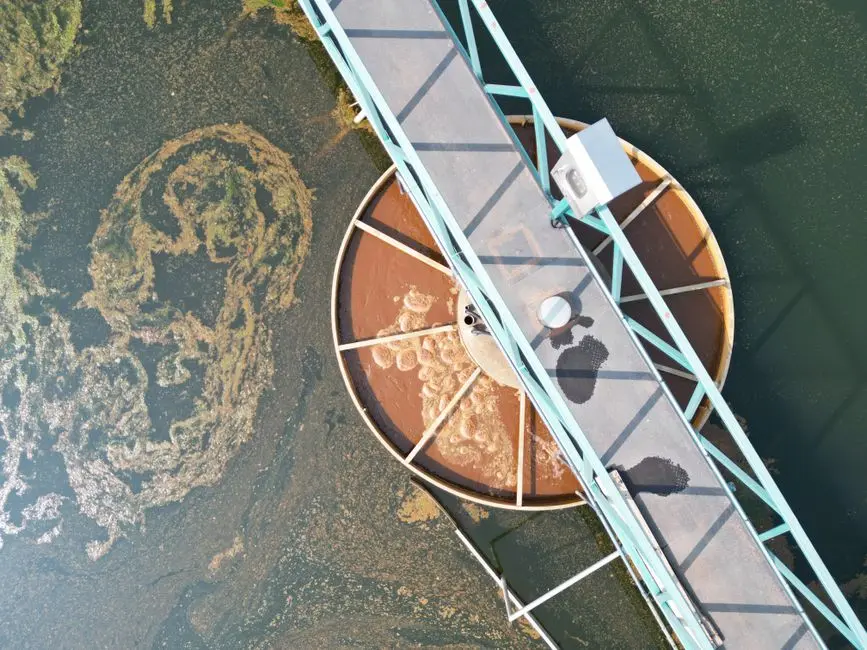
Ask for a guaranteed effluent quality on BOD, COD, TSS, ammonia, total nitrogen, total phosphorus, and faecal coliforms at the design peak flow, not at the average dry weather flow — the Agoro et al. (2020-10) survey shows effluent quality can swing widely between plants of similar nominal technology, and a guarantee written against average flow is not a guarantee at all. Ask for a hydraulic proof: residence time distribution, peak-flow handling, and the documented behaviour of the plant during a 24-hour power outage, because biological stages are the first to fail when aeration or recirculation is interrupted (Singh et al., IICBEE, 2025). Ask for the spares list with part numbers, the PLC code ownership, and remote-monitoring capability — the cheapest packaged plant is the most expensive one once consumables and callouts are priced in. Ask for a South African reference list of similar duty (residential estate, hotel, hospital, school) and a 12-month process warranty, not just a mechanical warranty, because biological performance and process warranty are what actually protect the buyer (Singh et al., 2025).
Frequently Asked Questions
What is the realistic 2026 cost range for a packaged domestic sewage treatment plant in Cape Town?
The research supplied does not include a price list or quotation for packaged domestic sewage treatment plants, so no rand figure can be quoted here without fabrication. A B2B buyer should request a written quote tied to design peak flow (m³/d), guaranteed effluent quality, hydraulic proof at peak, and a 12-month process warranty — comparing like-for-like on those four inputs is the only defensible way to compare capital cost across suppliers, because the cheapest packaged plant is the most expensive one once consumables and callouts are priced in.
How do I choose between an MBR and a conventional A/O package unit for a Western Cape site?
Use the discharge route as the first filter. If the plant discharges to a coastal outfall or municipal sewer and reuse is not required, an A/O package unit (the WSZ series covers 1–80 m³/h in a single buried skid) is usually the lower-cost, lower-maintenance choice. If irrigation reuse or toilet-flushing reuse is on the table, an MBR with submerged PVDF membranes plus UV or chlorine dioxide disinfection is the technically defensible option, because it produces a low-TSS, low-coliform effluent that can meet DWS General Authorisation reuse limits without a separate tertiary stage.
What is the minimum influent screening programme a B2B buyer should run before sizing a packaged STP?
At minimum, characterise the influent for BOD, COD, TSS, ammonia, total nitrogen, total phosphorus, pH, and the heavy metals listed as primary concerns in South African wastewater — As, Cd, Cr, Cu, Hg, Mn, Ni, Pb and Zn (Agoro et al., Water, 2020-10). For hospital, salon, or light-industrial inflow, also screen for fats, oils and grease and for any process-specific chemicals, because biological treatment is inefficient on toxic and non-biodegradable compounds and polishing steps have to be designed in, not retrofitted (Agoro et al., 2020-10).
What supplier-evaluation criteria matter most for compliance risk on a Cape Town domestic STP in 2026?
Compliance risk is driven by three things: a written guarantee of effluent quality at design peak flow (not average), evidence of hydraulic proof including behaviour during a 24-hour power outage, and a 12-month process warranty backed by a South African reference list of similar duty. Suppliers who cannot or will not provide those three items, or who offer only a mechanical warranty, should be down-weighted regardless of headline price, because the 2020 Eastern Cape survey (Agoro et al., 2020-10) shows that plants of similar nominal technology can swing widely in real effluent quality, and the Cape Town regulatory environment is moving towards more transparent and more frequent scrutiny of on-site discharge quality (S3, 2025).