Why 2026 Is a Reset Year for South African Hospitality Wastewater
South Africa's Second National Water Resources Strategy (2025 update) and the revised IRWQ&O 2013 (updated 2024) explicitly push hospitality developers toward Class A irrigation reuse targets to relieve potable demand (HydropureWater 2026 Gauteng compliance guide). Globally, only about 11% of the roughly 380 billion m³ of municipal wastewater produced each year is currently reused, per ABB's 2024 application note on water reuse — a strategic gap the national framework is trying to close.
Outside the City of Joburg, eThekwini and Cape Town sewer networks, most new lodges in the Magaliesberg, Pilanesberg, Dinokeng, Drakensberg and Greater Kruger corridors have no municipal reticulation, so on-site treatment is not optional. Three regulatory layers govern every 2026 hospitality build: a DWS (Department of Water and Sanitation) Section 39 water-use authorisation under the National Water Act 36 of 1998 for any discharge, storage or reuse; the 2024 IRWQ&O (International, Regional and Wastewater Quality Standards and Guidelines) revision for Class A reuse quality; and the local municipal or district bylaw for sewer discharge or on-site disposal. The terms developers need in their enquiry documents are Section 39, IRWQ&O 2024 Class A, and the relevant bylaw envelope for the receiving municipality.
Sizing Flows and Loads for a South African Hotel or Lodge
The Yokogawa 2025 wastewater treatment brief frames 200–250 L/bed-day for full-service hotels and 120–180 L/bed-day for eco-lodges with low-flow fixtures as the primary variable-strength influent envelope for commercial hospitality. Apply a peak factor of 2.5–3.0 to the daily mean to size the equalisation tank and the biological reactor — the morning shower plus breakfast plus laundry window stacks flows in a 90-minute surge that can hit 2.5× the daily mean. Flow volume splits roughly 60% guest rooms, 20% kitchen, 10% laundry, 10% staff and other, but the kitchen FOG (fats, oils and grease, 30–80 mg/L) and the laundry BOD (biochemical oxygen demand, 600–900 mg/L from detergents and linen soiling) carry the bulk of the organic load and must be characterised separately before the biological stage is sized. Blended influent BOD for a full-service hotel is about 350 mg/L, equivalent to 0.350 kg BOD per m³, and laundry-stream pH can spike to 9.5–10 from alkaline detergents — a small acid or caustic dosing skid on the equalisation tank is cheap insurance. Worked example: a 100-key lodge at 225 L/bed-day and 1.8 guests per room generates roughly 40–45 m³/day mean flow, jumping to 100–135 m³/day peak once the 2.5–3.0× factor is applied; the biological reactor must be sized to peak, not mean. DWS reviewers check the higher of the two envelopes — the 250 L/bed-day figure or the peak factor — on the Section 39 design report, and under-sizing at 150 L/bed-day to save tank volume is a common first-pass rejection reason.
| Property size | Beds | Daily flow (L/bed-day) | Mean flow (m³/day) | Peak flow @ 2.5× (m³/day) | BOD load @ 350 mg/L (kg/day) |
|---|---|---|---|---|---|
| Boutique guesthouse | 20 | 180 | 7 | 17 | 2.5 |
| Mid-scale lodge | 60 | 225 | 24 | 61 | 8.5 |
| Full-service resort | 100 | 225 | 40–45 | 100–135 | 14–16 |
| Large game reserve lodge | 150 | 250 | 68 | 169 | 24 |
DWS Section 39, the 2024 IRWQ&O Revision and Local Bylaws: The Compliance Stack
Section 39 of the National Water Act 36 of 1998 is required for any discharge, storage or reuse of water, including on-site irrigation, and the current DWS turnaround is 8–14 weeks from submission to licence issue (HydropureWater 2026 Gauteng compliance guide). The 2024 IRWQ&O revision tightens Class A unrestricted irrigation to E. coli <1,000 CFU/100 mL (colony-forming units per 100 millilitres) and codifies what "no detectable FOG" means at the reuse point — Class B (<100,000 CFU/100 mL) is allowed for restricted drip irrigation only. City of Joburg bylaw sewer limits are pH 6–9, COD (chemical oxygen demand) <75 mg/L, ammonia <6 mg/L, TSS (total suspended solids) <25 mg/L and FOG <50 mg/L; eThekwini and Cape Town run parallel but not identical bylaw envelopes, so the local municipality must be confirmed before sizing. The 2026 approval timeline for a Gauteng hospitality submission is 12–20 weeks combined: DWS 8–14 weeks, CoJ bylaw 4–6 weeks, and IRWQ&O reuse registration roughly 4 weeks if irrigation is in scope. For sub-10 m³/day flows (a ~20-key guesthouse), a WSZ-class buried A/O (anoxic/oxic) unit is typically compliant with City of Joburg bylaw without triggering a full Section 39 licence, but only inside the metro; rural sites in Limpopo, the Western Cape winelands or the KwaZulu-Natal midlands still need DWS sign-off.
| Permit / approval | Authority | Trigger | Typical 2026 turnaround |
|---|---|---|---|
| Section 39 water-use authorisation | DWS (national) | Any discharge, storage or reuse | 8–14 weeks |
| IRWQ&O reuse registration | DWS | Class A or Class B irrigation | ~4 weeks |
| City of Joburg wastewater bylaw | CoJ | Sewer discharge inside metro | 4–6 weeks |
| eThekwini bylaw approval | eThekwini Municipality | Sewer discharge inside metro | Confirm with municipality |
| Cape Town bylaw approval | City of Cape Town | Sewer discharge inside metro | Confirm with municipality |
Headworks and Pretreatment: Where South African Lodge Plants Commonly Fail
Specify a 3–5 mm aperture rotary mechanical bar screen at peak flow as the minimum front-end protection — laundry and housekeeping streams carry rags, hair and microplastics that blind MBR (membrane bioreactor) membranes. A rotary mechanical bar screen for laundry-lint and rag protection sized to the design peak is the cheapest insurance against membrane replacement years ahead of schedule. Grease-trap sizing must match 30–80 mg/L FOG loading from the kitchen; undersized traps are the most common cause of biological-stage fouling, and the Kenya 2024 plant-efficiency review found 60%+ of municipal plants missed nutrient limits partly because FOG carry-over starved the nitrification biomass. A DAF unit for a 200+ seat resort restaurant ahead of the biological stage is worth specifying when the lodge runs a high-volume banquet or à la carte kitchen. Equalisation of 8–12 hours of average daily flow is the cheapest insurance in the plant — it cuts the reactor volume 20–30% versus designing straight to peak.
Choosing the Biological Train: MBR, Buried A/O, SBR, Wetland or Vermifiltration
For urban Sandton, Rosebank, Pretoria, Durban Umhlanga and Cape Town CBD boutique hotels on tight footprints, an integrated MBR system for a 50–150-key South African lodge is the default — 60% smaller than conventional activated sludge, less than 1 µm filtered effluent, reuse-ready, and minimal surplus sludge. For 30–150-key lodges needing a buried unit landscaped over with no operator presence, a WSZ underground A/O package for a 30–60-key guesthouse is the workhorse — anoxic zone about 2 hours, aerobic zone about 6 hours, with an integrated settler and disinfection chamber in a single tank. SBR (sequencing batch reactor) sits between MBR and constructed wetland on footprint and is a strong pick for 100–300-key resorts with room to spread. Constructed wetlands are hard to beat on OPEX (operating expenditure) for game lodges and eco-resorts but the 0.5–1.0 ha land requirement rules them out for any urban South African site (see our constructed wetland process and design primer). Vermifiltration (BioPod-class) is real and reliable below 20 m³/day — the right answer for a 10–20-key guesthouse where simplicity wins — but it is unproven at scale in South Africa and not yet aligned with DWS Section 39 design norms for the 25 m³/day+ bracket. For an MBR train on hotel sewage, the operating envelope is HRT (hydraulic retention time) 6–8 hours, MLSS (mixed liquor suspended solids) 8,000–12,000 mg/L, PVDF (polyvinylidene fluoride) hollow-fibre at 0.1 µm nominal pore, operating flux 12–18 L/m²·h, and a sludge yield of 0.3 kg DS (dry solids) per kg BOD removed.
| Technology | Footprint | Operator skill | Best-fit property | Reuse-ready? |
|---|---|---|---|---|
| MBR (integrated) | Smallest | Moderate (CIP, membrane care) | Urban 50–150-key hotel or resort | Yes — Class A with ClO₂ |
| WSZ buried A/O | Small (buried) | Low | 30–150-key lodge, buried landscaped | Class B; Class A with polishing |
| SBR | Medium | Moderate | 100–300-key resort with spread | Class A with disinfection |
| Constructed wetland | 0.5–1.0 ha | Low | Game reserve, eco-lodge, large land | Class B; Class A with polishing |
| Vermifiltration | Small | Very low | 10–20-key guesthouse (<20 m³/day) | Class B only at this scale |
Disinfection, Sludge and the Class A Reuse Loop
Chlorine dioxide (ClO₂) is preferred over sodium hypochlorite for terminal disinfection: it handles the high-ammonia background of hotel sewage without forming chloramines, holds residual over a long pipeline, and avoids THM (trihalomethane) formation when upstream BOD is stripped to below 10 mg/L. A chlorine dioxide generator for terminal disinfection is the standard skid specification for any Class A reuse loop. MBR sludge yield is 0.3–0.5 kg DS per m³ treated, against 1.0+ kg/m³ for conventional activated sludge — a 25 m³/day hotel plant generates roughly 7–12 kg DS/day, well under the threshold where mechanical dewatering is mandatory. A plate and frame filter press for a 100-key+ site cuts cake volume to 20–25% wet solids and pulls sludge hauling down to a once-per-quarter withdrawal, which is the operating rhythm hospitality groups actually want. Reuse reservoir sizing should target at least 24–48 hours of average daily flow to buffer the irrigation demand curve and provide fire-suppression top-up. For a side-by-side Gauteng process and compliance deep dive, see our Gauteng-specific process and compliance deep dive.
2026 Installed Cost Bands and the Class A Reuse Payback
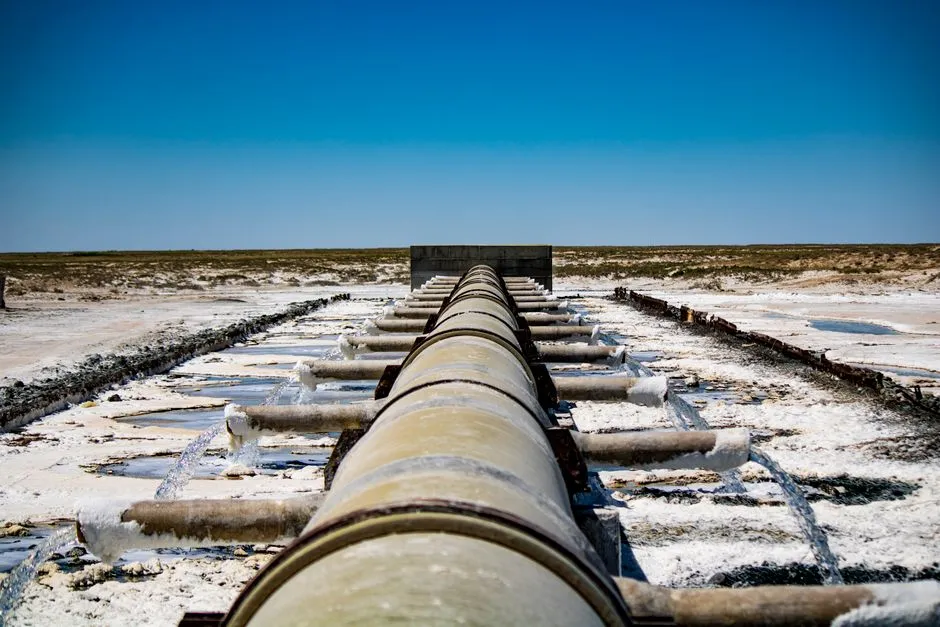
The cost bands below are 2026 installed, ex-VAT (exclusive of value-added tax), Gauteng labour rates, and reflect a turnkey supply with civil works, M&E (mechanical and electrical) and commissioning; they scale roughly linearly with flow between 25 m³/day and 100 m³/day (HydropureWater 2026 Gauteng compliance guide). Class A irrigation water at Johannesburg's 2026 step tariff of R50–80/kL displaces potable directly, and a 100-key lodge that irrigates 1.5 ha of garden with treated effluent is offsetting roughly R450,000/yr in potable draw — the single biggest financial lever on the spec. Payback on the MBR upgrade over a basic WSZ package typically lands at 3–5 years for a 100-key property once reuse revenue and avoided potable cost are added up. Operators should plan a membrane replacement cycle at 7–10 years and budget OPEX escalation against Eskom tariff increases; membrane life is the single biggest OPEX line item and must be provisioned in the 5-year OPEX forecast.
| Plant configuration | Design flow | 2026 installed cost band (ZAR, ex-VAT) | Class A reuse included? |
|---|---|---|---|
| WSZ buried A/O (no reuse) | 25 m³/day | R900,000 – R1,400,000 | Optional |
| WSZ buried A/O + Class B reuse | 50 m³/day | R1,800,000 – R2,600,000 | Class B |
| MBR + reuse irrigation loop | 100 m³/day | R4,500,000 – R6,500,000 | Yes — Class A with ClO₂ |
Supplier and Equipment Checklist for a 2026 South African Hotel Build
Require ISO 9001 / ISO 14001 documentation, a South African reference list of at least three operating hospitality plants, and a confirmed membrane or biological media supply chain — not a verbal assurance. Demand a Section 39 design report that demonstrates compliance on all five City of Joburg bylaw parameters at design stage, not just COD; undersizing the biological reactor to save tank volume is the most common first-pass rejection reason. Specify a chlorine dioxide generator for terminal disinfection as part of the disinfection skid rather than a sodium hypo alternative, since ClO₂ avoids chloramine formation against the high ammonia background typical of hotel sewage. Confirm in writing that the supplier's quoted MBR flux and MLSS envelope matches the 6–8 h HRT, 8,000–12,000 mg/L MLSS and 12–18 L/m²·h flux band documented in this guide, and that the membrane replacement cycle is provisionable in the 5-year OPEX forecast. For a parallel-frame reference outside South Africa, see our Ghana hospitality wastewater engineering guide.
| Checklist item | Acceptable evidence | Reject if missing |
|---|---|---|
| Quality and environmental certification | ISO 9001 + ISO 14001 certificates | Verbal assurance only |
| Local hospitality reference list | ≥ 3 operating SA hotel/lodge plants | No SA hospitality references |
| Section 39 design report | All 5 CoJ parameters demonstrated at design | COD-only compliance |
| Membrane / media supply chain | Named supplier, lead time in writing | "Available on request" only |
| 5-year OPEX forecast | Membrane replacement cycle costed | No membrane life provision |
Frequently Asked Questions
What is the average wastewater flow for a 100-key hotel in South Africa?
At 200–250 L/bed-day and 1.8 guests per room average occupancy, a 100-key hotel generates 40–45 m³/day mean flow and 100–135 m³/day peak once the 2.5–3.0× factor is applied (Yokogawa 2025; HydropureWater 2026). The biological reactor must be sized to the peak, not the mean.
Do I need DWS Section 39 approval for an on-site lodge wastewater plant?
Yes, for any discharge, storage or reuse. Section 39 of the National Water Act 36 of 1998 requires a water-use authorisation, and the relevant municipal bylaw approval runs in parallel; the combined 2026 timeline is 12–20 weeks. A sub-10 m³/day WSZ-class buried A/O unit can typically comply with City of Joburg bylaw without triggering a full Section 39 licence, but only inside the metro; rural sites still need DWS sign-off. Before issuing a purchase order, the developer should request the supplier's Section 39 design report and confirm that the receiving municipality has been engaged in writing.
Can hotel wastewater be reused for garden irrigation in Gauteng?
Yes, under the IRWQ&O 2013 (revised 2024) Class A or Class B reuse framework, provided the effluent meets COD <50 mg/L, E. coli <1,000 CFU/100 mL for Class A or <100,000 CFU/100 mL for Class B, and no detectable FOG at the reuse point. Chlorine dioxide disinfection is the standard terminal step.
What is the smallest packaged wastewater system for a 20-key guesthouse?
A WSZ-class underground A/O unit at roughly 5 m³/day — fully buried, no operator presence, no noise, and compliant with City of Joburg bylaw for sub-10 m³/day flows without a full Section 39 licence trigger. For suppliers, request an installed-cost band ex-VAT for a 5 m³/day buried A/O package, the membrane or media replacement interval in writing, and at least three South African hospitality reference sites of comparable size before placing the order.