Why Aleppo needs three wastewater trains, not one
Wastewater at a 2026 Aleppo data center is not a single stream but three, each with its own chemistry, peak load, and Syrian discharge rule. Cooling-tower blowdown (CTBD) is the largest, a mineralized, silica- and hardness-loaded, biocide-bearing stream that concentrates as the tower evaporates. Sanitary sewage is pathogen-bearing, organic, and low-flow, typically at BOD₅ 200–300 mg/L. Construction-phase fill-and-flush water from closed-loop commissioning is a one-time, chemistry-unusual batch that has triggered sewer-system incidents elsewhere, including the February 2025 cupriavidus gilardii episode at a U.S. data center in Cheyenne, Wyoming, where the local board revoked a discharge permit and issued a $10,000 fine after the bacterium survived treatment and was traced to the data center's closed-loop flushing (E&E News, 2025).
Mixing any two of those streams destroys reuse economics. Cooling-tower blowdown carries residual oxidising biocide that disrupts the biology of a membrane bioreactor; sanitary sewage carries organics and pathogens that foul RO membranes and violate any hyperscale tenant's water-stewardship disclosure; fill-and-flush water contains corrosion-inhibitor residues and trace metals that the municipal WWTP may not be able to remove. Each stream must be handled on its own train and only blended at the final reuse or discharge point, if at all (HydropureWater field data, 2026).
Aleppo's hot, dry summer ambient forces cooling towers toward high cycles of concentration, which maximises blowdown volume and mineral loading. Regional hyperscale tenants with published water-positive or net-zero water targets are unlikely to accept combined discharge, and the 2026 Syrian Arab Standards must be validated against the actual influent before any equipment is purchased (Ecologix, 2026).
Aleppo source-water envelope and summer design ambient
Most Aleppo municipal supply is drawn from the Quweiq and Jabbul spring systems, and engineers should validate the influent envelope against a current 2025–2026 Syrian water-quality analysis before final design. The same envelope structure used in the Baghdad Tigris reference applies: TDS, hardness (Ca and Mg as CaCO₃), silica, chloride, sulfate, alkalinity, and pH are the parameters that gate every downstream chemistry decision (Ecologix, 2026).
Aleppo summer peaks routinely exceed 38–40 °C, with the design day driven by July–August dry-bulb conditions. That ambient ceiling forces cooling-tower approach temperatures up, which pushes cycles of concentration (CoC) toward the 4–6 band once silica, calcium, and alkalinity limits are respected (Ecologix, 2026, applied to the Aleppo context).
At a 100 MW hyperscale envelope, intake can reach up to ~2 million L/day, evaporation is typically around 60% of intake, and sanitary is 10–20% of total site flow. The blowdown share is governed by the rule B/M = 1/(CoC − 1): at CoC 4, blowdown is 25% of make-up; at CoC 6, it is 20%. The gain from CoC 4 to CoC 6 is 5 percentage points, a 20% relative reduction, not the 50% some sustainability teams assume (IDE Tech, 2026; Ecologix, 2026).
| Parameter | Typical Aleppo range (validate locally) | Design implication |
|---|---|---|
| TDS | 250–600 mg/L | Sets RO feed osmotic pressure and reject volume |
| Total hardness (as CaCO₃) | 150–300 mg/L | Determines softener sizing or antiscalant dose |
| Silica (as SiO₂) | 10–30 mg/L | Limits CoC and governs RO recovery |
| Chloride | 20–80 mg/L | Drives corrosion-inhibitor selection |
| Sulfate | 30–120 mg/L | Couples with Ca to set CaSO₄ scaling ceiling |
| Alkalinity (as CaCO₃) | 100–200 mg/L | Governs acid dose for LSI control |
| pH | 7.2–8.0 | Starting point for LSI/RSI calculation |
| Summer peak ambient | 38–40 °C | Forces CoC toward 4–6 and derates RO 5–10% |
The two chemistry gates every Aleppo design must respect
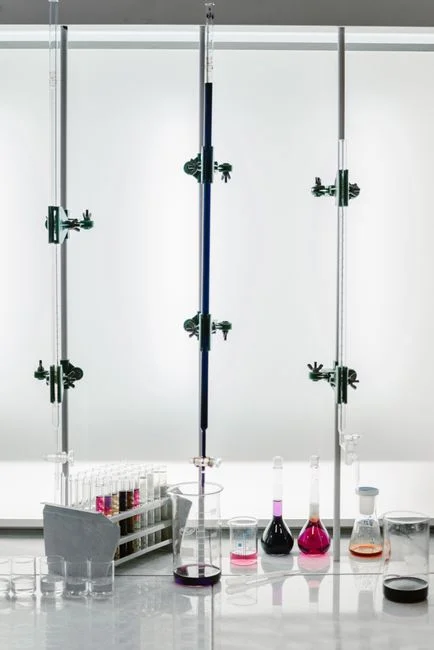
Two indices gate every chemistry decision: the Langelier Saturation Index (LSI = pH − pHₛ) and the Ryznar Stability Index (RSI = 2pHₛ − pH). The operating band for an Aleppo data center is LSI −0.5 to +0.5 and RSI 6.0–7.0, held there by precise acid or antiscalant dosing rather than by increasing blowdown volume. Exceeding the LSI band is the most common reason a new plant forces emergency blowdown, voids heat-exchanger warranties, and burns the first-quarter opex budget on chemistry top-ups (Ecologix, 2026).
Once cycled to CoC 4–6, the circulating water enters a scaling regime dominated by silica, calcium carbonate, and calcium sulfate, with elevated Cu, Zn, molybdate anticorrosive, and residual oxidising biocide accumulating in the blowdown. Each of those species is incompatible with at least one downstream unit operation: silica fouls RO membranes, calcium carbonate scales heat exchangers, copper and zinc violate hyperscale discharge disclosure, and residual oxidising biocide kills the biology in an MBR (Ecologix, 2026).
That is why the LSI/RSI pair is not a soft target but a gate. The control loop is acid or antiscalant dose, pH trim, and cycles of concentration, not blowdown volume. A design that relies on extra blowdown to "fix" the chemistry has already spent the savings the gate was meant to protect.
The ordered equipment train from raw water to blowdown reuse
The train below is the ordered equipment list an EPC can drop into a P&ID. Each step is justified by the contaminant it removes or the risk it mitigates.
Cooling-tower make-up and blowdown reuse line: intake → rotary mechanical bar screen (3–5 mm aperture) → multi-media filter (5–10 µm sand/anthracite/GAC, targeting SDI < 3) → twin-tank industrial water softener or PLC-controlled antiscalant dosing skid (holding LSI in the −0.5 to +0.5 band) → industrial RO system at 75–80% local recovery → pipeline UV sterilizer or on-site ClO2 generator for polishing → cooling-tower make-up storage.
Sanitary, cafeteria, and wash-down sidestream: equalisation basin → DAF unit (FOG and colloidal removal) → MBR system (10–2,000 m³/day, <1 µm effluent, 95–99% COD/BOD removal) → UV polishing → reuse for irrigation or toilet flush, or sewer discharge (Ecologix, 2026).
For Aleppo's long, hot return lines, on-site ClO₂ generation is the safer biocide. Free chlorine residual decays within hours in hot, dirty loops, while ClO₂ maintains residual across long return lines and does not form trihalomethanes at the 1–2 mg/L dose rates used. RO permeate polished to <50 ppm TDS is suitable for direct cooling-tower make-up (IDE Tech, 2026; Ecologix, 2026).
| Stage | Equipment | Operating parameter |
|---|---|---|
| Intake screening | Rotary mechanical bar screen | 3–5 mm aperture, continuous duty |
| Particulate removal | Multi-media filter | 5–10 µm, SDI < 3 |
| Softening / scale control | Twin-tank softener or antiscalant skid | Holds LSI −0.5 to +0.5 |
| Desalination | Industrial RO system | 75–80% recovery, permeate < 50 ppm TDS |
| Disinfection | Pipeline UV or on-site ClO₂ generator | >40 mJ/cm² UV or 0.2–0.5 ppm ClO₂ |
| FOG removal (sanitary) | DAF unit | Air-to-solid ratio 0.005–0.015 |
| Biological polishing (sanitary) | MBR system | MLSS 8,000–12,000 mg/L, flux 10–20 LMH |
Three discharge philosophies an Aleppo developer will face
The three philosophies below cover the realistic decision space an Aleppo developer will face: how much to spend on treatment versus how much freshwater to keep drawing.
Option A, discharge to municipal WWTP with pretreatment, is the lowest CAPEX path, but discharge fees and water-purchase cost remain, and hyperscale tenants with published water-positive targets increasingly reject it. Option B pairs an ultrafiltration pre-filter with a conventional industrial RO system to deliver 50–70% loop closure, which is the practical sweet spot for most Aleppo sites. Option C, a high-recovery brine desalter or near-ZLD configuration, is appropriate only where tenant contracts demand near-zero liquid discharge or where freshwater cost and discharge fees together push a 3–5 year payback even at higher CAPEX; high-recovery designs with controlled salt precipitation can reach ~95% overall recovery (IDE Tech, 2026; Ecologix, 2026).
| Philosophy | Freshwater saving vs baseline | CAPEX | OPEX complexity | Best fit |
|---|---|---|---|---|
| A — Discharge to WWTP with pretreatment | Low (discharge fees, water purchase) | Low | Low | Only if sewer has residual capacity and ESG mandate is weak |
| B — Industrial RO reuse to 50–70% loop closure | Medium | Medium | Medium (membrane replacement, energy) | Default choice for 10–30 MW colocation |
| C — High-recovery brine desalter / near-ZLD | High | High | High (brine chemistry, seed handling) | Hyperscale sites with water-stress disclosure to tenants |
Indicative numbers for a 10 MW Aleppo build
Scenario: 10 MW IT load, PUE 1.3, evaporative cooling, design CoC 5, summer ambient ~40 °C. Inputs are derived from the WUE 1.8 L/kWh benchmark and the blowdown rule B/M = 1/(CoC − 1), not from a proprietary site survey (Ecologix, 2026).
Math path: site IT load (10,000 kW) → site power with PUE 1.3 (13,000 kW) → site water with WUE 1.8 L/kWh (≈ 23,400 L/h baseline, expanded by the 1.3 PUE factor applied to the cooling load) → make-up → evaporation loss ~60% of intake → blowdown at CoC 5 is 25% of make-up. Staff sanitary is typically 50–80 L/person/day and is a minor contributor to total site flow.
Indicative equipment list: 1 × rotary bar screen (3–5 mm), 2 × multi-media filter vessels (5–10 µm, SDI < 3), 1 × twin-tank softener, 1 × PLC antiscalant skid, 1 × RO skid at 75–80% recovery, 1 × pipeline UV, 1 × on-site ClO₂ generator, 1 × DAF unit for cafeteria/greywater, 1 × MBR system for sanitary (Ecologix, 2026).
CAPEX band, payback, and the Syrian regulatory checkpoint
Indicative CAPEX band: USD 350,000–600,000 for the full package, with freight and installation to the site included in the upper end. Simple payback is 3–5 years once freshwater cost, discharge fees, sewage connection charges, and pumping energy for heat rejection are totalled (Genesis Water Tech, 2026). Engineers should request an itemised quote that separates process equipment, freight, installation, and commissioning rather than accept a single lumped figure, because site logistics and Syrian import procedures can shift the landed cost by more than 20%.
Two Aleppo-specific risks expand the design envelope. Summer peak grid outages force diesel-driven chilled-water make-up, which raises blowdown 10–20%. Ambient above the design point shifts the evaporation share above 60%, so RO capacity should be derated 5–10% to avoid a summer shortfall (Ecologix, 2026). For peer-reviewed regional parallels on similar logistics, the Baghdad data center blowdown engineering guide and the Kinshasa data center blowdown engineering guide document the same risks under comparable supply constraints.
Regulatory touchpoints to verify against current 2026 Syrian Arab Standards and municipal sewer-connection rules include effluent limits for TDS, BOD, residual oxidant, and thermal discharge, plus any reuse consent required for irrigation or toilet-flush applications. Engineers should not lift Jordanian, Saudi, or UAE benchmarks as substitutes; the limits differ, and an Aleppo reviewer will check the actual cited document (Ecologix, 2026).
Frequently Asked Questions
How much water does a 10 MW data center in Aleppo actually use, and how much of that becomes blowdown?
At PUE 1.3 and the WUE 1.8 L/kWh benchmark, a 10 MW site lands in the low-to-mid six-figure L/day range once the PUE factor is applied to the cooling load, with roughly 60% lost to evaporation and the remainder discharged as blowdown at CoC 5. The exact figure depends on the validated influent envelope and the actual PUE, so request a site water balance from the EPC that uses the measured intake, not the benchmark (Ecologix, 2026).
What CAPEX should an Aleppo EPC budget for a 10–20 MW data-center wastewater and cooling-blowdown package, and what is the realistic payback?
The indicative band is USD 350,000–600,000 for the full package, with freight and installation to the site included in the upper end, and simple payback 3–5 years once freshwater cost, discharge fees, sewage connection charges, and pumping energy for heat rejection are totalled. The right purchasing check is to require an itemised quote that splits process equipment, freight, installation, and commissioning, because landed cost in Syria can shift by more than 20% on logistics alone (Genesis Water Tech, 2026).
Which equipment goes into the blowdown-reuse line, and which goes into the sanitary sidestream?
The blowdown-reuse line is screening → multi-media filtration → softener or antiscalant dosing → industrial RO → UV or ClO₂ polishing → cooling-tower make-up. The sanitary sidestream is equalisation → DAF → MBR → UV polishing → reuse or sewer discharge. Keeping them on separate trains is what allows each unit operation to handle one chemistry, instead of forcing one train to manage incompatible waste profiles (Ecologix, 2026).
Does an Aleppo data center need a near-zero liquid discharge (ZLD) system, or is sewer discharge with pretreatment acceptable in 2026?
Sewer discharge with pretreatment is acceptable for 10–30 MW colocation sites with weak ESG mandates and available municipal capacity, but hyperscale tenants with published water-positive or net-zero water targets increasingly reject it, and an industrial RO reuse line delivering 50–70% loop closure is the practical default. Near-ZLD with a high-recovery brine desalter is justified only where tenant contracts demand it or where freshwater cost plus discharge fees push a 3–5 year payback even at higher CAPEX. Before committing, confirm what your specific tenant contract requires, because that clause is what governs the decision, not a generic ESG target (IDE Tech, 2026; Ecologix, 2026).