Why Faridabad Effluent Treatment Is a 2026 Compliance Project, Not a Capital Project
The 2026 environmental guidelines prioritise rejuvenation of the Yamuna basin, and HSPCB / CPCB consent decisions for Faridabad units now flow from that policy direction. According to Sanskriti Enviro's 2026 brief on Faridabad ETP design, industries in the district must adopt high-performance treatment technologies to secure Consent to Operate (CTO) renewal and avoid environmental penalties, with non-compliance exposing the unit to the Polluter Pays principle — the real cost driver, not the steel and concrete of the plant itself.
For Red and Orange category units — which covers most of Faridabad's automotive, metal-finishing, dye, and chemical clusters — HSPCB now mandates Online Continuous Effluent Monitoring Systems (OCEMS) that stream pH, TSS, COD, BOD, and flow to HSPCB and CPCB servers in real time. A working ETP in 2026 is therefore a compliance instrument first, a process system second.
Two delivery models coexist in the district: on-site ETPs (the focus of this guide) and Common Effluent Treatment Plants (CETPs) shared by industrial estates. A Faridabad unit typically owns its on-site train because the influent envelope — oils, heavy metals, dyes, salts — varies too widely for a shared CETP to handle without segregation. The remainder of this article builds the on-site ETP spec.
Faridabad's Industrial Influent Map: What the Plant Must Actually Treat
Faridabad's industrial wastewater envelope is not generic. The cluster a unit sits in dictates which unit operations the train must contain. Sanskriti Enviro's 2026 mapping breaks the district into four practical influent profiles, summarised below.
| Cluster / Sector | Dominant Load | Required Front-End Treatment |
|---|---|---|
| Automotive & engineering (Sector 24, 25, 58, DLF) | High oil, grease, TSS | Oil-water separator + DAF before any biological stage |
| Metal processing & finishing (NIT, Sector 58/59) | Chrome, Nickel, Zinc, cyanide, acid | Physico-chemical precipitation + cyanide destruction + ion exchange |
| Dye & chemical units | Colour, high TDS, refractory organics | Equalisation + AOP / Fenton + dedicated colour removal |
| Ballabhgarh industrial area | Casting & forging solids; textile dyes | Coarse screening + DAF + biological + AOP for residual colour |
The metal-finishing profile is the one buyers underestimate most. Chrome, Nickel, Zinc, and free cyanide must be precipitated or destroyed before biological treatment, otherwise they kill the biomass and breach the 10/10/50 standard (BOD ≤ 10 mg/L, TSS ≤ 10 mg/L, COD ≤ 50 mg/L) on the very first shift. Ion exchange polishing handles the residual dissolved metals the clarifier cannot catch.
For biologically inspired context, Kothari et al. (Bulletin of Environmental Contamination and Toxicology, 2021, doi:10.1007/s00128-021-03292-7) demonstrated that the microalga Chlorella pyrenoidosa removed Cr, Cu, Pb, Zn, Cd, Mn, and Ni from CETP wastewater at 47–87 % across concentration ranges. That figure sets a reference point for what a polishing biology step can theoretically achieve on metal-laden streams; it is not a substitute for physico-chemical precipitation in a 2026 Red-category ETP, but it is a useful benchmark when justifying a tertiary polishing stage to a consent officer.
For dye and chemical units, colour and dissolved salt are the two parameters that survive conventional biological treatment. AOP — Fenton, ozone, or UV/H2O2 — breaks the chromophores; a downstream RO stage separates the salt for reuse rather than discharge.
The Standard 2026 ETP Process Train for Faridabad Industries
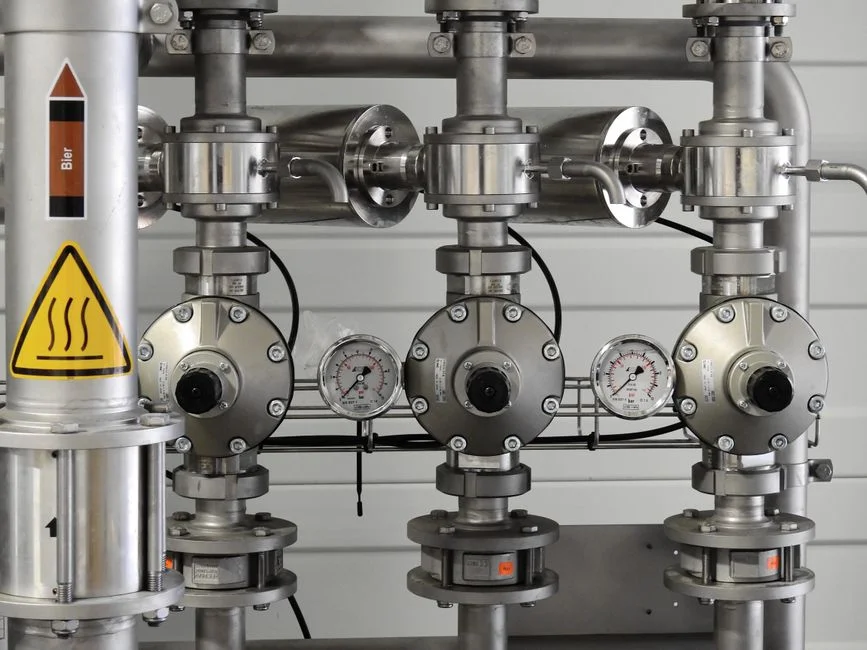
A 2026-compliant Faridabad ETP is a six-stage train. The exact unit operations vary by cluster, but the sequence is stable enough to draw on a single sheet of process flow diagram paper. Sanskriti Enviro's 2026 design brief lays out the sequence as equalisation → physico-chemical → biological → tertiary → sludge handling, with OCEMS telemetry across the outlet.
Stage 1 — Screening. A rotary mechanical bar screen at the headworks removes rags, plastics, and large solids that would otherwise rag the downstream pumps and foul the biological carriers. This is standard headworks practice for any Faridabad plant receiving municipal trade effluent.
Stage 2 — Equalisation and pH correction. An equalisation tank dampens hydraulic and organic shock, while an automatic chemical dosing system trims pH into the band the downstream precipitator needs. Without equalisation, the downstream DAF and biological stages see slug loads that no control loop can absorb.
Stage 3 — Physico-chemical treatment. Coagulation, flocculation, a lamella clarifier, and a DAF system strip emulsified oil, grease, and colloidal solids. Surface loading rate is the design parameter buyers should pin down in any vendor meeting; an undersized DAF is the most common reason Faridabad ETPs fail the 10 mg/L TSS target. The DAF oil water separator design criteria for 2026 walks through the calculation.
Stage 4 — Biological treatment. MBBR or MBR membrane bioreactor for the bulk BOD and COD removal; the choice between them is the subject of the next section.
Stage 5 — Tertiary polishing. An ultrafiltration system or nanofiltration polishes the biological effluent to reuse quality. Schrader's PhD thesis for the University of Twente (doi:10.3990/1.9789036523325) frames direct nanofiltration as a mature technique for polishing WWTP effluent to a quality suitable for agricultural or potable reuse, which is the technical basis for installing NF on Faridabad trains that need to recycle water back into the process.
Stage 6 — Sludge handling. A plate and frame filter press dewaters the wasted biological and chemical sludge to a disposable cake; the sludge dewatering system cost 2026 reference breaks down the capex versus opex for this stage.
Across all six stages, OCEMS sensors on the outlet stream pH, TSS, COD, BOD, and flow to HSPCB and CPCB servers. Buyers should treat the OCEMS scope and HSPCB data-server compatibility as a billable line item, not a free accessory.
| Stage | Unit Operation | Function |
|---|---|---|
| 1 | Rotary bar screen | Remove large solids |
| 2 | Equalisation tank + chemical dosing | Flow dampening, pH correction |
| 3 | Lamella clarifier + DAF | Oil, grease, colloidal TSS removal |
| 4 | MBBR or MBR | BOD / COD / ammonia reduction |
| 5 | UF or nanofiltration | Reuse-grade polishing |
| 6 | Plate and frame filter press | Sludge dewatering |
Choosing the Right Biological Stage: MBBR vs MBR vs SBR for Faridabad Loads
The biological stage is the single biggest cost line in the train and the one buyers most often mis-size. The three credible options for Faridabad loads are MBBR, MBR, and SBR, and the right answer depends on the cluster, the land envelope, and whether the unit wants reuse-grade water.
| Parameter | MBBR | MBR | SBR |
|---|---|---|---|
| Footprint | Compact (moving-bed biofilm) | ~60 % smaller than CAS / SBR | Larger (batch basin) |
| Effluent TSS | 20–50 mg/L (needs tertiary) | < 1 µm filtration, near-reuse quality | 20–50 mg/L (needs tertiary) |
| Load tolerance | Good for fluctuating BOD | Good for stable, low-F/M loads | Good for highly variable flows |
| Membrane cost | None | Submerged PVDF membranes (replace every 5–8 yr) | None |
| Best-fit cluster | Automotive, engineering, mixed industrial | Metal finishing with reuse, dye units with ZLD intent, land-constrained sites | Smaller units, batch production |
The MBR membrane bioreactor is the right answer when the site is land-constrained, when reuse back into the process is a board-level target, or when the downstream RO needs a low-SDI feed. MBBR is the right answer when the load is variable and the budget cannot absorb a membrane replacement cycle. SBR remains the simplest control story for very small or highly batch-fed operations.
Beyond these three, Lei's Wageningen University PhD thesis (2023, doi:10.18174/575408) confirms constructed wetlands as a research-stage polishing step for micropollutants — useful context for a sustainability narrative, but not a 2026 default for any Red-category Faridabad unit.
Sector-Specific Process Sketches for Faridabad Plants
The generic six-stage train is the chassis. Each Faridabad cluster bolts on different unit operations in front and behind it.
Metal-finishing flow: precipitation (pH 9–10 for Chrome) → alkaline chlorination for cyanide destruction → sand filter / ion exchange → MBR membrane bioreactor → UF polishing → RO for metal recovery. This sequence targets the Chrome, Nickel, and Zinc envelope and lets the unit recover water for rinse baths.
Dye and chemical flow: equalisation → coagulation / Fenton AOP → dedicated colour-removal stage → biological (MBBR) → RO for salt separation. The RO permeate is reused in the process; the concentrate is sent to a Multiple Effect Evaporator or Crystalliser for Zero Liquid Discharge.
Automotive and engineering flow: oil-water separator (API or CPI) → DAF system → equalisation → biological (MBBR) → UF polishing for shop-floor reuse. The train targets the oil, grease, and TSS envelope typical of Sector 24, 25, 58, and DLF.
Textile flow (Ballabhgarh): equalisation → DAF → biological → AOP for residual colour → UF or RO for reuse. The AOP step is what makes the difference between meeting and missing the colour consent condition for a textile unit.
For nutrient-sensitive sites, the advanced nutrient removal in wastewater treatment 2026 construction guide covers the biological configurations that take ammonia and total nitrogen down to consent levels.
Sizing, Cost Drivers, and What to Ask a Faridabad ETP Vendor
Three numbers drive every credible ETP quotation: daily flow in m³/day, peak factor (typically 1.5–2.0× the average), and the influent envelope from a wastewater characterisation study. Sanskriti Enviro's 2026 brief is explicit that vendors should be asked to perform treatability studies and wastewater analysis on the actual Faridabad influent before any quotation is firmed up — a generic budgetary figure built on assumed influent is a procurement risk.
Cost line items that buyers consistently miss:
- OCEMS integration and HSPCB / CPCB data-server compatibility — the sensors themselves are a small fraction of the installed cost; the data acquisition, telemetry, and one-year server hosting are the real number.
- Spare parts and consumables in NCR — coagulants, flocculants, filter media and valves stocked within driving distance of Sector 58 or Ballabhgarh.
- Annual Maintenance Contract scope — blowers, pumps, membranes, and instrumentation covered with defined response times; without an AMC, the first membrane pinhole takes the plant down for weeks.
- Industrial IoT dashboard — plant health, automated alerts, and digital audit logs that the consent officer can pull during an HSPCB inspection rather than waiting for a paper-based monthly report.
On the instrumentation side, a vendor's choice of TSS sensor for the wastewater treatment plant is worth probing directly — an unreliable TSS sensor on the OCEMS stream is a consent risk, not just a maintenance nuisance.
Frequently Asked Questions
What discharge parameters must a Faridabad ETP meet under HSPCB 2026 norms?
Sanskriti Enviro's 2026 design brief confirms that Faridabad ETP outlets must meet the 10/10/50 standard — BOD ≤ 10 mg/L, TSS ≤ 10 mg/L, COD ≤ 50 mg/L — with pH, TSS, COD, BOD, and flow additionally telemetered to HSPCB and CPCB servers via OCEMS for Red and Orange category units. The specific consent condition in the CTO may be tighter; the buyer should request a copy of the draft consent and have the ETP vendor match it unit by unit.
What budget range and installation timeline should a Faridabad buyer expect for a new ETP?
Capex for an on-site ETP scales with daily flow, influent envelope, and reuse target. A buyer should request vendor quotations that itemise civil work, mechanical equipment, instrumentation, OCEMS integration, and AMC separately; treat any lump-sum figure without that breakdown as a red flag. Installation time depends on whether the train is a greenfield build or a brownfield retrofit, and on the consent-to-commissioning inspection cycle with HSPCB — request the vendor's last three commissioning timelines in the NCR as a reference point.
Should a Faridabad metal-finishing or dye unit pick MBBR or MBR?
For metal finishing, dye, and chemical units with a reuse target, MBR is the better fit because it delivers near-reuse quality effluent and a low-SDI feed to the downstream RO, and it cuts the plant footprint by roughly 60 % relative to a conventional activated sludge or SBR train. For mixed automotive and engineering loads with variable BOD and a tighter membrane-replacement budget, MBBR remains the practical default.
What does the OCEMS scope cover, and how is the data transmitted to HSPCB?
OCEMS for a Red or Orange category Faridabad unit covers continuous pH, TSS, COD, BOD, and flow measurement on the final outlet, with data telemetered directly to HSPCB and CPCB servers. The buyer should confirm the data acquisition system, the telemetry protocol, and the one-year server hosting cost in the vendor scope; data gaps in the OCEMS log are treated as consent breaches.
How do I shortlist a reliable ETP manufacturer in Faridabad?
Verify four things before signing: (1) commissioning references inside Faridabad — Sector 24, 58, Ballabhgarh, or NIT — on the same influent envelope; (2) OCEMS integration with HSPCB / CPCB servers as a delivered, working line item; (3) in-house or local NCR AMC coverage for blowers, pumps, and membranes with defined response times; and (4) a treatability study and wastewater analysis on the actual site effluent before the quotation is firmed up. A vendor that quotes without those four items is quoting on assumptions, not on your plant.
Related Equipment
- MBR flat sheet membrane module — specifications, capacity range, and technical data