What a TSS Sensor Does in a Wastewater Treatment Plant
A TSS sensor for a wastewater treatment plant is an online probe that reports total suspended solids in mg/L using optical scatter, dual-beam absorption, or ultrasonic-cleaned optics. Dual-beam optical probes commonly cover 0.001–50,000 mg/L in mixed liquor. Ultrasonic cleaning can stretch clearwell wipe intervals from daily to roughly quarterly.
Online instruments remain proxies for the laboratory gravimetric test. According to University of Georgia Extension (2024), total suspended solids is the mass retained on a standard glass-fiber filter with a nominal pore size of about 1.5 µm after drying at 103–105 °C, reported in mg/L under Standard Methods 2540 D. Every commercial online solids analyzer is field-calibrated against that lab method for the local slurry.
Three operating principles dominate municipal and industrial plants. Optical light-scatter probes emit near-infrared light, typically at 880 nm, and measure photons deflected by particles; scatter intensity scales with concentration on single-channel heads such as the Hach TSS sc family. Dual-beam optical absorption probes, typified by the Solitax sc, run a reference path beside the measuring path so the controller can compensate for window fouling and LED aging in real time. Ultrasonic-cleaned optical probes add a piezoelectric transducer that vibrates the window at about 1 MHz to shed biofilm, an approach documented in the YSI IQ SensorNet application note A595 for a 6 m deep final-effluent clearwell.
Most plants we size for settle on one of these three families rather than exotic hybrids. Optical single-channel units such as the Hach Solitax sc and TSS sc lines cover roughly 0.001–50,000 mg/L across the product family, while ultrasonic-cleaned sensors such as the YSI VisoTurb 700 IQ cut biofouling maintenance from daily wiping to roughly quarterly service in final-effluent clearwells when the slurry is biofilm-prone.
TSS vs. Turbidity vs. Total Solids: How They Differ
TSS in mg/L is a gravimetric mass measurement. Turbidity in NTU or FNU is an optical property of how a sample scatters or absorbs light. The two track each other only when fine, light-scattering particles dominate and particle size, color, and refractive index stay stable.
A 1:1 swap between a turbidity probe and a solids probe is a common specification error. Fondriest Environmental’s measurement guidance notes that no standard conversion exists between turbidity units and suspended-solids mass in mg/L; site-specific regression is required and must be rebuilt when particle mix changes. That is why DIN ISO 7027-compliant turbidity sensors are interchangeable with solids probes only in narrow, well-characterized streams.
Total solids (TS) includes both suspended and dissolved fractions. Total dissolved solids (TDS) is the conductivity-derived companion that captures ions passing the 1.5 µm filter. A conductivity probe cannot replace a solids probe: conductivity responds to ionic strength, not particulate mass, and the two can move in opposite directions across a biological reactor.
The working rule of thumb in municipal plants is simple. Specify solids probes in mixed liquor and sludge streams, typically 2,000–12,000 mg/L. Use turbidity probes in low-solids final effluent where the target band sits below roughly 50 mg/L, optical scatter stays linear, and calibration drift stays manageable.
Three Sensor Technologies Compared Side by Side

Optical single-channel probes (Hach TSS sc, TSS HT sc, TSS EX1 sc, TSS Titanium sc) sit at the low end of the cost band. They cover 0.001–400 NTU/FNU and remain the default for clear effluent, hazardous-location duty, and high-salt or aggressive media. Optical dual-beam probes (Hach Solitax sc) extend the range to 0.001–50,000 mg/L, compensate continuously for window fouling and LED aging through a reference path, and dominate mixed-liquor, RAS, and raw-influent applications.
Ultrasonic-cleaned optical probes (YSI VisoTurb 700 IQ and ViSolid 700 IQ) wrap the same optical core in a 1 MHz piezo-driven cleaning head. The YSI A595 case study reports wipe-cleaning went from daily to roughly quarterly at a 6 m deep final clearwell. That maintenance shift often pays back the premium inside 12 months at sites with daily operator rounds.
Sensor selection usually depends on measurement range, accuracy needs, fouling severity, and process location. The table below maps the three families to these axes with 2026 list-price bands drawn from publicly listed catalog numbers (Hach LXV323–LXV424 series) and YSI IQ SensorNet channel configurations.
| Technology | Range (mg/L or NTU) | Accuracy (% FS) | Cleaning method | Typical process position | 2026 list price band (USD) |
|---|---|---|---|---|---|
| Optical single-channel (TSS sc family) | 0.001–400 NTU/FNU | ±5% FS | Mechanical wipe or none | Final effluent, hazardous areas, high-salt media | 4,500–7,500 |
| Optical dual-beam (Solitax sc) | 0.001–50,000 mg/L | ±3% FS | Mechanical wipe + air-burst option | Mixed liquor, RAS, influent | 9,000–14,000 |
| Ultrasonic-cleaned optical (VisoTurb 700 IQ / ViSolid 700 IQ) | 0–4,000 NTU or 0–150,000 mg/L (model dependent) | ±2–3% FS | 1 MHz piezo ultrasonic | Final clearwell, biofilm-prone effluents, primary clarifier scum | 11,000–18,000 |
For procurement, the price bands above cover the sensor head only. A complete point of measurement typically adds USD 1,500–4,000 for the controller, cleaning compressor or piezo driver, mounting hardware, and a NIST-traceable factory calibration certificate.
Where to Install the Probe in the Process
Process placement determines probe performance because the same head behaves differently at the headworks than at the clearwell. The four canonical positions and their target mg/L bands are summarized below. Align the probe’s range ceiling with the upper bound of the band so the reading stays in the linear 20–80% region of full scale.
| Process point | Target TSS (mg/L) | Recommended probe | Mounting notes |
|---|---|---|---|
| Influent screening outlet | 100–500 | Dual-beam optical with mechanical wiper | Flow-through chamber, 1 mm strainer upstream to catch rags and grit |
| Aeration basin / mixed liquor | 2,000–6,000 | Dual-beam optical (Solitax sc class) | Retractable fitting for in-service withdrawal, avoid air-roll zones |
| RAS line from secondary clarifier | 6,000–12,000 | Dual-beam optical with air-bubble purge | Vertical pipe section, 5×D straight run upstream |
| Final effluent clearwell | 0.5–30 | Ultrasonic-cleaned optical (VisoTurb or equivalent) | Submerged at 1–2 m below water surface, away from inlet turbulence |
Two practical details are often missed in the specification. First, a multi-media filter installed ahead of a sensor on high-roughness streams can cut both particle variability and probe abrasion, but it changes the slurry the sensor sees, so the calibration must be re-validated downstream. Second, pairing the probe with a dissolved air flotation system at primary treatment shifts the mixed-liquor profile and typically pulls the aeration-basin band down toward 1,500–4,000 mg/L, which can move a project from a Solitax sc-class range to a TSS sc-class range and save roughly 30% on the sensor line.
Calibration, Cleaning, and the 5-Question Selection Checklist
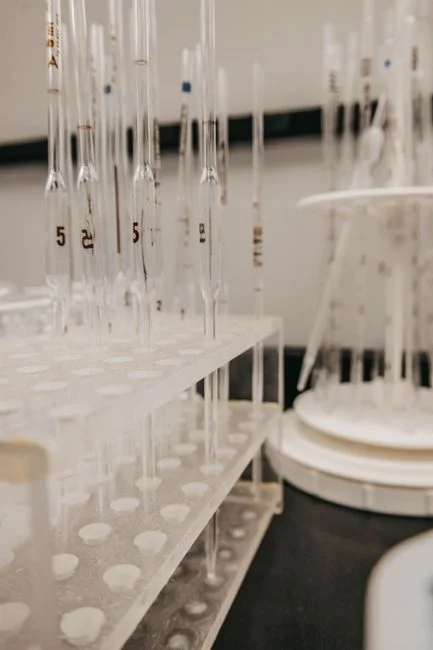
Field-calibrate every probe at three points: 0 mg/L in clean rinse water, a process mid-range grab sample, and a process high-end grab sample, each cross-checked against Standard Methods 2540 D gravimetric TSS. Done this way, online readings stay within ±5% of the lab, which is the typical plant-acceptance threshold for control-loop duty. The YSI A595 clearwell case used three grab samples at low, mid, and high plant flow to lock the VisoTurb 700 IQ to site-specific scatter behavior, and that same three-point pattern is the safest default for any influent or mixed-liquor installation.
Cleaning interval is the second-largest operational cost after the sensor itself, and the choice depends on labor cost and outage tolerance. Mechanical wiping systems typically need daily attention in mixed liquor. Ultrasonic cleaning stretches the same probe to roughly quarterly service per the YSI A595 study. Chemical air-burst cleaning falls in between at weekly to fortnightly intervals depending on the chemistry. Match the cleaning technology to local labor rates and to the maximum interval the plant can tolerate before a fouled reading triggers a false process alarm.
Bring the following five questions to the next project meeting before signing a PO:
- What is the mg/L range at this specific process point, and where does the normal operating point sit on the sensor’s linear band?
- How severe is fouling, and what cleaning method matches the local labor cost and outage tolerance?
- Is the location classified hazardous, and does the probe head carry the right ATEX/IECEx rating?
- What is the mounting depth, straight-pipe run, and access for retraction without draining the basin or channel?
- Does the controller expose 4-20 mA plus Modbus TCP, and is the cable rated to 10 m minimum with IP68 at the probe head?
Spec language worth copying directly into the purchase document: probe head rated IP68, 10 m factory cable, 4-20 mA plus Modbus TCP output, NIST-traceable factory calibration certificate, and a documented mean time between failures above 60,000 hours for the optical engine. If the site is integrating into a SCADA stack, the PLC control supplier for wastewater decision should be locked before the sensor PO so the Modbus map lines up.
2026 Installed Cost and Total Cost of Ownership
A complete TSS sensor point, including the probe, cleaning system, controller, and factory calibration, runs USD 4,500–18,000 installed in 2026, roughly 20% higher than 2024 list prices due to 316L stainless and industrial electronics inflation. Annual OPEX lands at USD 600–1,800 per point for cleaning consumables, calibration labor, and probe replacement at year 5–7. The hidden cost that derails most RFQs is cabling and Modbus integration, which adds 15–25% on top of the sensor line; flag this as a separate line item in the bid form to avoid scope creep once installation starts.
For plants that already run coagulant or polymer dosing, a single solids signal can justify a closed-loop trim on the automatic chemical dosing system and typically pays back the analyzer inside 9–14 months through polymer savings alone. Remote plants that lack 24/7 operator coverage should pair the probe with a cloud monitoring platform supplier for wastewater so fouling alarms reach on-call staff before the reading drifts out of spec.
Who This Is For and Next Step
This guide is for plant engineers, EPC instrumentation leads, and procurement managers selecting online solids measurement for municipal or industrial wastewater trains. Look elsewhere if you only need a handheld turbidimeter for grab samples, or if your permit already accepts turbidity-only monitoring on a well-characterized low-solids effluent.
When the process point, range band, and cleaning method are clear, request a point-of-measurement quote with controller, mounting, and calibration certificate itemized. You can request a TSS measurement quote with your process mg/L band and mounting constraints so the probe class matches the duty before the PO is issued.
Frequently Asked Questions

What is the difference between a TSS sensor and a turbidity sensor?
A solids sensor reports a gravimetric-equivalent mg/L value calibrated against Standard Methods 2540 D, while a turbidity sensor reports an optical property in NTU or FNU. Use solids measurement in mixed liquor and sludge. Use turbidity in clear effluent below roughly 50 mg/L where scatter remains linear and particle size stays stable enough for a site correlation.
How often should solids probes be calibrated in a wastewater plant?
Calibrate at three points—clean-water zero, process mid-range, and process high—on commissioning. Re-verify quarterly with a fresh grab sample against the lab method. Re-run the full three-point calibration whenever the process changes by more than ±20% from the baseline slurry used for the last lock-in.
Which probe type fits mixed liquor suspended solids measurement?
A dual-beam optical probe in the Solitax sc class is the usual fit for mixed liquor at 2,000–6,000 mg/L. It keeps the operating point inside the linear band and compensates for window fouling through the reference path. Add mechanical wipe or air-burst cleaning when biofilm or grease loads are high enough to force daily manual wiping.
How much does a complete online solids point cost in 2026?
Installed cost for a complete point typically runs USD 4,500–18,000 in 2026, depending on probe family, cleaning package, and controller. Budget another USD 1,500–4,000 beyond the head for mounting and calibration paperwork, plus 15–25% for cabling and Modbus integration if those items are not already in the electrical package.
Can turbidity replace solids measurement on final effluent?
Only when the effluent stays below roughly 50 mg/L, particle size and color are stable, and a site-specific correlation to Standard Methods 2540 D is maintained. Once particle size, color, or refractive index drifts, the NTU or FNU reading no longer tracks mass, and permit or control decisions based on that proxy become unreliable.