The 2026 Compliance Frame for Hemphill-Area Mines
Any U.S. mine generating process wastewater must hold an NPDES permit; that requirement applies to coal preparation, mineral processing, and metals-recovery operations (S1, EPA NPDES industrial wastewater guidance 2017-01). Plants discharging to a local publicly owned treatment works (POTW) must also satisfy categorical pretreatment standards, primarily 40 CFR 430 for metal mining and 40 CFR 434 for coal mining, plus any local sewer-use ordinance the POTW enforces (S1). Where discharge enters a municipal sewer, 40 CFR Part 403 local limits are imposed at end-of-pipe under 40 CFR 403.5(c) to prevent pass-through and interference at the receiving POTW (S3).
Local limits are site-specific, numeric or narrative, and are derived using the Maximum Allowable Headworks Loading (MAHL) approach in EPA's Local Limits Development Guidance (S2). The guidance lays out a five-step process — identify pollutants of concern, collect and analyze data, calculate MAHLs, designate and implement limits, and address collection-system concerns (S2). For a Hemphill-area EHS engineer in 2026, the typical discharge envelope is pH 6.0–10.0 (often 6.5–9.0), TSS ≤ 250–500 mg/L, total arsenic ≤ 0.5 mg/L, total iron and manganese ≤ 5–10 mg/L each, and oil & grease ≤ 100 mg/L (S1). These figures should be confirmed against the local control authority's sewer-use ordinance before any equipment is specified, because small-community POTWs frequently run tighter than the federal categorical (S4).
Two Failure Modes That Drive Compliance Risk
Effective pretreatment is risk management, not sunk cost. There are two distinct failure modes that drive 2026 compliance exposure for a Hemphill-area mine (S1). The first is the acute excursion: a single pH or arsenic spike that triggers a Notice of Violation, a state referral, and potential consent-order remediation costs. Metals permit limits have no tolerance band — a 0.5 mg/L arsenic limit is a hard ceiling, not a target (S5).
The second is chronic accumulation: metals meet daily limits but build steadily in the POTW's biosolids, which the receiving utility addresses with a surcharge against the industrial user. Effective pretreatment depends on precise unit operations designed for the specific influent concentrations, not a generic four-stage copy (S1). Documentation discipline closes the audit gap that turns a chemistry success into a compliance failure — continuous pH logging tied to discharge records is the documentation backbone most programs are missing (S5). Before any equipment is ordered, confirm three items on the permit: the local limits for each metal on the analytical panel, the maximum daily and instantaneous loading rates, and any slug-control or flow-equalization requirements the POTW has added to the discharge authorization (S4).
Hemphill Influent Picture: What the Plant Survey Must Show
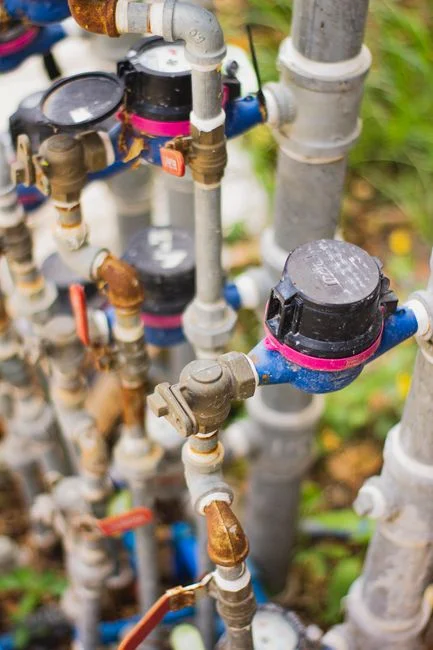
Mining wastewater carries a four-parameter signature that drives the design: high suspended solids, acidic pH, dissolved heavy metals and metalloids (iron, arsenic, manganese), and in some operations a brackish or elevated-TDS character (S4, EPA industrial wastewater characterization). The dominant source of acidity and dissolved metal loading is acid rock drainage (ARD) — the reaction of water and oxygen with sulfide minerals such as pyrite and pyrrhotite contained in mined or exposed rock (S4, SME Mining and Water Quality briefing).
Process-specific contaminants include mercury and cyanide from historic gold processing where legacy streams commingle with modern circuits, plus flotation reagents and leach solutions that add organic and dissolved-solids load (S4). A pre-specification survey should cover TSS, pH, total and dissolved metals, sulfate, TDS, and cyanide where applicable, sampled across haul-road, crushing, tailings-contact, and process streams so the train is matched to the actual hydraulic and contaminant envelope. For a filter-beds perspective on the polishing step, see this filter beds and multi-media filtration engineering guide.
Flow-management controls — leachate collection, run-on/run-off diversions, grout curtains for underground workings — should be sized alongside the wastewater plant to reduce hydraulic load on the train (S4). The Hemphill-area site typically sees small footprint, mixed metals, and intermittent slug loads from batch haul-truck wash and crusher start-ups; matching equalization to that pattern is the cheapest compliance insurance available.
The Four-Stage Treatment Train for 2026
The 2026 train for a Hemphill-area mine is built around four unit operations, each with a defined parameter target (S1).
Stage 1 — pH adjustment. Lime or caustic is dosed to precipitate dissolved Fe, Mn, As, and other heavy metals as hydroxides. A PLC-controlled chemical dosing skid tied to an in-line pH probe holds the setpoint at 8.5–9.0 for maximum metal hydroxide precipitation when arsenic and lead are present, then drops to 7.0–8.0 for discharge. An equalization basin provides 20–30 minutes of holding time to smooth feed variability before Stage 2 (S1).
Stage 2 — coagulation and flocculation. Coagulants — alum at 50–150 mg/L, ferric chloride at 30–100 mg/L, or polyaluminum chloride — neutralize colloidal charge, followed by anionic polyacrylamide flocculant at 1–5 mg/L to bridge destabilized particles into settleable flocs. A hydraulic residence time of 15–25 minutes in a flocculation basin with a low-shear paddle is the industry standard; target floc size is 0.5–3 mm (S1).
Stage 3 — clarification. A DAF system for TSS and O&G removal suits mine wash water when hydrocarbons are present (coal prep, truck wash, equipment washdown) — DAF typically reduces influent TSS of 1,000–5,000 mg/L to under 100 mg/L while removing 90%+ of oil and grease. A high-efficiency sedimentation tank (lamella clarifier) is more economical for high-TDS mineral slurries with low oil content. See the DAF vs clarifier decision in the next section for the selection binary.
Stage 4 — polishing ultrafiltration. A 0.03 µm PVDF ultrafiltration polishing system takes the clarifier overflow to < 1 NTU turbidity and < 5 mg/L TSS, which meets most POTW limits and is suitable for recycle. Design flux 50–80 L/m²·h, TMP < 1.0 bar; specify automatic backwash and CIP, and use ceramic SiC for hot, abrasive, high-TDS mining feeds (S1). A multi-media filter upstream of UF is often used to extend membrane life if clarifier overflow carries 50–100 mg/L of fines (S1).
Dissolved heavy metals — Fe, Mn, As, Pb, Zn — are primarily removed via pH 6.5–9.0, where 80–99% removal occurs as metal hydroxides co-precipitate with the coagulant (S1, HydropureWater field data 2026). Arsenic(III) requires oxidation to As(V) and an iron-arsenate co-precipitation step before UF to ensure effective removal; oxidize As(III)→As(V) with ClO₂ or H₂O₂ (S1). Oil and grease in coal-handling and metals-finishing streams is removed by DAF with whitewater micro-bubbles (20–80 µm) at 90%+ of influent O&G (S1).
| Pollutant class | Typical influent | Target effluent | Primary stage(s) | Key operating note |
|---|---|---|---|---|
| TSS / turbidity | 1,000–5,000 mg/L; 200–1,000 NTU | < 100 mg/L post-clarifier; < 1 NTU, < 5 mg/L post-UF | pH adjust + coag (Stage 1/2) → DAF or lamella (Stage 3) → UF (Stage 4) | Insert multi-media filter if clarifier overflow > 100 mg/L |
| Dissolved Fe / Mn | 5–200 mg/L Fe; 1–50 mg/L Mn | < 1–5 mg/L Fe; < 1 mg/L Mn | pH 8.5–9.0 + Fe co-precipitation + UF | Mn needs careful pH control; verify residence time |
| Arsenic (As(III)/As(V)) | 0.1–5 mg/L typical | ≤ 0.5 mg/L total As | Oxidize As(III)→As(V) with ClO₂ or H₂O₂, then pH adjust + Fe co-precipitation + UF | Skipping oxidation gives unreliable removal |
| Oil & grease | 50–500 mg/L (coal/metals-finishing) | ≤ 100 mg/L; 90%+ removal | DAF with whitewater micro-bubbles | Lamella is a poor fit for O&G-dominant streams |
| TDS / sulfate (reuse path) | 1,000–10,000 mg/L | Site-specific reuse target | RO downstream of UF; concentrate to ZLD or controlled evaporation | Do not specify RO without pilot |
DAF vs Lamella: Choosing the Right Clarifier for the Stream
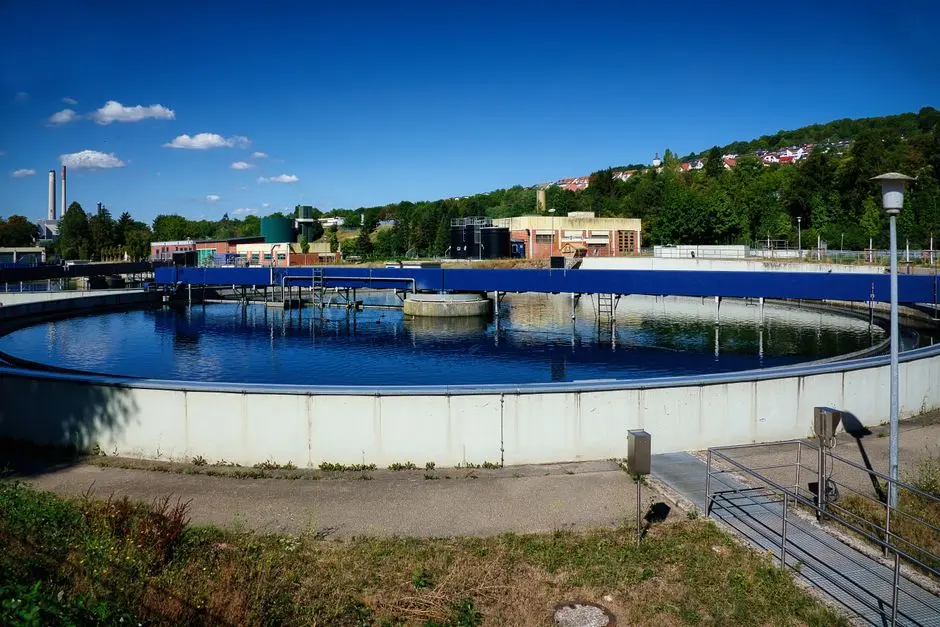
The Stage 3 decision is a binary keyed to the actual stream signature. Lamella clarifiers are generally preferred for high-density metal precipitates because their inclined plates provide large effective settling area in a compact footprint, removing heavy solids via gravity (S1 commentary). DAF is better suited for streams with high oil and grease content or light, low-density solids that do not settle readily, making it the standard for coal-handling and metals-finishing O&G removal (S1 commentary, S1).
DAF performance spec: TSS 1,000–5,000 mg/L → < 100 mg/L; O&G 90%+ removal; hydraulic loading 5–25 m³/m²·h (S1). Lamella surface loading: 20–40 m/h with up to 30% chemical consumption reduction versus conventional clarifiers (HydropureWater high-efficiency sedimentation tank spec, product page). For a deeper comparison of these two technologies, the DAF vs clarifier factory guide for mining wastewater walks through the same trade-off with a Cranks-area case.
If clarifier overflow exceeds 100 mg/L TSS, insert a multi-media filter ahead of UF to protect membrane life (S1). The decision rule is short: spec DAF when O&G is the controlling load, and lamella when the stream is a high-TDS mineral slurry with negligible hydrocarbon content. The table below condenses that rule into parameters an engineer can hand to procurement.
| Decision criterion | Choose DAF | Choose Lamella |
|---|---|---|
| Dominant load | Oil & grease; light floatables | Dense metal-hydroxide precipitates; high TSS |
| TSS removal target | 1,000–5,000 mg/L → < 100 mg/L | Gravity settling of dense floc |
| O&G removal | 90%+ via whitewater micro-bubbles (20–80 µm) | Not the design intent |
| Hydraulic / surface loading | 5–25 m³/m²·h | 20–40 m/h |
| Footprint pressure | Moderate; DAF cells are wider than lamella plates | Compact; inclined plates give high effective area |
| Upsstream-stage trigger | Insert multi-media filter if overflow > 100 mg/L | Insert multi-media filter if overflow > 100 mg/L |
| Stream examples | Coal-handling wash, truck/equipment wash, metals-finishing O&G | Mineral slurry with low hydrocarbon content, tailings-contact water |
Sludge Dewatering and Biosolids Surcharge Avoidance
Metal-laden sludge from pH adjustment, coagulation, DAF float, and UF backwash must be dewatered prior to disposal to maintain clarifier operational capacity (S1). A plate-and-frame filter press for metal-laden sludge is the industry standard for mining sludges, achieving 60–70% dry solids by weight, reducing cake volume, and recovering filtrate for plant recycling.
Sizing is based on dry-solids mass: total daily clarifier underflow TSS × flow, plus DAF float and UF backwash solids, matched to a press with 0.5–1.0 m³ chamber volume per 50–80 kg dry solids per cycle, with a 90–180 minute cycle time (S1). A plate-and-frame filter press with polypropylene plates and an automatic plate-shifter is the 2026 spec for mines producing over ~2 dry tonnes of sludge per day (S1). Filtration areas in the supplier range cover 1 m² packaged units to 500 m² full-scale presses with manual, hydraulic, or fully automatic PLC-controlled operation (HydropureWater plate and frame filter press product page).
Biosolids surcharge avoidance starts at the front of the train: if the metals that the POTW's biosolids program monitors (Fe, Mn, As, Pb, Zn) consistently meet local limits at end-of-pipe, surcharge exposure drops to routine waste-handling cost. If any one parameter drifts, the surcharge math flips fast.
Notice-of-Violation Recovery and Reuse Economics
Treated effluent post-UF is suitable for cooling loops, dust suppression, or ore washing. Recycling reduces freshwater demand, lowers discharge-hauling costs, and turns pretreatment from a regulatory cost into a water-security asset (S1, HydropureWater field data 2026). In water-stressed operations, recycling often recovers UF/RO capex within 18–36 months through freshwater cost avoidance (S1).
Adding a brackish-water RO system downstream of UF enables reuse in boiler feed, reagent make-up, or final rinse for metals recovery; concentrate must be managed via ZLD or controlled evaporation (S1). For a Hemphill-area site the recycling fraction typically targets 60–80% of clarified effluent, with the balance sent to sewer under permit (S4).
Recovery from a Notice of Violation starts with a continuous pH/ORP record, a recalibrated coag program, and a slug-control plan, then a reissued discharge authorization through the control authority (S5). Confirm three compliance artifacts before restart: verified local limits, maximum daily and instantaneous loadings, and slug-control or flow-equalization requirements added to the discharge authorization (S4). The parallel 2026 sewer discharge guide for a nearby mining region walks the same compliance recovery path for a comparable envelope.
Frequently Asked Questions
What federal categories and local limits actually control a Hemphill-area mine discharging to a POTW in 2026?
Categorical pretreatment standards sit at 40 CFR 430 (metal mining) and 40 CFR 434 (coal mining), with 40 CFR Part 403 local limits layered on top and enforced at end-of-pipe under 40 CFR 403.5(c) to prevent pass-through and interference (S1, S3). The 2026 envelope typically runs pH 6.0–10.0 (often 6.5–9.0), TSS ≤ 250–500 mg/L, total arsenic ≤ 0.5 mg/L, total iron and manganese ≤ 5–10 mg/L each, and O&G ≤ 100 mg/L — confirm against the local control authority before specifying equipment (S1).
What does arsenic(III) oxidation add to the four-stage train, and where does it sit?
Arsenic(III) must be oxidized to As(V) with ClO₂ or H₂O₂ before the pH-adjustment/co-precipitation step, then carried through iron-arsenate co-precipitation and the UF polish (S1). Skipping the oxidation step gives unreliable removal at pH 8.5–9.0, because As(III) does not co-precipitate with iron as efficiently as As(V) does.
How should an engineer size and budget a plate-and-frame press for metal-laden sludge?
Sizing starts with the dry-solids mass balance: clarifier underflow TSS × flow, plus DAF float and UF backwash solids, matched to a press with 0.5–1.0 m³ chamber volume per 50–80 kg dry solids per cycle and a 90–180 minute cycle time (S1). Budget proposals should be requested against the actual mass balance and target cake dryness, not against a generic flow rate — suppliers cannot quote a defensible price without the site's daily dry-solids loading and target cycle.
What supplier and delivery questions should a procurement manager raise before awarding the train?
Request a proposal tied to the influent testing and the permit's local limits, and require the supplier to confirm lead time for the dosing skid, clarifier, UF skids, and plate-and-frame press against the project's restart date. Ask for documentation of automatic backwash and CIP on the UF, plate-shifter automation on the press, and PLC integration scope, and verify that the arsenic(III) oxidation step is included as a discrete unit operation rather than folded into a general pH-adjustment line item. Suppliers should also identify the documentation deliverables — pH/ORP continuous logs, recalibration records, and slug-control plan — that close the audit gap most NOV cases share (S5).