Why Abidjan's Tech Build-out Changes the Wastewater Calculus in 2026
A live Tier III colocation site is already running inside the Village of Innovation and Technology (VITIB) industrial zone roughly 30 km from Abidjan city centre, which makes wastewater design a 2026 board-level question rather than a back-of-house utility call. Raxio Group inaugurated CIV1 on 24 September 2024 as a 2,000 m², Tier III Uptime-certified, carrier- and cloud-neutral facility, sized for up to 800 racks and 3 MW of IT power, served by six fibre providers, and selected to host the CIVIX internet exchange point (S3, 2024-09-24). Raxio states the design is "adapted to local environmental and climatic conditions" with renewable-energy feeds and PUE positioned as best-in-class for the African continent, signalling a deliberate water and cooling strategy rather than default air cooling (S3).
At the sector level, the Taskforce on Nature-related Financial Disclosures (TNFD, Feb 2026) frames both microchip fabrication and data centre operation as "very highly dependent on the ecosystem service of water supply," and states explicitly that "cooling systems account for most on-site operational water withdrawals" for data centres (S1, 2026-02-05). The same source notes that 45% of data centres globally sit in river basins at high risk of water availability disruption, and that the global semiconductor industry consumes on the order of 210 trillion litres of water per year (S1). For an Abidjan engineering team, the practical question is no longer whether to treat but which combination of equalisation, biological, membrane and ZLD polishing best fits Côte d'Ivoire's grid reliability, ambient temperature and discharge framework, and benchmarks against comparable Mumbai semiconductor and data-hall designs.
Two Effluent Profiles: Fab vs. Data Hall in an Abidian Climate
Sorting streams on day one is the cheapest decision a design team makes: putting a CMP slurry line into a high-rate biological tank costs months of rework. Fab process wastewater carries CMP slurry, fluoride, ammonia, plating chemicals from hydrofluoric-acid workflows, acidic and alkaline rinses, organic solvents and scrubber liquor; TNFD lists "chemical effluents from microchip manufacturing" among the principal impact drivers, alongside direct cooling-water withdrawal (S1, 2026-02-05). IDE Technologies similarly groups the difficult fab streams — CMP, ammonia waste, HFW plating and scrubber liquor — into a specialised treatment chain built around UF, PFRO and clarifiers, distinct from a standard end-of-pipe line (S4, 2024-12-04).
Data-hall wastewater is dominated by cooling-tower blowdown, evaporative-cooling drift-eliminator carry-over, humidification bleed, closed-loop glycol leakage and routine domestic effluent from staff areas (S1). TNFD's volume framing is the most useful number in any 2026 bid: a typical data centre uses 25 million to 770 million litres of water per year, hyperscale sites can exceed 2 billion litres, and a single fab uses around 14 billion litres of UPW per year with 1.4–1.6 units of municipal water consumed for every unit of UPW produced (S1, 2026-02-05). The same source notes that U.S. data centres consumed an estimated 66 billion litres in 2023, equivalent to the annual domestic consumption of a city the size of Santa Barbara (S1).
Abidjan's warm, humid coastal climate and dust load push cooling-tower cycles of concentration down versus temperate designs, raising blowdown volume per MW and elevating Legionella and biofilm control priorities. The qualitative inference is direct from TNFD's "cooling systems account for most on-site operational water withdrawals" framing combined with Raxio's stated climate-adapted design intent (S1, S3). Any 2026 Abidjan site that hosts both functions — for example a fab-adjacent colocation hall inside VITIB — must run segregated equalisation, then a shared biological, membrane and ZLD polish, not a single common sump feeding a DAF unit designed for one waste type.
The 2026 Treatment Train for Abidjan Semiconductor and Data-Hall Sites
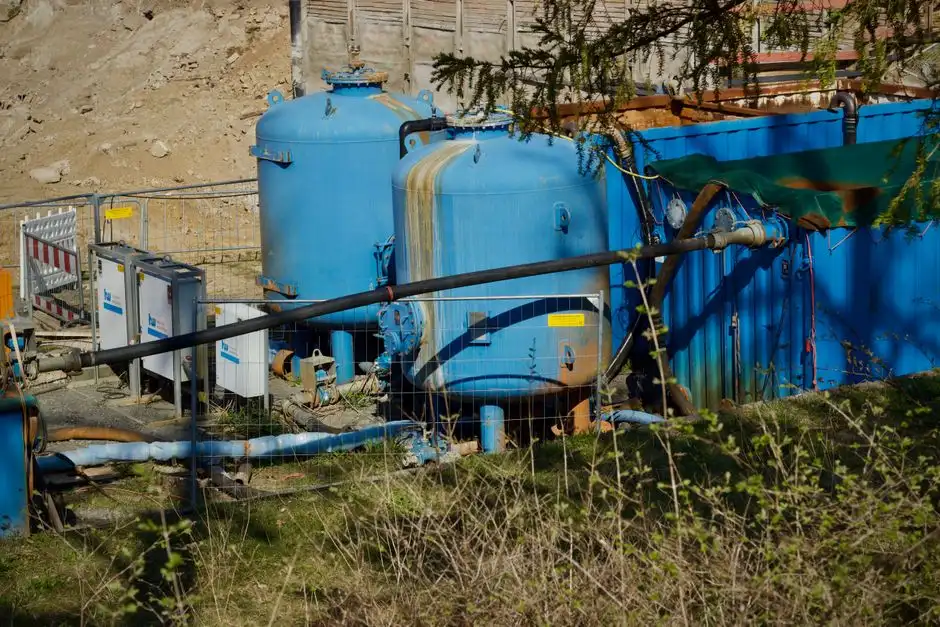
The defensible 2026 process train runs six stages in series, with segregated equalisation at the head. Each stage is tied to a specific stream and a clear reuse or discharge target so the engineer can spec or bid against it.
- Stream segregation and equalisation. Separate acid/alkaline, fluoride, ammonia, CMP and plating streams; balance pH, flow and temperature before any biological or membrane stage. This is the standard IDE-style front-end for fab mixed waste (S4).
- Coagulation, flocculation and DAF or lamella clarification. Removes suspended solids, metal precipitates and FOG from cooling-tower blowdown and blended fab waste; lamella designs operate at high surface loading and reduce chemical consumption.
- Fenton or AOP for refractory organics. Fenton, ozone or UV-based AOP addresses TMAH, solvents and other recalcitrant organics that biological steps cannot mineralise. Selection logic is covered in the AOP system design guide for 2026.
- MBR biological polishing. A submerged PVDF integrated MBR membrane bioreactor delivers near-reuse-quality effluent at < 1 µm and a much smaller footprint than conventional activated sludge — useful where VITIB or coastal plots are constrained.
- UF → two-pass RO for water reuse. UF protects the RO, the industrial RO system delivers permeate suitable for cooling make-up, scrubbers, landscape and toilet flush, and a smaller concentrate stream is routed forward.
- High-recovery PFRO / ZLD polish. An IDE MaxH2O-class PFRO or thermal ZLD polisher handles the RO concentrate to recover most of the remaining water and meet tight discharge or zero-discharge targets if aquifer protection or client ESG goals require it (S4, 2024-12-04).
Side streams are not optional. A plate-and-frame filter press dewaters chemical and biological sludge; an automatic chemical dosing system controls pH, coagulant and anti-scalant; a multi-media filter protects downstream membranes; and on-site chlorine dioxide or UV handles cooling-tower microbial control to manage Legionella risk in a humid coastal climate. The 2026 sizing logic is summarised below.
| Stage | Target stream | Function | Reuse or discharge point |
|---|---|---|---|
| Equalisation | All segregated streams | pH, flow, temperature balance | Feeds downstream biological and membrane stages |
| Coagulation / DAF / lamella | Cooling-tower blowdown; fab mixed waste | TSS, metals, FOG removal | Sludge to filter press; supernatant to AOP or MBR |
| Fenton / AOP | Refractory organics (TMAH, solvents) | Oxidation of non-biodegradable COD | Effluent to MBR |
| MBR | Pre-treated fab and data-hall waste | BOD/COD polishing to reuse quality | Permeate to UF → RO; biosolids to filter press |
| UF → two-pass RO | MBR permeate | Dissolved solids, silica, hardness removal | Permeate to cooling make-up or toilet flush; concentrate to PFRO/ZLD |
| PFRO / ZLD polish | RO concentrate | High-recovery reclaim; final polishing | Recovered water reused; brine solidified for disposal if zero discharge required |
The mass-balance framing matters as much as the unit operations. TNFD states that for every unit of UPW, 1.4–1.6 units of municipal water are consumed, so the design should be commissioned against a committed raw-water-to-discharge ratio, not only an effluent-quality line (S1, 2026-02-05). For a 2026 Abidjan bid, that ratio is the metric a board-level reviewer will read first.
Côte d'Ivoire-Specific Sizing, Compliance and Climate Overlay
Translating the generic train into something buildable in Abidjan starts with the cooling system. Because TNFD states that "cooling systems account for most on-site operational water withdrawals" for data centres, Abidjan's ambient conditions — high wet-bulb temperature, coastal humidity and seasonal dust — push the design toward aggressive cycles of concentration control, high-efficiency drift eliminators, side-stream filtration and a deliberate water-treatment chemistry program (S1, 2026-02-05; S3, 2024-09-24). A UV steriliser and a chlorine dioxide generator are the standard Legionella and biofilm control pairing in this climate.
Discharge routing has two paths, and the choice reshapes the train. If the site connects to SODECI's sewer network, the buyer must obtain SODECI's industrial-discharge acceptance criteria and pre-treatment thresholds before any biological or membrane stage is sized; if it discharges to the Ébrié lagoon system, the EU Urban Waste Water Treatment Directive (91/271/EEC) is the conventional international benchmark for BOD, COD, TSS and total nitrogen. In both cases, the ANDE environmental permitting envelope in Côte d'Ivoire should be confirmed early, since pre-treatment norms are tightened site by site. Materials of construction follow the climate: salt-laden coastal air and possible H₂S in humidifier drain lines require FRP or coated-steel tanks, 316L stainless for wetted membrane and dosing parts, and avoidance of standard carbon steel in headworks.
Power resilience is non-negotiable. Côte d'Ivoire's grid is improving but remains subject to disturbances, so the treatment plant needs dual-power architecture and on-site black-start so biological, membrane and disinfection stages do not crash and foul during an outage. Siting should follow CIV1's lead and stay inside or adjacent to the VITIB innovation cluster, where fibre, power and security are already engineered, rather than at a greenfield coastal site with limited effluent routing (S3, 2024-09-24).
Capital, Operating Cost and Lead Time — What to Ask Vendors in 2026
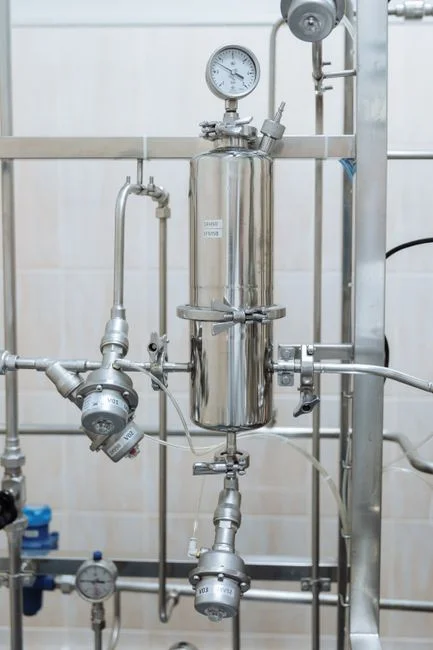
The cheapest way to compare bids on equal terms is to force vendors to quote per cubic-metre-per-day treated capacity separately for biological, membrane and ZLD polishing stages. That single line item exposes scope gaps between bidders who quietly bundle a thermal ZLD polisher into "RO" and bidders who price it as a discrete stage. Ask each bidder for a guaranteed power draw per cubic metre treated under Abidjan ambient conditions — high wet-bulb temperature is the dominant OPEX line and the most commonly undersized item in West-African bids, and TNFD's note that data centre electricity demand creates indirect dependence on water reinforces how tightly power and water costs couple on a 2026 site (S1, 2026-02-05; S5).
Lead-time questions must be specific. Confirm containerised MBR and skid RO delivery to Abidjan port plus on-site assembly windows, and check whether ZLD thermal polishing is feasible to import or must be regionally fabricated. A 24-month critical spares package — RO and UF membrane elements, MBR cassettes, dosing pumps, UV lamps, ClO₂ precursor — should be tied to Abidjan port clearance times and aligned with the broader water-treatment parts, valves and media catalogue so spares stay compatible across units. Finally, insist on a water-mass balance guarantee, not just an effluent-quality guarantee: for every unit of UPW, 1.4–1.6 units of municipal water are used (S1, 2026-02-05), so a credible 2026 design should commit in writing to a specific raw-water-to-discharge ratio and a UPW reclaim percentage the operator can verify monthly.
On ROI, the comparison is straightforward: a containerised MBR → two-pass RO → PFRO polish train, sized to reclaim a defined fraction of UPW and cooling-tower blowdown, eliminates most raw-water trucking and the SODECI effluent surcharges that come with high-strength discharge. Compared with the baseline of municipal water in plus liquid waste out, the reclaim train's per-cubic-metre operating cost falls once power draw is controlled and ZLD is reserved for the concentrate rather than the full flow — a point the 2026 manufacturing water-reduction guide develops in detail. The honest framing is that no CAPEX number can be quoted without the site's flow-and-load audit, and any vendor that publishes a single "cost per m³" without that audit is selling a marketing line, not an engineering answer.
Frequently Asked Questions
What does a 2026 treatment train for an Abidjan semiconductor or data-hall site actually look like?
It runs segregated equalisation, DAF or lamella clarification, Fenton or AOP where refractory organics are present, an integrated MBR, UF plus two-pass RO, and a high-recovery PFRO or ZLD polisher on the concentrate, with a plate-and-frame filter press and chemical dosing on the side streams (S4, 2024-12-04; S1, 2026-02-05). The fab and data-hall lines share the downstream biological, membrane and ZLD polish but must not share a common head-of-works sump.
How much should a buyer budget for a semiconductor or data-hall wastewater plant in Côte d'Ivoire?
No defensible single number is published in the supplied research, and the inputs that drive CAPEX and OPEX — segregated stream flows, UPW ratio, cycles of concentration, ZLD versus high-recovery RO, and ambient wet-bulb — vary too widely between a CIV1-class colocation hall and a wafer-processing fab to quote. The right buyer action is to request an EPCC bid that prices biological, membrane and ZLD stages separately per m³/day treated, and to require a guaranteed power draw per m³ under Abidjan ambient conditions before comparing offers.
How do I choose a wastewater equipment supplier for a West African Tier III or fab site?
Shortlist vendors who can deliver containerised MBR and skid RO to Abidjan port, commit to a 24-month critical spares package aligned with local clearance times, and provide a written water-mass balance guarantee covering the raw-water-to-discharge ratio (S1, 2026-02-05; S3, 2024-09-24). Verify that the supplier has prior tropical-coastal references, can specify FRP or 316L wetted parts as default, and supports dual-power and on-site black-start architecture so biological and membrane stages survive grid disturbances.
Are there Côte d'Ivoire-specific compliance risks I should flag before committing to a design?
Yes. The two practical risks are discharge-route permitting and ANDE pre-treatment acceptance, both of which must be confirmed before any biological or membrane stage is locked in. If the site discharges to SODECI's sewer, request the industrial-discharge acceptance criteria and pre-treatment thresholds in writing; if it routes to the Ébrié lagoon system, benchmark BOD, COD, TSS and total nitrogen against the EU Urban Waste Water Treatment Directive (91/271/EEC) and verify with the local authority that no site-specific tightening applies. Comparable compliance framing for other Indian coastal hubs is laid out in the Kolkata semiconductor and data-hall wastewater guide.