What an Effluent Treatment Plant in Kochi Actually Has to Do
An effluent treatment plant in Kochi is a physical-chemical-biological system designed to bring industrial wastewater from Kochi's manufacturing, seafood, chemical and hospital sectors into compliance with Kerala State Pollution Control Board discharge consent conditions before release or reuse. Local EPCs such as GME — a Kerala State Suchitwa Mission-approved consultant running the SWAT Centre of Excellence in Kochi — most commonly deploy MBBR-based turnkey trains. Academic research confirms membrane polishing (nanofiltration) and constructed wetlands as documented downstream options to tighten effluent to agricultural or potable-reuse quality. The right ETP for a Kochi plant is therefore not a generic package but a process train matched to your influent type, consent limits and reuse target.
ETPs are not built to produce "clean water" in the abstract; they exist to reduce toxicity and contaminant load so the discharge meets the consent conditions in the plant's KSPCB order, and so any reuse stream meets the in-house specification for gardening, cooling or boiler make-up. S3 frames ETPs exactly this way: as systems that treat effluents to reduce toxicity and contaminants before discharge or reuse, mandatory for Kochi's industrial base because contamination from untreated effluent harms local ecosystems and public health.
The dominant Kochi influent streams the ETP will see are seafood and fish-processing (high FOG and protein load), coconut and food processing (high BOD with seasonal surges), chemical and pharmaceutical (toxic and recalcitrant fractions), hospital effluent (pathogen load plus pharmaceuticals), and mixed industrial flow feeding a common effluent treatment plant. The compliance anchor is the KSPCB consent order issued for the specific unit, not a generic BOD/COD figure: the supplied research contains no published numeric KSPCB limits, and the buyer must pull those values from the consent order or a consent application pre-meeting with the board.
Reuse runs as a parallel objective. A polishing stage choice changes the moment the treated stream is destined for cooling-tower make-up or boiler feed rather than garden irrigation, and the EPC must be told the reuse target at the sizing stage, not after commissioning.
Process Trains Used in Kochi: From Screening to MBBR to Membrane Polishing
The canonical Kerala ETP train runs screening → equalisation → primary clarification or DAF → biological treatment (most commonly MBBR) → secondary clarification → tertiary polishing → disinfection → sludge handling. S2 confirms that GME provides turnkey execution for ETP using MBBR technology across design, supply, erection and commissioning, and that the same firm runs the SWAT Centre of Excellence in Kochi under KASE for training and pilot work. S3 lists the same broad sequence: physical, chemical and biological treatment methods, with the explicit goal of meeting environmental standards.
MBBR dominates locally because it tolerates load variation better than conventional activated sludge, operates at higher MLSS, and is offered as a packaged turnkey product by Kerala EPCs. Where footprint is the binding constraint, the MBR configuration replaces the secondary clarifier with an ultrafiltration membrane cassette, producing near-reuse-quality effluent in a smaller footprint; a compact MBR membrane bioreactor for space-constrained Kochi sites is the typical upgrade path when land is the limiting variable. For primary solids and FOG removal ahead of the biological stage, a dissolved air flotation system for primary solids and FOG removal is the standard choice for seafood and food processors.
Downstream of the biological stage, the academic record documents two polishing routes. S1 — a University of Twente PhD thesis by Schrader — finds that direct nanofiltration is a suitable technology to polish WWTP effluent to EU Water Framework Directive standards and consequently produce an effluent quality suitable for agricultural or (in)direct potable usage. S4 — a Wageningen University PhD thesis by Lei — examines removal of micropollutants from WWTP effluent by constructed wetlands, documenting the option as a low-energy downstream polishing step relevant to land-rich Kochi sites where a hectare of free land is available. A fifth reference, an algae-based treatment study at Cochin University of Science and Technology, is best treated as an emerging R&D direction rather than a proven commercial train, because the source content was not retrievable in this research.
| Stage | Typical Equipment | Function | Kochi Use Case |
|---|---|---|---|
| Headworks | Bar screen, grit removal | Solids and grit separation | All plants |
| Equalisation | EQ tank with aeration | Flow and load buffering | All plants, sized for monsoon peaks |
| Primary / FOG | DAF or clarifier | Suspended solids, oil and grease | Seafood, food, coconut processing |
| Biological | MBBR or MBR | Dissolved organics, ammonia | All plants (MBBR standard, MBR when reuse is the target) |
| Polishing | UF, RO, nanofiltration | Tighten to reuse or consent limit | Cooling, boiler, potable reuse |
| Disinfection | Chlorine dioxide, UV, ozone | Pathogen kill | Hospital, food, reuse |
| Sludge | Thickener, filter press | Volume reduction for disposal | All plants |
Matching the Process Train to Your Influent Type
The shortest path to a defensible shortlist is to start with the influent, not the equipment. The table below maps the four common Kochi influent profiles to a baseline train; the exact stage sizing is a function of consent limits and reuse target, not a catalogue choice.
| Influent Type | Pre-treatment | Biological | Polishing | Disinfection |
|---|---|---|---|---|
| Seafood / fish processing | Screening, DAF for FOG and blood | MBBR | Tertiary sand / carbon filter | Chlorine dioxide if reuse |
| Chemical / pharmaceutical | EQ with pH and flow buffering, equalisation of toxic batches | MBBR or MBR | Advanced oxidation (Fenton, ozone, UV/H₂O₂) before biological, then tertiary | UV or ozone before discharge |
| Hospital / clinical | Pathogen-reduction pre-treatment, EQ | MBR | Dedicated disinfection stage sized to microbial consent | On-site chlorine dioxide generation for ETP disinfection, or UV disinfection for pathogen log-reduction |
| Mixed industrial to a CETP | Pre-treatment to agreed CETP inlet quality only | CETP responsibility | CETP responsibility | CETP responsibility |
| Any, with reuse target | As above | As above | UF + RO polishing train | ClO₂ on RO permeate |
For high-strength organic streams (seafood, food, distillery), the load sits in FOG and suspended solids first, then in dissolved organics; DAF or a primary clarifier in front of an MBBR is the standard sequence and aligns with the MBBR turnkey approach documented in S2. Chemical and pharmaceutical streams with toxic or recalcitrant fractions need flow and pH buffering in equalisation, biological treatment, and an advanced oxidation step selected using a documented AOP framework; the engineering selection logic is set out in the AOP system design guide 2026. Hospital effluent adds a pathogen-reduction obligation that drives the train toward MBR plus a dedicated disinfection stage. Where the treated stream is to be reused for cooling or boiler make-up, add a dedicated UF and RO polishing step rather than rely on the tertiary filter alone.
Sizing and Footprint: What to Ask Your EPC Before You Sign
Sizing starts with inputs the buyer must supply, not with a vendor's standard model number. Those inputs are: design flow in m3/day, peak factor for Kochi monsoon hydraulic surges, influent BOD/COD/TSS/ammonia, pH range, temperature, and hours of operation per day. The outputs to demand back from the EPC are hydraulic retention time per stage, footprint in m2, and total connected load in kW — with the explicit understanding that the supplied research contains no published kW-per-m3 benchmark, so these values must come from the EPC's reference plants, not a generic catalogue.
To anchor the conversation at the primary-solids-removal stage, the HydropureWater DAF catalogue covers 4–300 m3/h across 13 standard models, which sets the order-of-magnitude envelope a buyer should expect when matching DAF capacity to peak shift flow. At the biological stage, the WSZ underground MBR package plant covers 10–2,000 m3/day and 1–80 m3/h, a useful sanity check when the EPC quotes a packaged biological reactor. For headworks protection of the downstream membranes, a rotary mechanical bar screen for ETP headworks sized to peak flow is the standard first stage, and a PLC-controlled chemical dosing for ETP coagulation and pH correction is the standard coagulant feed ahead of DAF or tertiary filtration. The dewatering stage should be priced against a plate and frame filter press for ETP sludge dewatering sized to the dry-solids mass balance, with the standard envelope running 1–500 m2 of filtration area.
| Stage | Sizing Input from Buyer | Output to Demand from EPC | Reference Envelope |
|---|---|---|---|
| Headworks | Peak flow, screen aperture | Screen width, channel velocity | Per rotary bar screen selection |
| Equalisation | Avg and peak flow, retention target | EQ volume, HRT, aeration kW | EQ volume ≈ 6–12 h of avg flow (to be confirmed with EPC) |
| DAF / primary | Flow, FOG, TSS | DAF surface area, recycle ratio | 4–300 m3/h, 13 standard models |
| Biological | Flow, BOD load, ammonia | HRT, media fill, MLSS, kW | MBBR or MBR; MBR 10–2,000 m3/day |
| Polishing | Reuse target | Membrane area, recovery, CIP plan | UF and RO per flux and recovery |
| Sludge dewatering | Dry solids kg/day | Filter area, cycle time, cake dryness | Plate and frame 1–500 m2 |
Two items the EPC must produce in writing: a sludge mass balance across the train, and a sludge dewatering plan that ties the cake output to disposal route. Both are standard expectations; the absence of either in an RFQ response is a flag.
Choosing a Kochi ETP Supplier: A Weighted Scorecard
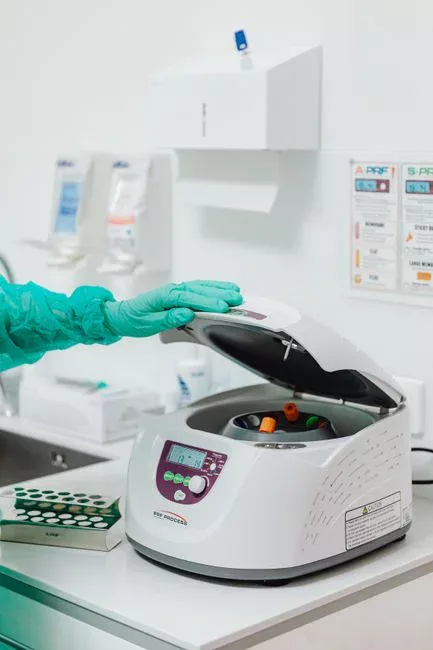
A weighted scorecard converts marketing claims into comparable numbers. The factors that should carry the most weight in Kochi are local-presence items the top SERP pages list but do not score: Kerala State Suchitwa Mission approval status (a documented compliance credential in S2 for GME), in-state commissioning crew, proximity to operating reference plants in Ernakulam district, and access to a local training centre such as the SWAT Centre of Excellence run by GME under KASE in Kochi (S2).
Engineering depth comes next. A credible EPC shows reference plant operating data — flow, influent versus effluent quality, downtime hours per quarter — rather than glossy case studies. After-sales is the third block: response time for breakdown within Kerala, spare-parts stocking of membranes and dosing pumps, and whether the EPC carries its own service team or subcontracts to a third party. Consent handling is the fourth: confirm in writing that the EPC manages the KSPCB consent application and the post-commissioning performance guarantee test, because this is where many Kochi projects lose months. The fifth item is single-point accountability — if the turnkey EPC buys in MBR modules and DAF units from separate makers, the buyer's warranty path splits across vendors, so the EPC must take ownership of the process design and the performance guarantee regardless of equipment origin.
A 100-point weight that reflects Kochi realities: 20 points for Suchitwa Mission approval and KSPCB consent handling, 20 for local commissioning and service crew, 15 for reference plant operating data in Ernakulam district, 15 for process design ownership and performance guarantee, 15 for spare-parts stocking and membrane replacement lead time, 10 for training and pilot support, 5 for documentation quality. Anything below 60 should be flagged for site visits before shortlisting.
Cost Drivers, Lead Times and Commissioning Risks in Kerala
The supplied research does not contain numeric Kochi cost figures, so the budget conversation is a checklist of cost drivers the buyer must price with the EPC rather than a quotation. The drivers that matter are influent strength (BOD/COD/TSS at the inlet, not after screening), peak flow versus average flow (monsoon surge factor), effluent target (KSPCB discharge only versus reuse), automation level (manual versus PLC with remote telemetry), and material of construction (FRP versus SS304 versus SS316, with SS316 the conservative choice for saline Kochi conditions).
Lead-time drivers common to Kochi projects: civil works in high-water-table coastal soil (dewatering and piling), the monsoon construction window (June to September), KSPCB consent timing, and imported component lead times for RO membranes and control panels. The reuse-side economics depend on the trade between polishing capex (UF/RO with an industrial UF as RO pretreatment for reuse polishing and an industrial RO polishing for treated effluent reuse) and opex savings on fresh water plus KSPCB consent fees over the project life — a qualitative model the buyer must build with the EPC, not a number to copy from a brochure.
Commissioning risks to plan for: seed sludge sourcing for biological trains (do not assume municipal STP surplus is available in Kochi year-round), MBR membrane acclimatisation (allow two to four weeks of stable operation before the performance guarantee test), Kerala State Electrical Inspectorate approval for the HT works, and a trial-run consent that is often stricter than the final consent. Build these into the project schedule, not the exception list.
Frequently Asked Questions
What is the typical process train for an ETP in Kochi?
Screening, equalisation, DAF or primary clarification, MBBR or MBR, tertiary filtration, disinfection, and sludge dewatering, with a UF/RO polishing train added if cooling, boiler or potable reuse is the target. S2 and S3 both describe this canonical sequence, and S2 confirms that MBBR-based turnkey execution is the local default.
How should a Kochi buyer choose an ETP supplier?
Score each EPC on Kerala State Suchitwa Mission approval status, local commissioning presence, reference plant operating data, KSPCB consent handling capability, and single-point warranty ownership. The buyer must request the EPC's KSPCB consent-application track record and at least two operating reference plants in Ernakulam district before shortlisting, because marketing claims without those documents are not comparable.
What budget and lead time should a Kochi ETP buyer plan for?
No Kochi-specific cost figure is present in the supplied research, so the buyer must obtain a line-item quote covering influent strength, peak flow, effluent target, automation, and material of construction, and must request a separate monsoon-adjusted schedule from the EPC. Inputs to demand are: civil works in high-water-table soil, monsoon construction window, KSPCB consent timing, and imported component lead time for RO membranes and control panels.
What is the compliance risk of operating without an ETP in Kerala?
The compliance target is the KSPCB consent order, which is plant-specific; the supplied research contains no specific penalty figures. The buyer must obtain the consent conditions and the KSPCB enforcement record for the relevant industry category from the board before sizing the risk, because the ETP scope is a direct function of those conditions, not of a generic standard. Reuse is realistic where the polishing train is sized for it, consistent with the academic evidence in S1 that nanofiltration can polish WWTP effluent to a quality suitable for agricultural or potable reuse.