Why Athens process wastewater is a 2026 design problem, not a 2024 retrofit
Athens semiconductor R&D, back-end test/assembly and hyperscale data-hall sites handle 2026 process wastewater under a three-layer regime: the EU Industrial Emissions Directive 2010/75/EU via the semiconductor BREF (2014/699/EU, conclusions updated in the 2024/2026 revision), the Greek transposition of the Urban Waste Water Treatment Directive administered through EYDAP S.A., and an EYDAP indirect-discharger permit that sets site-specific substance limits. Three hyperscalers are already building data centres in Greece, putting cooling-tower blowdown and humidifier bleed at the centre of the liquid budget. A 2026 Athens train equalises flow, runs lamella clarification and multimedia filtration ahead of PVDF ultrafiltration and reverse osmosis for cooling-tower blowdown and UPW-reject reuse, with a separate neutralisation/DAF/precipitation branch for scrubber quench, and targets 65–80% site recycling as a realistic upper bound for the Attica mix.
Deferring the project past 2026 is now a permit risk rather than a capex choice, because the Greek transposition of the UWWTD is being pushed into operational practice by EYDAP through projects in East Attica for treated wastewater suitable for unlimited irrigation and urban reuse, with aquifer-recharge schemes planned in other agglomerations (Sustainability, 2026). An Athens indirect discharger submitting a discharge notification today is being benchmarked against reuse-class effluent, not just sewer-compliant effluent, and the German AbwV-style city permit that Munich operators are used to does not exist in the Greek toolkit.
Three hyperscalers are already constructing large data centres in Greece, and the Attica basin is the primary landing zone, which puts cooling-tower blowdown and adiabatic humidifier bleed at the centre of the liquid budget rather than front-end fab chemistry (Sustainability, 2026). Globally the semiconductor industry consumes around 210 trillion litres of water per year, and a single fab uses 20–38 million litres per day (HydropureWater Munich 2026 engineering guide, citing Robeco 2026; iScience/SemiDigest, Sept 2025). Even an Athens back-end, R&D, or data-hall mix inherits a meaningful hydraulic load, and a 2026 capex plan that omits any one of the three compliance layers will fail permitting or sewer acceptance.
Inventory the six Athens-typical streams before sizing anything
You cannot size an Attica treatment train until you have inventoried the site streams against a fixed vocabulary. The same six flows that anchor a Munich- or Hamburg-style audit apply here, but the mass balance is weighted toward cooling and humidification because Athens back-end sites co-locate with hyperscale data halls and the Attica tariff structure rewards blowdown reuse. UPW reject (fluoride, silica, traces of boron) and cooling-tower blowdown (phosphate from scale/corrosion programmes, zinc, microbiocide residuals) together represent roughly 30–50% of liquid waste at a back-end-heavy site. Scrubber quench is episodic at 5–15 m³/day at packaging sites, driving equalisation design rather than continuous-treatment design. CMP effluent appears at lower volumes than in a front-end foundry but still carries suspended solids of silica, ceria or alumina slurries plus trace copper. Back-end rinse/assembly streams add dilute COD and trace metals, and a sanitary component (BOD, COD, nitrogen, phosphorus from washrooms, kitchens and cafeterias) closes the envelope before the EYDAP sewer connection (HydropureWater Munich 2026 engineering guide).
Two scale anchors set the daily flow envelope. Data-centre cooling-tower blowdown typically sits at 4–8% of the recirculation rate, and per cubic metre of UPW produced, 1.4–1.6 m³ of municipal feed is required (HydropureWater Munich 2026 engineering guide, citing TNFD, Feb 2026; IDE Technologies 2024). Carried into the 2026 Athens line, every 1 m³ of UPW reclaimed avoids drawing 1.4–1.6 m³ from the Attica-sourced EYDAP network, which is the figure the CFO will recognise.
The 2026 watch-list item for older Athens sites is PFAS. Legacy from photoresist, etch and aqueous film-forming foam (AFFF) sources is now under the draft EU PFAS restriction, with PFOA/PFOS family values trending toward <0.1 µg/L, and the 2024/2026 IED BREF revision is adding micro-pollutant and PFAS indicators to the watch list (HydropureWater Munich 2026 engineering guide). Site audits must check basement fire-system foams and older etch chemistries specifically, because Greek-transposition enforcement is moving faster than headline permits suggest.
| Stream | Typical Athens volume | Key contaminants | Reuse or discharge route |
|---|---|---|---|
| UPW reject | 30–50% of liquid waste (back-end heavy) | Fluoride, silica, trace boron | RO + EDI reclaim; fluoride polishing on bleed |
| Cooling-tower blowdown | 4–8% of recirculation | Phosphate, zinc, silica, biocides | Side-stream softening + RO for ≥80% reuse |
| Scrubber quench | Episodic, 5–15 m³/day at packaging sites | Acidic pH, HF/HNO₃ traces, metals | Neutralisation + DAF + metals precipitation |
| CMP effluent (where present) | Slug-load, batched | Silica/ceria/alumina slurry, trace Cu | Lamella clarifier + multimedia filter before RO feed |
| Back-end rinse/assembly | Continuous, dilute | COD, trace metals | RO polish, UV or ClO₂ for reuse loop |
| Sanitary | Per-occupancy | BOD, COD, N, P | Conventional biological pre-treatment before sewer |
Equalisation first, then the main process train
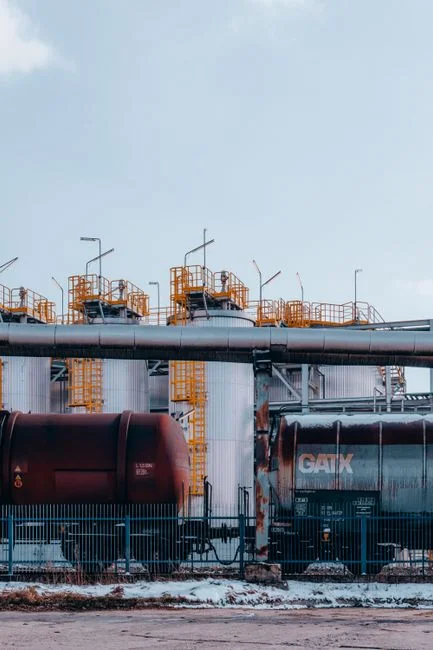
Equalisation comes first without exception on an Athens site. A lined balance tank with PLC-controlled pH adjustment, ORP monitoring and flow-paced coagulant dosing stabilises the slug-load from CMP batches and scrubber dumps so downstream units see a steady influent, typically 30–60 minutes of hydraulic retention at peak shift flows. From there the main line branches into a treatment train that has to be sized for Attica feed water, not Isar feed water — the inlet temperature, alkalinity profile and microbial loading across an Attica summer shift the cooling-tower recycle chemistry in ways a Munich baseline will not capture.
On the main process line, a lamella clarifier operating at 20–40 m/h hydraulic surface loading rate removes the bulk of suspended solids, followed by a multimedia filter (sand + anthracite + garnet, typically 0.8–1.2 m bed depth) polishing to a Silt Density Index below 5 ahead of any membrane. The membrane core is then a 0.03 µm PVDF ultrafiltration system as RO pretreatment, followed by an industrial RO skid sized at 75–85% recovery for UPW-reject and blowdown, with an EDI polishing stack of the RO permeate for higher-purity reuse loops (cooling-tower make-up, scrubber pre-wash, lower-grade rinse) delivering resistivity >15 MΩ·cm and silica <5 ppb (HydropureWater Munich 2026 engineering guide).
Activated carbon plus selective ion exchange handles residual fluoride and trace heavy metals, and a chlorine dioxide generator or UV provides microbial control in the recycled cooling loop without producing trihalomethanes — which matters for a closed loop that Athens sites will run hot through the Attica summer. Coagulant and antiscalant feed is handled by an automatic chemical dosing skid sized to the equalised flow, not the peak instantaneous flow, so that pH correction and floc formation are stable across shift boundaries. The Greek transposition of the IED BREF does not soften the BAT-AELs; it leans on them, and the 2024/2026 revision is explicitly tightening fluoride, total nitrogen and COD envelopes (HydropureWater Munich 2026 engineering guide).
| Stage | Design parameter | Function |
|---|---|---|
| Equalisation | 30–60 min HRT, PLC pH/ORP | Slug-load smoothing from CMP / scrubber |
| Lamella clarifier | 20–40 m/h surface loading; TSS removal ≥80% | Bulk TSS cut before media filter |
| Multimedia filter | Sand + anthracite + garnet; SDI <5 to RO | Solids polishing to membrane spec |
| PVDF ultrafiltration | 0.03 µm pore size | RO pre-treatment, SDI guard |
| Reverse osmosis | 75–85% recovery; conductivity <50 µS/cm permeate | Bulk demin for UPW-reclaim + blowdown reuse |
| EDI polishing | Resistivity >15 MΩ·cm; silica <5 ppb | Higher-purity reuse loops |
| Activated carbon + ion exchange | Fluoride and trace metals polishing | Permit-limit guard |
| Chlorine dioxide / UV | Microbial control without THMs | Recycled cooling-tower loop |
The scrubber-quench and sanitary branches are not optional
Routing acidic, metal-bearing scrubber quench through the RO skid is the single most common Athens design failure: it wrecks membranes and breaches the EYDAP permit. The scrubber-quench branch is treated on its own line — neutralisation in a FRP/dual-laminate tank, a DAF unit for the scrubber-quench branch to lift entrained FOG and floated solids, then hydroxide precipitation of dissolved metals (Fe, Cu, Ni, Zn) at pH 8.5–10.5 depending on the metal. The DAF subnatant rejoins the main equalisation tank for RO recovery; the float and clarifier underflow route to a plate-and-frame filter press targeting cake dryness ≥35% DS for offsite disposal, which keeps sludge-haul cost predictable for an Athens site that has to truck waste to a licensed facility (HydropureWater Munich 2026 engineering guide).
The sanitary component (BOD, COD, nitrogen and phosphorus from washrooms, kitchens and cafeterias) needs conventional biological pre-treatment before the EYDAP sewer, because the mixed sewer expects biodegradable loading within municipal envelopes and will not accept raw food-service discharge. For an Athens back-end site, plan for 20–30% headroom under the BAT-AEL rather than a tight compliance line, because the 2024/2026 IED BREF revision is explicitly tightening fluoride, total nitrogen and COD envelopes and is adding micro-pollutant and PFAS indicators to the watch list — a train that meets today's number with no headroom will breach the same permit within 24 months. The Munich 2024/2026 headroom guidance applies equally in Athens, and there is no Greek-specific relaxation in the data to lean on.
Sewer, reuse or third-party pre-treatment: the Athens-2026 decision
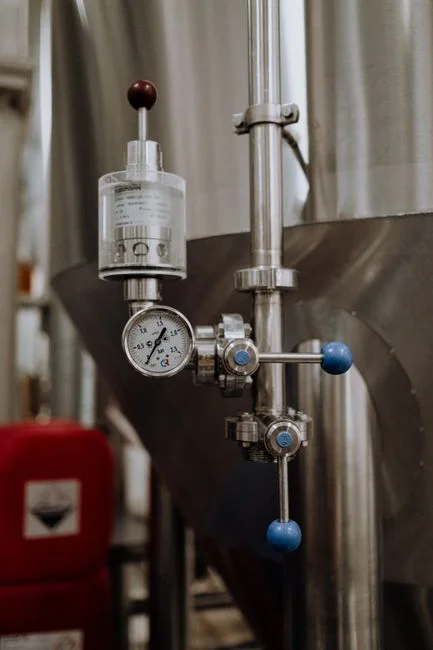
Three practical routes exist for an Athens 2026 design, and the decision should be made at the stream level, not site-wide. Route A is discharge to EYDAP's mixed sewer under an indirect-discharger registration: the operator submits a discharge notification covering stream inventories, treatment train and expected substance loads; EYDAP issues a permit with site-specific limits, typically stricter than the UWWTD floor for fluoride, zinc and phosphate, and approval runs in parallel with — but separate from — the EU IED pathway and any building permit from the Attica regional authority (Sustainability, 2026).
Route B is on-site reuse in a closed loop. Cooling-tower blowdown can be reused at 80–90% after side-stream softening with an industrial water softener ahead of the RO, and UPW reject can be reused at 60–75% in lower-grade loops (cooling-tower make-up, scrubber pre-wash, floor and CIP rinses). Total site 65–80% recycling is the realistic Athens envelope, with data-hall tenants pushing the number higher because their cooling loop dominates the hydraulic balance. Microbial control in the recycled loop is best handled with a UV steriliser where chlorine residual is undesirable, or with chlorine dioxide where biofilm control is the binding concern (HydropureWater Munich 2026 engineering guide).
Route C is third-party pre-treatment or off-site concentration for hazardous concentrates. That is the realistic answer for PFAS-laden legacy streams and for the brine envelope that appears above 85% site recovery, where brine management and the energy cost of high-recovery RO/EDR become the binding constraint, not influent quality. Globally, best-in-class fabs target >70% water recycling, and TSMC's Arizona reclamation plant is engineered for 90% recovery on a 15-acre site (HydropureWater Munich 2026 engineering guide, citing Robeco 2026; DCD, Sept 2025). The Athens headline number should be set stream by stream and then summed, because the Attica feed water, tariff structure and discharge rules differ from Phoenix's.
| Decision criterion | Route A: EYDAP sewer | Route B: on-site reuse | Route C: off-site / third party |
|---|---|---|---|
| Best for | Dilute streams, sanitary component | UPW reject, cooling-tower blowdown | PFAS legacy, high-recovery brine |
| Capex intensity | Low to moderate | Moderate to high | Low on-site, high off-site hauler fee |
| Permit risk | EYDAP site-specific limits; UWWTD floor | Internal reuse; limited EYDAP exposure | Waste-shipment compliance |
| 2026 Athens consideration | EYDAP reuse-class push is changing the floor | 65–80% site recycling is the realistic envelope | Cost rises sharply above 85% site recovery |
2026 capex and permit sequencing for an Athens project
The Athens schedule risk is parallel-track slippage, not serial delay, because the EYDAP approval runs in parallel with — but separate from — the EU IED permit pathway and any building permit from the Attica regional authority. A defensible sequence is: (1) site stream audit and 12-month composite sampling for fluoride, zinc, phosphate, total nitrogen, COD and PFAS indicators; (2) EYDAP indirect-discharger pre-engagement to align on substance limits; (3) IED permit pathway review against the 2024/2026 BREF revision; (4) front-end engineering with headroom under the BAT-AEL rather than at the compliance line; (5) equipment procurement using RO and UF membrane elements and matched valves, instruments and media, then commissioning and a parallel sewer acceptance test (HydropureWater Munich 2026 engineering guide).
For sizing, ask vendors for guaranteed flow at the 75–85% RO recovery band, not nominal flow, because the binding constraint above 85% site recovery is brine handling and energy, not influent quality. Plan the train for 80% and treat anything above as a brine problem, not a treatment problem. The cost of avoided discharge under EYDAP tariffs is non-trivial at Athens-scale flows because every 1 m³ of UPW reclaimed avoids drawing 1.4–1.6 m³ from the municipal network (HydropureWater Munich 2026 engineering guide, citing TNFD, Feb 2026), and that avoided-m³ line should be carried in the vendor comparison rather than buried in OPEX.
| Sequence step | Deliverable | 2026 Athens dependency |
|---|---|---|
| 1. Stream audit + 12-month composite sampling | Quantified stream inventory; PFAS screen | Required before EYDAP notification |
| 2. EYDAP pre-engagement | Site-specific substance-limit alignment | Parallel with IED pathway |
| 3. IED permit pathway review | BAT-AEL headroom check vs 2024/2026 revision | Independent of EYDAP timeline |
| 4. Front-end engineering | 20–30% headroom under BAT-AEL | Locked before procurement |
| 5. Procurement, commissioning, sewer acceptance test | Operating train with permit in hand | Closes 2026 compliance loop |
Frequently Asked Questions
How long does EYDAP indirect-discharger approval take in 2026, and can it run in parallel with the EU IED pathway?
The Athens schedule risk is parallel-track slippage, not serial delay. EYDAP's indirect-discharger approval runs in parallel with — but separate from — the EU IED permit pathway and any building permit from the Attica regional authority (HydropureWater Munich 2026 engineering guide; Sustainability, 2026). The actionable buyer check is to submit the EYDAP discharge notification at the same time as the IED pre-engagement, and to request a written lead-time estimate from EYDAP for site-specific limit setting rather than relying on verbal guidance.
What is the realistic capex split between RO/UF, DAF and sludge-handling skids for an Athens back-end or data-hall site?
No single Athens-specific capex split is available in the research data. The actionable check is to ask vendors for a line-item split between the RO/UF membrane core, the DAF unit for the scrubber-quench branch, and the plate-and-frame filter press for sludge dewatering, sized against the 12-month composite sample rather than a textbook influent. The brine envelope above 85% site recovery is where cost rises non-linearly, so ask for the boundary explicitly rather than as a hidden line item (HydropureWater Munich 2026 engineering guide).
How is the EYDAP indirect-discharger limit set against the 2024/2026 IED BREF revision?
EYDAP issues a site-specific permit that is typically stricter than the UWWTD floor for fluoride, zinc and phosphate, and the 2024/2026 IED BREF revision is explicitly tightening fluoride, total nitrogen and COD envelopes while adding micro-pollutant and PFAS indicators to the watch list (HydropureWater Munich 2026 engineering guide). The actionable check is to design the train with 20–30% headroom under the BAT-AEL, not at the compliance line, so the same permit does not breach when the 2024/2026 revision is transposed into Greek national law.
What PFAS scope should an Athens site audit cover in 2026?
The watch-list trend is toward <0.1 µg/L for the PFOA/PFOS family under the draft EU PFAS restriction, and the 2024/2026 IED BREF revision is adding PFAS indicators to the BAT conclusions (HydropureWater Munich 2026 engineering guide). The actionable check is to include basement fire-system AFFF sources and legacy etch chemistries in the site audit, and to request PFAS composite sampling on the scrubber-quench and UPW-reject streams specifically — not just on the mixed discharge.