Why Frankfurt Process Wastewater Looks Different in 2026
In 2026, Frankfurt semiconductor fabs and data halls must treat process wastewater in four segregated streams — UPW reject, chemical/abrasive spent rinses (CMP, fluoride, ammonia, NMP), cooling-tower blowdown, and humidification condensate — each routed through its own train (pH adjust, fluoride precipitation, RO, ultrafiltration, DAF, and polishing) to meet Abwasserverordnung (AbwV) Annex 22 limits, the revised EU Urban Wastewater Directive, and Frankfurt UAS indirect-discharge thresholds before any Main basin discharge or on-site reuse.
Frankfurt sits in a Main basin allocation zone that HLNUG Hesse now classifies as seasonally water-stressed, and the 2026 update to the EU Urban Wastewater Directive (UWWTD) added a dedicated industrial-pretreatment annex that Germany implements through the Abwasserverordnung — primarily Annex 22 for semiconductor and photovoltaic effluents, with Annex 40 (metals) and Annex 53 (photoresist/stripper organics) applying where chemistries overlap (per BMUV, 2026). At the same time, TNFD's February 2026 tech-sector case study reports that the global semiconductor industry consumes roughly 210 trillion litres of water per year, with almost half consumed in basins facing higher-than-average water scarcity, and that 45% of data centres sit in basins at high risk of water-availability disruption (TNFD 2026, citing Hajonides et al. 2025 and Ceres 2025). For a hyperscale hall in Frankfurt, that translates to 25 million–770 million litres per year for typical builds, and over 2 billion litres per year at hyperscale, with cooling the dominant withdrawal (Ceres 2025).
Frankfurt UAS (Stadtentwässerung Frankfurt) issues indirect-discharge permits for industrial customers that set site-specific ceilings on fluoride, total nitrogen, AOX, and heavy metals, and these ceilings are stricter than the AbwV floor because the Main basin downstream carries additional ecological load. The practical consequence is that a 2026 plant engineer cannot discharge a mixed fab drain and assume compliance — each stream must be characterised, segregated, and routed through a targeted train, with the segregated volumes reported in m³/yr for both the UWWTD industrial register and any CSRD/ESRS E3 water disclosure above the 1,000 m³/yr threshold.
The Four Process Streams a 2026 Frankfurt Site Must Segregate
Stream 1 — UPW reject and RO concentrate. A fab's ultrapure water (UPW) loop rejects 20–50% of feed as concentrate loaded with silica (5–30 mg/L as SiO₂), boron (0.5–5 mg/L), and residual TOC. For every unit of UPW produced, the plant consumes 1.4–1.6 units of municipal feed (IDE Technologies 2024, cited in TNFD 2026), so the reject stream is the single largest recoverable volume in the building. Mixing UPW reject with chemical drains complicates boron removal and forces the whole train to RO-grade chemistry, which is why a dedicated UPW-reclaim sideline is the cheapest m³ on site.
Stream 2 — CMP slurry, HF/F⁻, ammonia, NMP, and photoresist strippers. This stream carries extreme pH swings (1–13), fluoride 10–500 mg/L, ammonia 50–2,000 mg/L as N, suspended silica and ceria nanoparticles, and a solvent load dominated by NMP, DMSO, and stripper amines. It must never be co-mingled with biological sludge: fluoride complexes with the biomass and ammonia pushes nitrification off the curve, so the standard practice is dedicated precipitation, air-stripping, and a separate sludge-handling line (per AbwV Annex 22 monitoring requirements).
Stream 3 — cooling-tower blowdown and chiller bleed. Conductivity typically lands at TDS 500–2,500 mg/L with silica 10–80 mg/L, residual scale inhibitors (phosphonates, polyacrylates), and oxidising biocides. Volumes are large — typically 25–770 million L/yr per hall, and above 2 billion L/yr at hyperscale (Ceres 2025, TNFD 2026) — and the chemistry is incompatible with the UPW reclaim line because phosphonates foul RO membranes and silica scales the high-recovery second pass.
Stream 4 — humidification condensate and humidifier bleed. Low TDS (typically <50 mg/L), low metals, but high in microorganisms and traces of glycol from dehumidifier carryover. The matrix suits direct reuse in cooling make-up after a polish step, and the 2026 trend in Frankfurt colocation halls is to route condensate to cooling-tower make-up rather than to drain (see our data-hall cooling blowdown engineering reference for the broader design pattern).
| Stream | Key contaminants | Typical concentration | Annual volume band | Discharge route |
|---|---|---|---|---|
| UPW reject / RO concentrate | Silica, boron, TOC | SiO₂ 5–30 mg/L; B 0.5–5 mg/L | 20–50% of fab feed | Reclaim ≥75% on-site |
| CMP / HF / NH₃ / NMP | Fluoride, ammonia, silica/ceria NPs, solvents | F⁻ 10–500 mg/L; NH₃-N 50–2,000 mg/L; pH 1–13 | 5–15% of fab flow | Pre-treatment → Frankfurt UAS |
| Cooling-tower blowdown | TDS, silica, biocides, phosphonates | TDS 500–2,500 mg/L; SiO₂ 10–80 mg/L | 25–770 M L/yr; >2 B L/yr hyperscale | Reuse / partial ZLD |
| Humidification condensate | Microbes, glycol traces | TDS <50 mg/L | Site-dependent, low | Reuse after UV/ozone polish |
Treatment Train Design for Each Stream (2026 Best Practice)
UPW reject train. The 2026 baseline is UF pretreatment → two-pass RO → EDI → UV polish. UF accepts up to ~300 ppm turbidity without coagulant dosing, which protects the RO high-pressure pump from silica and colloidal fouling; a properly sized ultrafiltration pretreatment for UPW reject trains is the lowest-risk first step before any RO/EDI combination (per HydropureWater UF specification, 2026). The two-pass RO configuration targets ≥75% recovery to cooling make-up, with the concentrate routed to the chemical train for further polishing or to brine concentration if ZLD is on the table (see our UPW system specifications reference design and the 2026 UPW contamination budget reference for influent targets).
CMP / fluoride / ammonia train. pH adjust to 7.0–8.5 with lime or NaOH, then fluoride precipitation with CaCl₂ to <50 mg/L F⁻ (AbwV Annex 22 indirect-discharge ceiling for Frankfurt UAS sites), followed by multimedia filtration and ion-exchange or RO polishing for residuals. Ammonia is removed by air-stripping above pH 11 in a packed tower before any biological polishing — a single-step biological stage fails when F⁻ and NH₃ co-exist in the same tank, which is why the streams are segregated at the drain. When ion exchange is used as a polisher, ion-exchange energy optimization for polishers is the single largest operating-cost lever in 2026, given Hesse electricity tariffs.
Cooling-tower blowdown train. DAF for cooling-tower and CMP blowdown solids removes silica and metal hydroxides at 4–300 m³/h with micro-bubble flotation, after which softening (lime/soda or weak-acid cation) protects the downstream RO from hardness breakthrough. A high-recovery RO follows, and a brine concentrator / crystallizer is added only when the site is committed to ZLD or when Main basin allocation is binding.
Humidification condensate train. Bag or multi-media filtration → UV or ozone → reuse in cooling make-up. On-site chlorine dioxide for closed-loop microbial control is the 2026 default for microbial hold in the cooling loop, because it does not form the trihalomethanes that breakpoint chlorination produces in the presence of NMP trace residues.
| Stream | Train sequence (2026 best practice) | Key discharge / reuse spec |
|---|---|---|
| UPW reject | UF → 2-pass RO → EDI → UV | ≥75% reclaim; 18.2 MΩ·cm reuse to cooling make-up |
| CMP / F⁻ / NH₃ / NMP | pH 7–8.5 → CaCl₂ precipitation → MMF → IX or RO; NH₃ strip above pH 11 | F⁻ <50 mg/L; NH₃-N per Frankfurt UAS permit; NMP/TOC to AbwV Annex 53 |
| Cooling-tower blowdown | DAF → softening → RO → optional crystallizer | TDS reuse to cooling; ZLD if Main allocation binding |
| Humidification condensate | Bag/MMF → UV or ozone → reuse; ClO₂ for loop hold | Reuse in cooling make-up; microbial spec per VDI 3803 |
From Discharge to Reuse: 2026 ZLD Economics for Frankfurt
Cooling accounts for the largest on-site withdrawal in data halls, making it the prime reuse candidate in a 2026 Frankfurt design (Ceres 2025; TNFD 2026). The cheapest recovered m³ in any fab or large data hall is the UPW-reject stream: the feed water has already been pre-treated to feed-UPW quality, so a two-pass RO for UPW reject and cooling blowdown reuse delivers cooling-grade water with the lowest incremental CapEx per cubic metre. As a rule of thumb in 2026 engineering practice, RO polishing sits at the low end of the reuse CapEx band; introducing a thermal brine concentrator pushes CapEx sharply upward and is justified only at >80% reuse targets or where the Main basin allocation is binding under the revised UWWTD industrial-pretreatment register.
Two economic realities frame the 2026 build-or-buy decision. First, UPW production already demands 1.4–1.6× the municipal feed per unit UPW delivered, so the reject stream is effectively pre-paid — recovering it shortens payback. Second, the printed-electronics and minimal-liquid-discharge directions flagged by iScience (2025) describe a 5–10 year horizon; they are not a 2026 deployment option for a Frankfurt operator who needs a permitted, in-service train by Q4 2026. For a hyperscale hall drawing 770 million–2 billion L/yr, a 50% internal-reuse design displaces hundreds of millions of litres of Main basin withdrawal and materially reduces the 2026 indirect-discharge fees Frankfurt UAS applies per m³, which is the lever the capital committee will respond to.
Frankfurt & EU Compliance Checklist for 2026
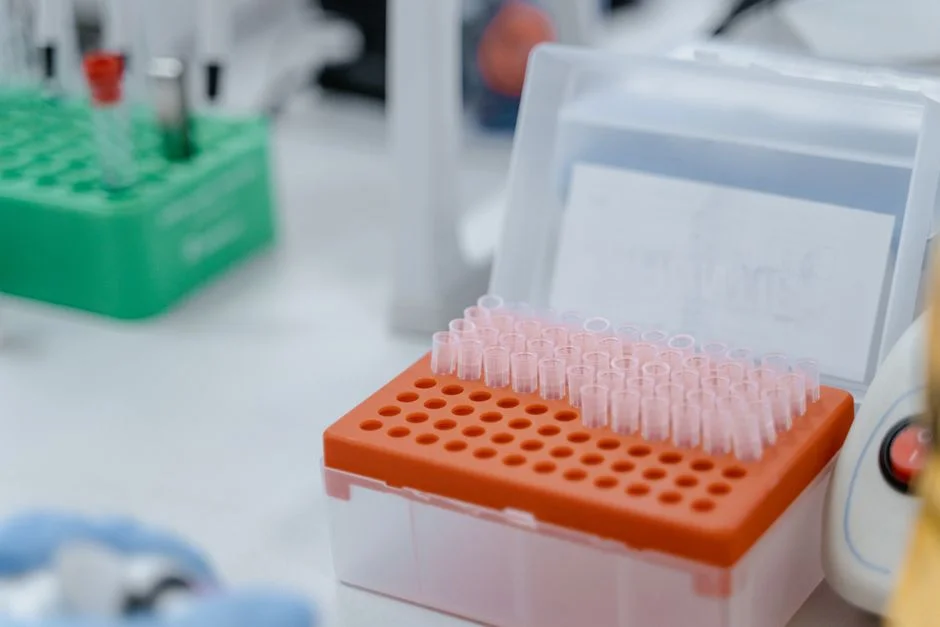
Use this one-page checklist to hand to legal and EHS so nothing slips between the AbwV, the UWWTD revision, and the Frankfurt UAS permit conditions. Each row maps a regulatory instrument to a verifiable action and a documentation output.
| Instrument | 2026 action | Documentation output |
|---|---|---|
| AbwV Annex 22 (semiconductor / photovoltaic) | Confirm applicability; segregate CMP/F⁻/NH₃ streams; install fluoride precipitation to <50 mg/L | Annex 22 monitoring log; internal indirect-discharge application |
| AbwV Annex 40 (metals) and Annex 53 (organics) | Verify metal and NMP/stripper loads; route to dedicated IX/RO or stripper | Annex 40/53 influent characterisation report |
| Frankfurt UAS indirect-discharge permit | Submit site-specific fluoride, NH₃-N, AOX, and heavy-metal sampling schedule | UAS permit; quarterly self-monitoring reports |
| HLNUG Main basin watch list | Cross-reference Main basin allocation renewal cycle; document reuse volumes | Annual Main basin allocation return (m³/yr) |
| EU UWWTD 2026 industrial-pretreatment register | Register site if >1,000 m³/yr; declare segregated streams and on-site reuse | UWWTD register entry; segregated-stream m³/yr |
| CSRD / ESRS E3 (water) | Disclose withdrawal, discharge, and reuse intensity; reference TNFD-aligned metrics | ESRS E3 water disclosures; TNFD-aligned metrics |
Frequently Asked Questions
Which AbwV annex governs a 2026 Frankfurt fab's process wastewater?
Annex 22 covers semiconductor and photovoltaic effluents and sets the fluoride, metals, and AOX ceilings that Frankfurt UAS enforces through site-specific indirect-discharge permits. Annex 40 (metals) and Annex 53 (organics, including photoresist strippers) apply where the chemistry overlaps, and the permit will list each annex explicitly (per BMUV AbwV consolidation, 2026).
What does the revised 2026 EU Urban Wastewater Directive change for Frankfurt industrial sites?
The 2026 revision adds an industrial-pretreatment register, sets stricter discharge ceilings for nutrients and micropollutants, and requires segregated-stream reporting for any operator above the 1,000 m³/yr threshold. Germany implements through the existing AbwV framework plus the new register, so a 2026 Frankfurt fab must report each segregated stream in m³/yr, not a single mixed-effluent figure (per EU UWWTD 2026/XX, OJ L 2026).
How much water does a Frankfurt data hall actually use, and what is the biggest reuse target?
A typical Frankfurt-area hall uses 25 million–770 million litres per year, with hyperscale builds above 2 billion litres per year (Ceres 2025; TNFD 2026). Cooling accounts for the largest withdrawal, so cooling-tower blowdown and UPW reject are the two highest-value reuse streams; recovering 50% of cooling blowdown at a hyperscale site displaces hundreds of millions of litres per year of Main basin withdrawal.
Can humidification condensate be reused directly in the cooling loop?
Yes, in 2026 Frankfurt practice humidification condensate (TDS typically <50 mg/L) is filtered and UV- or ozone-polished, then blended into cooling-tower make-up. On-site chlorine dioxide is the standard for closed-loop microbial hold because it avoids the trihalomethane formation that breakpoint chlorination produces in the presence of trace NMP residues from upstream fab drains.