Why UPW Specification Is Now a UK Water-Security Question
A 2026 UPW system for a UK semiconductor or compound semiconductor fab must deliver ≥18.2 MΩ·cm resistivity at 25 °C, TOC <1 ppb (sub-0.5 ppb for ≤3 nm nodes), dissolved oxygen <10 μg/L, and particles <0.3/mL above 0.05 µm, delivered through a six-stage train of pretreatment, RO, EDI, UV at 185/254 nm, 0.01-0.05 µm UF and mixed-bed polishing, with reclaim loops targeting 85-90% recovery to meet Environment Agency abstraction limits. In the UK, those purity numbers are only half the RFQ; the other half is whether the Environment Agency will issue an abstraction licence in the first place. UK fabs typically draw 1,400-1,600 gallons of municipal water to make 1,000 gallons of UPW (AXEON), so a 2-4 million gallon/day facility materially stresses regional supply and triggers Section 126 permit scrutiny during dry periods. Industry-average reclaim of 65-75% is no longer enough to secure a new licence in the South East or the Welsh Dee catchment — next-generation UK fabs are being designed for 85-90% recovery to keep the abstraction volume defensible (AXEON). Compound semiconductor lines on GaN-on-Si and SiC consume proportionally more UPW per wafer area than trailing-edge silicon lines because wet-etch and solvent-rinse steps repeat many times per layer. Engineers specifying in 2026 should therefore treat SEMI F63 as the floor, not the deliverable, and frame the UPW business case around Ofwat AMP8 tariff escalation and drought-permit risk rather than around resistivity alone.
UPW Quality Parameters: SEMI F63 and the 2026 Numbers Engineers Must Hit
Resistivity >18.2 MΩ·cm at 25 °C is a saturation indicator, not a guarantee of purity — theoretical pure water is 0.05501 μS/cm = 18.18 MΩ·cm, and 0.1 ppb NaCl drops the reading to 18.11 MΩ·cm (Wikipedia). SEMI F63, ASTM D5127 and ISO 3696 Grade 1 together define the envelope a UK fab should write into the RFQ. The table below is the version an engineer can paste into a specification and defend in a technical audit.
| Parameter | 2026 Specification | Measurement method |
|---|---|---|
| Resistivity | >18.2 MΩ·cm at 25 °C | Inline conductivity/resistivity meter at point of use |
| TOC | <1 ppb (<0.5 ppb for sub-3 nm and EUV) | UV-persulfate oxidation |
| Silica, dissolved | 0.2-1.0 ppb | ICP-MS |
| Silica, colloidal | 0.3-2.0 ppb | ICP-MS (colloidal fraction is more yield-critical than dissolved) |
| Particles >0.05 µm | <0.3/mL | Laser particle counter |
| Bacteria | <1 CFU/100 mL | Membrane filtration |
| Dissolved oxygen | <10 µg/L in final rinse | Membrane or optical DO probe (Wikipedia) |
| Trace metals (Fe, Cu, Na, K) — compound semi | <0.01 ppb each | ICP-MS at sub-ppb detection |
The DO line is the one most RFQs in the UK still miss; without it, an EUV or GaN line can pass every other parameter and still lose yield to native-oxide growth on wafer films (Wikipedia). For sub-3 nm logic and EUV photoresist rinse, drop the TOC ceiling to 0.5 ppb and budget for an additional AOP polishing stage (AXEON; Wikipedia).
The Six-Stage Treatment Train and How to Specify Each Stage
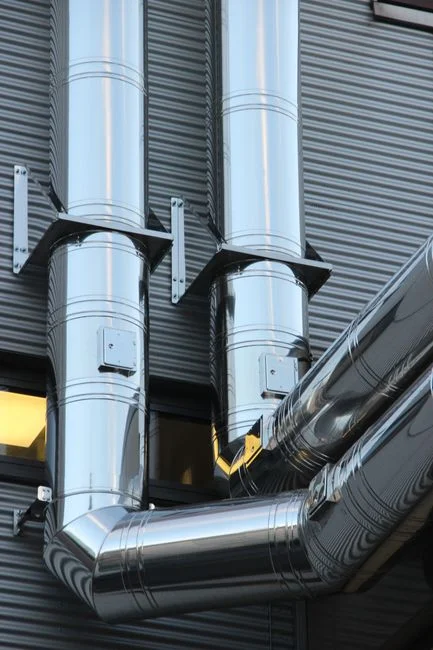
The standard 2026 make-up train runs pretreatment → two-pass RO → EDI → dual-wavelength UV → UF → final polishing. Each stage has a defensible performance band and at least one UK-specific material or compliance note that should appear in the RFQ.
| Stage | Function and 2026 spec | UK-specific notes |
|---|---|---|
| Pretreatment | Multimedia filtration to 5 µm; activated carbon for free-chlorine removal; softening to <1 ppm hardness; aluminium-salt or lime conditioning to drop reactive silica before RO (Wikipedia) | WRAS / Regulation 31 approval on all feedwater-contact materials |
| Reverse osmosis (two-pass) | 95-99% rejection; 300-400 psi on the high-pressure side; 3-5 year membrane life under controlled pretreatment (AXEON); two-pass is standard for UPW make-up | CE/UKCA-marked skids; VFD-driven high-pressure pumps for energy recovery |
| Electrodeionization (EDI) | Continuous, chemical-free polishing to >2 MΩ·cm with 90%+ recovery (AXEON); see comparison with mixed-bed below | Specify a non-regenerable nuclear-grade mixed-bed polisher downstream of EDI as a final 18.2 MΩ·cm guard |
| UV oxidation | Dual 185 nm (TOC reduction) and 254 nm (microbial control); 9,000-12,000 hour lamp life; sized to drop TOC below 1 ppb (AXEON) | IP-rated lamp housings for plant-room humidity |
| Ultrafiltration | 0.01-0.05 µm hollow-fibre PVDF; 10,000 MWCO class (AXEON) | Reference the hollow-fibre UF system for resilience against colloidal silica breakthrough |
| Final polishing | 0.2 µm membrane filters, vacuum or membrane degasification for DO control, and non-regenerable mixed-bed ion exchange to lock 18.2 MΩ·cm at point of use | Point-of-use polishers in the sub-fab; DO <10 µg/L guaranteed by membrane contactor |
On the EDI-versus-mixed-bed question, the operating-cost maths favours EDI on a 24/7 UK fab: EDI avoids acid and caustic regeneration, eliminates resin-truck movements on site, and recovers >90% of the RO permeate, whereas a regenerable mixed-bed adds chemical handling under COSHH and a wastewater consent burden (AXEON). A non-regenerable nuclear-grade mixed-bed polisher downstream of EDI remains the cleanest way to hold 18.2 MΩ·cm at the point of use and to act as a sacrificial guard when the EDI module approaches end of life. Engineers writing the RFQ should also ask vendors to confirm WRAS/Regulation 31 approval on feedwater-contact elastomers and CE/UKCA conformity on the skid assembly — both are common reasons UK projects fail acceptance testing.
Compound Semiconductor and Advanced Electronics: Where UPW Specs Get Tighter
GaN-on-Si, SiC power-device and GaAs wet-etch lines carry trace-metal limits (Fe, Cu, Na, K each below 0.01 ppb) that mainstream silicon fabs do not have to defend, because metallic contamination collapses breakdown voltage in HEMT and Schottky structures. Verification is by ICP-MS at sub-ppb detection on a daily grab, not by an online meter, so the lab throughput should appear in the operating-cost section of the RFQ. EUV photoresist processing adds an exceptionally tight envelope: <10 µg/L DO and <0.5 ppb TOC are both required to prevent oxide growth and amine-based resist poisoning (Wikipedia; AXEON). MicroLED and advanced packaging lines do not always need tighter purity, but they do need higher flow at the same resistivity to feed single-wafer cleaning tools — the same spec number can mask a very different hydraulic architecture, and a low-flow polishing loop will not keep up with a 100+ tool fab. The 2026 challenge specific to compound semi reclaim is organic contamination in sidestreams: TMAH, PFAS, urea and metal-humic complexes all survive conventional RO and ion exchange and must be broken down with AOP (UV/H2O2 or sulfate-radical) before any of that water can re-enter the UPW make-up loop (Wikipedia). For further pretreatment detail relevant to UK-adjacent sites, see How Semiconductor Plants Near Liberty, US Meet 2026 Pretreatment Limits.
Reclaim and Closed-Loop: How to Hit 85-90% Recovery Without Breaking UPW Spec

The 2025 pilot data from Kim et al. gives an engineer a defensible target: UF plus two-stage RO on fab wastewater delivered >75% recovery and 0.5 mgC/L DOC, and the RO permeate fed to a lab UPW train consistently yielded ≥18.2 MΩ·cm and <1 ppb DOC (ScienceDirect S0011916425005910). That number is the benchmark a UK fab should be quoting in its Section 126 pre-application. Three architectures are realistic for a 2026 build, and the choice is driven by recovery, CAPEX band, OPEX and how much the reclaim stream complicates the environmental permit.
| Architecture | Recovery | CAPEX band (relative) | OPEX indicator | UK permitting impact |
|---|---|---|---|---|
| Once-through (municipal → UPW → discharge) | 0% reclaim | Lowest (baseline) | Highest £/m³ on Ofwat AMP8 tariffs | High abstraction exposure under Section 126 |
| Partial reclaim (RO concentrate neutralisation, low-volume sidestream recycle) | ~30-50% | Low-moderate | Moderate; benefits from energy recovery on concentrate | Lower abstraction but neutralisation consent still required |
| Closed-loop reclaim (UF + 2-pass RO + EDI, AOP for TMAH/PFAS/urea) | 85-90% | Highest (≈ +20-35% on make-up train) | Lowest £/m³; 3-7 kWh/1,000 gallons of UPW offset by energy recovery (AXEON) | Defensible abstraction position; AOP residue covered under environmental permit |
Two operational points follow from the table. First, the OPEX gap between partial and closed-loop reclaim widens as soon as the RO booster pump is fitted with a VFD and an energy-recovery device — at UK industrial electricity tariffs, payback on the upgrade drops well below the 5-year mark on a 2-4 MGD fab. Second, residual contaminants — urea, TMAH, PFAS and metal-humic complexes with Cr and Ni — require AOP polishing before the reclaim stream can re-enter as UPW intake, and the AOP step is the one regulators will ask about most (Wikipedia; ScienceDirect). For the equipment side of a closed-loop design, an industrial RO system sized for two-pass operation, a continuous electrodeionization stack for chemical-free polishing, and a hollow-fibre UF system on the reclaim sidestream are the three unit operations the RFQ should be evaluated against.
Sustainability, OPEX and the 2026 UK Compliance Layer
Annual water OPEX on a UK fab sits in a £2M-£8M band at 2026 AMP8 tariffs, scaling with production volume and local abstraction charges. Energy intensity of 3-7 kWh per 1,000 gallons of UPW (AXEON) makes the high-pressure pump the single biggest electricity line in the water house, and VFD control plus an RO energy-recovery device is the quickest measurable win. UPW-system wastewater is regulated under the standard UK environmental permit; heavy-metal-bearing fab effluents (CMP slurry rinse, etch spent baths) cannot be co-mingled with UPW concentrate without prior consent, and reclaim architectures that mix the two streams need an explicit permit variation. From 2026 onward, ISO 14001 and SECR reporting make water-recovery percentage a board-level KPI for UK fabs, so the 85-90% reclaim number should appear in ESG disclosures alongside the abstraction volume and the electricity use of the water house. The 20-Year Lifecycle Cost Estimation for UPW Systems (2026 Guide) gives the full CAPEX/OPEX model that finance and procurement will want alongside this blueprint; for variable fab waste chemistry that affects the front end of the same permit, the Semiconductor Wastewater Treatment System Design for Variable Waste Chemistry (2026 Engineering Guide) is the matching reference.
Frequently Asked Questions
What resistivity should a 2026 UK UPW system be specified to deliver at the point of use?
Specify >18.2 MΩ·cm at 25 °C at the point of use, with a non-regenerable nuclear-grade mixed-bed polisher downstream of EDI as a guard. Note that 18.2 MΩ·cm is the theoretical maximum for pure water (18.18 MΩ·cm at 25 °C, per Wikipedia) and 0.1 ppb NaCl drops the reading to 18.11 MΩ·cm, so the number is a saturation indicator, not a purity guarantee.
What TOC and dissolved oxygen limits apply to EUV and sub-3 nm logic lines?
EUV and sub-3 nm production requires TOC <0.5 ppb and dissolved oxygen <10 µg/L in the final rinse (AXEON; Wikipedia). The engineer should specify a dual-wavelength 185/254 nm UV stage and a membrane or vacuum degasifier, and budget an AOP polishing step for reclaim-derived water.
What recovery rate should a 2026 UK fab target to secure an Environment Agency abstraction licence?
Target 85-90% reclaim on the make-up train, using UF + two-pass RO + EDI on the reclaim sidestream and AOP for urea, TMAH and PFAS. Pilot data confirms RO permeate can deliver ≥18.2 MΩ·cm and <1 ppb DOC into a UPW loop at >75% recovery (ScienceDirect S0011916425005910), and Section 126 pre-applications are strengthened when the abstraction number is anchored to a documented reclaim percentage.