Why Hamburg is a different wastewater problem than Phoenix or Hsinchu
Hamburg sits in the Elbe basin, where municipal supply is historically robust but is now under pressure from nutrient loading, salinity intrusion and emerging-contaminant scrutiny — so the binding constraint for a 2026 fab or data-hall is not raw water availability but the cost of treating each cubic metre well enough to reuse it. That is the opposite of the Phoenix or Hsinchu story, where the question is whether the tap will run dry (TNFD 2026 case study, Dependence on water by semiconductor). The TNFD 2026 framing still applies: 45% of global data centres sit in basins at high risk of water-availability disruption, and around 40% of announced new fabs will be in high or extremely high water-stress basins by 2030 (per TNFD 2026). Hamburg is not in that bracket, but the regulatory direction of travel — circularity, PFAS restriction, indirect-discharge tightening — is the same. A modern fab can use up to 10 million gallons of water per day (IDE Technologies 2026), and a single fab can use around 14 billion litres of UPW per year (TNFD 2026, citing WEF 2025).
For Hamburg, the question is not water stress but water circularity and permit defensibility. The local industry anchor makes this concrete: DESY's PETRA III storage ring produces around 5 petabytes of data per year, and the European XFEL in nearby Schenefeld acquired 30 petabytes of scientific data in 2024 (Scientia 2025, citing DAPHNE4NFDI / DESY). Both run on a Hamburg water footprint that is itself subject to the same Indirekteinleiter rules as a commercial fab. The pre-treatment logic for a Bahrenfeld/Schenefeld high-tech-park tenant is therefore a direct cousin of the logic for a TSMC Phoenix or a Dresden ESMC line — and the same logic that applies to data centre cooling blowdown treatment in water-utility-pressured basins.
The 2026 German and Hamburg rule stack you actually have to satisfy
There are four nested legal layers a Hamburg discharger has to satisfy, and they cascade: the federal water act (Wasserhaushaltsgesetz, WHG) sets the duty of care; the federal wastewater ordinance (AbwV), amended in 2024, sets indirect-discharge limit values for the electronics sector including fluoride, heavy metals, ammonia-N and PFAS; the Hamburg Water Act (HmbAbwG) and the Hamburg Wasser Indirekteinleiter rules translate those values into site-specific discharge limits, sampling frequency and self-monitoring (Eigenkontrolle); and EU instruments — Water Framework Directive 2000/60/EC, the revised Urban Waste Water Treatment Directive (91/271/EEC as amended), the Industrial Emissions Directive 2010/75/EU, and the REACH PFAS restriction — set the direction of travel that BSU (Behörde für Umwelt, Klima, Energie und Agrarwirtschaft) enforces in Hamburg. The 2024 AbwV amendment tightened PFAS and metals limit values for electronics-sector indirect discharges; the writer should treat the exact 2026 numerical limit values as confirmed by BSU and Hamburg Wasser in the permit letter, not as a design assumption.
Permit workflow runs in this order: (1) Antragstellung with BSU; (2) Hamburg Wasser pretreatment approval on the indirect-discharge side; (3) baseline monitoring on each segregated stream; (4) ongoing Eigenkontrolle with documented online instrumentation; (5) annual discharge report. The permit document that lands on the engineer's desk in 2026 will name each stream and the corresponding Teil/Anhang of the AbwV. Similar permitting logic for an electronics fab is described in this 2026 guide on semiconductor wastewater compliance, but the Hamburg stack is the binding one.
| Legal layer | Instrument | What it sets for a Hamburg site | Where enforced |
|---|---|---|---|
| EU | WFD 2000/60/EC, UWWTD (91/271/EEC as amended), IED 2010/75/EU, REACH PFAS restriction | Direction-of-travel on water quality, PFAS, industrial emissions | European Commission → BSU transposition |
| Federal | WHG (Wasserhaushaltsgesetz) | Umbrella duty of care; prohibits discharge without permit | BSU |
| Federal | AbwV (amended 2024) | Indirect-discharge limit values for electronics — fluoride, heavy metals, NH₃-N, PFAS, AOX | BSU; cross-checked by Hamburg Wasser |
| State | HmbAbwG (Hamburg Water Act) | State-level water-body protection, monitoring, enforcement | BSU |
| Municipal / utility | Hamburg Wasser Indirekteinleiterverordnung | Site-specific limits, sampling frequency, self-monitoring duties for sewer discharge | Hamburg Wasser |
Mapping the streams: what comes out of a Hamburg fab or data hall
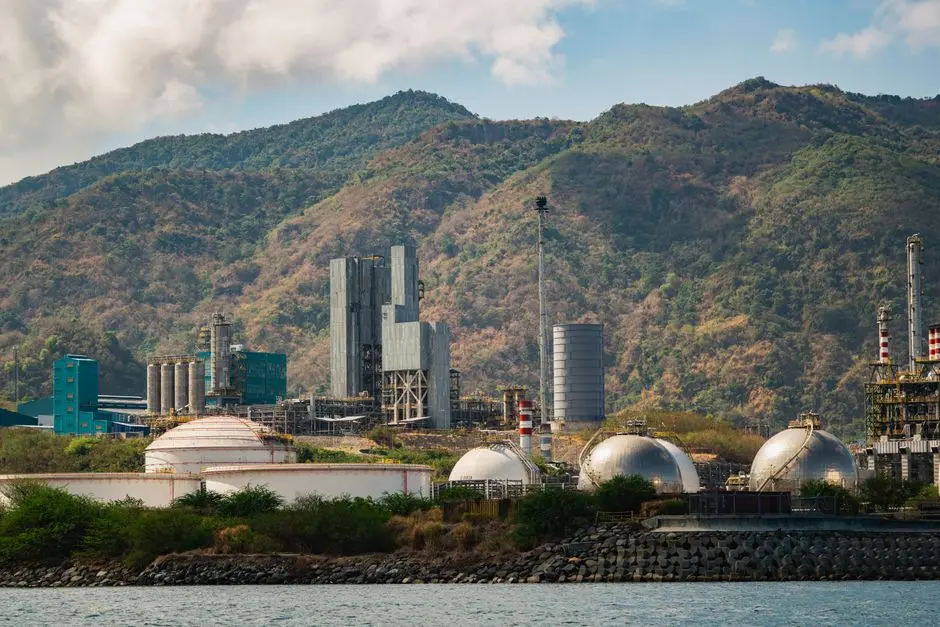
Segregation is the single biggest design decision on a 2026 Hamburg build, and it starts with an honest map of the streams. CMP wastewater is typically 30–40% of total fab wastewater volume (IDE Technologies 2026), is high in suspended solids from slurries, and carries copper, tungsten and colloidal silica — it cannot share a biological step with fluoride-bearing streams. HF/etch streams are high in fluoride, often co-contaminated with HCl, H₂SO₄ and NH₃; fluoride complexes metals and kills nitrification, so they must go to a segregated precipitation / lime neutralisation line. Photoresist and solvent streams are high in TOC with low-pH swings, and they foul RO membranes fast — they route to an AOP (UV/H₂O₂ or ozone) ahead of any biological or MBR polishing. Data-hall cooling blowdown — cooling tower bleed, adiabatic/humidification bleed, occasional chiller flush — is much lower in metals and organics but high in TDS, biocides and corrosion inhibitors; after softening it is often the cleanest feed on the site for direct RO reuse. A useful cross-reference for the photoresist AOP line is this engineer's guide to ozone water treatment.
| Stream | Key contaminants | Volume share | Segregated treatment line |
|---|---|---|---|
| CMP wastewater | Cu, W, colloidal silica, slurry solids | 30–40% of fab flow (IDE 2026) | pH adjust → DAF / lamella → UF → RO |
| HF / etch | F⁻, HCl, H₂SO₄, NH₃ | Variable, segregated by chemistry | Lime precipitation → clarifier → ion exchange |
| Photoresist / solvent | High TOC, low pH, organics | Variable | AOP (UV/H₂O₂ or O₃) → MBR / biological |
| Scrubber blowdown | Acidic / alkaline, process-specific | Variable | pH neutralisation → metals precipitation → shared UF/RO |
| Data-hall cooling bleed | TDS, biocides, corrosion inhibitors | Continuous, large volume | Softener → RO → reuse to cooling |
The 2026 treatment train: segregated lines, recovery loop, brine polish
Front-end segregation is non-negotiable in 2026. The four segregated lines — fluoride, CMP, photoresist and cooling blowdown — each have their own dosing and clarification, and only converge downstream of UF. A defensible train runs: (1) fluoride line: precipitation, sand or lamella clarification, ion exchange to bring F⁻ below the AbwV limit; (2) CMP line: pH adjust, DAF or lamella clarifier, slurry-resistant UF (0.03 µm PVDF) accepting up to ~300 ppm turbidity feed; (3) photoresist line: equalisation, AOP with UV/H₂O₂ or ozone, then biological or MBR; (4) cooling blowdown: softener, then RO. Permeate from the RO bank is split: a high-purity cut returns to UPW makeup; a lower-purity cut feeds cooling-tower makeup and scrubbers. State-of-the-art fabs reach 85–90% overall recovery using high-recovery RO, advanced filtration and thermal polishing (IDE Technologies 2026); the remaining 10–15% is concentrated and sent to brine concentration, low-temperature evaporation or a crystalliser, with the final push toward ZLD where site logistics allow.
PFAS and trace organics are the fastest-moving 2026 driver. The 2024 AbwV amendment, the REACH PFAS restriction and the EPA PFAS roadmap all push in the same direction (IDE Technologies 2026 cites the EPA roadmap; the German 2024 amendment is the binding instrument in Hamburg). The default 2026 placement is an AOP plus GAC or ion-exchange polish downstream of the RO concentrate treatment, with online PFAS-specific monitoring on the combined permeate to keep the recovery loop honest. AI-enabled monitoring is now standard: real-time pH, conductivity, TOC, fluoride and turbidity on each segregated line, with model-predictive dosing that holds RO recovery at 85–90% without scaling (IDE Technologies 2026, on AI-powered plant optimisation). Sludge from clarifiers and DAF units goes to a plate-and-frame filter press for dewatering to ~20–25% dry solids; Cu- and W-rich CMP cake is increasingly sold to EU metal reclaimers. To put this in a procurement frame, a useful starting point is a structured comparison of industrial water treatment systems for facility use; the front-end units to specify are DAF units for CMP and metals-laden streams, high-efficiency sedimentation tanks for the fluoride line, and industrial RO systems with 95% recovery for the recovery loop.
Choosing equipment: what to specify for a Hamburg 2026 build-out
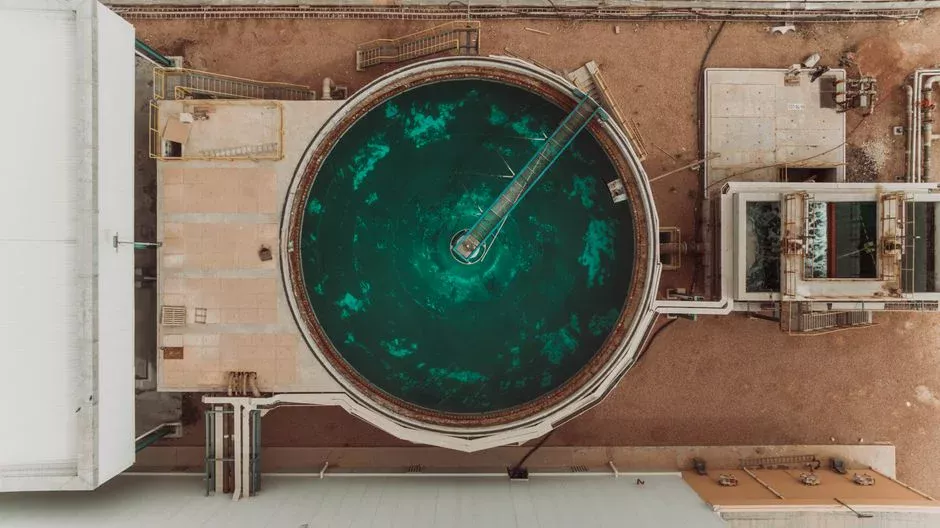
The procurement list follows directly from the train. On pretreatment, specify a lamella clarifier or DAF for CMP and metals precipitation, and a multi-media filter on raw water and cooling makeup to protect the downstream RO. On the membrane stack, fit UF (0.03 µm PVDF) ahead of RO for CMP and etch lines, accepting up to ~300 ppm turbidity feed; specify slurry-resistant UF membranes specifically for CMP duty. On the RO bank, run an industrial RO at 70–85% recovery per pass with a second high-recovery pass on the permeate to lift overall recovery into the 85–90% band (IDE Technologies 2026). On polishing, fit UV/H₂O₂ or ozone for photoresist and PFAS duty, and chlorine dioxide where Hamburg Wasser's AOX rules constrain residual oxidant. On the sludge line, size a plate-and-frame filter press for ~1–2% feed solids and back it with an automatic chemical dosing skid for pH, fluoride precipitation and antiscalant.
| Process step | Equipment | Specification | Why it matters in 2026 |
|---|---|---|---|
| CMP / metals clarification | DAF or lamella clarifier | Slurry-rated, polymer dosing skid | Protects downstream UF from Cu/W/SiO₂ fouling |
| Particulate barrier | UF system | 0.03 µm PVDF, slurry-resistant, ~300 ppm feed turbidity | Lifts RO feed quality on CMP and etch lines |
| Recovery loop | Industrial RO, 2-pass | 70–85% per pass, 85–90% overall | Hits the 2026 design point for new Hamburg builds |
| Organics / PFAS | UV steriliser + H₂O₂ or ozone | AOP-rated, downstream of RO concentrate | Addresses 2024 AbwV PFAS direction and REACH |
| Biocide control | Chlorine dioxide generator | On-site generation, AOX-aware dosing | Cooling loop biocide without breaching AOX |
| Chemical dosing | Automatic dosing skid | pH, F⁻ precipitation, antiscalant | Keeps RO recovery at 85–90% without scaling |
| Sludge dewatering | Plate-and-frame filter press | ~1–2% feed, target ~20–25% DS cake | Reduces sludge volume; enables Cu/W off-site reclaim |
Procurement-side references for the UF, dosing, filter press, biocide and UV items are UF water treatment systems, automatic chemical dosing systems, plate-and-frame filter presses, chlorine dioxide generators, and UV sterilisers for water treatment.
Operating economics and circularity targets for 2026
The 85–90% water reuse ratio is the de facto 2026 design point for any new Hamburg build; older Hamburg-area fabs typically run 50–65% and should benchmark against that gap explicitly in their permit submission. Pushing recovery higher is an energy trade-off: more RO recovery means more concentrate and more kilowatt-hours per cubic metre of reuse. A 2026 trend is to use ceramic-membrane electrodialysis reversal (EDR) pilots to concentrate wastewater on-site and cut both off-site trucking and the carbon of brine transport (UltraFacility 2026, on Samsung Austin Semiconductor / EDR pilots). Segregated treatment also reduces total chemical consumption because each line is dosed only for its actual load — a combined-stream plant that runs pH correction and fluoride precipitation on the same flow will systematically overdose one of the two. On the revenue side, Cu- and W-rich CMP sludge is increasingly sold to EU metal reclaimers; the value chain exists, and the engineer should price logistics and characterisation into the design rather than assume landfill. A 2026 circularity plan for a Hamburg site should pair a high-recovery RO loop with a brine-concentration step and a documented sludge-off-taker contract before commissioning, not after.
Frequently Asked Questions
Which German and Hamburg rules govern semiconductor and data-hall process wastewater in 2026?
The binding stack is the federal Wasserhaushaltsgesetz (WHG), the federal AbwV as amended in 2024 for electronics-sector indirect discharges (fluoride, heavy metals, ammonia-N, PFAS), the Hamburg Water Act (HmbAbwG), and the Hamburg Wasser Indirekteinleiter rules that set site-specific discharge limits, sampling frequency and self-monitoring. EU instruments (WFD, revised UWWTD, IED, REACH PFAS restriction) set the direction of travel that BSU enforces in Hamburg; the final numerical limits are confirmed in the BSU and Hamburg Wasser permit letter.
What is the difference between BSU and Hamburg Wasser in approving a discharge?
BSU (Behörde für Umwelt, Klima, Energie und Agrarwirtschaft) is the state permitting and enforcement authority — it issues the indirect-discharge permit under WHG/AbwV and protects the receiving water body. Hamburg Wasser is the municipal sewer operator — it sets and enforces the Indirekteinleiter rules on what may be discharged into the public sewer, including site-specific pretreatment limits, sampling frequency and self-monitoring. A Hamburg site needs both approvals before discharge can start.
What is a realistic 2026 water-recovery target for a new Hamburg fab or data-hall build?
State-of-the-art fabs reach 85–90% overall recovery using high-recovery RO, advanced filtration and thermal polishing (IDE Technologies 2026). To push above 90%, the engineer adds a brine-concentration step (low-temperature evaporation, membrane distillation, or ceramic-membrane EDR) and accepts higher energy intensity per cubic metre of reuse. For data-hall cooling bleed on its own, direct RO after softening typically achieves 70–80% before the energy trade-off stops paying back.
How should a Hamburg site address PFAS in 2026?
Treat PFAS as a first-class compliance parameter, not a footnote. The 2024 AbwV amendment and the REACH PFAS restriction both push toward lower indirect-discharge values; the engineer should design for a downstream AOP (UV/H₂O₂ or ozone) plus GAC or ion-exchange polish, with PFAS-specific online monitoring on the combined permeate. Concentrate handling and destruction technology should be specified at the same time as the polish step, because concentrate disposal is where PFAS compliance actually fails.
Is data-hall cooling blowdown treated the same as fab process wastewater?
No. Cooling tower bleed, adiabatic/humidification bleed and chiller flush are typically much lower in metals and organics but higher in TDS, biocides and corrosion inhibitors; they are usually suitable for direct RO reuse after softening, and they fall under a different AbwV annex than CMP or etch streams. The engineering mistake to avoid is mixing cooling bleed with fluoride or photoresist streams at the head of the plant — it dilutes the segregated-stream design that lets the recovery loop run at 85–90%.