Why Sandersville-Area Mining and Metals Plants Need On-Site Pretreatment
Washington County, GA — the self-described "Kaolin Capital of the World" — generates a stream of mining-influenced water (MIW) unlike anything a generic industrial-wastewater guide covers. Kaolin washing circuits, silica sand processing, and lightweight-aggregate (LWA) kilns each send water down the drain with the same signature: total suspended solids (TSS) measured in the thousands of mg/L, low-to-moderate dissolved metals (copper, zinc, lead, occasional nickel from wear dust), visible color from residual polyacrylates and alum carryover, and pH that drifts into the 4–6 range as the wash water picks up CO₂ and fines (ChemREADY describes this profile as classic MIW — "when ore meets water, metals and sulphates leach into solution, pH slides, and suspended solids climb").
Discharge to the local publicly owned treatment works (POTW) is regulated under the federal National Pollutant Discharge Elimination System (NPDES) program, and the receiving POTW layers on categorical and concentration-based local limits (EPA, 19january2017snapshot.epa.gov). In practice, that means every monthly discharge report for a plant within roughly 60 miles of Sandersville has to defend pH inside a 5.0–10.0 envelope, TSS below a low double-digit mg/L cap, oil & grease under ~10 mg/L, and a metals panel — Cu, Zn, Pb, Ni, Cr, Cd, and As where listed — at or below low ppm or µg/L objectives. Sulfates and total dissolved solids (TDS) sit on some local limits and not others, which is why a defensible pretreatment design has to be site-specific rather than copy-pasted from a municipal textbook.
The economics of dodging the problem have collapsed. Truck-and-haul to an off-site disposal well or landfill is no longer cheap enough to outpace operating margins; legacy settling ponds are losing operating permit renewals; and the recycle water that on-site treatment returns to the wash circuit is now worth more per gallon than the freshwater it replaces. That combination — tighter local enforcement, a failing pond strategy, and a real reuse credit — is what forces the issue for 2026 capital planning.
The Pretreatment Train Plants Use, Step by Step
A defensible central-Georgia MIW pretreatment train runs seven unit operations in the order they are actually built, and the sequence is not interchangeable. Equalization sits first to absorb batch and storm swings; chemical steps do the heavy lifting on dissolved species; mechanical separation strips the resulting solids; and a polishing barrier protects both the discharge and any downstream reuse.
- Equalization and flow buffering. Aerated EQ at 8–24 h residence damps the slug loads off a wash cycle or a storm event, oxidizes residual sulfide, and gives downstream chemistry a feed it can actually dose against. Skid-mounted EQ tanks with diffused aeration are the typical low-cost answer; covered variants cut odor complaints near property lines.
- pH and alkalinity adjustment. PLC-controlled dosing of lime, caustic, or CO₂ lands the stream at pH ≥ 8 — "raising pH pushes dissolved metals out of solution" by converting soluble metal ions to insoluble hydroxides (ChemREADY). A PLC-controlled chemical dosing skid with redundant pH probes and trim valves is the lowest-risk way to hold the setpoint through a swing in feed alkalinity.
- Coagulation and flocculation. Charge-neutralizing coagulants (alum, ferric chloride, polyaluminum chloride) followed by a high-molecular-weight anionic flocculant grow dense, fast-settling floc. ChemREADY's FlocREADY-grade family is the chemistry analog for mineral streams and keeps polymer dose from drifting upward as ore changes.
- Dissolved air flotation (DAF) or lamella clarification. Micro-bubble flotation strips floc and free oil in a fraction of the footprint of a settling pond; a DAF system (4–300 m³/h) handles the typical mid-range kaolin/silica plant. For higher solids or where footprint is the binding constraint, a lamella clarifier (20–40 m/h surface loading) is the right answer and offers built-in sludge recirculation to cut coagulant use by up to 30% (HydropureWater spec).
- Multimedia filtration and/or ultrafiltration. A sand/anthracite/GAC multi-media filter drives the Silt Density Index (SDI) below 5 ahead of any RO; DAF vs. clarifier selection upstream of this polish step is the most common plant-level decision in 2026. Where the permit demands near-zero colloidal carryover, 0.03 µm PVDF ultrafiltration (2,000–40,000 L/h) strips residual colloids and turbidity to less than 1 NTU without further chemical addition.
- Biological polishing (when ammonia/nitrate are in spec). Mines and aggregate plants with nitrogen in the discharge envelope usually add a moving-bed biofilm reactor (MBBR) or a Submerged Attached Growth Reactor (SAGR). SAGR post-lagoon units have been proven to nitrify below 1°C (34°F) and have more than 100 full-scale North American installations (Nexom).
- Sludge dewatering. A plate-and-frame filter press at up to 30 bar delivers stackable cake at roughly one-sixth the operating cost of a belt press or centrifuge (ChemREADY/Matec), and the cake is suitable for dry-stacking without further dewatering.
| Step | Unit Operation | Design Setpoint / Output | Why It Sits in This Position |
|---|---|---|---|
| 1 | Aerated equalization | 8–24 h HRT | Buffers batch and storm swings; controls sulfide |
| 2 | pH/alkalinity adjust | pH ≥ 8 | Precipitates dissolved metals as hydroxides |
| 3 | Coag/floc | TSS reduction begins | Grows settleable floc |
| 4 | DAF or lamella | 20–40 m/h surface loading | Strips floc and FOG; small footprint |
| 5 | MMF and/or UF | SDI <5 or <1 NTU | Polish for discharge or RO feed |
| 6 | MBBR / SAGR | NH₃-N < 1 mg/L (summer) | Cold-tolerant nitrification when required |
| 7 | Filter press | Up to 30 bar; stackable cake | Lowest opex dewatering at ≥20 m³/h |
Influent vs. Effluent: A Practical Parameter Table
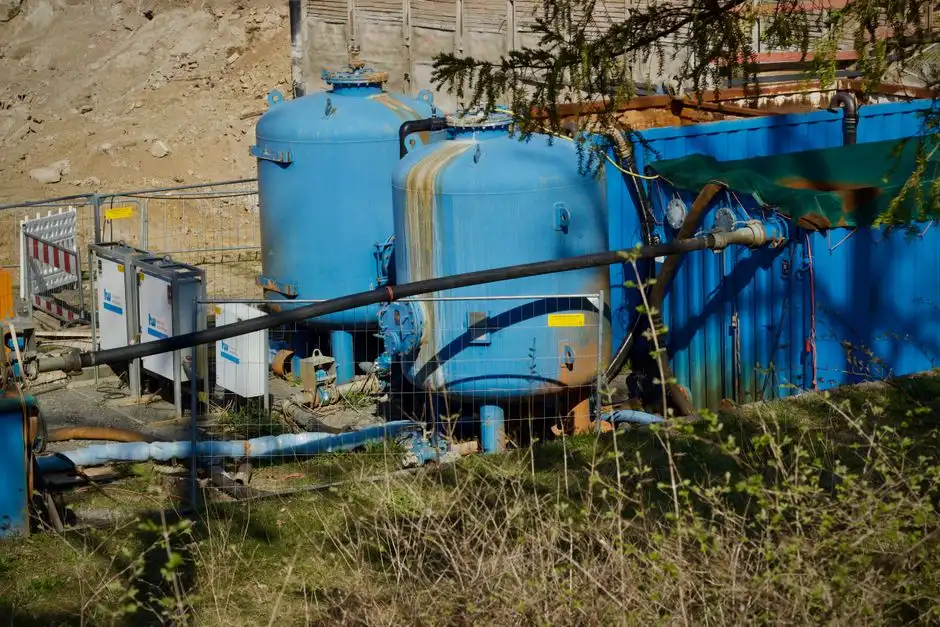
The numbers below are the ones a central-Georgia plant engineer has to defend in the monthly discharge report. They are not a national average — they are typical of the kaolin/silica/LWA MIW profile after the unit operations in the previous section have done their work.
| Parameter | Typical MIW Influent | Typical POTW Limit | Achievable Post-Pretreatment |
|---|---|---|---|
| pH | 4–7 | 5.0–10.0 envelope | 6.5–8.5 |
| Total Suspended Solids | 500–5,000 mg/L | <30 mg/L (local) | <30 mg/L after DAF/clarifier + MMF |
| Copper | 0.5–5 mg/L | ≤0.5 mg/L (categorical); 8 µg/L for ultra-low sites | ≤0.5 mg/L hydroxide; 8 µg/L with reactive-media polish (Nexom, Burrillville RI) |
| Zinc | 1–10 mg/L | <1 mg/L | <1 mg/L |
| Lead | 0.1–2 mg/L | <0.1–0.5 mg/L (local) | <0.1 mg/L at pH ≥ 8 |
| Nickel | 0.2–3 mg/L | <0.5 mg/L | <0.5 mg/L |
| Sulfate | 200–2,000 mg/L | Check local; some permits 250 mg/L | Unchanged by hydroxide train; needs RO or ion exchange if capped |
| Oil & Grease | 50–500 mg/L | <10 mg/L | <10 mg/L after DAF |
| Arsenic, Selenium, Cr(VI), Cadmium | Trace to 0.5 mg/L | Sub-µg/L on some categorical limits | Requires dedicated reactive-media or ion-exchange step beyond hydroxide precipitation alone |
The takeaway from the table is which parameters fall out cheaply and which do not. Copper, zinc, lead, and nickel all collapse to permit levels with pH ≥ 8 and a DAF — that is the cheap part of the train. Arsenic, selenium, hexavalent chromium, and cadmium do not; they need a reactive-media filter (coated-sand chemistry) or an ion-exchange polish, and that step is what separates a generic clarifier installation from a true metals-tight pretreatment plant.
Matching Equipment to Flow Regime and Plant Footprint
The flow into a central-Georgia kaolin or silica plant is rarely a steady 200 m³/h. Batch wash cycles, storm-water capture, and intermittent LWA quench water mean the right answer changes with flow regime as much as with average flow. The framework below maps the typical envelope to the unit operation that fits.
| Flow Regime | Typical Footprint Constraint | Primary Treatment | Polish | Sludge Side |
|---|---|---|---|---|
| <10 m³/h, batch/pilot | Tight, indoor, or temporary | Skid-mounted package plant (WSZ, 1–80 m³/h) | Inline cartridge or UF skid | Small plate press or bag-out |
| 10–200 m³/h, high turbidity wash | Outdoor pad, <0.5 acre | DAF first, then lamella clarifier (JY up to 3,000 mg/L → <3 mg/L) | MMF or PVDF UF (2,000–40,000 L/h) | Plate-and-frame filter press |
| >200 m³/h, sub-µg/L metals | Multi-unit train, 1+ acre | Reactive-media filter train ahead of primary clarifier | Ceramic UF (SiC-class) on harshest streams | High-pressure (≥30 bar) filter press |
Two cross-cutting items apply at any flow regime. First, every chemical step needs a PLC-controlled chemical dosing skid sized to the peak hydraulic load, not the average — that is what keeps the discharge report from going off the rails during a wash cycle. Second, every train needs a headworks bar screen upstream of pumps and membranes; a single rag or grit event upstream of a UF rack is what most often forces an unscheduled shutdown. A useful side reference is the skid-mounted wastewater plant guide for fast-track package options, and the belt filter press selection guide for the dewatering side of the comparison.
On the sludge side, the operating-cost arithmetic at any flow above about 20 m³/h favors a plate-and-frame press over a belt press by roughly 6:1 in total opex, driven by polymer use, belt replacement, and cake solids (ChemREADY/Matec field data). Below that threshold, the capex case for a belt press on a small footprint still has merit, which is why the framework above splits the recommendation at the 20 m³/h line.
Cost, Footprint, and ROI Considerations for 2026
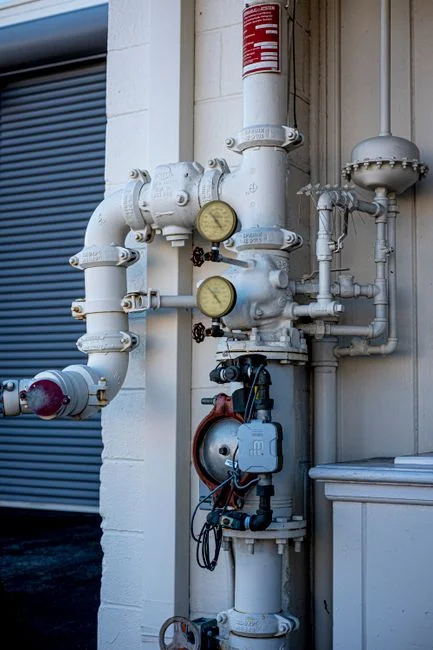
The economic case for on-site pretreatment versus truck-and-haul is no longer close in central Georgia. ChemREADY frames the trade plainly: on-site wins on trucking cost, gives the operator direct control over the discharge outcome, recovers water at high rates, and supports a near closed-loop reuse across the plant. Haul-off loses on every one of those vectors as diesel, landfill surcharges, and disposal-well fees continue to climb through 2026.
The line items a plant engineer can actually defend in a capital request are straightforward. Lamella clarification with sludge recirculation can cut coagulant and flocculant use by up to 30% (HydropureWater lamella spec), and a properly designed EQ basin lets the chemical dosing skid ride out feed swings without over-dosing. On the polish side, clarified water run through UF and RO can be returned to the wash circuit at process quality, which both reduces the freshwater draw and cuts POTW volume charges — Aquatech and ChemREADY both reference reuse as the primary economic driver for mine-site water treatment.
For the ROI model itself, keep the inputs to what can actually be measured: flow (m³/h), suspended solids (mg/L), power ($/kWh), labor (hours/shift), and polymer dose (kg/ton dry solids). Run payback against an avoided Notice of Violation and an avoided hauling surcharge, and the model usually closes in 18–36 months for a 50–150 m³/h kaolin or silica plant. Above that flow, the reused-water credit alone is often enough to carry the capital case on its own.
Frequently Asked Questions
What pretreatment limits does the Sandersville POTW typically enforce?
The local POTW operates under a federal NPDES pretreatment program (EPA, 19january2017snapshot.epa.gov) and layers categorical and concentration-based local limits on top. For a kaolin, silica, or LWA plant the typical enforcement envelope is pH inside 5.0–10.0, TSS below 30 mg/L, oil & grease under 10 mg/L, and a metals panel — Cu, Zn, Pb, Ni, and (where listed) Cr, Cd, As — at or below low-ppm or µg/L categorical objectives. Sulfate and TDS limits vary by permit and should be confirmed with the local POTW before any design is locked in.
Can hydroxide precipitation alone get a clay-wash stream below discharge limits?
For copper, zinc, lead, and nickel, yes — at pH ≥ 8 with adequate contact time, hydroxide precipitation followed by DAF or lamella clarification reliably delivers ≤0.5 mg/L on each. Arsenic, selenium, hexavalent chromium, and cadmium do not fall out on a hydroxide train alone; they need a reactive-media filter (coated-sand chemistry) or an ion-exchange polish to reach sub-µg/L or sub-mg/L categorical objectives.
How do plants in the region handle cold snaps or winter discharge?
The biological side of the train is the cold-sensitive step. Submerged Attached Growth Reactors (SAGR) have been proven to nitrify below 1°C (34°F) and have more than 100 full-scale North American installations, several of them on mine wastewater (Nexom). On the physical side, insulated or enclosed DAF and clarifier skids, plus heat-traced chemical dosing lines, are the standard way to keep a winter wash cycle from drifting off the discharge report.
Is a filter press or a belt press the right dewatering choice?
Above about 20 m³/h of sludge, a plate-and-frame filter press at up to 30 bar wins on cake solids, polymer use, and total operating cost — ChemREADY and Matec cite roughly one-sixth the operating cost of a belt press or centrifuge. Below that threshold, and where capex is the binding constraint, a belt press on a small footprint still has a defensible case. The belt filter press selection guide walks through the trade in detail.
How quickly can a packaged pretreatment train be installed?
A skid-mounted or trailer-mounted package plant can be commissioned in a matter of weeks rather than the months a stick-built train takes. For a 1–80 m³/h envelope, the WSZ trailer option is the usual fast-track reference; for a mid-range plant a DAF plus lamella plus UF train typically ships in 8–14 weeks from PO, with site work, EQ basin, and electrical on the critical path.