
Why Slaughterhouse Sludge Is Its Own Engineering Problem
Slaughterhouse wastewater sludge is a high-FOG, high-protein biosolid generated at DAF, dissolved air flotation, and biological stages, typically thickening to 3–5% dry solids in a DAF float before digestion. Stabilization is usually done in a mesophilic anaerobic digester at 35–37 °C, often co-digested with waste activated sludge or FOG, with downstream conditioning and dewatering on a plate-and-frame filter press producing 18–25% DS cake. A planning rule of thumb used in slaughterhouse sludge design is 0.3–0.6 kg dry solids per kg live-weight processed per day — an order of magnitude higher than the per-capita biosolids yield a municipal engineer is used to.
The unusual fraction mix is what breaks a standard thickener or belt press. SWW sludge contains free fats, blood protein, paunch solids, grit, and hair in addition to the carbohydrate-and-cellulose mix found in municipal biosolids (IntechOpen, 2021). FOG blinds filter cloth and floats over scraper thickeners, paunch fibre ropes around rotating drums, hair mats on belt-press media, and grit chews centrifuge bowls. The Sigma DAF field observation that DAF float reaches 3–5% DS in slaughterhouse service is the operational acknowledgement that the float has already done the thickening work — provided you condition it correctly downstream.
Compare that with municipal biosolids: 2–4% DS primary sludge, low FOG, low protein, and well-behaved under gravity thickening. An abattoir cannot run a municipal thickener-duty cycle and expect the same throughput — the FOG fraction alone will halve effective hydraulic capacity on a rotary drum thickener within a shift. That mismatch is why the dewatering-equipment selection at the back end of the train, and the digester sizing decisions in the middle, need to be designed for the abattoir envelope rather than ported from a municipal design basis.
The Slaughterhouse Sludge Process Train
The sludge line is a six-stage train: collection → screening → thickening → stabilization → conditioning → dewatering → disposal/reuse. Each stage has a defined input stream and a defined output stream, and the engineering choices at each stage set constraints on the next one.
Sludge sources are heterogeneous. The DAF float from primary treatment carries most of the FOG, blood protein, and suspended solids. Waste activated sludge (WAS) from the aerobic or MBR stage contributes the biological fraction. Grit from upstream screening adds an abrasive load. Plants running a UASB or a purple-non-sulfur-bacteria (PNSB) reactor contribute a granular biosolids stream that behaves more like a high-rate anaerobic sludge than a WAS. The Mwanza City Slaughterhouse (MCS) full-scale layout — biodigester → aeration → clarifier → constructed wetland — reports 87.5% BOD5 and 92.2% COD removal at the integrated facility (Nelson Mandela African Institution of Science and Technology, 2020), which is the kind of process envelope you can plan a downstream sludge line against.
| Stage | Input Stream | Typical Output | Equipment |
|---|---|---|---|
| Collection | DAF float, WAS, grit, UASB/PNSB biosolids | Combined sludge sump | Pumping, screening |
| Screening | Raw sludge, hair, paunch fibre | Screened sludge + screenings | Rotary mechanical bar screen |
| Thickening | Screened sludge | 3–6% DS thickened sludge | DAF, gravity thickener, RDT |
| Stabilization | Thickened sludge (+ optional FOG/WMS) | Digested biosolids, biogas | Mesophilic AD, 35–37 °C |
| Conditioning | Digested biosolids | Flocculated sludge | Polymer, iron coagulant, THP |
| Dewatering | Conditioned sludge | 18–25% DS cake | Filter press, belt, screw, centrifuge |
| Disposal / Reuse | Cake, biogas, reused water | Soil amendment, energy, wash water | Composting, CHP, UV/ClO2 |
The SIGMA BIODAF-FBR concept, which couples DAF with a fluidized-bed reactor to maintain up to 9,000 mg/L MLVSS (Sigma DAF commercial documentation), collapses the secondary clarifier and the thickener into one stage — a useful precedent for plants trying to reduce capex on a 50–500 m³/d envelope. From the sludge side, the BIODAF-FBR delivers a thickened, low-FOG stream directly to the digester or to dewatering, which simplifies the entire downstream train. For plants that retain a conventional activated-sludge step, an MBR system produces a WAS that is well-stabilized for direct co-digestion, and a DAF system handles the FOG-bearing float in parallel.
Thickening: When a DAF Float Already Is Your Thickener
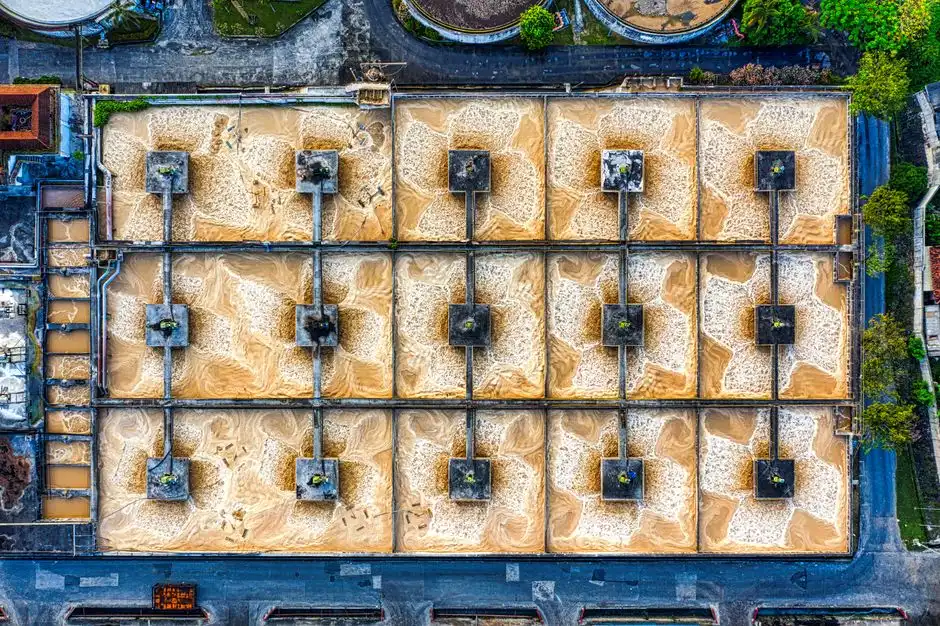
A DAF float at 3–5% DS is already at the gravity-thickener underflow concentration, so the default question for an abattoir is whether to add a thickener at all. Sigma DAF explicitly notes that, based on their slaughterhouse project experience, "the sludge obtained from the DAF system has a high concentration (3–5%), which makes it possible to dispense with a sludge thickener." That is a real capex saving, but it shifts the FOG load to whatever comes next — usually the digester or the dewatering stage.
If the plant does want a dedicated thickening step, the choice is between gravity, rotary drum (RDT), and dissolved gas flotation (DGF). The typical DS envelopes are:
| Thickener Type | Typical Underflow DS | Polymer Required | Notes for Abattoir Sludge |
|---|---|---|---|
| DAF float (primary) | 3–5% | 2–5 g/kg DS cationic PAM | Often replaces a dedicated thickener |
| Gravity thickener | 3–6% | None to minimal | FOG floats, poor underflow solids |
| Rotary drum thickener | 4–8% | 2–6 g/kg DS | Hair and paunch fibre wrap on drum |
| Dissolved gas flotation | 4–6% | 3–6 g/kg DS | Good for light FOG-rich sludge |
Polymer-aided DAF is the dominant thickening step in 50–500 m³/d abattoirs because it concentrates the FOG float in one operation and produces a stream that is already chemically conditioned. Cationic polyacrylamide in the 2–5 g/kg DS range is typical engineering practice for this duty. The trade-off is straightforward: skipping a dedicated thickener saves capex and floor space, but the digester then sees a FOG-rich feed and needs higher mixing intensity (8–10 W/m³) and possibly trace-element dosing to stay within the VFA/TA <0.4 stability window. Plants that cannot tolerate the FOG load on the digester can run a DGF thickener on the float to push it to 4–6% DS, but polymer consumption rises accordingly. An automatic chemical dosing skid lets the plant titrate polymer against real-time DS loading rather than running flat-rate dosing.
Stabilization With Anaerobic Digestion
Mesophilic anaerobic digestion at 35–37 °C is the workhorse for abattoir sludge stabilization, and the published operating envelope is wide enough to plan against with confidence. Mono-digestion of slaughterhouse sludge has been reported at 49.93% COD, 65.85% sCOD, and 82.22% BOD removal with a stable VFA/TA ratio below 0.4 (MDPI Processes, 2022). Co-digestion with waste mixed sludge (WMS) at 40% SWW raises the biochemical methane potential to 735 NL CH4/kg, with a peak methane yield of 550 NL CH4/kg VS at an organic loading rate of 1.5 kg VS/m³·d. Co-digestion with 10% FOG pushes CODt removal to 66% with a specific BMP of 562–777 mL CH4/g CODs removed.
UASB reactors report approximately 90% COD removal at an OLR of 0.4 g/L·d with about 5 L/d of biogas, but COD removal drops below 50% once the OLR climbs to 15 g/L·d (MDPI). That ceiling is the reason most abattoirs pair a UASB with a downstream digester or run a CSTR digester as the primary stabilizer — the CSTR handles OLR swings around holiday production peaks without losing the methanogenic population.
| Configuration | OLR (kg VS/m³·d) | HRT (days) | Removal / Yield | Source |
|---|---|---|---|---|
| Mono-digestion (CSTR) | 1.0–2.5 | 15–20 | 49.93% COD, VFA/TA <0.4 | MDPI 2022 |
| Co-digestion SWW:WMS 40% | 1.5 | 15–20 | 735 NL CH4/kg BMP | MDPI 2022 |
| FOG co-digestion 10% | 1.0–2.0 | 18–22 | 66% CODt, 562–777 mL CH4/g CODs | MDPI 2022 |
| UASB (lab scale) | 0.4 | 1 | ~90% COD, 5 L/d biogas | MDPI 2022 |
| Low-cost tubular digester | <0.5 kg COD/m³·d | >19 | >70% COD removal | MDPI 2022 |
Design parameters to lock in: 35–37 °C mesophilic, 15–20 day HRT, mixing at 5–10 W/m³ to keep FOG emulsified, and a gas-holder sized for roughly 0.6 L CH4 per g COD introduced (MDPI 2022). Trace-element supplementation with Fe, Ni, Co, Mn, and Mo consistently improves OLR tolerance and biogas yield in slaughterhouse digesters (MDPI 2022) — worth specifying for any digester above 100 m³/d working volume. The digester is also where FOG-peak equalization pays for itself: a 24-hour FOG storage tank ahead of the digester smooths the OLR swing that arrives with religious-holiday processing peaks.
Sludge Conditioning Before Dewatering

Conditioning is where abattoir sludge dewatering succeeds or fails. Residual FOG on a filter cloth raises cake moisture by 3–5 percentage points versus a fully conditioned sludge, which is the difference between an 18% DS landfill cake and a 22% DS composting cake. The dominant choice is polymer-only conditioning, and the working range for cationic polyacrylamide on digested abattoir biosolids is 3–8 kg active polymer per tonne of dry solids — a range confirmed by jar tests on multiple abattoir projects rather than a single number you can pull off a data sheet.
Thermal hydrolysis (THP) at 150–170 °C and around 6 bar for 20–30 minutes is the next step up. THP lyses cells, breaks FOG emulsions, and improves both dewaterability and downstream biogas yield — but it adds capex that only pencils out for plants above about 200 m³/d of sludge throughput. Iron-coagulant-aided conditioning (FeCl3 or PACl) is the third option, and it pays for itself when phosphorus co-precipitation is part of the plant's nutrient compliance story; the iron dose ties to the automatic chemical dosing package rather than to a separate skid.
The practical decision is sequencing. Run jar tests on real digester output — not on a DAF float sample — and titrate polymer and iron together. FOG-blind cloths are almost always a polymer-selection problem, not a dose problem, and the fix is usually switching from a high-molecular-weight cationic PAM to a medium-charge, medium-MW blend that holds up against emulsified fat. Plants that skip the jar test and run a flat dose end up doubling polymer consumption within a month.
Dewatering Equipment Comparison for 2026
The four-way equipment choice for abattoir biosolids is plate-and-frame filter press, belt press, screw press, and decanter centrifuge. Headline cake-dryness numbers are similar across the four, but the operating envelopes diverge sharply once FOG and grit are in the feed.
| Equipment | Cake DS | Polymer (kg/t DS) | Energy Use | Throughput Fit | FOG Sensitivity |
|---|---|---|---|---|---|
| Plate-and-frame filter press | 18–25% | 3–8 | Low | Batch; 1–500 m² filtration area | Tolerates FOG with proper polymer |
| Belt press | 14–18% | 3–6 | Low–Medium | Continuous; mid-size plants | High — FOG blinds media |
| Screw press | 18–22% | 2–4 | Low | Limited below 50 m³/d | Moderate — sensitive to grit |
| Decanter centrifuge | 20–28% | 4–10 | High | Continuous; high throughput | Low — but sensitive to grit |
The plate-and-frame filter press is the default choice for the 50–500 m³/d abattoir envelope because it tolerates FOG variability, hits 18–25% DS cake, and runs on low energy with a moderate polymer dose. Batch operation is a disadvantage for plants that need 24-hour unmanned operation, but the cake-dryness payoff versus a belt press is enough to justify the cycle-time penalty in most jurisdictions. HydropureWater's plate-press range of 1–500 m² filtration area covers the full abattoir throughput envelope without forcing a step up to a centrifuge.
Belt presses have lower capex and run continuously, but FOG blinding is severe on raw DAF float and the operator will spend the capex saving on weekly media replacement. Screw presses sit in a useful middle ground for sub-50 m³/d plants with stable, well-conditioned feed. Decanter centrifuges win on throughput and cake dryness (20–28% DS) but punish the operator on energy and require good upstream screening to keep grit out of the bowl. Pick the equipment around throughput, FOG fraction, and operator skill — not around the headline cake-dryness number alone.
Resource Recovery: Biogas, Cake Reuse, and Water Reuse
Reframing the sludge line as a resource-recovery asset is what separates a 2026 design from a 2015 design. The digester is the centre of gravity: at 0.6 L CH4 per g COD introduced and 735 NL CH4/kg BMP at the SWW:WMS 40% mix (MDPI 2022), a 100 m³/d abattoir with 5,000 kg DS/d into the digester can plan on roughly 3,000–3,500 m³ CH4/d, which is 30–35 MWh/d of thermal energy at a standard CHP envelope of 40–55% electrical and 35–45% thermal efficiency.
Cake at 18–25% DS is suitable for composting or as a soil conditioner pending local regulations. The path is straightforward: pressed cake → windrow or in-vessel composting → mature biosolids → agricultural land application, gated by the local regulator's pathogen and heavy-metal limits. Plants without land-access options send cake to landfill or incineration; the higher the cake DS, the lower the transport cost per tonne of dry solids.
Water reuse closes the loop on wash-down demand. The MDPI airlift MBR result — 95 ± 1.9% COD and 70 ± 3.3% TN removal at a 2.5-day HRT, with 14% lower energy consumption than a crossflow MBR — is a realistic design point for the polishing step. UV or chlorine dioxide polishing is required where the reused water contacts food-contact surfaces or facility cleaning equipment. An MBR system ahead of the sludge line keeps the WAS fraction well-stabilized for co-digestion, and the MBR permeate is a free polishing stream for non-critical reuse.
Sizing Checklist for a 2026 Slaughterhouse Sludge Line
Lock these parameters before equipment selection, in this order:
| Parameter | Design Value | Notes |
|---|---|---|
| Influent DS loading | 0.3–0.6 kg DS / kg live-weight / d | Per 1,000 head processed, design input |
| DAF float DS | 3–5% | Often replaces dedicated thickener |
| Target cake DS — landfill | 18–20% | Plate press, screw press |
| Target cake DS — compost / incineration | 22–25% | Higher-pressure press cycle, centrifuge |
| Polymer dose | 3–8 kg active / t DS | Jar-test against real digester output |
| Mesophilic digester | 35–37 °C, 15–20 d HRT, 5–10 W/m³ | OLR 1.5 kg VS/m³·d at SWW:WMS 40% |
| Methane yield | 550–735 NL CH4/kg VS | CHP 40–55% electrical, 35–45% thermal |
| FOG peak equalization | ≥24 h storage | Smooths holiday production OLR swing |
Run jar tests before locking polymer chemistry, not after. Decide digester vs. aerobic-only stabilization on plant scale and CHP availability — below 50 m³/d, aerobic often wins on capex; above 200 m³/d, anaerobic with CHP wins on lifecycle cost. Plan for FOG-peak events around religious-holiday production with equalization or dedicated FOG storage, not with digester overdesign. Verify local discharge and reuse compliance with the regulator before specifying polishing equipment, and use the beverage wastewater sludge treatment guide as a cross-reference for high-organic biosolids where the conditioning envelope overlaps.
Frequently Asked Questions
What cake dryness should I target from a slaughterhouse sludge dewatering press?
Target 18–20% DS for landfill disposal and 22–25% DS for composting or incineration, achieved on a plate-and-frame filter press with 3–8 kg active polymer per tonne DS conditioning. Cake moisture rises 3–5 percentage points when residual FOG is not properly conditioned, so polymer selection matters as much as polymer dose.
What HRT and OLR should I design a mesophilic digester for abattoir sludge to?
Design at 35–37 °C with 15–20 days HRT, 5–10 W/m³ mixing intensity, and an OLR of about 1.5 kg VS/m³·d at a 40% SWW : WMS co-digestion mix. That envelope gives 49–50% COD removal mono-digestion or 735 NL CH4/kg BMP co-digestion, with VFA/TA stable below 0.4.
How much polymer is required to condition digested slaughterhouse biosolids?
The working range is 3–8 kg active cationic polyacrylamide per tonne of dry solids for digested abattoir biosolids, confirmed by jar test on real digester output. DAF float thickening alone needs less — 2–5 g/kg DS — because the float is already partially conditioned during flotation.
What methane yield can I expect from co-digesting slaughterhouse sludge with FOG?
Co-digestion of slaughterhouse sludge with 10% FOG delivers 562–777 mL CH4 per g CODs removed at 66% CODt biodegradability, and SWW:WMS co-digestion at 40% reaches 735 NL CH4/kg BMP with 550 NL CH4/kg VS at the optimum OLR. A 100 m³/d abattoir with 5,000 kg DS/d into the digester can plan on roughly 30–35 MWh/d of thermal energy at a standard CHP envelope.
How should I handle FOG peaks in the sludge train?
Install 24-hour FOG equalization storage ahead of the digester to smooth the OLR swing from religious-holiday production peaks, and confirm with trace-element dosing (Fe/Ni/Co/Mn/Mo) that the methanogenic population tolerates the FOG pulse. Belt presses do not survive raw FOG swings; plate-and-frame filter presses tolerate them with the right polymer.