Why Claxton's Food and Beverage Plants Can't Discharge Untreated
A poultry processor in Evans County running 8,000 birds a day will push roughly 1,200–1,800 m³/day of process water into the sewer, and the concentrations are what kill the deal. Biochemical oxygen demand (BOD) from a poultry deboning line routinely runs 1,500–4,000 mg/L; a vegetable cannery pushing wash water from peas or greens sits in the 800–2,500 mg/L range; a sauce or beverage blender can swing between 500 and 5,000 mg/L across a single shift (per Crystal Clean, 2024). Domestic sewage, by comparison, averages 200–300 mg/L BOD — so most food and beverage waste streams hit 10–20× the strength a municipal plant is sized for.
The pollutant mix is just as unforgiving. Total suspended solids (TSS) from peel, pulp, and packaging fragments land in the 400–2,000 mg/L band. Fats, oils, and grease (FOG) from fryers, rendering, and dairy creameries often exceed 500 mg/L, sometimes spiking past 2,000 mg/L during a clean-out. pH is the wild card: a citrus line drops to 3.5 during acid wash, then the CIP caustic cycle pushes the same pipe to 11.5 two hours later. Total Kjeldahl nitrogen (TKN) from protein-rich streams (poultry, dairy, sauces) frequently clears 100 mg/L. Send any of that slug load to the local Claxton-area publicly owned treatment works (POTW) and the biological stage takes a hit, the headworks screens blind, the operator calls you about a surcharge, and you're shopping for a wastewater engineer by Friday.
Georgia's food-processing footprint in and around Claxton — poultry complexes, vegetable canneries, condiment and sauce plants, small craft beverage operations — generates exactly the waste profile that pretreatment programs were built to stop. "Pretreatment," in this context, means anything done on-site to bring the waste below the local discharge limits before it enters the municipal sewer, and for a Georgia food plant it's the price of keeping the discharge permit.
The Three Pretreatment Limits Every Claxton Plant Must Clear
Every Claxton-area discharger answers to three regulators simultaneously, and the governing rule is straightforward: design to the strictest of the three. Violating any one of them triggers surcharges, consent orders, or permit revocation (per Crystal Clean, 2024).
Layer 1 — Federal categorical standards under 40 CFR Part 405. EPA's Food and Food Products category sets baseline numeric limits by subcategory — poultry products, fruits and vegetables, beverages, dairy, grain processing, and others. Subcategory limits vary significantly: poultry limits tend to be tighter on FOG and TSS, fruit/vegetable limits on TSS and BOD after screening, beverage limits depend heavily on whether the stream is sugary (high BOD) or rinse-water dominant. The federal floor is non-negotiable, but it's rarely the binding constraint.
Layer 2 — Georgia EPD industrial pretreatment program. Georgia Environmental Protection Division implements the federal program through delegation agreements with local POTWs, but it retains authority to set state-level limits and to enforce against Significant Non-Compliance (SNC) facilities. Where Georgia tightens, it tightens on ammonia, TKN, and oil & grease caps — particularly in watersheds with downstream reuse or sensitive receiving streams.
Layer 3 — Local Claxton-area sewer use ordinance. The City of Claxton Public Works / Evans County Water and Sewer Authority holds the discharge permit and sets the local sewer use ordinance, which is almost always the strictest layer. The local cap reflects the receiving POTW's actual capacity and the condition of its collection system. Local limits update whenever the POTW renews its NPDES permit, and the 2026 renewal cycle is the trigger most Claxton plants are currently working against.
The table below shows typical numeric ranges a Georgia food/beverage discharger should expect to design to in 2026. The federal column is drawn from 40 CFR Part 405 subcategory limits; the state and local columns are representative of typical Georgia EPD and small-municipality pretreatment ordinances. Local limits are frequently tighter than what is shown — always confirm against your actual permit.
| Parameter | 40 CFR Part 405 (federal floor, typical range) | Georgia EPD program (typical) | Local Claxton-area ordinance (typical) |
|---|---|---|---|
| BOD₅ (mg/L) | 200–500 (subcategory-dependent) | 200–300 | 150–250 |
| TSS (mg/L) | 200–400 | 150–300 | 100–200 |
| Oil & Grease / FOG (mg/L) | 75–150 | 50–100 | 25–50 |
| pH (s.u.) | 6.0–9.0 | 6.0–9.0 | 6.0–9.0 |
| Total Kjeldahl Nitrogen (mg/L) | Not always set federally | 25–50 | 20–40 |
Inside the 2026 Pretreatment Train: From CIP to Clean Effluent
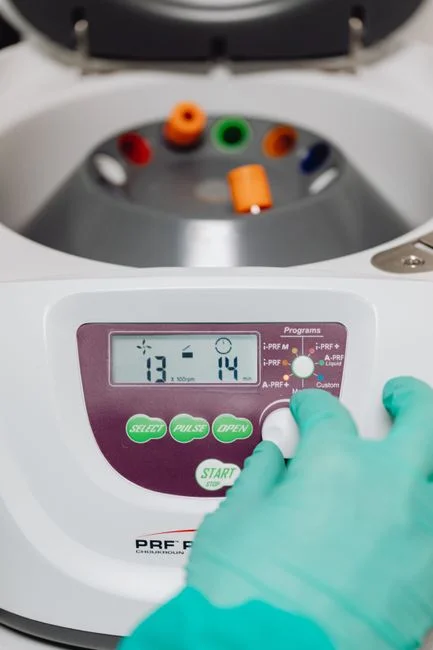
The treatment train below is the order of operations a Claxton food plant should plan around in 2026. Skipping steps is how facilities end up on the SNC list.
Step 1 — Source control and segregation. Concentrated brines, spent CIP caustics, and high-strength rendering waters should be kept out of the main waste line where practical. A side-stream DAF or a holding tank for off-site hauling reduces the load on everything downstream.
Step 2 — Screening. A rotary mechanical bar screen in the 1–3 mm aperture range strips out pulp, seeds, bone fragments, and packaging debris before they blind a DAF or shred a pump impeller. Most Claxton plants under-screen — bar screens sized for municipal sewage plug within hours on a poultry line.
Step 3 — Flow equalization. A 24-hour EQ basin is the single most underrated piece of equipment in a food plant. It dampens peak CIP surges, blends pH swings into something neutralizable, and keeps the downstream biological stage on a steady diet. Hydraulic peaks during sanitation shifts are what trigger hydraulic overload at the POTW.
Step 4 — pH neutralization. An automatic chemical dosing system with pH probe feedback trims influent into the 6–9 band before biological treatment. Without it, the biomass crashes and recovery takes days.
Step 5 — Dissolved Air Flotation (DAF). DAF is the FOG and TSS workhorse. Micro-bubbles attach to oil droplets and fine solids, floating them to the surface for skimming. Typical hydraulic surface loading runs 4–20 m/h depending on the application, and FOG removal of 90%+ is achievable with proper coagulant/flocculant chemistry (per ALAR Corp., 2024). A HydropureWater DAF system sized at 15–25% of the raw waste flow typically handles pre-clarification duty for a small to mid-scale plant.
Step 6 — Biological treatment. MBBR or activated sludge takes the soluble BOD down to the local cap. MBBR's biofilm carriers tolerate load swings from batch CIP better than suspended-growth systems, and the footprint is roughly 30–50% smaller than conventional activated sludge for equivalent load.
Step 7 — Sludge handling. A plate-and-frame filter press drops sludge volume by 80–85% before hauling. For most Claxton plants, sludge hauling is the second-largest opex line after chemicals.
| Step | Unit operation | Target removal | Typical design parameter |
|---|---|---|---|
| 2 | Rotary bar screen | Coarse solids | 1–3 mm aperture |
| 3 | EQ basin | Hydraulic/pH dampening | 18–24 hr retention |
| 4 | pH neutralization | pH to 6–9 | ±0.3 s.u. control |
| 5 | DAF | FOG ≥90%, TSS 60–85% | Surface loading 4–20 m/h |
| 6 | MBBR / activated sludge | BOD to <30 mg/L | F/M 0.1–0.3 (CAS); HRT 4–8 hr (MBBR) |
| 7 | Filter press | Sludge to 18–25% DS | Cycle 2–4 hr |
Choosing the Right Primary Solids Removal: DAF vs Lamella Clarifier
This is the single most common equipment decision a Claxton food plant gets wrong, and the wrong pick shows up in the surcharge column within a quarter. The rule of thumb: if FOG in the raw wastewater runs above ~150 mg/L, DAF almost always wins. If FOG is low and you're particulate-dominated, a lamella clarifier costs less to build and run.
DAF excels where light, floatable material dominates — poultry, rendering, dairy, frying operations, sauce lines with oils. Micro-bubbles carry oil droplets and fine suspended solids to the surface; gravity clarifiers simply can't do that because the density of emulsified oil is close to water. A HydropureWater DAF system with polymer dosing will hit 90%+ FOG removal and 60–85% TSS removal in one pass.
A lamella clarifier uses inclined plates to multiply the effective settling area in a small footprint. Surface loading rates of 20–40 m/h are typical, chemical demand is lower, and there's no recycle pump or saturation tank to maintain. For a vegetable line with high pulp and starch but minimal oil, lamella often beats DAF on both capex and opex.
| Criterion | DAF | Lamella clarifier |
|---|---|---|
| FOG removal | 85–95% | 10–30% |
| TSS removal | 60–85% | 50–75% |
| Surface loading | 4–20 m/h | 20–40 m/h |
| Chemical consumption | Higher (coagulant + flocculant) | Lower (polymer only, often) |
| Footprint (per m³/h) | Larger | Smaller (inclined plates) |
| Best fit | FOG >150 mg/L (poultry, dairy, frying) | Low-FOG, TSS-dominated streams |
For a deeper look at the trade-offs in a comparable application, the DAF or clarifier for food and beverage wastewater guide walks through a parallel decision tree for a North Carolina plant.
Biological Treatment Choices for 2026: MBR, MBBR, or Conventional Activated Sludge
After primary solids removal, the question is how to hit the BOD cap reliably, day after day, while absorbing the swings a batch CIP cycle throws at the system. Three options dominate the 2026 food/bev market in Georgia.
MBR (membrane bioreactor) combines activated sludge with ultrafiltration membranes. Effluent quality is near-reuse (BOD <5 mg/L, TSS <1 mg/L, bacteria and some viruses rejected), and the footprint is the smallest of the three because MLSS can run 8,000–12,000 mg/L. The trade-off is membrane capex, membrane replacement every 7–10 years, and an operator who understands membrane cleaning cycles. A HydropureWater MBR membrane bioreactor makes sense where the plant is space-constrained, water reuse is a near-term goal, or the local POTW cap is exceptionally tight.
MBBR (moving bed biofilm reactor) uses free-floating plastic carriers colonized by biomass. It tolerates load swings from batch CIP better than suspended-growth systems, recovers faster from toxic upsets, and doesn't require routine wasting of mixed liquor. A typical MBBR/MBR or MBBR/clarifier combo hits BOD <30 mg/L and TSS <30 mg/L, clearing most Claxton-area local caps. For small and mid-sized plants without a dedicated wastewater operator, MBBR is the safest 2026 pick.
Conventional activated sludge is the lowest-capex option and the most familiar to operators, but it's also the most sensitive to hydraulic and toxic shock. It needs equalization, consistent wasting, and a microscope on the bench. Appropriate for larger facilities with dedicated operations staff and steady-state loading.
The deeper trade-off between MBR and conventional activated sludge is laid out in the MBR vs conventional activated sludge for food and beverage wastewater comparison.
2026 Capex, Opex, and Permit Path for a Claxton Pretreatment Upgrade
Translating the technical discussion into money: order-of-magnitude capex for a packaged pretreatment system in 2026 runs roughly low six figures USD for a 5–20 m³/h small plant, mid-to-high six figures for a 50–100 m³/h mid-scale system, and into seven figures for a 200+ m³/h custom plant. Aeration equipment, biological reactor tanks, and the DAF unit dominate the equipment bill; site work, controls, and installation typically add 30–50% on top of the equipment cost.
Opex is where most plants underestimate the total cost of ownership. Electrical for aeration is usually the largest line, followed by coagulant and flocculant chemicals, caustic/acid for pH control, sludge hauling, and operator labor. A reasonable rule of thumb for a well-run food/bev plant is that 5–10-year cumulative opex roughly equals or exceeds the original capex — meaning the cheapest system to buy is often the most expensive to run. The full breakdown is detailed in the food processing wastewater plant operating cost breakdown for 2026.
For 2026 permitting, the path runs through three steps. First, file an industrial wastewater permit application with the local Claxton-area POTW (City of Claxton Public Works / Evans County Water and Sewer Authority). Second, confirm whether a Georgia EPD pretreatment permit is required for the discharge category — most Significant Industrial Users will trigger this. Third, document the applicable EPA categorical standard (40 CFR Part 405) subcategory for the facility's main product. Sampling and self-monitoring reports (SMRs) at the monitoring manhole, typically 24-hour composites, are required on a defined schedule, and missed SMRs remain the most common audit failure mode for Georgia industrial users in 2026. Plants instrumenting for real-time monitoring should review the IoT sensor selection for a food processing wastewater plant before specifying a control upgrade.
Frequently Asked Questions
What BOD and TSS limits apply to a food processing plant near Claxton, GA in 2026?
Federal categorical standards under 40 CFR Part 405 set the floor, typically 200–500 mg/L BOD and 200–400 mg/L TSS depending on subcategory. Georgia EPD's pretreatment program typically tightens this to 200–300 mg/L BOD and 150–300 mg/L TSS, and the local Claxton-area ordinance is usually strictest at 150–250 mg/L BOD and 100–200 mg/L TSS. Design to the local cap and confirm against your actual permit.
Is DAF or a lamella clarifier better for FOG removal in poultry or dairy wastewater?
DAF is the correct choice when raw FOG exceeds ~150 mg/L. A properly sized DAF achieves 85–95% FOG removal and 60–85% TSS removal, while a lamella clarifier typically removes only 10–30% of FOG because emulsified oil won't gravity-settle. Reserve lamella for low-FOG, TSS-dominated streams like vegetable wash water.
Do I need a Georgia EPD pretreatment permit if I already have a local discharge permit?
Often yes. Georgia implements its pretreatment program through POTW delegation, but the local authority may require state concurrence, and Significant Industrial Users typically need both a local discharge permit and confirmation of Georgia EPD oversight. File the local application first, then let the POTW route the state review — this is the most common 2026 path for Claxton-area food and beverage facilities.