Why a Vietnam Roche Acquisition Triples the Wastewater Workload
The moment a Roche subsidiary or local SPV signs the Vietnamese investment certificate, three wastewater obligations trigger simultaneously: the environmental permit must be transferred or re-issued through the Department of Natural Resources and Environment (DONRE) under the Ministry of Natural Resources and Environment (MONRE) framework, the host industrial-park sewer contract must be novated to the new operator, and the influent must be re-baselined for active pharmaceutical ingredients (APIs), solvents, COD, BOD, TDS and heavy metals before any discharge begins. None of these are passive name swaps — each requires a separate filing, a separate technical annex, and a separate sampling campaign.
The macro context matters: Ho Chi Minh City is mid-way through a USD 1.3 billion wastewater expansion across six new plants and one upgrade, and the Thu Duc City facility — Southeast Asia's largest at 1.1 million m³/day and a USD 524 million MBBR-based build — is being commissioned to serve 1.8 million residents across eight districts (per trade.gov, 2025-08). Vietnam is upgrading, not loosening, enforcement, and a 2026 acquirer inherits that trajectory rather than riding a legacy baseline.
The second layer is corporate. Roche group water-reuse and water-risk targets sit above the site permit; site EHS must defend the CAPEX line to headquarters against group ESG metrics, not just to MONRE. Treat the two layers as parallel deliverables with one P&ID: the same equalization → DAF → MBBR → MBR → disinfection train that satisfies QCVN 40:2011/BTNMT also feeds the cooling-tower make-up loop that satisfies the water-reuse KPI.
Vietnam's Wastewater Regulatory Stack for Pharma Plants
Law 72/2020/QH14 on Environmental Protection is the umbrella statute for every wastewater permit in Vietnam. Decree 08/2022/NĐ-CP and Circular 02/2022/TT-BTNMT provide the detailed implementing instruments — they define the EIA contents, the environmental permit application, the self-monitoring frequency, and the violation classes. Two national technical standards then set the numeric envelope the design must hit: QCVN 40:2011/BTNMT for industrial wastewater discharge, and QCVN 28:2010/BTNMT for the receiving water body.
The industrial-park sewer contract is the de facto third standard. Parks in Bình Dương, Đồng Nai, Bắc Ninh, and the HCMC export-processing zones typically apply in-pipe limits 20–40% tighter than QCVN 40 on COD, NH₃-N and total P, and the park operator — not MONRE — is the day-to-day gatekeeper. A Roche site EHS who designs only to QCVN 40 will fail the park's monthly composite check and risk contract termination.
Permit authority splits along administrative lines: MONRE issues national-level guidance and the EIA decision for large-investment projects, while provincial DONRE offices issue the environmental permit and run the inspection programme. The EIA decision and the environmental permit are two separate documents; closing a deal does not transfer either one automatically — both must be re-issued in the new operator's name within the filing window defined by Decree 08/2022/NĐ-CP.
| Parameter | Unit | QCVN 40:2011/BTNMT (industrial discharge, Class B/C reference) | QCVN 28:2010/BTNMT (municipal receiving water, column A1/A2 reference) |
|---|---|---|---|
| pH | — | 6–9 | 6–8.5 |
| BOD₅ | mg/L | ≤ 50 | ≤ 4 (A1) / ≤ 25 (A2) |
| COD | mg/L | ≤ 150 | ≤ 10 (A1) / ≤ 50 (A2) |
| TSS | mg/L | ≤ 100 | ≤ 20 (A1) / ≤ 30 (A2) |
| NH₃-N (as N) | mg/L | ≤ 10 | ≤ 0.1 (A1) / ≤ 1 (A2) |
| Total N (as N) | mg/L | ≤ 40 | ≤ 5 (A1) / ≤ 20 (A2) |
| Total P (as P) | mg/L | ≤ 6 | ≤ 0.2 (A1) / ≤ 2 (A2) |
| Sulfide (as H₂S) | mg/L | ≤ 1.0 | ≤ 0.05 |
| Chloride | mg/L | ≤ 1,000 (industrial-park contract often ≤ 500) | ≤ 250 (A1) / ≤ 600 (A2) |
| Residual chlorine | mg/L | ≤ 1.0 | ≤ 0.05 |
Influent Characterization: What a Vietnam Pharma Plant Actually Discharges
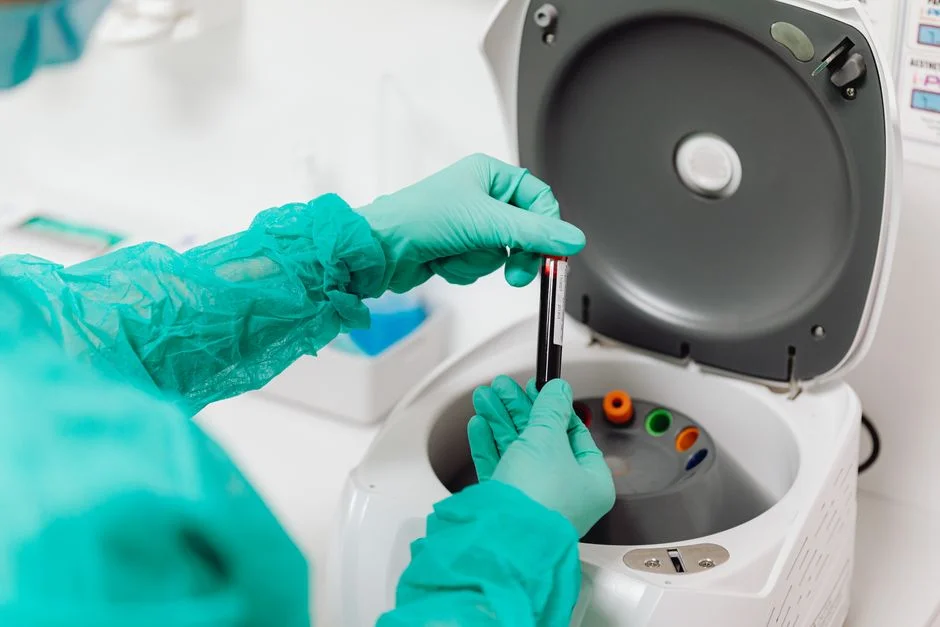
A Vietnam small-molecule / API / vaccine plant produces a non-domestic envelope dominated by batch swings, not steady flow. The design must be sized to the spike, not the average, because a single fermenter CIP dump or a tablet-coating wash batch can double the daily COD load in two hours.
Spike sources to characterize explicitly: API and antibiotic residues from synthesis and fermentation broths; organic solvents (methanol, ethanol, acetone, dichloromethane, THF) from purification and crystallisation; CIP chemicals (NaOH 2–5%, HNO₃ 1–3%, surfactant blends); cooling-tower blowdown with biocides; and laboratory wash from QC. The BOD:COD ratio typically sits in 0.3–0.5, well below the 0.5–0.7 range seen in food-and-beverage wastewater — the lower ratio means the carbon is more recalcitrant, the MBBR carrier biofilm must work harder, and Fenton or ozone polishing may be needed downstream of the MBR for residual API oxidation. The U.S. Commercial Service notes that rapid industrial-park development has historically left wastewater under-treated (trade.gov, 2025-08) — a warning that historical plant data must be re-baselined, not trusted from the due-diligence pack.
| Parameter | Unit | Typical Vietnam pharma influent envelope | Design spike (peak hour) |
|---|---|---|---|
| Flow | m³/day | 50–1,000 (plant-scale dependent) | +30% on CIP day |
| COD | mg/L | 1,500–4,500 | 8,000–12,000 |
| BOD₅ | mg/L | 600–2,000 | 3,000–5,000 |
| TSS | mg/L | 300–900 | 1,500 |
| NH₃-N | mg/L | 30–80 | 150 |
| Total P | mg/L | 5–20 | 40 |
| Oil & grease | mg/L | 50–200 | 500 |
| Sulfate | mg/L | 200–800 | 1,500 |
| Conductivity | µS/cm | 1,500–4,000 | 6,000 |
| pH | — | 5.5–9.5 | 2–11 (CIP swing) |
| Temperature | °C | 25–38 | 45 (post-CIP) |
The 2026 Treatment Train: Equalization → DAF → MBBR → MBR → Disinfection
Start with a rotary bar screen at the headworks to remove rags and packaging debris before the flow enters equalization. The equalization basin should run 8–12 hours HRT with coarse-bubble aeration and a submersible mixer to prevent sulfide build-up; pH is conditioned toward 6.5–8.5 using a PLC-controlled chemical dosing system for pH, coagulant and flocculant injection. The equalization tank is the buffer that lets every downstream unit run at design average, not design spike.
From equalization, flow goes to a DAF system for pre-MBBR suspended-solids and oil-and-grease removal. DAF is the right choice here because the influent carries emulsified oils, coating polymers and colloidal API fines that settle poorly; target a surface loading rate in the 15–25 m³/m²·h band and an air-to-solid ratio (A/S) in 0.03–0.08 kg air/kg TSS. The DAF effluent typically drops COD by 30–50% and TSS by 60–80% before the biological stage.
The MBBR stage is the bulk COD/BOD workhorse. Use carrier media at 30–50% fill fraction in the aerobic zone, sized to a volumetric BOD loading in the 0.4–1.0 kg BOD/m³·d band; the Thu Duc City plant is the regional reference that MBBR is the proven technology of choice in Vietnam at scale (per trade.gov, 2025-08). For the downstream polishing, a MBR system as the ammonia and final TSS polishing stage using a PVDF flat-sheet MBR module for stable flux on pharma wastewater gives MLSS in the 8,000–12,000 mg/L range and a design flux of 12–18 LMH, with flat-sheet preferred over hollow-fiber for the API-fouling resistance. Disinfection closes the train with a UV sterilizer as the final disinfection step before discharge (UV preferred over Cl₂ to keep residual chlorine inside the QCVN 40 ≤ 1.0 mg/L ceiling), with sodium hypochlorite as the polishing backup if the receiving body is a small stream with low dilution.
Sludge, Reuse and the Roche Water-ESG Layer
Waste activated sludge from the MBBR and MBR is thickened (typically a gravity belt thickener to 3–5% DS) and then dewatered with a plate-and-frame filter press for pharma sludge dewatering; target cake dryness of 22–28% DS with a cationic polymer dose in the 4–8 kg/ton DS band. The cake is then routed to a licensed hazardous-waste incinerator if API residues classify it under Vietnam's hazardous-waste list (Decision 35/2015/QĐ-TTg as amended), otherwise to a municipal solid-waste facility permitted for industrial sludge.
On the reuse side, the MBR permeate — and DAF float-cleared backwash — are candidates for cooling-tower make-up after RO polishing for cooling-tower make-up reuse. The trade-off is explicit: zero-liquid-discharge (ZLD) via brine concentrator and crystallizer delivers 95%+ water recovery but multiplies CAPEX 2–3× versus discharge-to-park, while discharge-to-park is the 2026-relevant default unless the site is in a water-stressed province (e.g., Bình Dương, Đồng Nai) where the host park operator already meters reuse demand. Run both options past the Roche group water target before locking the design.
30/60/90-Day Acquisition Compliance Playbook
Days 0–30 — close and stand-up. File the MONRE/DONRE environmental permit transfer under the new investment certificate; lodge the EIA decision amendment; submit the wastewater section of the new investment certificate; execute the industrial-park sewer-contract novation; and commission a 14-day baseline-sampling grid covering influent, equalization, DAF effluent, MBR permeate and final discharge, with 24-hour composites on at least three working days. Engage the RO/UF membrane elements supplier and the valves, instruments and media vendor early enough that long-lead items are on order before day 30.
Days 31–60 — pilot and select. Run a 30-day bench/pilot of the proposed train on real wastewater; finalize DAF, MBBR, MBR and disinfection vendor selection; lock CAPEX/OPEX banded by plant capacity; submit the detailed design package for DONRE review if the design changes the original EIA. Reference the tablet-coating wash pretreatment before the MBBR stage process guide and the SCADA architecture for a pharmaceutical wastewater plant when sizing the upstream and control layers.
Days 61–90 — commission and prove. Wet commissioning of the train, operator training, and a 24-hour composite sampler programme aligned with QCVN 40 monitoring frequency and the park operator's monthly check. From day 91, the plant must demonstrate compliance under the new operator's name.
| Plant capacity (m³/day) | CAPEX band (USD, equipment + install) | OPEX band (USD/m³ treated) | Default disposition |
|---|---|---|---|
| 50 | 180,000 – 320,000 | 0.9 – 1.6 | Discharge to park |
| 200 | 520,000 – 850,000 | 0.6 – 1.1 | Discharge to park |
| 500 | 1.1 M – 1.8 M | 0.4 – 0.8 | Discharge to park + RO reuse for cooling |
| 1,000 | 2.0 M – 3.2 M | 0.35 – 0.7 | RO reuse + ZLD feasibility study |
Frequently Asked Questions
Which standard is actually binding — QCVN 40, QCVN 28, or the industrial-park contract?
QCVN 40:2011/BTNMT is the binding national discharge standard; QCVN 28:2010/BTNMT applies to the receiving water body and is enforced indirectly through MONRE/DONRE monitoring. The industrial-park sewer contract is the de facto tightest limit in practice — park operators in Bình Dương, Đồng Nai, Bắc Ninh and HCMC export zones typically impose in-pipe limits 20–40% tighter than QCVN 40 on COD, NH₃-N and total P, and breach is grounds for contract termination. Design to the tightest of the three.
What is the permit-transfer filing window and the re-baselining expectation?
Under Decree 08/2022/NĐ-CP and Circular 02/2022/TT-BTNMT, the environmental permit transfer and the EIA decision amendment must be filed with the provincial DONRE within the window defined by the new investment certificate — typically prior to first discharge under the new operator's name. Re-baselining is expected to cover a 14-day, 24-hour composite sampling campaign on influent, equalization, DAF effluent, MBR permeate and final discharge before the design is locked.
What is the standard MBBR → MBR treatment train and the typical effluent envelope?
The 2026 default train is flow equalization (8–12 h HRT) → DAF (15–25 m³/m²·h surface loading) → aerobic MBBR (0.4–1.0 kg BOD/m³·d, 30–50% carrier fill) → MBR with PVDF flat-sheet modules (MLSS 8,000–12,000 mg/L, flux 12–18 LMH) → UV disinfection. The design effluent envelope is COD ≤ 50 mg/L, BOD₅ ≤ 10 mg/L, TSS ≤ 5 mg/L, NH₃-N ≤ 1 mg/L, total P ≤ 0.5 mg/L, pH 6–9 — well inside QCVN 40:2011/BTNMT Class A and inside the in-park contract envelope.
What is the CAPEX/OPEX band and the reuse-vs-discharge trade-off?
For a 200 m³/day plant the equipment-and-install CAPEX band is roughly USD 520,000 – 850,000 and OPEX USD 0.6 – 1.1 per m³ treated; for a 1,000 m³/day plant CAPEX rises to USD 2.0 – 3.2 million with OPEX USD 0.35 – 0.7 per m³. Discharge-to-park remains the 2026 default; RO polishing for cooling-tower make-up reuse adds 15–25% to CAPEX but cuts discharge volume by 40–60% and supports Roche group water-reuse KPIs. For a parallel jurisdiction comparison, see the parallel Roche Mexico compliance guide for NOM-001-SEMARNAT-2021, the parallel Roche Texas compliance guide for TCEQ and TPDES, and the peer pharma M&A compliance guide for Arizona (ADEQ, AZPDES).