Why a Pharmaceutical ETP Cannot Run on Generic Wastewater SCADA
A SCADA system for a pharmaceutical wastewater plant is a PLC-and-HMI/SCADA-server layer that monitors flow, pH, COD, TOC, dissolved oxygen, and chemical dosing across the API effluent treatment plant (ETP) in real time, and logs every operator action to a validated historian for FDA 21 CFR Part 11 and EU Annex 11 compliance. A typical architecture uses redundant PLCs, an OPC-UA server, and a central SCADA workstation, with 2026 CAPEX of roughly $180K–$1.4M for a 50–500 m³/day plant (HydropureWater field data, 2026). Three constraints separate a pharma ETP SCADA from any generic wastewater implementation, and no SCADA explainer in the current top-3 SERP addresses them.
First, the ETP discharges to a controlled discharge point and, inside the plant fence, often feeds a reuse loop. The effluent concentration is itself a GMP release parameter: an off-spec equalization tank is not a compliance event, it is a batch rejection event. Second, the system must enforce 21 CFR Part 11 §11.10(a)–(k) controls — unique accounts, electronic signatures, time-stamped audit trails for setpoint changes, alarm acknowledgements, and recipe edits. Third, EU GMP Annex 11 §4 requires documented validation of the computerized system against a URS, with periodic review. A municipal or food-plant SCADA carries none of these obligations.
Cross-contamination between product families is the fourth, less obvious constraint: an API plant running two antibiotics in parallel cannot let a shared ETP carry data on the wrong batch, which forces segregation in tag naming, historian retention, and access control. For the controls engineer, this means the SCADA is no longer an HMI project; it is a validated computerized system sitting at the intersection of EHS, QA, and operations. The PLC control engineering guide covers the lower-level automation in more detail.
Pharma ETP Unit-Process Map and the SCADA Tag List It Generates
The unit operations of a typical API ETP run in a fixed sequence, and the SCADA tag list falls out of that sequence one-for-one. A 100 m³/day plant typically carries 180–260 analog and 400–600 discrete I/O points (HydropureWater field data, 2026); the table below maps the major unit operations to the tags a controls engineer must specify. For process-side depth, the pharma API wastewater process guide covers the unit operations in detail; this section stays on the instrumentation and SCADA side.
| Unit Operation | SCADA Tag (example) | Sensor / Signal | Range | Default Alarm | 21 CFR Part 11 Record |
|---|---|---|---|---|---|
| Equalization tank | EQ-100.LEV, EQ-100.PH | Hydrostatic level, pH probe, 4–20 mA + HART | 0–6 m, 0–14 pH | Low 0.5 m, high 5.5 m; pH low 2.0, high 11.0 | Audit trail on setpoint change; operator ID on manual override |
| pH correction (NaOH / H₂SO₄ dosing) | DOS-200.PH_CTRL_SP | pH probe + PID loop output to automatic chemical dosing skid | 0–14 pH, 4–20 mA | SP deviation ±0.5 pH for 5 min | Setpoint change with reason + e-signature |
| Primary clarification (DAF / lamella) | DAF-300.FI, DAF-300.SDU | Electromagnetic flow, sludge density | 0–50 m³/h, 0–5 % w/w | High flow 110 % of design; polymer pump fault | Alarm ack log + corrective action note |
| Biological (SBR / MBBR / MBR) | MBR-400.DO, MBR-400.TMP, MBR-400.PH | Optical DO, transmembrane pressure, pH | 0–10 mg/L O₂, -1 to 0 bar, 0–14 pH | DO low 1.5 mg/L; TMP high -0.3 bar; pH out of 6.5–8.5 | Critical alarm routed to MES Quality event |
| Tertiary (sand filter + carbon + RO) | RO-500.CONDUCT, RO-500.PHI, RO-600.CONDUCT | Conductivity, pH on permeate and reject | 0–2000 µS/cm, 0–14 pH | Permeate conductivity > 50 µS/cm; reject ratio out of band | Trend stored in validated historian; LIMS pulls the result |
| Effluent monitoring | EFF-700.COD, EFF-700.TOC | Online COD/TOC analyzer (Hach, Endress+Hauser, or S::can class) | 0–1000 mg/L COD, 0–100 mg/L TOC | COD high 250 mg/L; TOC high 30 mg/L (typical EU EQS-aligned contract) | Quality alarm, MES holds batch release |
| Sludge dewatering (press) | SLP-800.PI, SLP-800.CAKE | Pressure transmitter, cake moisture NIR | 0–16 bar, 0–30 % DS | High pressure 12 bar; cake moisture > 22 % | Press-cycle report archived 7 years |
The biological train is the highest-density section: an MBR train with a PLC-integrated MBR system alone contributes 60–90 I/O points, including permeate flow, backwash sequence, and CIP status. Skip any of these and the historian will not reproduce a contamination event back to the QA review board.
Reference SCADA Architecture for an API ETP
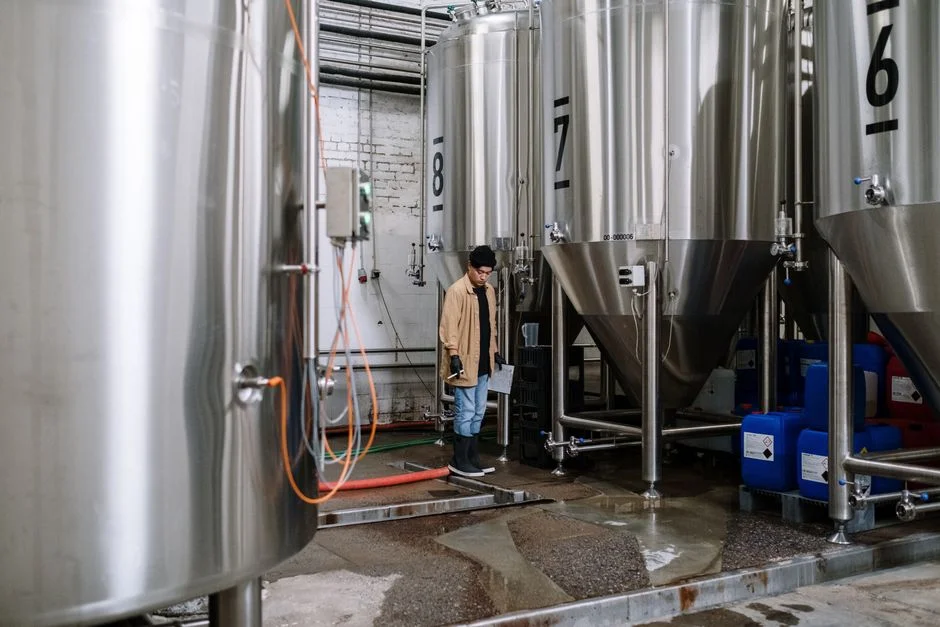
A defensible pharma ETP SCADA follows a five-layer model. Layer 1 is field instrumentation (smart instruments on HART or IO-Link). Layer 2 is PLCs — typically one per unit process (Siemens S7-1500 or Allen-Bradley CompactLogix class), each handling its own local I/O. Layer 3 is an industrial Ethernet ring using managed switches, with PRP or HSR for zero-loss redundancy and RSTP as the fallback. Layer 4 is the SCADA server pair plus a validated historian (WinCC, Ignition, or iFIX). Layer 5 is the operator and supervisor HMI stations, with thin clients for QA review access.
| Topology | CAPEX Impact | Mean Time to Repair (MTTR) | Single-Fault Containment | Best Fit |
|---|---|---|---|---|
| Centralized (one large PLC, all I/O home-run) | Baseline | 4–8 h (whole plant down on CPU fault) | Poor — one fault stops all trains | < 100 m³/day single-train plants |
| Distributed (one PLC per unit process) | +20–35 % vs. centralized | 0.5–2 h (swap spare PLC or card) | Strong — one train fault does not stop the others | Multi-train API plants, MBR + RO with batch-release coupling |
OPC-UA is the data backbone between PLCs and the validated historian, and it is the GAMP 5 friendlier option: open protocol means less custom interface code (Category 5) and more configured integration (Category 4). Legacy OPC-DA requires DCOM configuration that auditors routinely flag. Redundancy choices follow the cost of downtime: redundant SCADA servers with automatic failover and redundant historians are non-negotiable for a 500 m³/day multi-train plant because the MBR train's unplanned stop can pin a $200K batch in the ETP; redundant PLCs are reserved for the MBR and the RO trains only.
Validated Alarm Philosophy for Pharma ETP
A pharma ETP alarm is a GMP record, not a notification. The philosophy is tiered into four classes, each with a documented operator response and a retention path: Engineering (informational, no acknowledgement required, retained 30 days); Operator Warning (yellow, acknowledged within 30 minutes, retained 1 year); Operator Critical (red, acknowledged with a corrective action note, retained 7 years); and Quality Alarm (triggers a Quality event in the MES, retained for the life of the affected batch plus 7 years). Validated default setpoints the controls engineer should populate: equalization pH low 2.0 / high 11.0; MBR DO low 1.5 mg/L; MBR TMP high -0.3 bar (manufacturer-dependent); effluent COD high 250 mg/L; effluent TOC high 30 mg/L per typical EU EQS-aligned contract limits (HydropureWater field data, 2026).
Per 21 CFR Part 11 §11.10(e), every alarm acknowledgement must capture the operator ID, the timestamp, the value at the time of acknowledgement, and a free-text disposition. Skipping the disposition is the single most common audit finding on pharma SCADA systems because vendors default to a binary ack button. The alarm summary, the trend at the time of the alarm, and the operator note are then exported as a single record to the MES — that is what a QA reviewer reads during a deviation investigation.
FDA 21 CFR Part 11, EU Annex 11, and the Validation Lifecycle
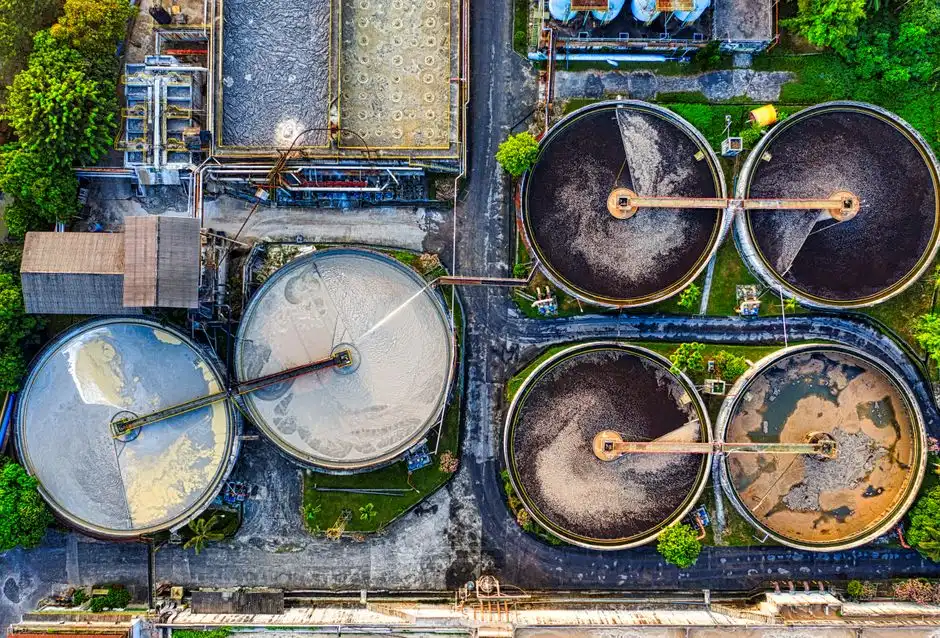
Compliance is feature-by-feature, not aspirational. The specific SCADA features that satisfy 21 CFR Part 11 are: unique user accounts (§11.10(d)), password policy with rotation and minimum length (§11.10(g)), automatic logout after a defined idle period, electronic signature capture requiring username, password, and a free-text reason (§11.50 / §11.70), and a time-stamped audit trail for setpoint changes, alarm acknowledgements, recipe edits, and override actions (§11.10(e)). EU GMP Annex 11 adds supplier qualification, periodic review, and a documented risk assessment for the system.
The GAMP 5 categories map to SCADA components as follows: Category 1 covers the operating system and PLC firmware; Category 3 covers the COTS SCADA software (WinCC, Ignition, iFIX); Category 4 covers configured PLC code, alarm thresholds, and HMI screens; Category 5 covers custom interfaces to the MES or LIMS. The validation lifecycle the engineer should document runs URS → FS → DS → IQ → OQ → PQ → ongoing periodic review, and the PQ must include a documented test of the audit trail — for example, "the system can reproduce who changed the pH setpoint on date X at time Y and what value was in place before and after." That single test is the line item an FDA inspector opens the file to find.
SCADA, MES, and the LIMS Connection
The SCADA historian is the source of process data, not the source of analytical truth. The data flow is: SCADA historian → OPC-UA bridge → MES for batch release gating, and a parallel path → LIMS for finished-water and effluent analysis uploads. The SCADA pushes the sample-collect timestamp, the analyzer status, and the raw signal; the LIMS pushes back the validated result, which is what QA signs against. This separation matters because the LIMS is the validated record under Annex 11 for off-line assays, and the SCADA is the validated record for continuous monitoring — collapsing the two creates an audit-trail conflict.
Recent pharma MES vendors (Werum PAS-X, Emerson Syncade) ship validated OPC-UA connectors, and that is the simplest path to GAMP 5 compliance for the SCADA-to-MES hand-off. Custom REST or SQL bridges should be avoided in a regulated plant because they push the integration into GAMP 5 Category 5, which adds validation cost without functional benefit. The smart water monitoring market trend toward OPC-UA over the field bus is documented in the smart water monitoring market data brief.
CAPEX, OPEX, and ROI: 2026 Numbers for a 50–500 m³/day API ETP
The 2026 CAPEX band a controls engineer can defend in a Functional Specification runs as follows: a basic single-server SCADA package for a 50 m³/day ETP at $180K–$320K; a fully redundant, validated, GAMP 5 FAT-tested system for a 500 m³/day multi-train API plant at $900K–$1.4M. OPEX items the procurement team will ask about: SCADA software subscription 3–5% of license value per year, validation maintenance and periodic review budget 8–12% of CAPEX per year, and one controls engineer FTE allocated at roughly 25% for ongoing change control.
| Cost Line | 50 m³/day Plant | 250 m³/day Plant | 500 m³/day Plant |
|---|---|---|---|
| SCADA hardware + software (CAPEX) | $180K–$320K | $450K–$750K | $900K–$1.4M |
| Validation documentation (one-time) | $40K–$70K | $90K–$150K | $180K–$280K |
| Annual SCADA software subscription | $6K–$14K / yr | $18K–$32K / yr | $35K–$60K / yr |
| Periodic review + change control | $15K–$30K / yr | $40K–$75K / yr | $80K–$140K / yr |
| Controls engineer FTE allocation | ~25 % (~$25K / yr) | ~25 % (~$25K / yr) | ~25 % (~$25K / yr) |
A defensible 3-year ROI calculation: 30–60% reduction in operator intervention on routine alarms, ~$80K–$220K/year of avoided off-spec batch rejection (one rejected API batch at the ETP typically costs $50K–$300K depending on product value), and the avoided regulatory finding — an FDA Form 483 observation on audit-trail integrity is the single most expensive line item in the calculation, and remediation cost runs 10–50x the underlying fine. The PLC control engineering guide and the related PLC control for wastewater article cover the lower-level automation that this SCADA layer sits on top of.
Frequently Asked Questions
What does a SCADA system for a pharmaceutical wastewater plant actually monitor?Flow, pH, COD, TOC, dissolved oxygen, transmembrane pressure on the MBR, conductivity on the RO permeate and reject, sludge press feed pressure, and chemical dosing rates on the pH correction loop — typically 180–260 analog and 400–600 discrete I/O points for a 100 m³/day API ETP (HydropureWater field data, 2026). See the pharma API wastewater process guide for the unit-by-unit breakdown.
How does 21 CFR Part 11 apply to a wastewater SCADA?Every setpoint change, alarm acknowledgement, and operator override must carry a unique user ID, a timestamp, and a retrievable audit-trail entry under §11.10(e). Electronic signatures for batch release require a username, password, and a free-text reason per §11.50 / §11.70.
What is the GAMP 5 category of a COTS SCADA like Ignition or WinCC?Category 3 for the COTS software itself, Category 4 for configured alarm thresholds and HMI screens, and Category 5 for any custom interface to the MES or LIMS. Category 5 is where the validation cost lives, which is why validated OPC-UA connectors from MES vendors are preferred.
How much does a pharma ETP SCADA cost in 2026?A basic single-server package for a 50 m³/day plant runs $180K–$320K; a fully redundant, GAMP 5 FAT-tested system for a 500 m³/day multi-train plant runs $900K–$1.4M, before validation documentation and OPEX.
Can a pharma ETP use a generic municipal wastewater SCADA?Not without significant retrofit. A generic SCADA lacks the audit trail, e-signature, segregation-of-duties, and GAMP 5 evidence package that 21 CFR Part 11 and EU Annex 11 require, and it cannot serve as the validated system for batch release gating.
Related Equipment
- industrial RO system — specifications, capacity range, and technical data