Why Osaka Is a Special Case for Data Center Water
Osaka sits at the downstream end of the Yodo River basin, which supplies drinking water to roughly 13 million people across the Kansai region and is classified as water-stressed under Japanese national water-accounting frameworks. A 100 MW data center in this corridor can demand up to 2 million liters of water per day (per ide-tech.com, 2026), and that demand is now landing on a basin that is already under allocation pressure between municipal users, agriculture, and industry. Any new hyperscale campus in Osaka Bay or the Inland Sea corridor therefore cannot be designed on a generic "RO + sewer" template — freshwater intake, discharge volume, and seismic resilience all collide in a single permitting conversation.
Two regional constraints dominate the engineering choice. The first is the Nankai Trough seismic expectation: Japan Building Standard Law and related guidelines (Building Standard Act, 1981 amendments and onward) push structural design toward base shear coefficients of roughly 0.2-1.0 for water-handling equipment, and water treatment skids in Osaka are typically specified with seismic restraints, low centers of gravity, anchor bolts sized to Japanese standard (JIS B 0202) thread families, and flexible couplings on all process piping to absorb inter-story drift. The second is siting: dense urban Osaka leaves very little land for outdoor evaporation ponds or crystallizer pads, so packaged, indoor skid-mounted treatment with low-noise enclosures (<65 dBA at 1 m) is the practical default. For an Osaka engineer comparing this against tropical or arid references like the Medan data center treatment guide, the seismic and siting deltas — not the chemistry — are what break the standard design.
The Two Wastewater Streams an Osaka Data Center Actually Generates
A 50-200 MW Osaka campus generates two chemically distinct streams that almost never share a single treatment train, and the difference matters for both equipment sizing and permit strategy. Cooling tower blowdown (CTBD) is the dominant stream by volume and the only one that justifies membrane treatment. At 4 cycles of concentration, 25-30% of makeup water leaves as blowdown (per genesiswatertech.com, 2026), so a facility using 10 million gallons per month of makeup generates 2.5-3 million gallons of CTBD that must either be reused, discharged, or evaporated. CTBD chemistry sits at TDS 1,200-6,000 mg/L, suspended solids 10-50 mg/L, with silica, calcium carbonate, calcium sulfate, and accumulated biocides and corrosion inhibitors all concentrated above makeup levels (per genesiswatertech.com).
Sanitary wastewater and equipment-pad drainage (humidifier purge, generator test water, floor drains) are the second stream. They are low-volume — typically 50-100 L per person per day of sanitary flow plus intermittent batch loads — but they must still meet Osaka City sewer ordinance limits before they can be co-discharged with CTBD. The design impact is that sanitary flow is treated with a small packaged biological system (typically an MBR) sized for peak daily occupancy, while CTBD gets its own continuous side-stream filtration and membrane train. Mixing the two streams forces the membrane train to handle biological fouling it was never designed for and inflates the sanitary train to handle scaling it will never see.
| Stream | Typical flow | TDS (mg/L) | Suspended solids (mg/L) | Generation pattern | Treatment path |
|---|---|---|---|---|---|
| Cooling tower blowdown (CTBD) | 25-30% of makeup at 4 cycles | 1,200-6,000 | 10-50 | Continuous, scaling-prone | Side-stream filter → UF → RO ± MVC |
| Sanitary / equipment drain | 50-100 L/person/day plus batches | <1,000 | 100-300 | Intermittent, BOD/COD dominated | Packaged MBR biological treatment |
Japanese Compliance Backdrop: Water Pollution Control Act and Osaka Sewer Ordinance
Japan's Water Pollution Control Act (Suishitsu Odaku Bōshi-hō, 水質汚濁防止法) sets the national effluent ceiling, and Osaka City layers a stricter local sewer ordinance (jōrei, 条例) on top of it for any industrial discharge into the municipal sewer system. The hierarchy matters: a hyperscale campus discharging to Osaka City sewer must clear both the national uniform effluent standards (排水基準) and the local ordinance's tighter limits on parameters such as BOD, suspended solids, pH, and various harmful substances. The Osaka City Public Sewerage Ordinance (Osaka-suishitsu-jōrei) typically caps sewer-discharge parameters well below national defaults, and prefectural consent from Osaka-fu is often required for discharges to Yodo basin tributaries or directly to Osaka Bay.
The practical framing for an engineer is binary. If sewer capacity is available and discharge is permitted, the train only needs to meet Osaka City ordinance limits — usually achievable with a comparatively light filtration and polishing chain, and the economic case is built on avoided discharge fees and not on freshwater savings. If sewer capacity is constrained, hyperscaler water-positive pledges apply, or the site sits inside a basin where further freshwater withdrawal faces social and regulatory friction, the calculus flips: the campus must design for on-site reuse, with the concentrate stream either routed to MVC evaporation for partial ZLD or crystallized for full ZLD. Engineers working in other Kansai cities will recognize a similar pattern from the Jakarta data center cooling blowdown treatment reference, but the Osaka City ordinance and Yodo basin policy backdrop are the binding constraints here.
Reference Process Train: Side-Stream Filtration → UF → RO → Optional MVC
The reference train that fits the majority of Osaka hyperscale sites is a four-stage side-stream and membrane chain. Stage 1 is side-stream filtration: 1-5% of circulation flow passes through 10-25 micron self-cleaning filters with automatic scraping, at $50,000-200,000 installed for typical data center flows (per genesiswatertech.com). Its job is to drop suspended solids, biofilm fragments, and corrosion products out of the recirculating loop before they reach the blowdown stream, which in turn makes the blowdown membrane-friendly.
Stage 2 is PVDF ultrafiltration pretreatment at 0.01-0.1 micron, operating at 10-30 psi with 90-95% recovery and permeate backwash. The UF unit protects the downstream RO from fouling and biological carryover; it is the single most common reason a blowdown RO fails prematurely, and it is rarely the place to economize. Stage 3 is industrial RO for cooling tower makeup, running at 150-400 psi to overcome osmotic pressure of the concentrated feed, rejecting 95-99% of dissolved solids, and producing permeate at 10-50 mg/L TDS. Conventional BWRO plateaus at 50-85% recovery on CTBD before silica, calcium carbonate, and calcium sulfate reach scaling thresholds; pushing past 85% requires high-recovery architecture such as a controlled fluidized-bed precipitation reactor followed by dynamic RO operation, which has been demonstrated at ~95% overall recovery with permeate silica around 1 mg/L (per ide-tech.com).
Stage 4 is optional: a mechanical vapor compression (MVC) evaporator takes RO concentrate and produces 95-98% recovery distillate at TDS below 10 mg/L, with energy consumption of 15-25 kWh per 1,000 US gallons and CAPEX of $1-3 million for 10,000-30,000 GPD systems (per genesiswatertech.com). MVC is the unit that turns a reuse train into a partial or full ZLD train, and it is the most expensive line item by far. Routine consumables — antiscalant, CIP chemicals, and the RO and UF replacement membranes themselves — are the recurring spend that determines OPEX over a 10-15 year asset life.
| Stage | Unit operation | Key parameters | Indicative CAPEX | Indicative OPEX |
|---|---|---|---|---|
| 1. Side-stream filtration | 10-25 µm self-cleaning | 1-5% of circulation flow | $50,000-200,000 | Solids disposal only |
| 2. UF pretreatment | PVDF, 0.01-0.1 µm | 10-30 psi, 90-95% recovery, CIP every 1-3 months | Site-dependent | Membrane life + CIP chemicals |
| 3. Reverse osmosis | BWRO, optionally high-recovery | 150-400 psi, 50-85% conventional, ~95% high-recovery; permeate 10-50 mg/L TDS | $250,000-500,000 for 50,000 GPD | $1.50-3.00/kgal |
| 4. MVC (optional) | Mechanical vapor compression | 95-98% recovery, distillate <10 mg/L TDS, 15-25 kWh/1,000 gal | $1-3 million for 10,000-30,000 GPD | Energy-dominant |
Choosing the Right End-Use Strategy: Reuse, Compliance, or ZLD
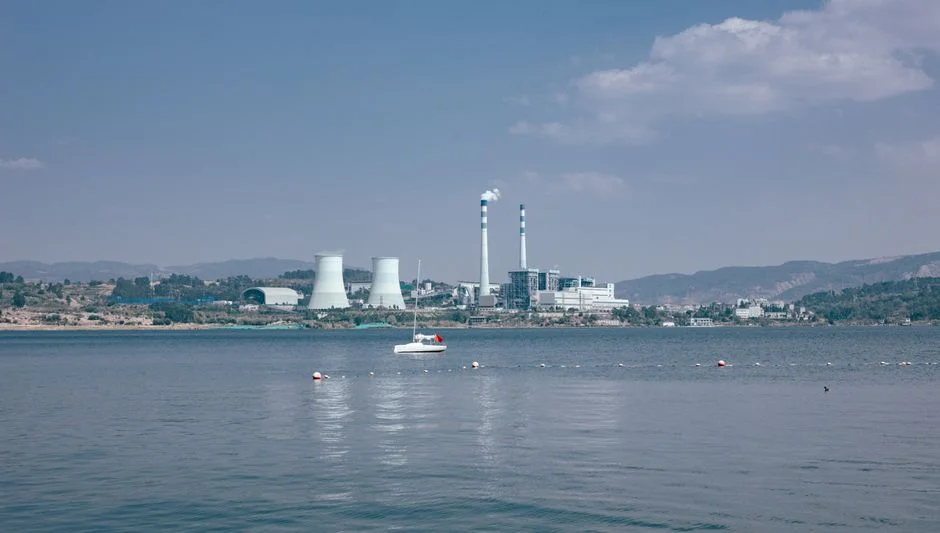
Three end-use strategies dominate the design conversation, and they have very different CAPEX/OPEX profiles. Cooling tower makeup reuse is the highest-value path: permeate returns to the cooling loop at 10-50 mg/L TDS, the campus runs higher cycles of concentration, and the dominant savings line is reduced freshwater intake and avoided sewer discharge fees, which sit in the $5-15 per kgal range in water-stressed regions (per genesiswatertech.com). Reuse trains typically achieve 60-85% recovery on the blowdown stream and pay back through water savings rather than avoided discharge fees.
Discharge-compliance-only trains treat CTBD to meet Osaka City sewer ordinance limits and discharge the rest. The economic case here is "avoided discharge fees plus compliance certainty," not water savings, and the train is typically lighter — multi-media filtration, chemical conditioning, and polishing — with no RO unless TDS limits demand it. Full ZLD (95-99% recovery, no liquid waste) costs $3-8 million in CAPEX and $5-15/kgal in OPEX (per genesiswatertech.com) and is justified only where Osaka sewer is genuinely unavailable, where hyperscaler water-positive commitments are binding, or where the site is in a Yodo basin sub-area where further discharge consent is unlikely. Partial ZLD — RO at 75-85% recovery plus MVC of the concentrate at 95% recovery — lands at 85-95% overall recovery at substantially lower cost than full ZLD and is the practical Osaka middle ground for many campuses.
| Strategy | Typical recovery | Indicative CAPEX | Indicative OPEX | Best fit in Osaka |
|---|---|---|---|---|
| Cooling tower makeup reuse | 60-85% | RO-class investment | $1.50-3.00/kgal | Yodo basin sites with freshwater friction |
| Discharge compliance only | Minimal recovery | Lowest | Chemical + labor only | Sewer-available sites without water-positive pledges |
| Partial ZLD (RO + MVC) | 85-95% | Mid-to-high | Energy-dominant | Sewer-constrained sites needing high recovery |
| Full ZLD (RO + MVC + crystallizer) | 95-99% | $3-8 million | $5-15/kgal | Zero-discharge commitment or no sewer option |
Costs, Footprint, and Seismic Design for an Osaka Installation
Translating the cost ranges into JPY at roughly 150-160 yen per USD (2026 trading range), a 50,000 GPD blowdown RO train lands in the ¥37-80 million CAPEX band with OPEX of ¥225-480 per cubic meter of treated water. Full ZLD sits in the ¥450 million to ¥1.2 billion CAPEX band and ¥750-2,400 per cubic meter OPEX. Those numbers bracket the conversation; the actual installed cost in Osaka typically sits above the global median because of seismic restraint, low-noise enclosures, and the need to fit everything into an existing multi-story data-hall envelope rather than a ground-level equipment yard.
Two operating-cost lines dominate over a 10-15 year asset life. The first is membrane replacement: RO and UF elements wear out on a 3-7 year cycle depending on feed quality, CIP frequency, and operating pressure, and pressure vessels last longer but still need periodic replacement. The second is energy — RO high-pressure pumps and MVC compressors both draw significant power, and the campus OPEX is highly sensitive to electricity tariff. Antiscalant and biocide dosing through an antiscalant and biocide dosing system is a smaller line but a critical one: non-phosphate, low-toxicity programs reduce both membrane fouling and interference with downstream reuse, and they are increasingly required by Japanese discharge rules (per genesiswatertech.com).
Seismic design is not optional. Treatment skids must be anchored to a structural slab with anchor bolts sized to Japanese building standards, all process piping needs flexible couplings at skid boundaries to absorb inter-story drift, and skid centers of gravity should be kept low (typically below 1.2 m). Control panels and PLCs need to be seismically qualified to the same standard as the IT load they support. Skid valves, instruments, and consumables should all be sourced to JIS or equivalent standards so that spare parts cycle through the same supply chain as the rest of the campus.
Decision Framework: What an Osaka Data Center Should Actually Build in 2026
The shortest path to a defensible design is a three-branch decision tree keyed to sewer availability and water-stewardship commitments. If sewer capacity is available and the hyperscaler has no water-positive pledge, the right train is a discharge-compliance chain — multi-media filter, chemical conditioning, and UF polishing — with CTBD discharged to Osaka City sewer under the local ordinance limits. This is the lowest-CAPEX path and the one that makes sense on a short timeline.
If the site is on the Yodo basin where freshwater stress is a real factor, or if the hyperscaler has a binding water-positive pledge, the right train is a reuse chain — side-stream filtration at 1-5% of circulation flow, UF pretreatment, and RO at 75-85% recovery, with concentrate management either via MVC (partial ZLD) or via controlled sewer discharge. If sewer is genuinely unavailable or the campus has committed to zero discharge, the right train is full ZLD: RO + MVC + crystallizer at 95-99% recovery, accepting the $3-8 million CAPEX and $5-15/kgal OPEX (per genesiswatertech.com). Across all three branches, the constant requirements are seismic restraint to Japanese standards, packaged PLC control, and a low-noise enclosure rated for indoor urban siting — and a rotary bar screen upstream of any biological or membrane train to protect it from gross solids.
| Site condition | Train to build | Target recovery | CAPEX band |
|---|---|---|---|
| Sewer available, no water-positive pledge | Multi-media filter + dosing + UF polishing, sewer discharge | Minimal | Lowest |
| Yodo basin freshwater stress, or water-positive pledge | Side-stream + UF + RO (75-85% recovery) ± MVC of concentrate | 60-95% | Mid |
| No sewer available, or zero-discharge commitment | RO + MVC + crystallizer (full ZLD) | 95-99% | $3-8 million (per genesiswatertech.com) |
Frequently Asked Questions
What TDS does a data center cooling tower blowdown typically have?
CTBD typically runs 1,200-6,000 mg/L TDS, roughly 4-8 times higher than the makeup water depending on cycles of concentration and source water quality (per genesiswatertech.com). High-silica makeup can push the upper end of that range even higher.
What recovery rate can RO achieve on cooling tower blowdown?
Conventional brackish water RO plateaus at 50-85% recovery on CTBD before silica, calcium carbonate, and calcium sulfate reach scaling thresholds (per genesiswatertech.com). High-recovery architectures that combine controlled precipitation in a fluidized-bed reactor with dynamic RO operation have demonstrated ~95% overall recovery, with permeate silica around 1 mg/L (per ide-tech.com).
Does Japan require zero liquid discharge for data centers?
There is no national ZLD mandate for data centers in Japan. The binding requirements are the Water Pollution Control Act at the national level and the Osaka City sewer ordinance for sewer discharges. In practice, hyperscaler water-positive pledges and Yodo basin freshwater stress often push Osaka campuses toward partial or full ZLD voluntarily, but it is a design choice, not a regulatory one.
How much does a data center blowdown RO system cost in Japan?
A 50,000 GPD blowdown RO system typically costs $250,000-500,000 installed with OPEX of $1.50-3.00 per thousand gallons treated, including energy, chemicals, membrane replacement, and maintenance (per genesiswatertech.com). In Osaka, the installed cost is usually above the global median once seismic restraint, low-noise enclosures, and indoor siting are added.
Can cooling tower blowdown be reused as cooling makeup?
Yes. Side-stream filtration followed by UF and RO returns permeate at 10-50 mg/L TDS to the cooling loop, where it blends with freshwater makeup and allows the cooling tower to operate at higher cycles of concentration (per genesiswatertech.com). This is the highest-value reuse path for a data center and the one that most directly reduces both freshwater intake and sewer discharge.