What an Effluent Treatment Plant in Liverpool Must Achieve in 2026
An effluent treatment plant in Liverpool is a permitted treatment system that brings industrial or domestic wastewater to a quality acceptable to the Environment Agency under a discharge consent or to United Utilities under a trade effluent agreement under Section 119 of the Water Industry Act 1991. In 2026, an ETP serving Merseyside industry typically combines screening, DAF or MBR, and either UV or chlorine dioxide disinfection to meet consent limits.
Two distinct regulatory pathways govern a 2026 Liverpool ETP. Discharges to the Mersey tidal system or to ground fall under an Environment Agency EPR 2016 permit, with application via the B2.3 bespoke permit route. Discharges to the public sewer — the common route for the majority of Merseyside manufacturing sites — require a United Utilities trade effluent consent under Section 119, with parameters set against the company's published "Trade Effluent Guidance Notes" (2024, still current for 2026). Trade effluent is defined under Section 141 WIA 1991 as any liquid waste discharged from a trade or industrial process to the public sewer.
Typical 2026 sewer-discharge consent limits imposed in the Liverpool area are: BOD <20 mg/L (in some agreements <10 mg/L), TSS <30 mg/L, ammonia <5 mg/L (as N), oil & grease <10 mg/L, pH 6-9, and temperature <43 °C (United Utilities standard trade effluent terms). For sites over 2,000 PE that discharge to inland waters, the EU Urban Waste Water Directive 91/271/EEC (still retained in UK law post-2020) sets tightened phosphorus and nitrogen limits that ripple into the ETP design. A live regional reference is the H+E-built effluent treatment facility at the Jaguar Land Rover Liverpool plant, which discharges to United Utilities under a Section 119 agreement and is widely cited in comparable Birmingham ETP guidance.
Liverpool Wastewater Profile by Industry: What Your ETP Must Handle
Merseyside hosts four chemically distinct industrial waste streams that require specific ETP configurations. A JLR-tier automotive plant at Halewood discharges spent pretreatment phosphates, paint detackifier, and total hydrocarbons up to 500 mg/L on top of a COD baseline of 2,000-6,000 mg/L. Food and beverage sites clustered around Fazakerley and Aintree generate BOD/COD of 3,000-10,000 mg/L, FOG of 500-2,000 mg/L, and TSS of 800-2,000 mg/L during shift washdown. Pharmaceutical and fine-chemical operations on the Daresbury/Runcorn corridor add complex organics and possible adsorbable organically bound halides (AOX) at COD 1,500-5,000 mg/L. Stanlow and the Eastham tank farms generate free and emulsified oil, sulphides, and COD 500-2,000 mg/L.
Domestic and hospitality flows — city-centre hotels, the Royal and Alder Hey hospital estates — are far weaker at COD 400-800 mg/L and fit a packaged WSZ packaged sewage plant for Liverpool domestic duty in the 1-80 m³/h capacity range. The table below maps each industry to its typical influent envelope and the appropriate process train.
| Industry (Merseyside cluster) | Typical COD (mg/L) | Key contaminant | Recommended primary unit |
|---|---|---|---|
| Automotive (JLR-class) | 2,000-6,000 | Oil, phosphate, hydrocarbons ≤500 mg/L | DAF + biological polish |
| Food & beverage (Fazakerley, Aintree) | 3,000-10,000 | FOG 500-2,000 mg/L, TSS 800-2,000 mg/L | DAF + MBBR or MBR |
| Pharma / fine chemicals (Daresbury, Runcorn) | 1,500-5,000 | Complex organics, possible AOX | MBR + advanced oxidation |
| Tank farm / petrochem (Stanlow, Eastham) | 500-2,000 | Free & emulsified oil, sulphides | DAF + bio with N & P dosing |
| Domestic / hospitality | 400-800 | Standard sanitary load | Packaged WSZ / MBR |
Process Train Selection: Screening → DAF → MBR → Disinfection
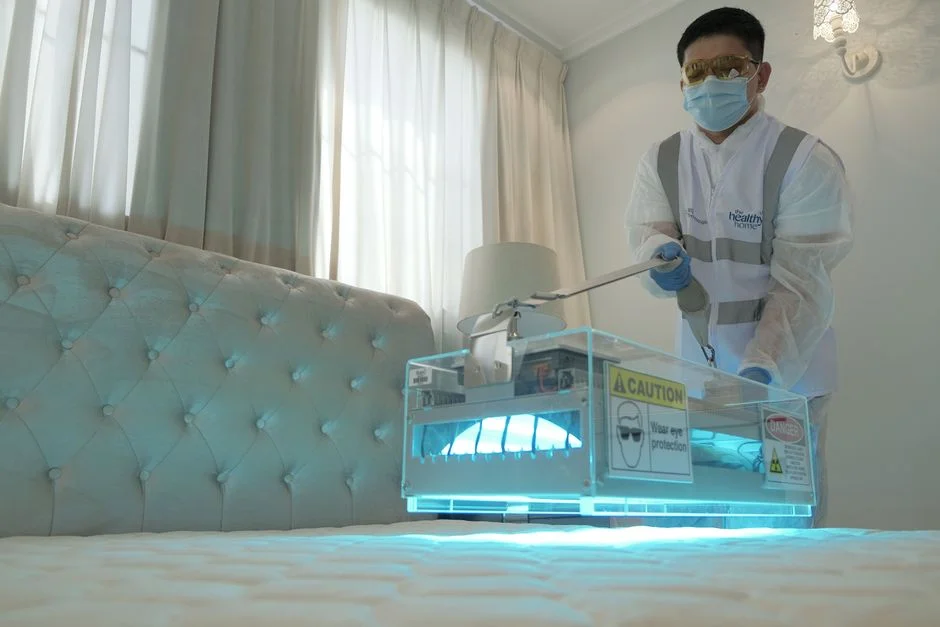
A defensible Liverpool ETP runs as a five-step train, with each step anchored to a measurable output. Step 1 headworks uses a rotary bar screen for ETP headworks at 3-6 mm aperture to strip rags and plastics before they enter the biological stage. Step 2 is equalisation with a hydraulic retention time of 8-12 hours combined with PLC-controlled pH correction, typically targeting a ±0.5 pH band to protect downstream biology. Step 3 primary separation is where a DAF pre-treatment unit for FOG and TSS removal earns its place, operating at 5-15 m/h hydraulic surface loading across the 4-300 m³/h capacity band; a lamella clarifier is the alternative where footprint is constrained.
Selecting the correct biological stage is critical for compliance and performance. Step 4 biological treatment is the design decision. A conventional activated-sludge plant handles domestic-grade COD cheaply; an MBR at 8-12 g/L MLSS handles 2-3× the volumetric load of CAS and reliably produces <50 mg/L effluent for reuse. MBBR is the retrofit choice when an existing tank must be upgraded without civils. Step 5 polishing and disinfection is sized to the consent: UF at 0.03 µm PVDF ahead of RO for sites pursuing reuse under the EU Drinking Water Directive 98/83/EC; otherwise a UV disinfection stage for ETP polishing or a chlorine dioxide generator for pathogen kill to <100 CFU/100 mL. Research from the University of Twente (Schrader PhD, 2024) shows direct nanofiltration can polish WWTP effluent to EU WFD standards for agricultural or potable reuse, and constructed wetlands remain a low-energy polishing option for ammonia and micropollutants (Lei, WU thesis 8189). The table below summarises the train outputs.
| Step | Unit operation | Typical output target |
|---|---|---|
| 1 Headworks | Rotary bar screen 3-6 mm | Solids >3 mm removed |
| 2 Equalisation + pH | 8-12 h HRT, PLC dosing | pH 6-9, flow damped |
| 3 Primary | DAF 5-15 m/h or lamella | FOG <50 mg/L, TSS <100 mg/L |
| 4 Biological | MBR / CAS / MBBR | BOD <20 mg/L, COD <125 mg/L |
| 5 Polishing + disinfection | UF + RO / UV / ClO₂ | Pathogen kill to consent, optional reuse |
Sizing an ETP for Liverpool: Flow, Load and Footprint
Size the hydraulic basis at 1.3× average daily flow to absorb shift peaks that are characteristic of food and chemical sites on the Mersey. A 24-hour equalisation tank sized at 25% of the daily flow provides the buffer; pair it with an automatic chemical dosing system for coagulant and pH trim. For biological sizing, conventional activated sludge runs at 0.15-0.30 kg BOD/kg MLSS/day, while an MBR holds MLSS at 8-12 g/L and tolerates 2-3× the load in the same volume — a 500 m³/day MBR plant occupies roughly 80-120 m², against ~250 m² for a CAS design of equal duty (HydropureWater MBR product specification, 2026).
Sludge production runs 0.4-0.8 kg dry solids per kg BOD removed, and must be dewatered before consignment off-site. A plate and frame filter press will deliver a <25% moisture cake suitable for off-site incineration or landfill, while a high-efficiency sedimentation tank cuts the sludge volume upstream of the press. Recirculate the press filtrate back to headworks — it is rarely clean enough to bypass the biological stage.
CAPEX and OPEX Benchmarks for a Liverpool ETP in 2026
Procurement leads need a defensible £/m³ number before the tender goes out. The 2026 Merseyside band, based on recent UK installations, runs as follows: a packaged WSZ or MBR in the 50-100 m³/day range is £80k-£220k CAPEX with OPEX of £0.30-£0.60/m³; an MBR-based industrial ETP at 200-500 m³/day sits at £350k-£1.1M CAPEX and £0.18-£0.40/m³ OPEX including sludge disposal and power; a DAF + SBR train at 500-1,500 m³/day is £600k-£1.8M CAPEX with £0.12-£0.28/m³ OPEX. Add 18-25% to any of these for Merseyside-specific civils, MCERTS self-monitoring equipment, and Environment Agency B2.3 or United Utilities consent application fees.
Power consumption varies by technology and directly impacts total cost. MBR plants draw 0.6-1.4 kWh/m³ against 0.3-0.5 kWh/m³ for CAS, and UK industrial electricity at ~£0.25/kWh in Q1 2026 (per Ofgem quarterly cap data) widens that gap further. The table below distils the numbers; the 10,000 m³/day sewage treatment plant price reference explains the same logic at larger scale.
| Train / scale | CAPEX (2026, GBP) | OPEX (£/m³) | Power (kWh/m³) |
|---|---|---|---|
| Packaged WSZ / MBR, 50-100 m³/day | £80k-£220k | 0.30-0.60 | 0.5-0.9 |
| MBR industrial ETP, 200-500 m³/day | £350k-£1.1M | 0.18-0.40 | 0.6-1.4 |
| DAF + SBR, 500-1,500 m³/day | £600k-£1.8M | 0.12-0.28 | 0.3-0.5 |
Frequently Asked Questions
Frequently Asked Questions
Do I need an Environment Agency consent or a United Utilities trade effluent agreement for an ETP in Liverpool?
If you are discharging treated effluent into the public sewer system in Liverpool, you must obtain a Trade Effluent Consent from United Utilities under the Water Industry Act 1991. This agreement stipulates the volume, flow rate, and chemical composition permitted for discharge into their infrastructure.
If you intend to discharge treated effluent directly into a watercourse, such as the River Mersey or its tributaries, you must obtain an Environmental Permit from the Environment Agency. This is governed by the Environmental Permitting (England and Wales) Regulations 2016, and discharge without this permit is a criminal offense.
What consent limits does United Utilities apply for trade effluent discharge in 2026?
United Utilities typically sets site-specific limits based on the capacity of the local sewer network and the downstream municipal wastewater treatment works. Standard parameters often include a pH range of 6 to 10, temperatures below 43.5°C, and specific mass load limits for Chemical Oxygen Demand (COD) and Total Suspended Solids (TSS).
In 2026, stringent limits are increasingly applied to heavy metals, fats, oils, and grease (FOG), with many industrial sites required to maintain COD levels below 1,000 mg/l to avoid high Mogden formula treatment charges. Specific limits are determined via a site-specific risk assessment and the capacity of the receiving treatment facility.
How much does a 500 m³/day effluent treatment plant cost in the Merseyside area?
For a 500 m³/day industrial effluent treatment plant in the Merseyside region, capital expenditure (CAPEX) typically ranges between £1.5 million and £3.5 million, depending on the complexity of the influent stream and the required level of automation. This estimate includes civil works, mechanical equipment, electrical control systems, and commissioning.
Operational expenditure (OPEX) should be budgeted at approximately £150,000 to £400,000 per annum, accounting for energy consumption, chemical dosing, sludge disposal costs, and periodic maintenance. Costs fluctuate based on the specific treatment technologies required to meet the necessary discharge standards for your industrial sector.
Is MBR or activated sludge better for an industrial ETP in Liverpool?
Membrane Bioreactor (MBR) technology is generally superior for industrial sites in Liverpool where space is limited or where high-quality effluent is required for water reuse. MBR systems provide a significantly smaller physical footprint and produce a higher quality effluent by using microfiltration membranes to separate solids, effectively replacing secondary clarifiers.
Conventional Activated Sludge (CAS) may be more cost-effective for large-scale operations with sufficient land availability and lower quality discharge requirements. However, given the regulatory pressure on water quality in the Mersey catchment, MBR is increasingly preferred for its ability to handle variable organic loads and consistently achieve lower TSS and pathogen levels.
What discharge limits apply to the Mersey estuary if I am not discharging to sewer?
Direct discharge to the Mersey estuary is governed by the Water Framework Directive and the Environment Agency’s "Surface water pollution risk assessment" guidelines. Limits are determined by the sensitive nature of the estuary and are often set at very low concentrations for ammonia (typically < 1-5 mg/l), phosphorus (< 1 mg/l), and BOD (< 10-20 mg/l).
The Environment Agency will apply site-specific Environmental Quality Standards (EQS) to ensure the discharge does not cause a deterioration in the chemical or ecological status of the water body. You will likely be required to perform continuous monitoring of pH, flow, and turbidity, with frequent laboratory testing for priority hazardous substances as defined in the River Basin Management Plan.