What Car Wash Wastewater Actually Contains
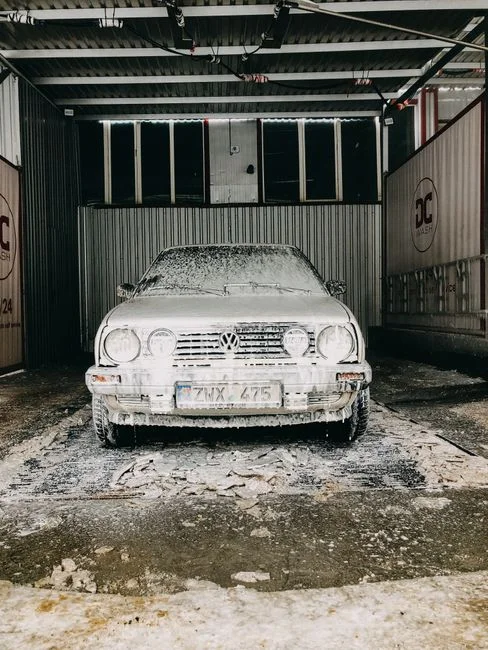
Car wash wastewater is not a single stream — it is a composite of high-pressure detergent flushes, road-soil residue, polishing waxes, and engine fluids that vary sharply with wash type. A Johor characterization across manually-dispersed, snow, and auto car washes (Bhatti et al., per the IJET study at sciencepubco.com) measured pH, COD, BOD, O&G, TSS, anionic surfactant (AS), nitrate, sulfate, chloride, fluoride, orthophosphate, Fe, Zn, Mg, Cr, Mn, Cu, Pb, and Ag at initial-rinse (IR) and final-rinse (FR) sampling points, and the central finding was that contamination severity ranks SCW > MCW > ACW — i.e., a high-pressure snow-foam tunnel can be dirtier per vehicle than a touchless automatic. The study also found no consistent IR-vs-FR pattern, which means designers must size for the worst composite, not a benign average.
Across the published envelope, raw effluent typically carries 200–800 mg/L COD, 100–400 mg/L TSS, 30–150 mg/L O&G, and 5–30 mg/L anionic surfactant (typical engineering envelope where site-specific data is not given). The two parameters that most often fail standard discharge limits are iron (from chassis wear and rust) and anionic surfactant (linear alkylbenzene sulfonate and its homologs), and both carry through into the sludge stream where they complicate downstream dewatering.
| Parameter | Typical car wash range | Failure driver |
|---|---|---|
| pH | 5.5–9.0 | Acidic foam detergents or alkaline presoaks |
| COD | 200–800 mg/L | Surfactants, oils, soil organics |
| BOD | 100–400 mg/L | Slowly biodegradable LAS fraction |
| O&G | 30–150 mg/L | Engine drip, polishing compounds |
| TSS | 100–400 mg/L | Road grit, brake dust, tire wear |
| Anionic surfactant (AS) | 5–30 mg/L | Detergent carryover; persists through primary |
| Fe | 1–15 mg/L | Chassis corrosion, road fines |
| Zn, Cu, Pb | Trace–5 mg/L | Brake dust, alloy wear |
Why Sludge Is the Back-End Problem Most Guides Skip
Most published car-wash treatment studies stop at the laboratory gate — they characterize the water or test one membrane or adsorption step and call it done. The sludge that drops out of DAF, the wasted biomass from an MBR, and the oily interceptor residues are the back-end problem a real plant engineer has to dispose of every week. For a 30 m³/h tunnel wash, DAF float thickened to 0.5–2% dry solids represents a continuous volumetric burden that has to be moved, conditioned, and pressed before any truck can take it off-site.
Anionic surfactants and entrained oils make this sludge resistant to gravity thickening — it stays at low DS and refuses to compact without polymer conditioning at typical doses of 4–10 kg/t DS. Add a biological stage and you roughly double the cake mass: the MBR waste activated sludge stream lands on top of the DAF float, and both have to be co-thickened or pressed in alternating batches. Unmanaged sludge is also a re-permitting risk — sewage cross-connections and oil-interceptor residues are routinely cited as POTW violations, and any oil and grease online monitoring system a plant installs is only as defensible as the downstream solids handling behind it.
Primary Separation: DAF vs Lamella Clarifier for Car Wash Duty
The two workhorse primary units for car-wash duty are dissolved air flotation and lamella sedimentation, and they answer different problems. A DAF system for car wash oil and TSS removal (4–300 m³/h) generates 30–50 μm micro-bubbles that attach to free and emulsified oil, lifting the float to the surface; operating at an air-to-solids ratio of 0.02–0.06 and a recycle of 4–6 g/L, it consistently hits 92–97% TSS removal on detergent-laden car-wash water. Lamella clarification at 20–40 m/h surface-loading rate, using inclined plates at 55–60°, cuts coagulant demand by up to 30% versus a conventional clarifier and is the right pick when the load is settleable-dominant and the oil fraction is light.
The trade-off is wet-sludge yield: DAF produces roughly 5–10% more wet sludge than lamella because the float carries bound water, but DAF is materially better at stripping emulsified oil from detergent-laden water. Rule of thumb: choose DAF when O&G > 50 mg/L or when anionic surfactant load is high, and choose lamella when the water is mostly settleable grit with light oil. For most tunnel and fleet washes, a DAF + lamella polish (DAF for oil/surfactant stripping, lamella for final TSS knock-down) is the most robust combination — typical hydraulic split is 70–80% through the DAF and 20–30% through the lamella polish. For a deeper side-by-side on operating cost and air-to-solids sensitivity, see the DAF unit vs alternatives comparison.
| Criterion | DAF | Lamella clarifier |
|---|---|---|
| Best influent | O&G > 50 mg/L, high AS, emulsified oil | Settleable-dominant, O&G < 50 mg/L |
| TSS removal | 92–97% | 70–85% |
| O&G removal | 85–95% | 40–60% |
| Surface loading | 5–25 m/h | 20–40 m/h (with plates) |
| Coagulant demand | Baseline | Up to 30% lower |
| Wet-sludge yield | Higher (5–10% above lamella) | Lower, denser cake |
| Footprint | Larger due to float zone | Compact, inclined plates |
Polishing With MBR or UF: Cutting COD, Surfactants and TSS Together
After primary separation, the polishing stage has to drive COD below 50 mg/L, knock out residual anionic surfactant, and deliver TSS low enough for either POTW discharge or onsite water reuse. A submerged MBR system for polishing car wash effluent couples a biological reactor with a flat-sheet PVDF membrane at 0.1 μm nominal pore size, giving roughly 60% footprint reduction versus conventional activated sludge and excellent retention of the slowly biodegradable LAS fraction that a CAS system lets slip. MLSS typically runs 8,000–12,000 mg/L, and the wasted sludge has a high SVI that needs conditioning before pressing.
A UF-only train, sized from 2,000–40,000 L/h in PVDF hollow fiber at 0.03 μm, is the right call when the influent is already low in BOD (e.g., a lamella + chemical precipitation front end) and the goal is TSS and surfactant polishing for water reuse. UF tolerates feed turbidity up to 300 ppm with automatic backwash every 20–40 minutes and produces very little biological sludge, which keeps the dewatering end small. For reference, a 2025 Sci Rep study on integrated pretreatment + Noug sawdust activated carbon adsorption hit 97.5% COD removal on real car-wash wastewater (Europepmc PMC12660830); a properly designed MBR or UF train delivers the same envelope with far less operator skill than dosing powdered adsorbent. The DF-series flat-sheet MBR modules are documented in the DF MBR module datasheet, and standalone UF skids in the UF water treatment system range.
Sludge Thickening and Dewatering: Sizing the Plate and Frame Press
The back end that almost no published car-wash paper covers is where the operator's floor stays dry and the truck driver gets a load he can haul. Polymer-conditioned DAF float and MBR waste sludge are first thickened to 2–4% DS in a gravity belt or rotary drum thickener at polymer dose 4–10 kg/t DS, and then dewatered. A plate and frame filter press for car wash sludge (1–500 m² filtration area, hydraulic or PLC closure, 1.5–2.0 MPa feed pressure) delivers 25–35% dry solids cake, depending on feed solids and conditioning, with a filtration cycle of 30–90 minutes plus a cake-wash step.
Against a decanter centrifuge — covered in detail in the decanter centrifuge design guide 2026 — the plate press typically reaches 5–8 percentage points higher cake solids on car-wash sludge, at the cost of batch (not continuous) operation and a larger footprint. Centrifuges are smaller-footprint and continuous, but usually top out at 20–28% DS on this duty. The mass balance is straightforward: for a 30 m³/h car wash with 400 mg/L TSS influent and 92% DAF removal, the dry-solids load is 30 × 0.4 × 0.92 ≈ 11 kg DS/h or 264 kg DS/day, which lands in the 10–25 m² plate-press range once the MBR waste stream is added. Cake is normally disposed as non-hazardous solid waste after oil-content verification; oily streams above the RCRA threshold (typically 50 mg/L TCLP oil) require hazardous-waste handling. A broader sludge-train comparison for adjacent industries sits in the domestic sewage sludge treatment process guide.
| Dewatering device | Cake DS achieved | Operation | Footprint | Polymer demand |
|---|---|---|---|---|
| Plate and frame filter press | 25–35% | Batch, 30–90 min cycle | Large | 4–10 kg/t DS |
| Decanter centrifuge | 20–28% | Continuous, 2,000–4,000 G | Compact | 5–12 kg/t DS |
| Screw press | 18–25% | Continuous, low speed | Compact | 3–8 kg/t DS |
| Belt press | 15–22% | Continuous, gravity + shear | Medium | 4–10 kg/t DS |
Decision Matrix: Matching the Train to the Site
There is no single car-wash train that fits every site — the right combination is set by flow, oil load, and whether the operator is targeting reuse or just sewer discharge. The matrix below is the short-list I work through with new projects before opening a P&ID.
| Site profile | Primary | Polishing | Sludge train | Notes |
|---|---|---|---|---|
| Small in-bay wash (< 5 m³/day) | Lamella + bag filter | UF (2,000 L/h) | Bag-filter solids to solid waste | Low operator skill, no biological stage |
| Mid-size tunnel (10–50 m³/h) | DAF + lamella polish | MBR (DF series) | 10–25 m² plate press | Standard POTW-discharge train |
| Fleet / depot (50+ m³/h) | DAF (larger DAF) | MBR + optional RO | 25–80 m² plate press, decanter pre-thickener | Targets > 70% reuse, RO after MBR/UF |
| Reuse target > 70% | DAF | MBR or UF → RO | Plate press for back-end solids | Add automatic chemical dosing for anti-scalant and CIP |
For any reuse-aiming site, an RO polishing stage downstream of MBR or UF typically achieves 95–99% dissolved-solids rejection, and the reject stream (5–15% of RO feed) returns to the head of the plant for retreatment.
Meeting 40 CFR Part 442 and Local Sewer-Use Limits
In the US, car-wash discharges to a POTW are governed by 40 CFR Part 442 (Car Wash Point Source Category), which sets categorical pretreatment limits for BOD, TSS, O&G, and pH and subcategorizes facilities by wash type — conveyor, self-service, and component — each with its own limit set. Most car-wash operators are indirect dischargers, and local POTW limits are frequently tighter than Part 442 for anionic surfactant and metals (Zn, Cu, Pb) because the receiving plant's biological stage is sensitive to LAS shock loads.
Solids from the oil-water separator and the DAF float are tracked separately: interceptor residues and any cake that fails TCLP for oil content (typically the 50 mg/L threshold under RCRA) must be managed as hazardous waste, while routine plate-press cake below threshold goes out as non-hazardous solid waste. A defensible compliance file includes the daily DAF float volume, polymer consumption, cake weight, and TCLP oil verification on a quarterly cadence.
Frequently Asked Questions
What is the typical TSS removal rate of DAF on car wash wastewater?
A properly sized DAF system for car wash oil and TSS removal hits 92–97% TSS removal at an air-to-solids ratio of 0.02–0.06 and 4–6 g/L recycle, with 85–95% O&G removal on the same pass.
How much dry solids per day does a 30 m³/h car wash produce?
At 400 mg/L TSS influent and 92% DAF removal, the front end generates roughly 264 kg DS/day from the float; add the MBR waste stream and the total pressed cake is typically 250–400 kg DS/day, which sizes to a 10–25 m² plate and frame filter press for car wash sludge at 25–35% cake solids.
Do I need an MBR or just UF to meet POTW limits?
UF alone is enough when influent BOD is already low (after lamella + chemical precipitation) and the goal is TSS and surfactant polishing for reuse; otherwise an MBR system for polishing car wash effluent is required to biodegrade the slowly biodegradable LAS fraction and meet a 50 mg/L COD ceiling.
Is plate-press cake from a car wash hazardous waste?
Usually no — routine plate-press cake at 25–35% DS is disposed as non-hazardous solid waste provided a TCLP test for oil content stays below 50 mg/L. Oily streams above threshold, or any cake from an interceptor that has seen a petroleum spill, must be managed under RCRA as hazardous waste.