What a Hamburg Data Center Actually Has to Treat
A 2026 Hamburg campus has five on-site water streams: cooling-tower blowdown, humidifier bleed, RO reject concentrate, equipment washdown, and sanitary wastewater. At a typical 5–50 MW HafenCity or Steinwerder colocation build, cooling-tower blowdown is the dominant stream by both volume and contaminant load — frequently 80–90% of total industrial wastewater mass. The other streams are real but secondary for spec purposes. The sizing lever is the cooling tower itself, not the rest of the campus plumbing.
Apply cycles-of-concentration (CoC) math to size the blowdown stream. A 10 MW facility intakes roughly 15 million gal/month at 4 CoC; blowdown equals 1/(CoC-1) of makeup, i.e. about 3.75 million gal/month recoverable, with seasonal excursions of 25–30% (S1, S4). Hamburg facilities drawing from Elbe-side or harbor-side intakes face surface water with seasonal algae-driven TOC swings (2–8 mg/L typical), moderate hardness (60–120 mg/L as CaCO₃), and occasional brackish intrusion during dry Elbe low-flow periods. These three variables shape pretreatment selection more than intake conductivity does. Compare this with the Alexandria data center blowdown treatment guide where river makeup chemistry is different, and reuse economics diverge.
Hamburg is surface-water + sewer-discharge dominant. It is not Frankfurt (district-heat-rich, reclaimed-water pipeline dominant), not Dublin (marine-cooling, no evaporative), and not the Nordics (passive/free-cooling). The compliance path, the discharge destination, and the heat-recovery option set all look different here. Specifying a treatment train designed for Phoenix or Dublin and dropping it into HafenCity is the single most common engineering mistake on Hamburg 2026 builds.
German Compliance Stack: WHG, AbwV, and the Indirekteinleiter Path
EU Urban Waste Water Directive 91/271/EEC sets the top of the ladder, but for an individual Hamburg facility the binding stack is: Bundes-Wasserhaushaltsgesetz (WHG) → Abwasserverordnung (AbwV), specifically Annex 22 (Kühlwasser) and Annex 31 (Wärmekraftwerke und Abwässer aus Kühlsystemen) → Hamburg Indirekteinleiterverordnung → HAMBURG WASSER Netzanschluss- and pretreatment conditions. Equipment selection that ignores this stack is equipment that will not get permitted. Permit denial is the strongest reuse-ROI argument in Germany because the alternative cost is an unbuildable project (per S4 framing on avoided cost of water).
Under §58 WHG, any facility discharging cooling-tower blowdown, RO concentrate, or any process wastewater to the public sewer (Indirekteinleiter path) needs formal pretreatment approval with site-specific chemical, temperature, and flow limits issued by HAMBURG WASSER. The review runs in parallel with the Baugenehmigung process and typically requires 8–14 weeks of pilot or bench-scale data for new chemistries. Key parameter ceilings to design against:
| Parameter | Typical Indirekteinleiter ceiling | Source |
|---|---|---|
| Temperature at discharge point | ≤ 35 °C | AbwV Annex 22, common practice |
| Total Dissolved Solids (TDS) | Site-specific, often ≤ 1,500–2,000 mg/L | HAMBURG WASSER pretreatment conditions |
| Chloride | ≤ 600–1,000 mg/L | AbwV + sewer-corrosion limits |
| Sulfate | ≤ 400–600 mg/L | AbwV + cement-corrosion limits |
| Phosphorus (total) | ≤ 1–2 mg/L (Hamburg lower-P targets) | Hamburg Indirekteinleiterverordnung |
| Zinc / Chromium (legacy) | Detection limits, near zero | AbwV Annex 22 / 31 |
| AOX / biocide residuals | ≤ 0.5–1.0 mg/L, dechlorination proof required | AbwV + HAMBURG WASSER |
| pH | 6.5–9.5 (typical Indirekteinleiter band) | AbwV general |
Three common permit pitfalls cost Hamburg applicants 6–12 months of rework. First, legacy chromate inhibitors are forbidden and any historical contamination in the cooling loop must be flushed and documented before discharge approval. Second, phosphate-based scale inhibitors that were standard a decade ago are now constrained under Hamburg's lower-P discharge targets — any new spec must use non-phosphate, low-fouling antiscalants compatible with downstream RO. Third, biocide neutralization proof (dechlorination or SO₂ quench) is required before sewer discharge; sodium-hypochlorite residuals above 0.2 mg/L will fail the review.
Cooling-Tower Blowdown Chemistry and Cycles of Concentration
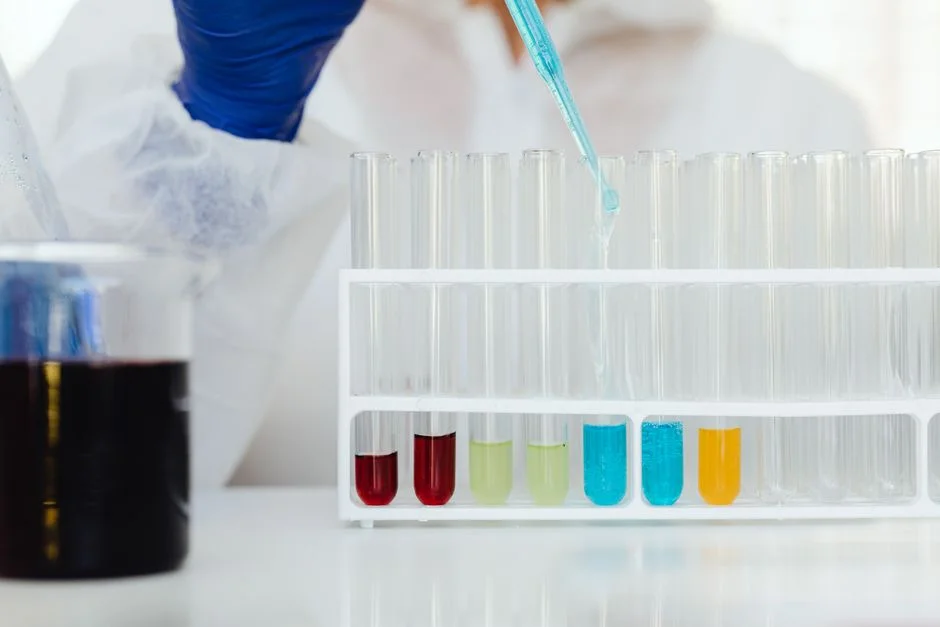
Blowdown TDS runs 1,200–6,000 mg/L, 4–8× the makeup concentration depending on cycles (S1). The dominant scaling species are silica (typically 40–120 mg/L as SiO₂ at 5–6 CoC), calcium (200–600 mg/L as CaCO₃), magnesium, and alkalinity. Above 5–6 CoC, silica scaling on heat exchangers becomes the binding constraint; below 4 CoC, biological fouling is the dominant cost driver. Pushing CoC above 6 without advanced chemistry creates scaling and microbiological risk that erodes any freshwater savings (S1, S4).
Suspended solids in blowdown range 10–50 mg/L — corrosion products (iron, copper, zinc from heat-exchanger surfaces), biofilm fragments, and airborne particulates that bypass basin filtration. This load matters because any downstream membrane sees it as instantaneous fouling. Without effective side-stream filtration reducing TSS to <5 mg/L ahead of UF, CIP frequency on UF triples and RO flux declines 30–50% within the first quarter of operation.
| Cycles of concentration | Blowdown % of makeup | Approx. blowdown TDS (mg/L) | Operating risk |
|---|---|---|---|
| 3 | 50% | 1,200–1,800 | Low; high freshwater cost |
| 4 | 25–30% | 1,600–2,400 | Balanced; baseline for most Hamburg sites |
| 5 | 20% | 2,000–3,000 | Silica scaling risk rising |
| 6 | 17–20% | 2,400–3,600 | Biological + scaling risk; needs advanced chemistry |
| 7–8 | 14–17% | 3,000–6,000 | Operational instability; rarely sustainable |
The Water Usage Effectiveness (WUE) metric trap is real and shows up in Hamburg 2026 sustainability audits: a 0.47 gal/kWh WUE (S4 industry-low band) can hide 30% of intake leaving as contaminated blowdown that never returns to the watershed. German reviewers reading an ESG report will distinguish consumption (Wasserverbrauch) from usage (Wassernutzung) — a facility discharging 30% of intake as contaminated blowdown does not get the same sustainability credit as one recycling that blowdown into process water, even if the headline WUE numbers are identical.
Pretreatment Train: Screening, DAF, and Side-Stream Filtration
Front-of-train protection is what makes the downstream membrane train economic. A rotary mechanical bar screen at 1–3 mm aperture is the first device on the blowdown sump, removing rags, leaves, and coarse debris that would otherwise blind DAF or filter media. For a 50–150 m³/h Hamburg blowdown stream, expect a 1.5–2.5 kW drive and an automatic washout cycle every 4–8 hours.
The clarification stage is typically a DAF clarifier for the blowdown pretreatment train or a lamella plate pack, sized at surface loading 20–40 m/h for lamella and 4–300 m³/h DAF capacity envelope. DAF wins where residual oils from generator-room washdown or FOG carryover are present; lamella wins where footprint is constrained and the load is mostly inorganic TSS. Either way, target TSS reduction to <30 mg/L ahead of the next stage. Avoid placing the automatic chemical dosing system upstream of the screen — dose after clarification so antiscalant and biocide react with already-conditioned water, not raw debris.
Side-stream filtration at 1–5% of circulation flow, 10–25 micron rating, installed cost typically $50,000–200,000 (S1), drops blowdown TSS to levels manageable for downstream UF and RO. The right device for Hamburg sites is a multi-media filter for RO feed protection — sand + anthracite + garnet, with backwash on differential pressure. Continuous self-cleaning spiral units are an option but trade higher CAPEX for lower backwash water loss; the payback math is marginal at Hamburg water prices and only favorable when site footprint is tight.
Chemical conditioning at this stage sets up the rest of the train. pH adjustment to 7.0–7.5, antiscalant injection compatible with polyamide RO (non-phosphate, low-fouling), and biocide selection that minimizes AOX formation in the sewer discharge. Oxidizing biocides (Cl₂, ClO₂) are common but require dechlorination before sewer; non-oxidizing programs (isothiazolone, DBNPA) trade handling complexity for lower downstream AOX risk and are increasingly preferred in Hamburg Indirekteinleiter reviews.
Membrane Recovery: UF, NF, and RO Options for Reuse
UF is the workhorse pretreatment ahead of any RO or NF. Operating envelope: 0.01–0.1 micron pore size, 10–30 psi transmembrane pressure, 90–95% recovery (S1), backwash every 20–45 minutes, CIP every 1–3 months. The role of UF is to remove colloids, bacteria, and high-molecular-weight organics that would otherwise foul RO/NF. Sizing a UF pretreatment ahead of RO at 1.5–2× the RO feed flow handles the concentrate return without over-designing.
RO is the membrane of choice for cooling-tower makeup reuse in EU data centers. Operating envelope: 150–400 psi, 50–85% recovery, permeate 10–50 mg/L TDS, CAPEX $250,000–500,000 installed for a 50,000 GPD unit, OPEX $1.50–3.00 per kgal treated (S1). A properly specced industrial RO system for blowdown reuse delivers permeate clean enough to blend with freshwater makeup at 30–50% substitution without changing cooling-tower chemistry. The trade is scaling: at 75% recovery the concentrate Langelier Saturation Index (LSI) typically exceeds +2.5, demanding either antiscalant dose escalation or recovery reduction.
NF occupies the middle ground: 75–150 psi, 70–85% recovery, permeate TDS 30–50% of feed (S1). NF is the right answer when the binding discharge or reuse limit is hardness or sulfate rather than total TDS. For Hamburg sites pulling from Elbe-side surface water with moderate sulfate, NF can achieve partial softening and 70% recovery at 60% of the energy of RO — and the concentrate is easier to dispose of in the public sewer. Use compatible RO/UF membrane elements with documented track records on cooling-tower blowdown to avoid generic-spec risk.
| Membrane | Pore / cutoff | Operating pressure | Recovery | Permeate TDS vs. feed | Best fit in Hamburg train |
|---|---|---|---|---|---|
| UF | 0.01–0.1 µm | 10–30 psi | 90–95% | Pass-through (no salt removal) | RO/NF pretreatment |
| NF | 200–800 Da | 75–150 psi | 70–85% | 30–50% | Partial softening, sulfate reduction |
| RO | < 1 nm | 150–400 psi | 50–85% | 1–5% | Cooling-tower makeup reuse |
Any membrane stage requires pretreatment guardrails: feed SDI <3, antiscalant dosing matched to concentrate LSI, and pH 6.5–7.5 for polyamide RO. Violations of any one of these shorten membrane life from 5–7 years to 18–24 months and turn OPEX economics upside down. When paired with MVC on the RO concentrate, overall system recovery reaches 85–95% with minimal liquid discharge (S1).
Brine Management and Heat Integration
MVC evaporation is the realistic next step when Elbe-mixing capacity, HAMBURG WASSER sewer acceptance, or AbwV parameters block direct concentrate discharge. Operating envelope: 95–98% recovery, distillate <10 mg/L TDS, CAPEX $1–3 million for 10,000–30,000 GPD systems, energy 15–25 kWh per 1,000 gal (S1). MVC pencils in Hamburg when the alternative is hauling brine by truck at €80–150/m³ or accepting a permit denial. Site a packaged MVC unit with adequate structural support, electrical service (typically 150–400 kW per 10,000 GPD), and stack venting for non-condensables.
Hamburg has a heat-recovery angle that almost no U.S. reference covers. The Hammerbrook and HafenCity district-heating corridors have active pilots for data center waste-heat export. A 15 MW Hamburg site with a PUE of 1.3 exports 3–4 MW of low-grade heat, sufficient to feed a 300–500 kW MVC evaporator at near-zero incremental energy cost. This is a 2027+ scenario, not a 2026 procurement decision — but the steam, hot water, or glycol-loop interface should be designed into the building core now if the site sits inside a known heat-export corridor.
Full ZLD adds a crystallizer on the MVC concentrate. Operating envelope: 95–99% overall recovery, <1% solid waste, CAPEX $3–8 million, OPEX $5–15 per kgal treated (S1). ZLD is rarely the right answer in Hamburg because the Elbe-mixing zone, public sewer, and HAMBURG WASSER pretreatment path are all available — but it becomes the only answer if HAMBURG WASSER denies a new Indirekteinleiter permit or a sewer moratorium hits the HafenCity catchment. A partial ZLD alternative at 80–90% volume reduction with the remainder sent to a specialized waste hauler is often the right lifecycle-cost choice over full crystallization for a 5–15 MW Hamburg build.
For a packaged skid-mounted approach that combines biological and physical treatment for the broader site wastewater mix, an MBR integrated wastewater treatment unit handles sanitary and washdown streams alongside the blowdown train when the site layout justifies the integration.
Right-Sizing and Cost Economics for a 15 MW Hamburg Site
Worked example: a 15 MW HafenCity-scale colocation facility intakes 15 million gal/month (≈ 57,000 m³/month) of HAMBURG WASSER supply at 4 CoC. Blowdown at 25% of makeup is 3.75 million gal/month. Reuse at 60% recovery returns 2.25 million gal/month to the cooling-tower makeup stream, offsetting roughly 27 million gal/year of freshwater intake.
Localize the cost data: HAMBURG WASSER freshwater is approximately €1.80–2.20/m³ (per published 2025–2026 tariff), and the Abwassergebühr (sewage charge) on the discharge side is approximately €2.50–3.50/m³, so combined avoided cost is €4.30–5.70/m³ of blowdown reused. The $5–15 per kgal U.S. figure (S1) is in the same order of magnitude but does not translate directly because it does not include the German Schmutzwasser- versus Niederschlagswasser- split or the Indirekteinleiter surcharge structure.
| Train element | CAPEX range | OPEX notes |
|---|---|---|
| Side-stream filtration | $50,000–200,000 (€45,000–185,000) | Minimal; media disposal |
| DAF / lamella clarification | $40,000–150,000 (€37,000–140,000) | Polymer, sludge haul |
| UF pretreatment | $30,000–100,000 (€28,000–93,000) | CIP chemicals, membrane replacement 5 yr |
| RO (50,000 GPD class) | $250,000–500,000 (€230,000–460,000) | $1.50–3.00/kgal (€0.35–0.70/m³) |
| Combined train CAPEX | €340,000–880,000 | — |
Simple payback for the combined train at 60% reuse: water + sewer avoided cost of €4.30–5.70/m³ × 8,500 m³/month recovered = €36,500–48,500/month savings, or roughly €440,000–580,000/year. Against combined CAPEX of €340,000–880,000, simple payback lands at 0.6–2.0 years for the lower-cost envelope, and 1.5–2.0 years at the upper end. Including avoided permit-denial risk, Indirekteinleiter reapplication cost, and ESG-disclosure penalties that are increasingly material under EU taxonomy reporting, total-cost-of-water payback compresses to the 3–5 year band typical of S4 15 MW worked examples. Compare to the Quito 2026 blowdown guide for a Latin-American contrast where freshwater scarcity and discharge economics differ markedly.
Frequently Asked Questions
Which German AbwV annex governs cooling-tower blowdown discharge from a Hamburg data center?
Abwasserverordnung Annex 22 (Kühlwasser) is the primary annex for cooling-tower blowdown chemistry and temperature limits, and Annex 31 applies to wastewater streams from power-generation and heat-rejection systems typical of large data center sites. Both are enforced through the Indirekteinleiter path under §58 WHG and reviewed by HAMBURG WASSER during the pretreatment approval process. The binding local ceiling is set by Hamburg's Indirekteinleiterverordnung, which can be tighter than the federal annex (e.g. lower phosphorus limits).
What is the realistic freshwater and sewage cost for a Hamburg data center in 2026?
HAMBURG WASSER freshwater is approximately €1.80–2.20/m³ and the Abwassergebühr for indirect discharge is approximately €2.50–3.50/m³, so the combined cost of consumed water plus discharged sewage is €4.30–5.70/m³. An Indirekteinleiter surcharge applies for non-domestic discharges above defined thresholds, which can add another €0.50–1.50/m³ depending on the load. Reuse economics are therefore meaningful for Hamburg facilities but tighter than the $5–15/kgal U.S. figures often cited.
What cycles of concentration should a Hamburg cooling tower target?
4 CoC is the operationally stable baseline; 5–6 CoC is achievable with non-phosphate antiscalants, proper side-stream filtration, and a non-oxidizing biocide program. Beyond 6 CoC, silica scaling and microbiological fouling risk erodes the freshwater savings and typically forces operators back to 5–6 CoC within months. The blowdown math is 1/(CoC-1): at 4 CoC blowdown is 25% of makeup, at 6 CoC it is 17% — only 8 percentage points of freshwater offset for double the chemistry and scaling risk.
Does a Hamburg data center need to consider the Elbe temperature and mixing zone for blowdown discharge?
Direct discharge to the Elbe is not a typical 2026 path for Hamburg data centers; discharge goes to the public sewer under the Indirekteinleiter path, and HAMBURG WASSER sets the temperature limit at the discharge point (typically ≤ 35 °C per AbwV Annex 22). The Elbe-mixing zone matters when sizing MVC or ZLD: a site with constrained sewer capacity or where HAMBURG WASSER tightens pretreatment may need 80–95% volume reduction on-site to stay within the permit envelope.
What is the typical RO recovery rate for Hamburg cooling-tower blowdown reuse?
50–75% single-stage RO recovery is the realistic operating band for cooling-tower blowdown with Elbe-side surface water makeup, limited by calcium carbonate and silica scaling in the concentrate. Recovery above 75% requires aggressive antiscalant dosing and tighter CIP intervals that erode the OPEX benefit. Pairing RO with MVC on the concentrate pushes overall system recovery to 85–95% with distillate below 10 mg/L TDS (S1), and is the right answer when sewer acceptance or Elbe-mixing constraints are binding.