Why Paris Is a Specific 2026 Engineering Case
A 100 MW data center can draw on the order of 2,000,000 L/day of cooling-tower makeup water (IDE Water Tech, 2025-11), and on a 10 MW Paris site the linear scaling puts daily makeup near 200,000 L/day. That number, however, disguises the chemistry that actually constrains the design. Seine-sourced makeup typically sits at 200–600 mg/L TDS, but once that water has cycled through an evaporative cooling loop at 4 cycles of concentration (COC), the blowdown envelope is 1,200–6,000 mg/L TDS with TSS at 10–50 mg/L (Genesis Water Tech, 2025-08). The Mediterranean and Southwest US templates used by most vendor literature do not transplant cleanly, because the binding rule stack is European and the makeup profile is softer than a North African or Middle East feed but harder than a US freshwater basin.
Three EU and French instruments shape the 2026 design envelope. EU Energy Efficiency Directive 2023/1791 binds data centers above 1 MW to annual waste-heat cost-benefit assessments from October 2025, with PUE ≤1.2 as the 2026 planning line (HydropureWater Algiers 2026 guide). ICPE 2921 covers cooling installations above 2,000 kW and ICPE 1510 covers data storage facilities; both filings must reference the chosen treatment train and discharge route. Urban Waste Water Directive 91/271/EEC governs any indirect discharge to a French POTW (SIAAP for Paris), and the SAGE Seine-aval water-management plan is the practical permitting overlay that a developer must clear before DRIEAT Île-de-France will countersign the ICPE file. Engineers used to framing Paris against Marseille or Frankfurt should also review the parallel Alexandria data center wastewater and cooling blowdown treatment 2026 guide for chemistry contrast.
Paris Site Water Balance and Blowdown Chemistry
At 4 COC, blowdown equals 25–30% of makeup water (Genesis Water Tech, 2025-08). A 10 MW Paris site drawing ~200,000 L/day of makeup therefore generates 60,000–180,000 L/day of blowdown, and the upper end of that band is the planning assumption for equipment sizing. The chemistry of that blowdown is dominated by evaporation-driven concentration, not by influent variability, which is why the envelope is tight enough to specify against. The table below summarises the 10 MW reference case.
| Parameter | 10 MW Paris site (4 COC) | Source |
|---|---|---|
| Makeup demand | ~200,000 L/day (Seine-derived) | IDE Water Tech, 2025-11 (scaled) |
| Blowdown volume | 60,000–180,000 L/day | Genesis Water Tech, 2025-08 |
| Blowdown TDS | 1,200–6,000 mg/L | Genesis Water Tech, 2025-08 |
| TSS | 10–50 mg/L | Genesis Water Tech, 2025-08 |
| Silica / Ca / Mg | Accumulated at 4× makeup ratios | HydropureWater Algiers 2026 |
| Residual biocides / scale inhibitors | Present, variable by program | Genesis Water Tech, 2025-08 |
| Seine temperature swing | ~5–25 °C winter/summer | Engineering practice |
| Discharge TDS planning cap | <1,500 mg/L (assumed for permit) | Genesis Water Tech, 2025-08 |
The Seine winter/summer temperature swing of roughly 5–25 °C matters because it drives the cooling-tower evaporation rate, the achievable COC, and the biocide demand profile. A winter loop runs cooler and tolerates higher COC before scaling limits bite; a summer loop runs warmer and biocide demand rises with biological activity. The discharge TDS cap below 1,500 mg/L is not yet binding French law across the board, but several water-stressed EU jurisdictions are already enforcing it, and DRIEAT inspectors will read a Paris permit application against that backdrop (Genesis Water Tech, 2025-08). Treat it as the binding planning assumption for 2026.
The 2026 Reference Treatment Train for a Paris Data Center
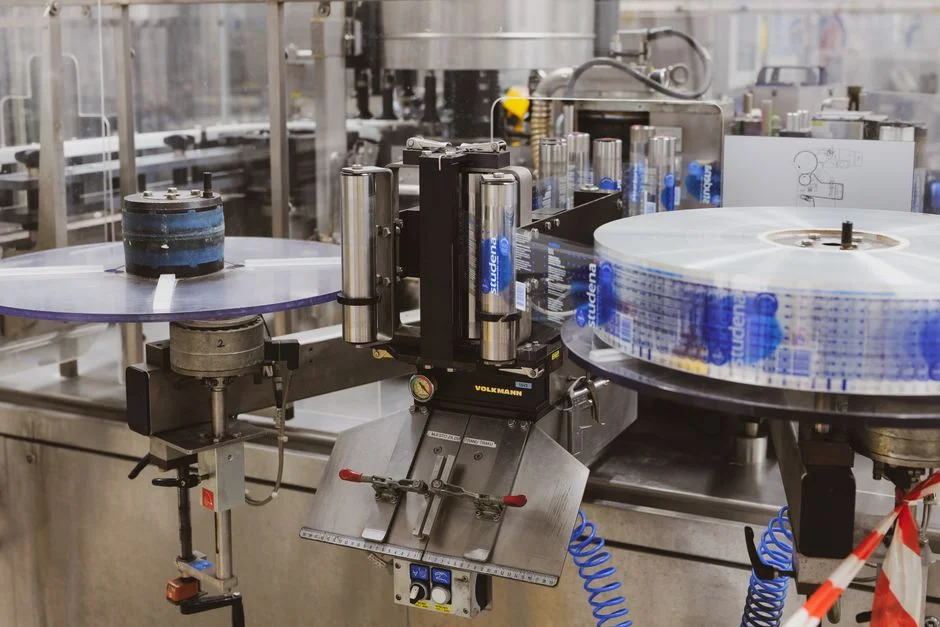
The reference train for a 10 MW Paris site runs in three or four stages, each sized to the working stream rather than the full circulation flow. The objective is to protect the downstream membranes, recover as much water as the permit allows, and route brine to the lowest-impact discharge option the ICPE and SIAAP files will accept.
Stage 1 — Side-stream spiral filtration. Self-cleaning spiral units operating at 1–5% of circulation flow and 10–25 µm cut drop suspended solids and biological load before blowdown leaves the basin; CAPEX sits in the $50,000–$200,000 band for a typical data-center installation (Genesis Water Tech, 2025-08). The objective is membrane protection, not polishing: a multi-media filter for RO pretreatment on the Seine makeup line can be added where feed TSS runs high.
Stage 2 — Hollow-fiber UF. Operating at 0.01–0.1 µm pore size, 90–95% recovery, and 10–30 psi, the UF stage removes bacteria, colloids, and biofilm fragments that pass the side-stream screen, and stabilises the SDI for downstream RO; chemical cleaning is typically required every 1–3 months (Genesis Water Tech, 2025-08). A hollow-fiber ultrafiltration pretreatment for blowdown RO is the standard 2026 configuration for Seine-derived feed.
Stage 3 — BWRO. Brackish-water RO delivers 95–99% dissolved-solids rejection with permeate at 10–50 mg/L TDS, but conventional BWRO caps at 75–80% recovery on silica-bearing cooling-tower blowdown because calcium carbonate, calcium sulfate, and silica reach antiscalant thresholds before osmotic limits (IDE Water Tech, 2025-11). Operating pressure runs 150–400 psi; a 50,000 GPD skid costs $250,000–$500,000 installed with OPEX of $1.50–$3.00 per thousand gallons treated (Genesis Water Tech, 2025-08). The skid is delivered as an industrial reverse osmosis skid for cooling tower blowdown, fed by a PLC-controlled antiscalant and biocide dosing skid sized to the recovery profile chosen.
Optional Stage 4 — MVC evaporation. Mechanical vapor compression of RO concentrate at 95–98% recovery produces distillate below 10 mg/L TDS, with energy at 15–25 kWh per 1,000 US gallons and CAPEX of $1–3M for 10,000–30,000 GPD (Genesis Water Tech, 2025-08). This stage is only triggered when the Paris discharge permit forces partial or full ZLD, and it is the practical EU EED offset case where waste-heat reuse from the data hall is modelled into the OPEX. The table below summarises the membrane and thermal stage options.
| Stage | Cut / Recovery | Operating pressure | CAPEX (USD) | OPEX (USD/kgal) |
|---|---|---|---|---|
| Side-stream spiral | 10–25 µm, 1–5% of circ. flow | Gravity / low head | $50,000–$200,000 | Minimal |
| Hollow-fiber UF | 0.01–0.1 µm, 90–95% | 10–30 psi | Site-specific | Membrane replacement |
| BWRO (50,000 GPD) | 95–99% rejection, 50–85% | 150–400 psi | $250,000–$500,000 | $1.50–$3.00 |
| MVC (10–30k GPD) | 95–98% on concentrate | 15–25 kWh/kUSG | $1,000,000–$3,000,000 | Energy-dominated |
Conventional BWRO vs Fluidized-Bed Crystallization: The 80% Recovery Wall
Conventional BWRO hits a 75–80% recovery ceiling on silica-bearing cooling-tower blowdown because calcium carbonate, calcium sulfate, and silica reach antiscalant limits before osmotic limits (IDE Water Tech, 2025-11). Adding more RO stages with booster pumps raises complexity and energy without solving the chemistry, and aggressive antiscalant dosing raises membrane fouling risk and discharge liability. On Seine-derived feed at 4 COC, the limiting species is typically calcium carbonate paired with silica, and the recovery wall sits inside the 80% band.
Fluidized-bed crystallization deactivates scale inhibitors inside a reactor so silica, calcium carbonate, and other sparingly soluble salts precipitate onto seed pellets as compact solids rather than accumulating in solution. The residual brine becomes mostly NaCl and the system can run in a closed loop at roughly 95% overall recovery, with permeate silica near 1 mg/L (IDE Water Tech, 2025-11). The seed-pellet handling step is sized using a high-efficiency sedimentation tank for seed-pellet handling downstream of the fluidized-bed reactor. High-recovery designs of this type also reduce antiscalant consumption versus multi-pass RO cascades because chemistry is managed at the system level rather than pushed to the performance ceiling.
Decision rule for a Paris site: if the permit requires more than 85% system recovery, or if the discharge TDS cap forces brine volume reduction, specify the fluidized-bed stage. If 75–80% BWRO recovery clears the permit and brine sewering is accepted by SIAAP, conventional BWRO is the lower-CAPEX baseline. The table below condenses the engineering tradeoff.
| Criterion | Conventional BWRO | BWRO + fluidized-bed crystallization |
|---|---|---|
| System recovery | 75–80% (silica-limited) | ~95% (closed loop) |
| Permeate silica | 1–5 mg/L (typical) | ~1 mg/L (IDE Water Tech, 2025-11) |
| Brine chemistry | CaCO₃ / CaSO₄ / silica scaling risk | Mostly NaCl, low scaling |
| CAPEX (skid-level) | Lower baseline | Higher (reactor + sedimentation) |
| OPEX chemistry | Antiscalant at performance ceiling | Reduced antiscalant, seed handling |
| Best fit on Paris site | Permit allows brine sewering, ≤80% recovery | Permit caps discharge TDS or bans brine sewering |
Procurement Decision Matrix for a 10 MW Paris Site
For a 10 MW Paris site, the procurement question is not whether to treat blowdown — it is which of four strategies to specify against the ICPE and SIAAP permit profile. Each option carries a different CAPEX, OPEX, and recovery profile, and each maps differently to the French discharge regime and the Eau de Paris industrial tariff on the makeup side.
Strategy A — Direct discharge only. Lowest CAPEX, but effectively closed off by direct-discharge fees of $5–$15 per thousand gallons and TDS caps below 1,500 mg/L in water-stressed jurisdictions (Genesis Water Tech, 2025-08). Not viable as a 2026 Paris baseline where SIAAP is tightening discharge acceptance.
Strategy B — RO reuse only. A 50,000 GPD industrial reverse osmosis skid for cooling tower blowdown at $250,000–$500,000 installed returns permeate as cooling-tower makeup at 60–85% recovery with OPEX of $1.50–$3.00 per thousand gallons (Genesis Water Tech, 2025-08). Workable where SIAAP sewering rules accept brine, but brine remains a liability under tightening TDS caps.
Strategy C — Partial ZLD (RO + MVC). RO at 50–75% recovery with the concentrate fed to MVC producing distillate below 10 mg/L TDS; CAPEX $1.3M–$3.5M total system, OPEX $3–$8 per thousand gallons, overall system recovery 85–95% (Genesis Water Tech, 2025-08; HydropureWater Algiers 2026). The recommended 2026 default for Paris where the ICPE inspectorate flags brine sewering or where waste-heat reuse offsets MVC energy under EU EED 2023/1791. The high-efficiency sedimentation tank for seed-pellet handling also becomes relevant if the partial ZLD path is later upgraded to fluidized-bed crystallization.
Strategy D — Full ZLD. 95–99% overall recovery, CAPEX $3–8M, OPEX $5–$15 per thousand gallons (Genesis Water Tech, 2025-08). Over-specified for Paris unless the Seine-discharge permit is fully refused. The table below consolidates the procurement decision.
| Strategy | CAPEX (USD) | OPEX (USD/kgal) | Recovery | Paris permit status |
|---|---|---|---|---|
| A — Direct discharge | Minimal | $5–$15 (fees) | 0% reuse | Closed off by TDS caps |
| B — RO reuse only | $250,000–$500,000 | $1.50–$3.00 | 60–85% | Workable if SIAAP accepts brine |
| C — Partial ZLD | $1,300,000–$3,500,000 | $3–$8 | 85–95% | 2026 recommended default |
| D — Full ZLD | $3,000,000–$8,000,000 | $5–$15 | 95–99% | Over-specified unless permit refused |
Paris-Specific Compliance, Energy, and Sequencing Constraints
EU EED 2023/1791 binds data centers above 1 MW to annual waste-heat cost-benefit assessments from October 2025, with PUE ≤1.2 the 2026 planning line (HydropureWater Algiers 2026). Typical North African and Mediterranean sites run PUE 1.4–1.7; closing that gap to ≤1.2 via waste-heat reuse and modern cooling architecture can reduce operating cost 15–25% (Algeria Tech News, 2025-10) and is the practical EU EED offset against MVC energy consumption. The waste-heat reuse case to the MVC evaporator should be modelled into the OPEX from day one, not added later as a sustainability upgrade.
ICPE 2921 (cooling installations above 2,000 kW) and 1510 (data storage) filings must reference the chosen treatment train and discharge route. Engage DRIEAT Île-de-France in parallel with the SIAAP/SATESE sewer permit; a 10 MW site touches both rubrics and the sequencing is the difference between a clean permit and a deficiency notice. The Eau de Paris industrial tariff for Seine-sourced makeup is the real freshwater-cost line item, and a partial ZLD train that displaces 60–80% of makeup pays back inside the planning horizon on that tariff alone (IDE Water Tech, 2025-11).
Lock the sequence before construction: (1) confirm the makeup source with Eau de Paris or SEDIF, (2) file the ICPE package with the chosen train and discharge route, (3) confirm SIAAP/SATESE brine acceptance, and (4) issue the equipment RFQ. Reverse the order and the ICPE file will be returned with a deficiency notice. For thermal envelope contrast on cooler climates, the Data Center Wastewater & Cooling Blowdown Treatment in Quito, Ecuador 2026 guide and the Data Center Cooling Blowdown Treatment in Guayaquil 2026 engineering guide illustrate the same procurement logic at different ambient baselines.
Frequently Asked Questions
What wastewater and cooling blowdown treatment does a data center in Paris, France need in 2026?
A 10 MW Paris site needs side-stream spiral filtration plus hollow-fiber UF feeding a BWRO skid at 75–80% recovery, with partial ZLD (BWRO plus MVC) added when the ICPE permit or SIAAP sewering rules force brine volume reduction; overall system recovery lands at 85–95% with distillate below 10 mg/L TDS (Genesis Water Tech, 2025-08; HydropureWater Algiers 2026). The train must be sized to the 60,000–180,000 L/day blowdown band that a 10 MW site generates at 4 COC, against the Seine makeup profile of 200–600 mg/L TDS.
What is the 75–80% recovery wall on cooling-tower blowdown, and when does fluidized-bed crystallization beat conventional BWRO?
Conventional BWRO caps at 75–80% recovery on silica-bearing cooling-tower blowdown because calcium carbonate, calcium sulfate, and silica reach antiscalant limits before osmotic limits (IDE Water Tech, 2025-11). Fluidized-bed crystallization deactivates scale inhibitors so those salts precipitate onto seed pellets, allowing closed-loop operation at roughly 95% overall recovery with permeate silica near 1 mg/L. Specify the fluidized-bed stage when the Paris permit demands more than 85% system recovery or caps discharge TDS; otherwise conventional BWRO is the lower-CAPEX baseline.
How does EU EED 2023/1791 change the treatment train economics for a Paris data center?
EU EED 2023/1791 binds data centers above 1 MW to annual waste-heat cost-benefit assessments from October 2025, with PUE ≤1.2 the 2026 planning line (HydropureWater Algiers 2026). Waste-heat reuse to the MVC evaporator offsets 15–25 kWh per 1,000 US gallons of MVC energy demand and turns a partial ZLD OPEX line into a defensible EU EED compliance case, which is why Strategy C (RO plus MVC) is the recommended 2026 default for Paris rather than Strategy B (RO reuse only).
How is biocide residual controlled when RO permeate is blended back into the cooling loop on a Paris site?
Antiscalant and biocide feed across the RO and post-RO stages is handled by a PLC-controlled dosing skid, with chlorine residual managed to protect RO membranes while staying inside the Urban Waste Water Directive 91/271/EEC envelope. For residual control where RO permeate is blended back into the cooling loop, a chlorine dioxide generator for biocide-residual control is the standard 2026 option, optionally paired with a UV sterilizer for residual biocide polishing downstream of the blend point.