Why Algiers Data Centers Cannot Discharge Blowdown the Old Way
Algeria's renewable freshwater share sits below 500 m³ per capita per year against a recognised scarcity threshold of 1,700 m³, and the World Meteorological Organization projects water demand growth of 40–50% by 2030 in hyper-arid countries including Algeria (Springer, 2025-09). At the same time, national treated-wastewater reuse runs below 15%, versus roughly 60% in neighbouring Tunisia, and Algerian Executive Decree discharge standards are tightening against a backdrop where approximately 40% of national wastewater treatment plants are already non-compliant (Springer, 2025-09). The signal for new industrial discharges is clear: direct blowdown discharge is no longer a permit baseline in 2026.
Concentrating cooling-tower blowdown at 4 cycles of concentration produces 1,200–6,000 mg/L TDS — 4–8× the 500–1,000 mg/L TDS of Algiers tap water — and some water-stressed jurisdictions already cap discharge TDS at <1,500 mg/L, with direct-discharge fees running $5–15 per thousand gallons (Genesis Water Tech, 2025-08). The combination of regulatory pressure, public-resource cost, and concentrated brine chemistry is pushing Algiers sovereign-cloud planners toward a treatment train rather than a discharge permit. Local water-stress planning is converging with broader Mediterranean industrial discharge reform agendas, even where site-specific permit limits have not yet been formalised.
A 10 MW Algiers Facility: Quantifying the Water and Blowdown Balance
At 4 cycles of concentration, blowdown equals 25–30% of cooling-tower makeup water (Genesis Water Tech, 2025-08). A 100 MW facility can reach 2 million litres per day, roughly 528,000 US gallons (IDE Water Tech, 2025-11). Scaling linearly, a 10 MW sovereign-cloud site in Algiers draws on the order of 200,000 L/day of makeup water, generating roughly 60,000–180,000 L/day of blowdown at 4 COC — the band that frames the entire treatment-train sizing exercise.
Blowdown chemistry is dominated by evaporation-driven concentration: TDS 1,200–6,000 mg/L, suspended solids 10–50 mg/L from corrosion products and biofilm fragments, residual biocides, scale inhibitors, plus accumulated silica, calcium, and magnesium (Genesis Water Tech, 2025-08). Mediterranean Algiers tap water typically sits at 500–1,000 mg/L TDS, so concentrate at 4 COC easily exceeds 2,000 mg/L — well inside the discharge-restriction band that several jurisdictions have already enforced at <1,500 mg/L. A worked water balance for the 10 MW Algiers site is summarised in the table below.
| Parameter | Makeup Water | Circulating Water (4 COC) | Blowdown |
|---|---|---|---|
| Flow, L/day | ~200,000 | ~50,000 (evap. + drift loss only) | ~60,000–180,000 (25–30% rule) |
| TDS, mg/L | 500–1,000 | 2,000–4,000 | 1,200–6,000 |
| Hardness as CaCO₃, mg/L | 150–300 | 600–1,200 | 600–2,400 |
| Silica (SiO₂), mg/L | 10–30 | 40–120 | 40–240 |
| Suspended solids, mg/L | <5 | 10–40 | 10–50 |
| Discharge status | n/a | n/a | Above 1,500 mg/L TDS cap in many stressed jurisdictions |
This 10 MW site is the reference case used throughout the remainder of the article, sized using a multi-media filter for RO pretreatment and an RO platform. The site is also subject to the same global tightening of data-center discharge rules now being formalised across the Mediterranean.
The Algiers Treatment Train: Side-Stream Filtration → UF → BWRO
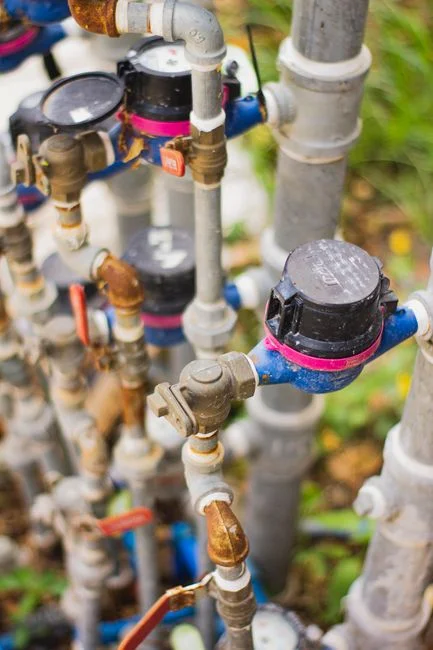
The 2026 reference train for a 10 MW Algiers site runs in three stages, with each stage sized to the working stream rather than to the full circulation flow.
Step 1 — Side-stream filtration. Self-cleaning spiral units operating at 1–5% of circulation flow and 10–25 µm cut size drop suspended solids and biological load before blowdown leaves the basin. Capital is in the $50,000–$200,000 band for a typical data-center installation (Genesis Water Tech, 2025-08). The objective is membrane protection, not water polishing: lower SDI and TSS feed makes the downstream RO run at higher recovery with fewer cleanings.
Step 2 — Ultrafiltration. Hollow-fiber UF at 0.01–0.1 µm pore size, 90–95% recovery, and 10–30 psi operating pressure removes bacteria, colloids, and biofilm fragments that pass the side-stream screen. Chemical cleaning is typically required every 1–3 months (Genesis Water Tech, 2025-08). For the Algiers case, a hollow-fiber UF pretreatment ahead of BWRO is the standard configuration, and a Lamella clarifier handles any inorganic carryover from the basin.
Step 3 — BWRO. Brackish-water reverse osmosis delivers 95–99% dissolved-solids rejection with permeate at 10–50 mg/L TDS, but conventional BWRO caps at 75–80% recovery on silica-rich blowdown because calcium carbonate, calcium sulfate, and silica reach scaling thresholds beyond that (IDE Water Tech, 2025-11). Operating pressure runs 150–400 psi with antiscalant injection; recovery in the 50–85% range is realistic for Mediterranean feed. A 50,000 GPD blowdown RO skid costs $250,000–$500,000 installed, with OPEX of $1.50–$3.00 per thousand gallons treated (Genesis Water Tech, 2025-08). For Algiers feed where hardness is the binding constraint, nanofiltration at 75–150 psi and 70–85% recovery offers a lower-energy alternative, with permeate TDS 30–50% of feed. The BWRO stage is delivered as an industrial reverse osmosis skid for blowdown treatment, fed by a PLC-controlled antiscalant loop. The table below summarises the membrane stage options.
| Membrane Stage | Pore / Cut Size | Operating Pressure | Recovery | Permeate Quality | Indicative CAPEX (50,000 GPD) |
|---|---|---|---|---|---|
| UF (pretreatment) | 0.01–0.1 µm | 10–30 psi | 90–95% | SDI <3, TSS <1 mg/L | $100,000–$250,000 |
| BWRO (silica-limited) | <0.001 µm | 150–400 psi | 50–80% | 10–50 mg/L TDS | $250,000–$500,000 |
| NF (hardness-limited) | ~0.001 µm | 75–150 psi | 70–85% | 30–50% of feed TDS | $180,000–$380,000 |
Pushing Past 80% Recovery: Fluidized-Bed Crystallization for Algiers
Conventional BWRO hits a ceiling at 75–80% recovery on silica-bearing Mediterranean blowdown because calcium carbonate, calcium sulfate, and silica reach antiscalant limits before osmotic limits (IDE Water Tech, 2025-11). Adding more RO stages with booster pumps raises complexity and energy without solving the chemistry; aggressive antiscalant dosing raises membrane fouling risk and discharge liability. The fluidized-bed crystallization approach is fundamentally different: scale inhibitors are deliberately deactivated inside a fluidized-bed reactor so silica, calcium carbonate, and other sparingly soluble salts precipitate onto seed pellets as compact solids rather than accumulating in solution.
After the precipitation step, the residual brine is mostly NaCl and can be processed in a closed loop at roughly 95% overall recovery, with permeate silica near 1 mg/L (IDE Water Tech, 2025-11). For Algiers, where Mediterranean makeup water carries measurable silica that concentrates under evaporation, this matters more than at sites with soft, low-silica feed. High-recovery designs of this type also reduce chemical consumption versus multi-pass RO cascades because antiscalant is not being pushed to its performance ceiling. The seed-sludge handling step is typically sized using a high-efficiency sedimentation tank for pellet withdrawal and dewatering — a configuration borrowed from semiconductor and advanced-packaging water reuse, where a comparable high-recovery treatment train for high-purity water reuse has been demonstrated at 99.8% contaminant removal.
Partial ZLD vs Full ZLD: Matching CAPEX to the Algiers Permit
For a 10 MW Algiers sovereign-cloud site, the procurement question is not whether to treat blowdown — it is which of four strategies to specify. Each option carries a different CAPEX, OPEX, and recovery profile, and each maps differently to the Algerian Executive Decree discharge regime and the water-stress reality on the Algiers coast.
Strategy A — Direct discharge only. Lowest CAPEX, but effectively closed off by discharge-fee economics ($5–15 per thousand gallons in water-stressed regions) and tightening TDS limits of <1,500 mg/L (Genesis Water Tech, 2025-08). Not viable as a 2026 baseline.
Strategy B — RO reuse only. 50,000 GPD RO skid at $250,000–$500,000 installed returns permeate as cooling-tower makeup at 60–85% blowdown recovery; OPEX sits at $1.50–$3.00 per thousand gallons (Genesis Water Tech, 2025-08). A workable baseline where discharge permits allow brine sewering, but brine is still a liability.
Strategy C — Partial ZLD (RO + MVC). RO at 50–75% recovery, with the concentrate fed to mechanical vapor compression producing distillate at <10 mg/L TDS. MVC CAPEX is $1–3 million for 10,000–30,000 GPD; energy is 15–25 kWh per 1,000 US gallons of distillate; overall system recovery is 85–95% (Genesis Water Tech, 2025-08). The brine stream concentrates to 20–30% dissolved solids and is hauled off-site as a manageable solid or slurry. This is the recommended 2026 default for Algiers: most of the freshwater-saving benefit of full ZLD without the crystallizer capex, and salt cake is disposable at permitted facilities. PUE improvement of 15–25% achievable through waste-heat reuse strengthens the case for the higher-recovery systems (Algeria Tech News, 2025-10).
Strategy D — Full ZLD (RO + brine concentrator + crystallizer). 95–99% overall recovery, CAPEX $3–8 million, OPEX $5–15 per thousand gallons (Genesis Water Tech, 2025-08). Justified only where discharge is fully prohibited or where freshwater sourcing is more expensive than ZLD energy. For most 2026 Algiers sites, this is over-specified.
| Strategy | Overall Recovery | Liquid Discharge | CAPEX (10 MW Algiers) | OPEX ($/kgal) | Permit Fit (Algiers 2026) |
|---|---|---|---|---|---|
| A — Direct discharge | 0% reuse | 100% of blowdown | <$50,000 | $5–15 discharge fees | Non-compliant under tightening TDS caps |
| B — RO reuse only | 60–85% | 15–40% as brine | $250,000–$500,000 | $1.50–$3.00 | Workable where brine sewering allowed |
| C — Partial ZLD (RO + MVC) | 85–95% | <10% (solid/slurry) | $1.3M–$3.5M | $3–$8 | Recommended 2026 default for Algiers |
| D — Full ZLD (+ crystallizer) | 95–99% | 0% (solid salt cake) | $3.3M–$8.5M | $5–$15 | Over-specified unless discharge is banned |
Antiscalant and biocide feed across the RO and post-RO stages is handled by an PLC-controlled antiscalant and biocide dosing system, sized to the recovery profile chosen. Strategy C builds directly on the high-recovery RO + ZLD process train for high-purity water reuse already proven in advanced-packaging facilities, adapted for the Mediterranean blowdown envelope.
Aligning With Algerian Regulation and the SONALGAZ/SEAAL Economics
Algerian Executive Decree discharge standards govern the parameters that matter most for blowdown — TDS, BOD, TSS, and residual chlorine — and they set the bar that the permeate stream and the final brine must clear (Springer, 2025-09). With approximately 40% of national wastewater treatment plants already non-compliant, enforcement pressure is intensifying, and SONALGAZ/ministry reviewers will read a discharge permit application against that backdrop. The 10 MW facility's permeate is well within typical reuse limits; the concentrate is the contentious stream, and it is exactly where partial ZLD earns its capex.
On the supply side, SEAAL potable-water tariffs for Algiers industrial customers make every cubic metre of displaced freshwater a real line item, and the 2 million-litres-per-day benchmark for 100 MW sites (IDE Water Tech, 2025-11) shows how quickly the freshwater bill scales. SONALGAZ subsidised industrial electricity reduces the OPEX penalty of MVC evaporation (15–25 kWh per 1,000 US gallons) but does not eliminate it, and the energy line should be modelled explicitly (Genesis Water Tech, 2025-08; Algeria Tech News, 2025-10). The EU Energy Efficiency Directive (EED 2023/1791) trajectory — annual waste-heat cost-benefit assessments for data centers above 1 MW from October 2025 and a PUE ≤1.2 target by 2026 — is not binding in Algeria but is the realistic planning baseline for any facility that will operate into the 2030s. Engaging SONALGAZ and the High Commission for Digitization in parallel with SEAAL is the practical path to lock in discharge, makeup, and waste-heat agreements before construction, especially given the community and regulatory backlash on data-center water discharge that is reshaping site selection globally. A comparable Indian policy push on data-centre treated-wastewater reuse in Visakhapatnam shows the direction regulators are heading.
Frequently Asked Questions
How much cooling-tower blowdown does a 10 MW Algiers data center actually produce?
At 4 cycles of concentration, blowdown equals 25–30% of makeup water. A 10 MW Algiers site on Mediterranean tap water (500–1,000 mg/L TDS) draws on the order of 200,000 L/day of makeup, generating roughly 60,000–180,000 L/day of blowdown (Genesis Water Tech, 2025-08; IDE Water Tech, 2025-11).
What is the realistic recovery ceiling for BWRO on Algiers blowdown, and how do you exceed it?
Conventional BWRO caps at 75–80% recovery on silica-bearing blowdown because calcium carbonate, calcium sulfate, and silica reach antiscalant limits. Fluidized-bed crystallization deactivates scale inhibitors so silica and hardness precipitate onto seed pellets, allowing closed-loop operation at roughly 95% overall recovery with permeate silica near 1 mg/L (IDE Water Tech, 2025-11).
What CAPEX and OPEX should be budgeted for a 10 MW Algiers partial-ZLD train?
A 50,000 GPD BWRO skid is $250,000–$500,000 installed at $1.50–$3.00 per thousand gallons OPEX. Adding MVC to reach partial ZLD adds $1–3 million CAPEX and 15–25 kWh per 1,000 US gallons of energy, taking total system CAPEX to roughly $1.3M–$3.5M and OPEX to $3–$8 per thousand gallons (Genesis Water Tech, 2025-08).
Why is the Algerian water-stress number important for data-center planning specifically?
Algeria's renewable freshwater share is below 500 m³ per capita against a 1,700 m³ scarcity threshold, and the country reuses less than 15% of treated wastewater versus roughly 60% in Tunisia. WMO projects 40–50% water-demand growth by 2030, which means industrial freshwater draw in Algiers will compete directly with municipal and agricultural users within the planning horizon of any 10 MW facility (Springer, 2025-09).
What PUE should a 2026 Algiers sovereign-cloud facility be designed around?
EU regulations now require new data centers to achieve PUE ≤1.2 by 2026, while typical Algerian and North African facilities currently run at 1.4–1.7. Closing that gap through waste-heat recovery and modern cooling architecture can reduce operating costs by 15–25% for a comparable facility (Algeria Tech News, 2025-10).