Why Packaging Plants Need Advanced Wastewater Reuse Systems in 2025
Advanced packaging wastewater water reuse systems achieve 95-99% recovery rates through hybrid treatment trains combining dissolved air flotation (DAF), membrane bioreactors (MBR), and reverse osmosis (RO). For semiconductor packaging plants, these systems remove 99.8% of low molecular weight organics (LWOs) like TMAH and acetone while meeting China GB 8978-2024 discharge limits. Decentralized systems reduce water transport costs by 40-60% compared to centralized treatment, with payback periods of 2-5 years depending on local water pricing and regulatory incentives.
Semiconductor packaging facilities consume between 5 and 12 m³ of high-purity water for every 1,000 chips produced, making the industry one of the most water-intensive sectors in modern manufacturing. As global semiconductor demand surges, the pressure on local water grids has intensified. By 2027, an estimated 40% of global semiconductor fabrication and packaging sites will operate in regions classified as under high water stress. This environmental reality is compounded by the enforcement of China’s GB 8978-2024 standards, which mandate stringent discharge limits for packaging effluents: Chemical Oxygen Demand (COD) below 50 mg/L, Ammonia Nitrogen (NH³-N) below 5 mg/L, and Total Suspended Solids (TSS) below 10 mg/L.
The economic case for reuse is as compelling as the regulatory one. In major industrial hubs, municipal water costs have risen to approximately $1.20/m³, whereas the levelized cost of reused water produced on-site averages $0.45/m³. Real-world applications have shown that integrated reuse systems prevent production shutdowns during seasonal droughts or municipal supply interruptions. For instance, in 2023, several packaging plants in water-scarce regions maintained 100% uptime despite 30% reductions in municipal allocations by relying on internal 90%+ recovery loops.
| Driver Category | Metric / Benchmark (2025) | Operational Impact |
|---|---|---|
| Water Intensity | 5-12 m³ per 1,000 chips | High volumetric demand requires localized recycling to maintain supply security. |
| Regulatory Compliance | GB 8978-2024: COD <50 mg/L | Non-compliance results in heavy fines or mandatory production suspension. |
| Water Stress | 40% of fabs in water-stressed zones | Reuse systems transition from "sustainability goals" to "business continuity" requirements. |
| Cost Efficiency | $0.45/m³ (reused) vs $1.20/m³ (city) | Direct reduction in OPEX with typical payback periods of 36 months. |
Packaging Wastewater Contaminant Profile: What Your Treatment System Must Remove
Packaging wastewater composition typically consists of 60% organic solvents, 25% heavy metals, and 15% acids and alkalis, creating a complex chemical matrix that traditional wastewater plants cannot effectively treat. The primary challenge for reuse systems lies in the removal of low molecular weight organics (LWOs). Contaminants such as urea (120-350 mg/L), Tetramethylammonium hydroxide (TMAH) (50-200 mg/L), and acetone (80-400 mg/L) are highly soluble and often bypass standard biological treatments. TMAH, in particular, is toxic to conventional nitrifying bacteria, requiring specialized pretreatment or advanced oxidation to prevent system failure.
Heavy metal concentrations are another critical factor, stemming from electroplating and lead frame manufacturing. Copper (15-80 mg/L), nickel (5-30 mg/L), and lead (2-10 mg/L) must be reduced to parts-per-billion (ppb) levels if the water is to be reused in cooling towers or process cleaning. wafer grinding and polishing processes contribute significant loads of suspended silica particles, ranging from 200 to 1,200 mg/L. These sub-micron particles are highly abrasive and will cause rapid fouling of RO membranes if not removed during the pretreatment stage.
The pH of influent streams fluctuates wildly between 2.5 and 11.5 due to alternating acid and alkaline cleaning cycles. This variability necessitates high-capacity equalization tanks and automated dosing systems to stabilize the water before it reaches sensitive membrane components. While PCB assembly wastewater focuses more on lead and flux residues, semiconductor packaging is defined by its high solvent load and ultra-fine silica content.
| Contaminant Group | Specific Parameters | Typical Concentration | Reuse Target |
|---|---|---|---|
| Organic Solvents | Acetone, IPA, TMAH | 250 - 950 mg/L (COD) | <10 mg/L |
| Heavy Metals | Cu, Ni, Sn, Pb | 15 - 80 mg/L | <0.1 mg/L |
| Suspended Solids | Silica, Ceramic dust | 200 - 1,200 mg/L | <1 mg/L |
| Nutrients | Urea, NH³-N | 50 - 350 mg/L | <1 mg/L |
Hybrid Treatment Train Design: How to Achieve 99%+ Water Recovery for Reuse
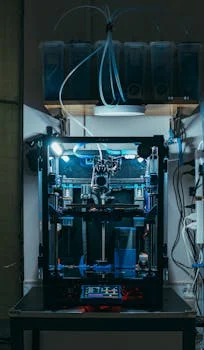
Achieving recovery rates exceeding 99% requires a five-stage hybrid treatment process that addresses contaminants in descending order of particle size and molecular weight. The process begins with Stage 1: Pretreatment using DAF systems for packaging wastewater pretreatment. These units utilize micro-bubble flotation to remove 95%+ of TSS and 80% of Fats, Oils, and Grease (FOG), effectively protecting downstream membranes from silica abrasion and organic coating.
Stage 2 involves biological treatment via Integrated MBR systems for organic contaminant removal. Unlike conventional activated sludge, MBRs operate at higher mixed liquor suspended solids (MLSS) concentrations, allowing for the degradation of complex organic solvents and achieving 99% COD removal. To address the most persistent LWOs like TMAH, Stage 3 utilizes Advanced Oxidation Processes (AOP), typically UV/H²O², which achieves a 99.8% reduction in refractory organics by generating hydroxyl radicals that break down molecular bonds.
Stage 4 is the polishing phase, where RO systems for ultrapure water reuse in packaging applications reduce Total Dissolved Solids (TDS) to less than 50 mg/L. For facilities targeting ultrapure water (UPW) standards, a second-pass RO or Ion Exchange (IX) unit is integrated. Finally, Stage 5 ensures biological safety using ClO² generators for reuse water disinfection, providing a 6-log reduction in pathogens and preventing biofilm growth in reuse piping. This specific sequence allows for hydraulic retention times (HRT) to be optimized—typically 4-6 hours for DAF and 8-12 hours for MBR—ensuring stable output even during peak load periods.
For more complex facilities, integrating microelectronics wastewater reclaim systems with 99%+ recovery rates can further enhance the efficiency of the hybrid train by recycling RO reject through specialized brine recovery membranes.
DAF vs MBR vs RO: Technology Comparison for Packaging Wastewater Reuse
Selecting the correct technology mix depends on the specific influent profile and the intended reuse application. For instance, if the goal is only to provide water for cooling towers, a DAF-based system may be sufficient for solids removal, whereas process-water reuse requires the full MBR+RO stack. Dissolved Air Flotation (DAF) is the most footprint-efficient method for solids removal, requiring 30% less space than conventional clarifiers. DAF system engineering specifications and performance data show that these systems are particularly effective at handling the low-density silica particles common in packaging wastewater.
Membrane Bioreactors (MBR) offer a significant advantage in footprint and effluent quality, replacing both the aeration tank and secondary clarifier with a single unit that is 60% smaller than conventional systems. However, MBRs have higher energy requirements, consuming 0.4-0.8 kWh/m³ compared to the 0.1-0.3 kWh/m³ required for DAF. Reverse Osmosis (RO) remains the gold standard for TDS removal but is the most energy-intensive, requiring 1.2-2.5 kWh/m³ depending on the feed water pressure and osmotic resistance.
Maintenance profiles also differ: DAF systems require annual sludge pump maintenance and monthly scraper inspections. MBR membranes typically require replacement every 5 to 8 years, with bi-annual chemical clean-in-place (CIP) cycles. RO systems demand the most frequent attention, often requiring quarterly cleaning to prevent scaling from heavy metals and silica bypass.
| Metric | DAF (Pretreatment) | MBR (Biological) | RO (Polishing) |
|---|---|---|---|
| Primary Target | TSS, FOG, Silica | COD, BOD, NH³-N | TDS, Metals, LWOs |
| Removal Efficiency | 95% TSS | 99% COD | 99.5% TDS |
| Energy Use | 0.1 - 0.3 kWh/m³ | 0.4 - 0.8 kWh/m³ | 1.2 - 2.5 kWh/m³ |
| Chemical Needs | Coagulants (10-30 mg/L) | Nutrients (C:N:P) | Antiscalants (1-5 mg/L) |
| Footprint | Compact | Minimal (Integrated) | Moderate (Skid-mounted) |
Zero-Liquid-Discharge (ZLD) for Packaging Plants: When to Implement and How to Design
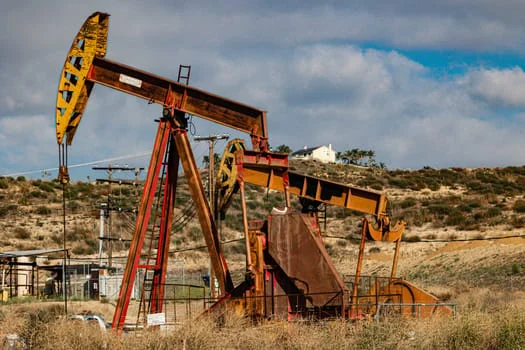
Zero-Liquid-Discharge (ZLD) implementation is triggered when local environmental regulations prohibit all liquid discharge or when the cost of municipal water exceeds $2.50/m³. For packaging plants, a ZLD process design for semiconductor wastewater typically follows a hybrid membrane-thermal approach to balance CAPEX and OPEX. The membrane stage concentrates the RO reject from the primary reuse system, achieving up to 90% recovery at a relatively low energy cost of 8-12 kWh/m³.
The remaining 10% of high-concentration brine is then processed through thermal evaporators and crystallizers. While thermal ZLD achieves 95-98% total recovery, it is energy-intensive (15-25 kWh/m³) and requires significant capital investment, often ranging from $5M to $10M for a 100 m³/h system. To optimize costs, engineers use "forced circulation" crystallizers for streams with TDS exceeding 100,000 mg/L, while "falling film" evaporators are preferred for moderate TDS levels (30,000-80,000 mg/L) due to their higher heat transfer efficiency.
A minimum viable ZLD system size is calculated based on the facility’s water balance. If the RO reject volume is small enough, it may be more cost-effective to utilize a smaller, modular evaporation unit rather than a full-scale thermal plant. Modern 4-stage RO concentration systems can now achieve 80% recovery of the primary RO reject, significantly reducing the volume of water that must be treated by expensive thermal processes.
| ZLD Approach | Recovery Rate | Energy Intensity | Relative CAPEX |
|---|---|---|---|
| Membrane-Only | 90% | 8 - 12 kWh/m³ | Low ($2M - $5M) |
| Thermal-Only | 95% | 15 - 25 kWh/m³ | High ($5M - $10M) |
| Hybrid (Mem+Therm) | 98%+ | 10 - 18 kWh/m³ | Mid ($3M - $7M) |
Cost-Benefit Analysis: ROI Calculator for Water Reuse Systems in Packaging Plants
The financial viability of an advanced packaging wastewater water reuse system is determined by the intersection of CAPEX, OPEX, and avoided costs. For a system processing 50-200 m³/h, CAPEX typically ranges from $1.2M to $3.5M. Operational expenses (OPEX) are dominated by energy (40%) and chemicals (25%), with labor, membrane replacement, and general maintenance accounting for the remaining 35%.
The ROI calculation must factor in not only direct water savings but also regulatory incentives and avoided discharge fees. In regions with high water stress, governments often provide subsidies covering 10-20% of the CAPEX for reuse systems. The formula for ROI is: (Annual Water Savings + Avoided Discharge Fees + Regulatory Incentives) / (CAPEX + Annual OPEX). Payback periods in high-cost regions like Eastern China or Singapore are often as short as 2-3 years, while regions with moderate water costs see a 4-5 year return.
A typical 100 m³/h system operating at 90% recovery will save approximately 788,400 m³ of water per year. At a municipal rate of $1.20/m³, this represents nearly $950,000 in annual gross savings. After accounting for an OPEX of $0.45/m³, the net annual savings exceed $590,000, facilitating a rapid recovery of the initial investment.
| Expense Category | % of Total OPEX | Annual Estimate (100 m³/h) |
|---|---|---|
| Energy Consumption | 40% | $140,000 |
| Chemical Dosing | 25% | $87,500 |
| Labor & Monitoring | 15% | $52,500 |
| Membrane Replacement | 10% | $35,000 |
| Maintenance & Parts | 10% | $35,000 |
Implementation Checklist: 12 Steps to Deploy a Packaging Wastewater Reuse System
Deploying a high-recovery reuse system requires meticulous planning to ensure the treated water meets the stringent requirements of semiconductor packaging processes. Following these 12 steps minimizes risk and ensures a smooth transition from installation to full-scale operation.
- Wastewater Characterization: Conduct a 30-day sampling program to analyze COD, TSS, heavy metals, and LWO diurnal variations.
- Reuse Application Definition: Determine if the water is for cooling towers (TDS <50 mg/L) or process water (TDS <10 mg/L).
- Technology Selection: Match the contaminant profile to the optimal DAF/MBR/RO combination.
- Pilot Testing: Run a 6-12 week trial with a 1-5 m³/h pilot unit to validate flux rates and chemical consumption.
- Permitting: Secure Environmental Impact Assessments (EIA) and reuse water quality certifications.
- Detailed Engineering: Finalize P&IDs, hydraulic calculations, and detailed equipment specifications.
- Procurement: Manage lead times: DAF (12 weeks), MBR (16 weeks), RO (20 weeks).
- Installation: Execute civil works (4-8 weeks) followed by mechanical and electrical integration (6-10 weeks).
- Commissioning: Perform clean water testing (2 weeks) followed by gradual wastewater introduction (4 weeks).
- Operator Training: Conduct a 2-week program focusing on membrane cleaning and automated troubleshooting.
- Performance Validation: Complete a 30-day continuous run with daily water quality lab testing.
- Optimization: Fine-tune chemical dosing and backwash frequencies based on real-time performance data.
Frequently Asked Questions
How does MBR technology handle TMAH in packaging wastewater?
MBR systems handle TMAH through specialized microbial consortia that are acclimated to nitrogen-rich organic compounds. While TMAH is toxic at high concentrations, the high MLSS (Mixed Liquor Suspended Solids) in an MBR provides a robust buffer. For influent levels above 200 mg/L, an upstream AOP (Advanced Oxidation Process) is recommended to break the TMAH molecule into more biodegradable fragments before it enters the MBR tank.
What is the typical lifespan of RO membranes in a packaging reuse system?
In a properly maintained system with DAF and MBR pretreatment, RO membranes typically last 3 to 5 years. However, if silica removal in the pretreatment stage is inefficient, lifespan can drop to less than 18 months due to irreversible scaling. Using high-quality antiscalants and maintaining strict SDI (Silt Density Index) limits below 3.0 is essential for maximizing membrane longevity.
Is ZLD always necessary for semiconductor packaging plants?
No, ZLD is not always necessary. It is typically implemented only when there is a regulatory "Zero Discharge" mandate or when the cost of municipal discharge is prohibitively high. Most plants find that a 90-95% recovery system provides the best balance of environmental compliance and ROI without the extreme CAPEX required for thermal crystallization.
Can reused water be used for the final wafer rinse?
Yes, but it requires an additional "polishing" stage. While a standard RO system produces water suitable for cooling towers and general cleaning, final wafer rinsing requires ultrapure water (UPW). This involves adding Electrodeionization (EDI) and UV sterilization to the end of the reuse train to ensure conductivity is <0.1 µS/cm and TOC is <5 ppb.