Why Santiago's Water Math Forces a New Cooling-Water Playbook
The September 2024 ruling by Chile's Environmental Court blocking Google's US$200 million Cerrillos data center — over its proposed 7.6 ML/day groundwater draw — is now the operative precedent for any hyperscale project in the Maipo–Mapocho basin (S3). The court held that the draw was incompatible with Santiago's declared water scarcity, and Google publicly committed to redesign the project around air cooling. For a 100 MW Santiago facility, the same S2 benchmark implies up to 2 ML/day of cooling water demand, a figure that has to be reconciled with the Dirección General de Aguas (DGA) allocation regime under Res. Exenta DGA and the cumulative-impact doctrine the Cerrillos ruling codified.
Two Chilean instruments dominate the permitting conversation in 2026. DS 90/2000 sets the effluent quality standards (pH 6.0–8.5, TSS ≤ 80 mg/L, oils & greases ≤ 20 mg/L, fecal coliforms ≤ 1,000 NMP/100 mL) that any discharge to sewer or natural watercourse must meet. The APTA/Suralis industrial potable tariff — the structure a hyperscaler is most likely to land on — supplies the avoided-cost line of the business case. The chemistry driving both is the same: most Santiago cooling-tower blowdown (CTBD) is dominated by silica, CaCO3, and CaSO4 rather than NaCl (S2), and that mineralogy is what caps conventional recovery at 75–80%. For a comparison framework on the Latin American water question, see the Rio de Janeiro data center cooling blowdown guide and the Brasília data center cooling blowdown guide.
What Cooling Tower Blowdown (CTBD) and Site Wastewater Look Like at the Inlet
CTBD is a brackish stream produced when evaporative cooling concentrates dissolved minerals past their scaling threshold and the operator purges a fraction of the circulating water to control cycles of concentration (CoC). At 4–6 CoC against Santiago tap water, the purge is enriched roughly four- to six-fold relative to makeup, with silica, calcium, and alkalinity carrying the load (S2, S5). Sanitary wastewater is the secondary stream at any campus: typically 10–15% of total site flow, low in volume but high in BOD/COD and suspended solids, and it must be stabilized before any reuse or discharge path.
Engineers designing around DS 90/2000 need concrete inlet numbers, not a narrative. The table below summarizes typical CTBD and sanitary ranges observed at Latin American and Mediterranean sites in the 2–10 MW to 100 MW envelope, drawn from S2 chemistry and standard blowdown literature.
| Parameter | CTBD inlet (typical) | Sanitary inlet (typical) | Method / basis |
|---|---|---|---|
| TDS | 800–2,500 mg/L | 300–700 mg/L | Conductivity conversion, S2 |
| Silica (as SiO2) | 20–80 mg/L | 5–15 mg/L | S2, blowdown literature |
| Total hardness (as CaCO3) | 400–1,200 mg/L | 150–350 mg/L | EDTA titration, S2 |
| Conductivity | 1,500–4,000 µS/cm | 600–1,200 µS/cm | Portable meter, S5 |
| TSS | 20–80 mg/L | 150–300 mg/L | DS 90/2000 reference methods |
| BOD5 | 5–15 mg/L | 150–300 mg/L | Standard methods 5210 |
| Oils & greases | 2–10 mg/L (carryover) | 10–30 mg/L | Hexane extractable, DS 90/2000 |
The intake side also has to be framed correctly. WUE in L/kWh conflates consumption (evaporation) with usage (withdrawal minus return), so a site can post a respectable WUE while consuming 20–40% of its intake as blowdown (S5). The recovery design should target consumed water, not the headline WUE number, and it starts with a clear stream map. Polishing the makeup side toward a closed loop begins with a multi-media filter sized to drop SDI below 3 ahead of the membranes.
A 2026-Ready Treatment Train for Santiago: DAF → MMF → UF → RO with Antiscalant and CIP
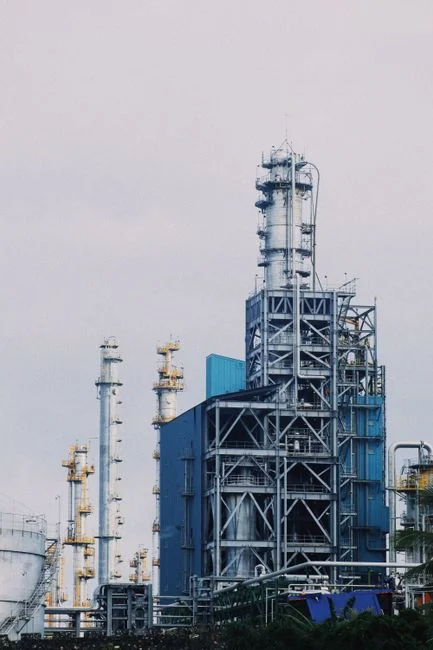
The defensible 2026 train for a Santiago data center combines five unit operations in series, with chemical precipitation or ZLD closing the loop on the brine. The sequence is vendor-neutral, equipment-agnostic, and maps directly onto a P&ID.
- DAF (4–300 m³/h). A dissolved air flotation clarifier removes suspended solids, oil carryover, and colloidal carryover from the cooling loop before the water hits filtration; expect 80–95% TSS removal and an effluent TSS consistently below 20 mg/L.
- Multi-media filter. Anthracite/sand/garnet media drops SDI15 below 3, protecting the downstream UF and RO membranes from particulate fouling during Santiago's variable-source events (Maipo–Mapocho turbidity swings in the wet season).
- UF (0.03 µm PVDF). A 0.03 µm PVDF ultrafiltration skid sized at 2,000–40,000 L/h removes bacteria, colloids, and turbidity up to 300 ppm. Automatic backwash plus air scour keeps flux stable without a full CIP after every cycle.
- Brackish RO with antiscalant and CIP. A brackish reverse osmosis unit paired with a PLC-controlled antiscalant and CIP dosing skid targets 80–85% recovery on standard streams and up to ~95% when paired with a fluidized-bed salt-precipitation step (S2). The CIP loop, instrument air, and a single PLC HMI cover the entire membrane train.
- Concentrate management. Route RO brine to a controlled-precipitation reactor or ZLD crystallizer. Coastal sites can co-dispose with industrial concentrate streams per S1's Chilean-context brine precedent; inland sites typically need forced evaporation and salt harvesting.
Target effluent numbers for the permeate stream, the envelope a 2026 design should be stamped against, are summarized below.
| Parameter | RO permeate target (cooling makeup) | DS 90/2000 ceiling (discharge) | Method |
|---|---|---|---|
| TDS | < 50 mg/L | n/a (reuse stream) | Conductivity, S2 |
| Silica (as SiO2) | < 5 mg/L | n/a | S2, induction-timing limit |
| Conductivity | < 100 µS/cm | n/a | Portable meter |
| pH | 6.5–7.5 | 6.0–8.5 | Electrometric, DS 90/2000 |
| TSS | < 1 mg/L | ≤ 80 mg/L | Gravimetric, DS 90/2000 |
| Hardness (as CaCO3) | < 5 mg/L | n/a | EDTA titration |
Conventional vs. Chemistry-Aware CTBD Recovery: Where the 75–80% Ceiling Comes From
Conventional brackish reverse osmosis on CTBD plateaus at 75–80% recovery because silica, CaCO3, and CaSO4 reach their induction-time scaling limits inside the membrane element (S2). Pushing recovery higher with traditional designs means additional stages, booster pumps, and concentrate recirculation loops — more complexity, more energy, and a higher failure rate. This is the trap S5 describes: biological and scaling risk grow exponentially above 5–6 CoC, and conventional chemistry forces operators back down to manageable levels.
A chemistry-aware approach deliberately separates salt removal from osmotic pressure limits. Sparingly soluble salts are precipitated in a fluidized-bed reactor before the brine ever reaches the high-pressure side of the RO; the remaining brine is NaCl-dominated, and the membrane can run at ~95% recovery without entering the unstable crystallization regime (S2). The trade-off is capital cost, footprint, and a real operator-skill requirement — paid back in cycles-of-concentration gain and reduced freshwater withdrawal.
| Dimension | Conventional BWRO | Chemistry-aware train |
|---|---|---|
| Recovery ceiling | 75–80% | ~95% with fluidized-bed precipitation (S2) |
| CoC unlocked | 5–6 (then forced back down) | 7–10 with cleaner chemistry (S5) |
| Permeate silica | 5–15 mg/L | ~1 mg/L at desalter permeate (S2) |
| Antiscalant dose | Aggressive, multi-chemical | Targeted, lower TDS load downstream |
| CAPEX relative | 1.0× baseline | 1.3–1.6× baseline (S2/S5 range) |
| Operator skill | Standard RO training | Chemistry + membrane operations |
Sanitary and Process Wastewater Side-Streams: MBR as the Site Workhorse
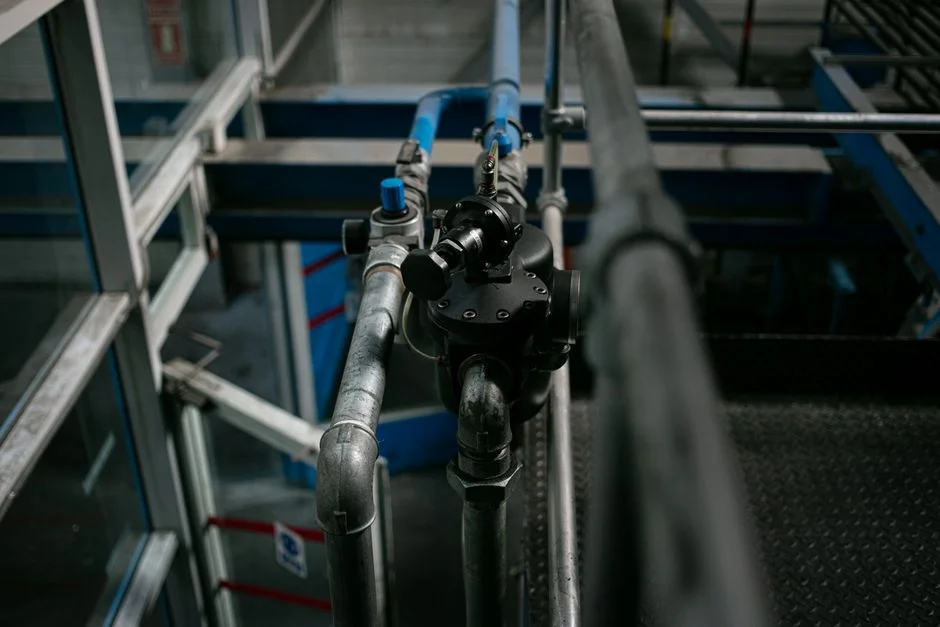
Sanitary and cafeteria streams need biological treatment before any reuse or discharge path, and a submerged MBR is the right tool for a space-constrained Santiago campus. A submerged MBR for sanitary side-streams running flat-sheet PVDF modules at 0.1 µm delivers near-reuse effluent with a 60% smaller footprint than conventional activated sludge, and a single DF-series module covers 32–135 m³/day per train. MBR effluent can be polished through RO for toilet flush, irrigation, or cooling-tower makeup, materially reducing freshwater draw against APTA tariffs.
Sludge handling closes the loop. A plate-and-frame sludge dewatering press sized 1–500 m² dewiters MBR waste-activated sludge and physico-chemical precipitate to a 22–28% dry cake for off-site disposal per DS 90/2000 solids-handling expectations, eliminating open drying beds and the odor risk they carry in dense urban settings like Cerrillos or Quilicura.
Disinfection, Monitoring, and Permitting Closure
Reuse loops need chemical-free disinfection. A UV sterilizer on the reuse line and on the cooling-tower makeup stream delivers inactivation effective against Cryptosporidium and Giardia at 40 mJ/cm² without forming DBPs. For cooling-loop biocide control, a chlorine dioxide generator in the 50–20,000 g/h range provides shock biocide capacity without the trihalomethane load of chlorine at high pH.
DS 90/2000 self-monitoring requires monthly logging of pH, temperature, TSS, oils & greases, and fecal coliforms, plus flow-proportional composite sampling. The O&M log must be audit-ready for the Superintendencia de Servicios Sanitarios and for any RCA-mandated environmental follow-up. Treat the Cerrillos ruling as the operative precedent for cumulative-impact assessment in the Maipo basin: any 2026 permit submittal should pre-empt the cumulative-draw question with a documented net-positive water balance.
Capex, Opex, and Payback in a Santiago Context
Modular DAF + MMF + UF + RO trains for industrial CTBD recovery land in a USD 0.20–0.50 per L/day of installed capacity band — treat this as a sizing benchmark, not a project quote, and refine against the specific Maipo basin intake, the altitude derate for Santiago's 520 m atmospheric pressure, and the seismic-design adder required by NCh433. Operating cost is dominated by chemical dosing (antiscalant, CIP acid/alkali, biocide), RO membrane replacement on a 3–5 year cycle, and power for the high-pressure pump. Both lines scale with influent silica and hardness (S2, S5).
The business case moves when the avoided-cost lines are counted honestly. S5's 6.7-year simple payback at 60% recovery on a USD 200k capex compresses to 3–5 years once APTA industrial potable tariffs, avoided sewer discharge, reduced chemical intensity from higher sustainable CoC, and the deferred CAPEX of a larger freshwater intake are included. The carbon dimension reinforces the case: a decarbonized Chilean grid over the 2026–2050 asset life pushes the GWP penalty of reuse below 0.1% of the direct water displacement benefit (S4), and the broader market context from the 2026 desalination market outlook confirms that high-recovery, chemistry-aware trains are the cost-curve baseline, not the premium option.
| Cost line | Driver | Effect on payback |
|---|---|---|
| CAPEX (modular train) | USD 0.20–0.50 per L/day capacity | Baseline |
| OPEX — chemicals | Silica, hardness, CoC | Lower at 7–10 CoC (S5) |
| OPEX — membranes | 3–5 year replacement | ~10–15% of annual OPEX |
| Avoided — APTA potable | Industrial tariff escalation | Strongest single line |
| Avoided — sewer discharge | DS 90/2000 compliance cost | Reduces surcharge exposure |
| Avoided — intake CAPEX | Deferred potable connection upsizing | 1.0–1.5× reuse CAPEX avoided |
| Payback envelope | Total cost of water | 3–5 years (S5 framework) |
Frequently Asked Questions
What is the minimum treatment train a 2026 Santiago data center should specify for cooling-tower blowdown reuse?
DAF for TSS and oil removal, multi-media filtration to SDI < 3, 0.03 µm PVDF ultrafiltration for colloids and bacteria, brackish reverse osmosis with antiscalant dosing, and a CIP skid, sized to land at 80–85% recovery standard and up to ~95% with a fluidized-bed salt-precipitation step (S2).
What influent and effluent numbers should the design be stamped against for DS 90/2000 compliance?
CTBD inlet typically runs 800–2,500 mg/L TDS, 20–80 mg/L silica as SiO2, 400–1,200 mg/L hardness as CaCO3, and 1,500–4,000 µS/cm conductivity (S2). Discharge to sewer must hit pH 6.0–8.5, TSS ≤ 80 mg/L, oils & greases ≤ 20 mg/L, and fecal coliforms ≤ 1,000 NMP/100 mL per DS 90/2000.
How long is the realistic payback for a CTBD reuse train in the Maipo basin?
S5's 6.7-year simple payback at 60% recovery compresses to 3–5 years once APTA industrial potable tariffs, avoided sewer discharge, and deferred intake CAPEX are credited, and the chemistry-aware approach that unlocks 7–10 CoC reduces OPEX further (S2, S5).
Why does the Cerrillos ruling matter for a 2026 permit application?
The September 2024 Environmental Court decision blocking Google's 7.6 ML/day groundwater draw is now the controlling precedent for cumulative-impact review in the Maipo–Mapocho basin (S3). Any new project should pre-empt the cumulative-draw question with a documented net-positive water balance and a clear effluent pathway under DS 90/2000.
Related Equipment
- brackish reverse osmosis unit — specifications, capacity range, and technical data