
What an Effluent Treatment Plant in Winnipeg Has to Handle in 2026
An industrial effluent treatment plant in Winnipeg in 2026 typically combines screening, DAF or equalization, biological treatment (most often MBR), and tertiary UV or chlorine disinfection, designed around the City of Winnipeg's Sewer By-law and Manitoba Environment and Climate Change (ENV) industrial discharge limits. Cold-climate duty requires enclosed or buried bioreactors, heat-traced piping, and protected UV banks to maintain >95% BOD removal through -30°C ambient swings. Roughly 40% of North American wastewater plants already struggle to meet current regulatory benchmarks (per industry best-practice surveys, 2024), and Manitoba's winter envelope makes that gap wider, not narrower.
Manitoba industrial effluent profiles split into three working bands that drive equipment selection. Food and beverage streams typically run 2,000–5,000 mg/L COD and 200–2,000 mg/L TSS with high FOG, which forces a DAF upstream of any biological stage. Metal-finishing plants deliver 100–1,000 mg/L COD but carry heavy metals (Cu, Ni, Zn, Cr) that demand precipitation and sludge stabilization before sewer discharge. Light manufacturing — machining, painting, wash bays — produces 500–2,000 mg/L COD, 100–1,500 mg/L TSS, and free oils that an API or DAF must strip first. These are planning benchmarks, not design numbers; the actual envelope comes from a 2-week composite sampling campaign at the source.
Winnipeg's design-day ambient of -30°C to -35°C (Environment Canada, 2024) freezes unprotected influent, kills biological activity in open basins, and derates UV output by 25–40% if lamps are not housed in conditioned rooms. That is why buried or enclosed MBR tanks with R-20+ insulation and heat-traced service lines are now standard in Manitoba, and why open activated-sludge basins — still common in southern Ontario — are rare on Prairie greenfield sites.
Manitoba ENV and City of Winnipeg Compliance Targets
Manitoba ETP compliance is a three-layer stack: federal Fisheries Act where effluent reaches a receiving water, provincial Manitoba ENV wastewater discharge requirements under the Environmental Act Licence (EAL) regime, and the City of Winnipeg Sewer By-law for any discharger to the municipal system. The City enforces through its own Sewer Use By-law limits, while ENV issues construction and operating approvals through the EAL process for any discharge above the prescribed trigger thresholds (Manitoba ENV, 2024).
The table below is a working benchmark for design basis — confirm every cell against the current by-law text and ENV licence schedule before finalizing P&IDs.
| Parameter | Typical sewer-discharge ceiling | Typical direct-to-watercourse ceiling | Notes |
|---|---|---|---|
| BOD5 | ~300 mg/L | ~25 mg/L | Tighter limit for surface-water discharge |
| TSS | ~350 mg/L | ~30 mg/L | MBR polish typically <10 mg/L |
| Oil & grease | ~100 mg/L | ~15 mg/L | DAF pre-treatment required for FOG streams |
| pH | 6.0–9.5 | 6.5–9.0 | Continuous online monitoring |
| Total metals (Cu+Ni+Zn+Cr) | ~5 mg/L combined | ~1–2 mg/L combined | Precipitation + sand filtration typical |
| Ammonia-N | ~50 mg/L (sanitary) | ~5–10 mg/L | Nitrification required for reuse |
An EAL is triggered by design flow (generally above ~10 m³/day for industrial), by contaminant loading, and by discharge to a watercourse rather than the City sewer. Low-risk sites discharging only to the sanitary sewer and below the by-law thresholds often route through a sewer-use permit only. EAL applications typically require 6–10 months of review including hydrogeology and assimilative-capacity studies for direct discharges (per Manitoba ENV typical review timelines, 2024-2025). Academic work on nanofiltration polishing for EU Water Framework Directive compliance (Schrader, UT, 2024) points to the longer-term direction: MBR or UF polish stages are now the lowest-risk future-proofing choice, since they can be tightened to meet stricter limits without major retrofit.
Mainstream Process Trains for a Winnipeg ETP
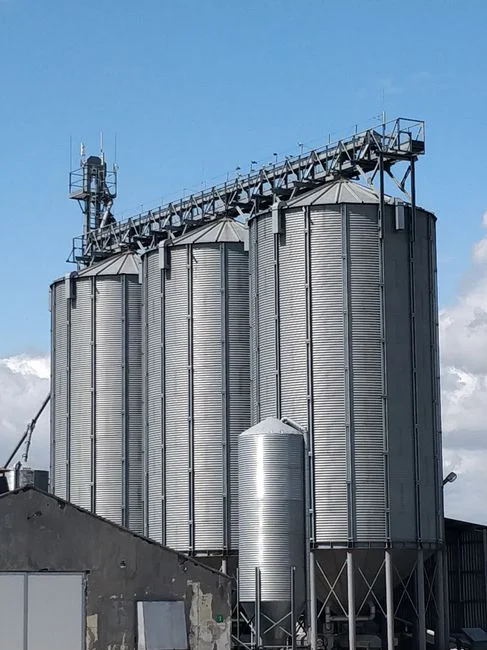
Most Winnipeg industrial ETPs follow a four-stage train: headworks, primary separation, biological, and tertiary polish plus sludge handling. The headworks should start with a rotary mechanical bar screen sized to 3 mm aperture to strip rags, plastics, and fibrous debris that would otherwise blind downstream membranes. Grit removal follows, sized for a peak-to-average ratio of 2:1 or more, since food and metal-finishing facilities routinely hit 3:1 during shift changes.
Equalization and DAF pre-treatment come next. The DAF stage at 4–300 m³/h with micro-bubble flotation typically captures 90%+ TSS and FOG for food and metalworking streams (HydropureWater DAF spec, 2026). High-FOG streams (dairy, meat, fryer operations) should expect recycle ratios of 20–30% and polymer dosing of 5–15 mg/L to keep floated solids above 3% dry solids.
The biological stage is the main decision point. Conventional activated sludge (CAS) needs a separate clarifier and accepts 20–40 mg/L TSS in the effluent; a submerged MBR membrane bioreactor system delivers <1 μm filtration in the same tank and roughly 60% footprint reduction versus CAS at the same loading (HydropureWater MBR spec, 2026). For high-strength food/beverage waste, an anaerobic reactor upstream of an MBR or CAS produces usable biogas — typically 0.3–0.5 m³ CH₄ per kg COD removed — but mesophilic digesters need ~35°C, so digester heating and insulation are mandatory in Manitoba. Anaerobic-only discharge rarely meets the Winnipeg sewer by-law without an aerobic polish step.
Tertiary polish is generally UV or chlorine dioxide. A UV disinfection unit in a conditioned room handles Cryptosporidium and Giardia with no disinfection by-products, and lamp output derates by 25–40% in cold water if not enclosed and temperature-controlled. Chlorine dioxide is the alternative for sites with high TSS variability or long distribution loops downstream. Sludge handling closes the train: a plate and frame filter press at 1–500 m² filtration area dewaters to 22–28% DS, ready for landfill or land-application haul-off.
Process Comparison: MBR vs DAF+AS vs UF Polish vs Anaerobic
The matrix below compares four realistic process options for a 50 m³/day Winnipeg duty. All numerical cells are planning estimates — confirm against vendor P&IDs and a site-specific design basis before committing budget.
| Criterion | MBR (submerged) | DAF + CAS | UF polish on existing AS | Anaerobic + aerobic polish |
|---|---|---|---|---|
| Effluent BOD5 achievable | <5 mg/L | 15–25 mg/L | 5–10 mg/L | 15–30 mg/L (post-polish) |
| Effluent TSS achievable | <1–5 mg/L | 15–30 mg/L | <1–5 mg/L | 10–20 mg/L |
| Footprint (relative) | 0.4× (60% smaller than CAS) | 1.0× baseline | 0.8× (adds skid) | 0.9× (adds digester) |
| Energy use (kWh/m³) | 1.5–2.5 | 0.8–1.2 | 0.6–1.0 (incremental) | 0.3–0.6 (net, with biogas) |
| Cold-weather suitability | High (enclosed/buried) | Moderate (needs enclosure) | High (skid indoors) | Low without digester heating |
| Reuse potential | High (near-potable) | Low–moderate | Moderate–high | Low–moderate |
| Indicative CAPEX 50 m³/day (CAD) | C$350K–C$650K | C$250K–C$450K | C$150K–C$300K (retrofit) | C$600K–C$1.0M (with CHP) |
MBR data points come from the HydropureWater integrated spec (10–2,000 m³/day range, submerged PVDF membranes, 60% footprint reduction) and the DF series flat-sheet cassette (0.1 μm pore, 32–135 m³/day per cassette, 10–20× lower energy than cross-flow, individually replaceable elements). The UF retrofit column assumes a UF polishing system added to an existing CAS plant — a cost-effective path when the civil structure is already there. DAF figures (90%+ TSS/FOG capture, 4–300 m³/h, 13 standard models) come from the HydropureWater DAF spec. Anaerobic makes sense only where influent COD is consistently above 3,000 mg/L and digester heating is properly scoped.
2026 CAPEX and OPEX Benchmarks for Winnipeg
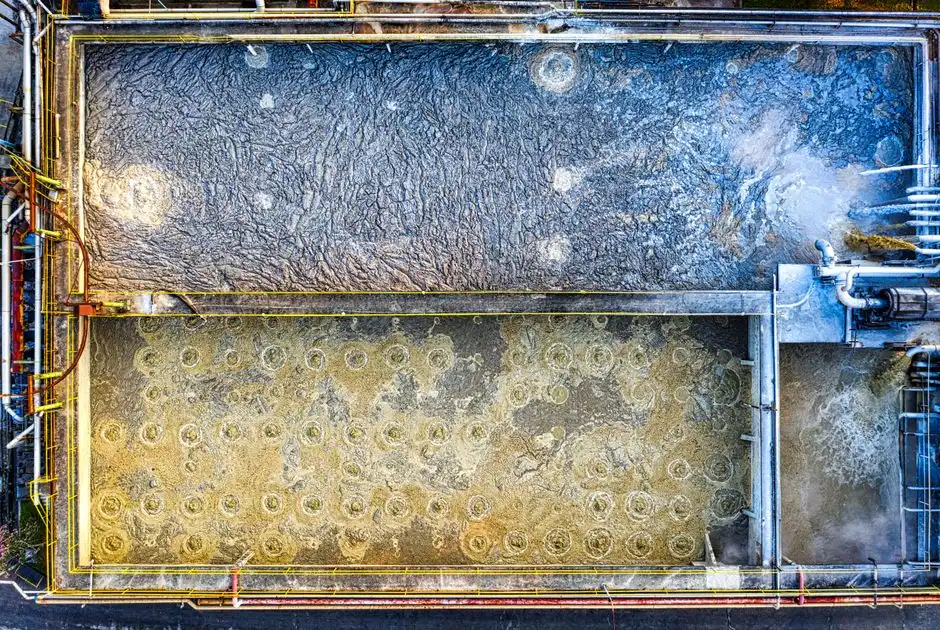
Budget envelopes below are 2026 Canadian dollars for a turnkey, containerized or pre-engineered system, excluding building, site civil works, and ENV licence fees. They assume DAF pre-treatment, biological stage, tertiary UV, and a plate-and-frame sludge press — but no anaerobic digester.
| Design flow | CAPEX envelope (CAD) | OPEX envelope (CAD/m³ treated) | Winter OPEX adder |
|---|---|---|---|
| 50 m³/day (packaged MBR) | C$350,000 – C$650,000 | C$2.20 – C$3.50 | +10–20% |
| 250 m³/day (modular MBR) | C$1,500,000 – C$3,000,000 | C$1.80 – C$2.80 | +10–20% |
| 1,000 m³/day (site-built MBR + DAF) | C$4,000,000 – C$10,000,000 | C$1.40 – C$2.20 | +10–20% |
| CAS-only at 250 m³/day (comparison) | C$900,000 – C$1,800,000 | C$1.80 – C$2.80 | +10–20% |
For sites with constrained civil work, an underground packaged sewage treatment plant at 1–80 m³/h typically costs 15–25% more than a surface skid but eliminates the need for a heated building, paying back the premium in 3–5 winters. Sludge handling on a plate and frame filter press typically runs C$40–C$80 per dry tonne for polymer, hauling, and labour.
Integrated water resource management (IWRM) — heat recovery, biogas utilization, and sludge volume reduction — can cut operational cost by up to 30% (per industry best-practice data, 2024). Winnipeg's winter electricity demand and natural gas heating for digesters push OPEX 10–20% above the same plant in Vancouver or Toronto, so the MBR OPEX range above already includes that seasonal uplift. Budget ENV application fees, hydrogeology studies, and City sewer-connection charges separately — they routinely add 5–10% to the project total on direct-discharge projects.
Cold-Climate Design Checklist for Manitoba
A Winnipeg ETP that meets spec in July will quietly fail in February unless winterization is engineered in from the start. The four failure points I see most often on Prairie retrofits are: (1) buried or enclosed bioreactors with R-20+ insulation and heat-traced influent lines, where the underground packaged sewage treatment plant is the cold-climate benchmark for flows up to ~80 m³/h. (2) heated MBR tank enclosures and indoor UV banks, because UV lamps lose 25–40% output below 10°C and reactor biology slows by 50% at 5°C. (3) insulated DAF cabinets and chemical dosing lines via an automatic chemical dosing skid — pH adjusters and coagulants freeze below -10°C without tracing and ruin pump diaphragms. (4) sludge handling in winter, where covered dewatering with a plate and frame filter press in a heated enclosure and shorter sludge residence avoids frozen conveyors and truck-loadability problems below -20°C.
Other items that routinely get missed: heat-traced sample lines and flow meters, frost-free instrument air, and redundant membrane cleaning chemical storage kept above 5°C. For unmanned sites, PLC control with remote telemetry is now standard on most pre-engineered skids and is a low-cost insurance add for Manitoba.
Selecting the Right ETP Configuration: A 4-Step Framework
Step 1 — Characterize the influent. Run a 2-week composite sampling campaign covering flow, pH, BOD/COD, TSS, FOG, temperature, and peak-to-average ratio. Anything above 2:1 peak-to-average forces equalization; anything above 1,000 mg/L FOG forces DAF upstream. Step 2 — Define the discharge point and receptor. Is it the City of Winnipeg sanitary sewer (by-law only), the storm sewer (ENV + by-law), or a surface watercourse (ENV EAL + Fisheries Act)? Pull the applicable limits into a design basis table before any equipment selection.
Step 3 — Match the process to influent, discharge target, and footprint. A packaged MBR membrane bioreactor system fits sites under 80 m³/day with tight footprints or reuse targets. DAF plus AS fits medium flow with moderate discharge ceilings and budget pressure. Anaerobic plus MBR fits high-strength food/beverage waste where the operator can use the biogas and tolerate the digester heating load. A UF polishing system fits existing CAS plants being retrofitted to meet tighter limits without a full rebuild. Step 4 — Validate winterization, sludge handling, and remote monitoring. Insulate, trace, and enclose; specify a high-efficiency sedimentation tank or DAF upstream of any membrane; and budget PLC with remote telemetry from day one.
For a benchmark cross-check against Prairie duty conditions, the Calgary ETP engineering guide and the Edmonton domestic sewage treatment guide cover similar cold-climate envelopes. For modular packaged builds specifically, the Minnesota package plant guide offers a useful North American comparison.
Frequently Asked Questions
What does an effluent treatment plant cost in Winnipeg in 2026?
A packaged 50 m³/day MBR-based ETP runs C$350,000–C$650,000 in 2026; 250 m³/day modular systems land at C$1.5M–C$3M, and 1,000 m³/day site-built plants C$4M–C$10M. These are turnkey equipment envelopes — exclude site civil, building envelope, ENV fees, and sewer-connection charges, which routinely add 5–10%.
Do I need a Manitoba ENV licence or only a City of Winnipeg sewer permit?
If the discharge is to the City sanitary sewer and stays below by-law thresholds, a sewer-use permit is usually enough. Discharges above the EAL trigger thresholds (roughly 10 m³/day for industrial, higher contaminant loadings, or any direct watercourse release) require an Environmental Act Licence from Manitoba ENV, with a typical 6–10 month review.
Can an MBR operate in Manitoba winters?
Yes, with buried or enclosed tanks, R-20+ insulation, heat-traced service piping, and indoor UV banks. HydropureWater submerged MBRs are rated for -30°C design margin when specified with the cold-climate package; biological activity holds above 90% of design rate down to ~5°C mixed liquor, and an enclosed tank keeps mixed liquor at 10–15°C year-round.
What effluent quality can I expect from a well-designed MBR?
A properly designed industrial MBR polish typically delivers <10 mg/L TSS and <30 mg/L BOD5 on the discharge side, with BOD5 below 5 mg/L achievable on stable, low-toxicity influents. That comfortably meets the City of Winnipeg sewer by-law and gives headroom for any future tightening.
How long does an ETP build take in Manitoba?
Engineering plus ENV permitting plus installation typically runs 9–14 months from kickoff to commissioning for a packaged or modular MBR. A site-built 1,000 m³/day plant with an EAL and full civil works more typically lands at 14–20 months, with the ENV review on the critical path.