
How Edmonton Regulates Domestic Sewage in 2026
The City of Edmonton operates its wastewater and stormwater systems under an Approval to Operate document issued by Alberta Environment and Parks, and that single instrument governs how a discharge from any site — municipal plant, commercial development, or remote subdivision — can affect the North Saskatchewan River (per the City of Edmonton utilities page, edmonton.ca, 2026). The approval is explicit about its purpose: it "seeks to minimize the impact of City discharges on the North Saskatchewan River" (edmonton.ca, 2026), which is the practical water-quality lens through which every packaged-plant proposal in the region is read.
For sites that connect to the city, EPCOR owns the collection system downstream of the property line and operates it as three separate networks — sanitary sewer, storm sewer, and combined sewer — and the company's own page states that "our responsibility for sewer servicing begins where your property ends" (epcor.com, 2026). Customer plumbing stops at the property line; everything past that boundary, including billing, is EPCOR's. The practical consequence is that any developer who cannot reach a sanitary stub at the property line is automatically pushed into the Approval to Operate path as a private discharger.
That path is triggered by new subdivisions, commercial developments (including hotels and hospitals), and any site that does not connect to the EPCOR network. The single most useful phone number at the start of any Edmonton project is EPCOR's customer line at 780-310-4300, which the City directs residents to for all billing and service questions (edmonton.ca, 2026) and which will, in practice, tell a developer whether a sanitary stub exists in the right-of-way or whether a private plant is the only option. The same conversation sets whether a site will be billed as a metered commercial customer or treated as a stand-alone discharger with its own approval.
What Edmonton's Domestic Sewage Actually Contains
Domestic sewage is the combination of blackwater (toilets) and greywater (sinks, showers, laundry, and kitchen drains), and the raw concentrations a packaged plant must handle in Edmonton sit in well-defined bands: biochemical oxygen demand typically runs 200–500 mg/L, chemical oxygen demand 200–600 mg/L, total suspended solids 150–400 mg/L, and ammonia-nitrogen 20–60 mg/L, with fats, oils, and grease spiking in any development that includes a food-service tenant. These are not single-point targets; they are the design envelope a vendor should be sized against.
What matters for technology selection is the removal benchmark. A 2018 IntechOpen vermifiltration study found that biofilters treating septic-tank effluent achieved 80–90% removal of BOD, COD, total suspended solids, and total dissolved solids, with some parameters exceeding 90% (IntechOpen, 2018, doi:10.5772/intechopen.75658). Any packaged MBR or A/O plant that cannot reliably clear that 80–90% bar is not meeting the de facto standard for an Alberta Approval to Operate.
Edmonton's winter operating reality constrains the biology further. Incoming sewage typically arrives at 8–12 °C for most of the year, dropping lower in uninsulated lift stations, and these temperatures slow nitrification kinetics enough that designers either add tank volume or accept a winter derating on ammonia. The contaminants the City of Edmonton approval is built around are exactly the ones a packaged plant must control: BOD, TSS, ammonia, total phosphorus, fecal coliforms, and oil and grease from food-service tenants.
| Parameter | Typical raw domestic sewage | Design target after biological + clarification | Design target after MBR + disinfection |
|---|---|---|---|
| BOD5 (mg/L) | 200–500 | ≤ 20–30 | ≤ 5–10 |
| COD (mg/L) | 200–600 | ≤ 60–100 | ≤ 30–50 |
| TSS (mg/L) | 150–400 | ≤ 20–30 | ≤ 1–5 (membrane-retained) |
| NH3-N (mg/L) | 20–60 | ≤ 5–10 (winter), ≤ 1–3 (summer) | ≤ 1–3 |
| Total phosphorus (mg/L) | 4–12 | ≤ 1–2 (without chemical precipitation) | ≤ 0.5–1 |
| Fecal coliform (CFU/100 mL) | 106–108 | 103–104 (with disinfection) | ≤ 200 (with UV or ClO2) |
The Standard Process Train: From Sewage to Compliant Effluent
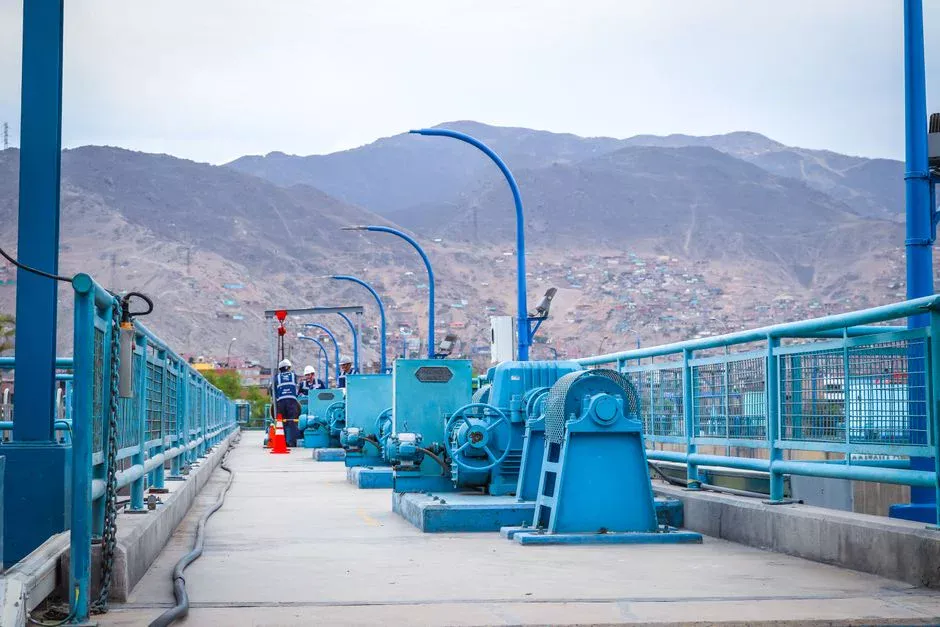
A packaged domestic sewage treatment plant in Edmonton is a five-step process train, and the steps map directly to the equipment list on a vendor P&ID. The first step is preliminary treatment: a GX series rotary mechanical bar screen set at 3–6 mm aperture removes rags, wipes, plastics, and fibrous material before the lift station, protecting downstream pumps and biological reactors from ragging and clogging. Skipping or undersizing this step is the single most common cause of unplanned service calls on small packaged plants.
Step two is the biological stage. An anoxic/aerobic (A/O) contact-oxidation configuration puts the sewage through an anoxic zone first, where facultative bacteria convert nitrate to nitrogen gas (denitrification), followed by an aerobic zone with fine-bubble diffusers where nitrifying bacteria oxidize ammonia to nitrate (nitrification). Splitting the two zones inside a single buried tank is what allows a small footprint to hit both ammonia and total-nitrogen targets without a separate moving-bed or SBR reactor.
Step three is solid–liquid separation. In a WSZ-class unit, mixed liquor flows into an integrated settling tank where clarified supernatant overflows to disinfection and settled sludge returns to the biological chamber via an airlift. In an MBR unit, the same mixed liquor is drawn through submerged PVDF ultrafiltration membranes with a nominal pore size under 1 μm, which physically retain biomass and almost all suspended solids — the secondary clarifier is eliminated entirely. The trade-off is energy: membranes need a permeate pump and periodic backwash, while a clarifier needs only a sludge pump.
Step four is disinfection. Most Edmonton packaged plants use either a chlorine dioxide generator or a UV sterilizer for water treatment to hit the fecal-coliform target the Approval to Operate enforces. ClO2 handles cold-water performance and provides a residual, which is useful for long outfalls; UV is chemical-free but loses dose as water temperature drops and quartz sleeves foul, so winter maintenance matters.
Step five is sludge handling. Surplus activated sludge is wasted to a sludge holding chamber, then thickened and dewatered on a plate and frame filter press. The dewatered cake is typically hauled off-site to a licensed disposal facility, and the filtrate returns to the head of the plant. For a buried WSZ unit on a small subdivision, sludge is usually withdrawn on a service interval rather than continuously processed — a meaningful operational difference versus a larger MBR plant where sludge production scales with flow.
Choosing Between MBR, WSZ, and Conventional Activated Sludge in Edmonton
For a small-to-mid Edmonton community, the technology choice collapses to three options, and the right one is driven less by biology than by site constraints, reuse goals, and operator availability. The WSZ underground package sewage treatment plant runs 1–80 m³/h of A/O + sedimentation + disinfection in a single buried unit, is fully automated, requires no on-site operator, and can either be buried with landscaping above grade or trailer-mounted for mobile duty on a remote site. It is the default for new subdivisions without an EPCOR stub, for hotels and hospitals under ~200 m³/day, and for rural clusters where hauling sludge quarterly is acceptable.
The MBR membrane bioreactor system runs 10–2,000 m³/day, hits under-1-μm effluent quality with submerged PVDF membranes, and delivers roughly 60% less footprint than an equivalent conventional activated sludge plant. It is the right pick when the Approval to Operate includes a tight ammonia or total-phosphorus limit, when the site has a water-reuse target (toilet flushing, landscape irrigation, or cooling-tower makeup), or when the available footprint is constrained by a high water table or a tight property line. For reuse quality, the key sub-component a buyer should ask a vendor about by name is the DF series PVDF flat-sheet MBR membrane module, with 0.1 μm pore size, 80–225 m² cassettes, and 32–135 m³/day per cassette, because the cassette spec determines the actual reuse-grade throughput.
Conventional activated sludge (CAS) still wins on dollars per cubic metre at scale, but it needs a dedicated clarifier, a separate sludge-return system, an operator with daily checks, and a larger footprint. Below roughly 200 m³/day, CAS is rarely economic in an Alberta context because the operator cost alone consumes the CAPEX saving. The technology only really enters the conversation above that flow, where it competes with MBR on cost while losing on footprint, effluent quality, and automation.
| Criterion | WSZ buried package | MBR (submerged PVDF) | Conventional activated sludge |
|---|---|---|---|
| Flow range | 1–80 m³/h (24–1,920 m³/day) | 10–2,000 m³/day | ~200 m³/day and up |
| Footprint | Smallest — fully buried, landscaping above | ~60% of CAS footprint | Largest — open basins, clarifier, RAS building |
| Effluent BOD / TSS | ≤ 20 / ≤ 20 mg/L | ≤ 5 / ≤ 5 mg/L | ≤ 20 / ≤ 20 mg/L (with good clarifier) |
| Operator requirement | None daily; quarterly service visit | Light daily checks; membrane CIP every 6–12 months | Daily operator presence; C of A level staffing |
| CAPEX per m³/day | Low at small flows | Mid to high | Lowest at scale |
| Best Edmonton fit | Subdivision, hotel, hospital < 200 m³/day, remote sites | Reuse target, tight ammonia/TP limits, footprint-constrained sites | Municipal upgrade > ~200 m³/day, $/m³ at scale |
Edmonton Climate, Burial, and Site Constraints
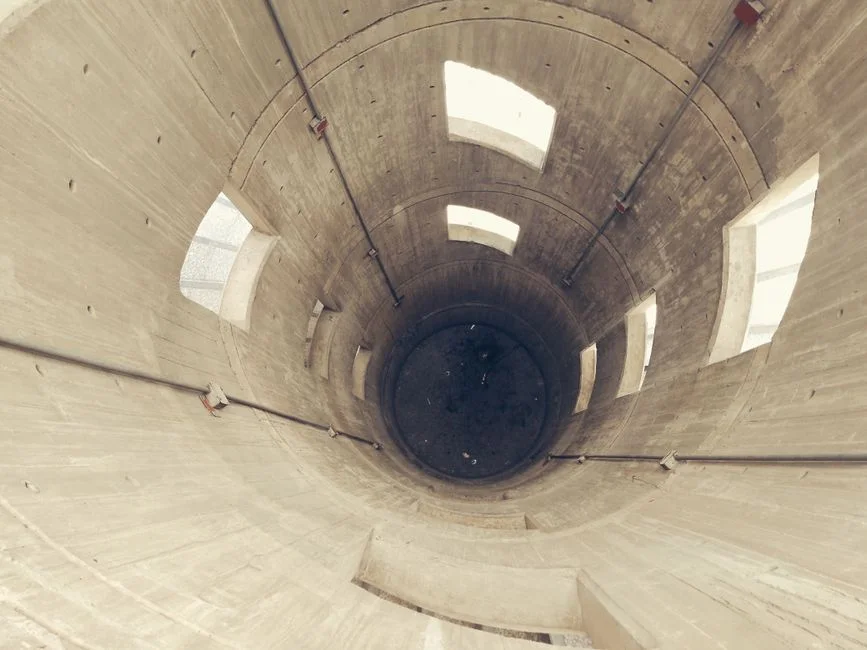
Edmonton's 1% coldest design ambient sits below −30 °C, which is the number that actually drives buried-plant decisions, not the average January temperature that vendor brochures tend to quote. Buried WSZ units ride on two thermal sources: the sensible heat of incoming sewage (8–12 °C for most of the year) and a 1.5–2 m earth cover that puts the tank below the regional frost line. The combined effect keeps biological kinetics viable through winter without external heat tracing, provided the unit is specified for prairie burial conditions from the factory.
Three site constraints still bite. First, snow load on access risers, control kiosks, and any above-grade valve assemblies must be specified for prairie ground-snow loads rather than the lower values found in milder jurisdictions. Second, traffic-rated covers are mandatory wherever a vehicle can cross the buried envelope — a detail that gets missed on subdivisions with shared driveways. Third, the high water table in the North Saskatchewan River valley means any buried tank needs a buoyancy check and, in many cases, anti-floatation ballast or a concrete deadman.
Winter influent temperature is the operational constraint that matters most for biology. Nitrification rates roughly halve for every 10 °C drop, so a winter derating either lengthens the aerobic residence time or pushes the designer toward a larger tank volume. MBR systems with their high mixed-liquor concentration tolerate cold better than CAS, which is one of the reasons they keep winning Edmonton reuse projects despite the higher membrane cost.
Reuse, Disposal, and Where the Treated Water Goes
An Approval to Operate typically lists three acceptable discharge paths for treated effluent, and a developer should pin down which one applies before sizing the plant. The first is discharge to a municipal sanitary sewer, where EPCOR's discharge limits apply and the volume is billed as flow plus load; the second is discharge to a designated drainage pathway identified in the approval, usually a stormwater ditch or a designated reach of a watercourse; and the third is on-site reuse for irrigation or toilet flushing, gated by reuse-quality parameters written into the approval itself.
The reuse-quality chain is straightforward: MBR effluent at under 1 μm followed by a UV sterilizer for water treatment or a chlorine dioxide generator typically meets non-potable reuse targets for landscape irrigation, toilet flushing, and cooling-tower makeup. For a hotel or hospital, that reuse path turns the wastewater treatment plant from a cost centre into a partial water-offset, which materially changes the project's payback. The related engineering and cost context is laid out in the decentralized wastewater treatment trend 2026 analysis and the municipal sewage treatment plant 2026 cost and spec guide, both of which carry the same technology-economics logic into a North American framework. For a project that may need to compare with EU-spec plants, the package wastewater treatment plant spec and cost guide gives a useful international benchmark.
On the solids side, thickened and dewatered sludge from a plate and frame filter press is sent to a licensed disposal facility, with the filtrate returned to the head of the plant. For a WSZ unit on a small subdivision, this usually means quarterly tanker withdrawal rather than on-site dewatering, which is one of the operational simplifications that keeps the buried-package concept economic below ~200 m³/day.
Frequently Asked Questions
Who issues the Approval to Operate for a packaged sewage plant in Edmonton, and what does it cover?
Alberta Environment and Parks issues the Approval to Operate, and the document governs the planning, design, construction, and operation of Edmonton's wastewater treatment plant, wastewater collection system, and stormwater drainage — explicitly to minimize impact on the North Saskatchewan River (edmonton.ca, 2026). Any private site that does not connect to the EPCOR sanitary network is treated as a stand-alone discharger and needs its own approval.
What is the difference between a WSZ package plant and an MBR for an Edmonton subdivision?
The WSZ is a buried A/O + sedimentation + disinfection unit rated 1–80 m³/h, with no on-site operator, designed for small residential or commercial clusters. The MBR runs 10–2,000 m³/day with submerged PVDF membranes under 1 μm, produces near-reuse-quality effluent, and fits the same 60% smaller footprint advantage it offers anywhere — but costs more per cubic metre and needs periodic membrane cleaning.
Can a buried package plant actually operate through an Edmonton winter at −30 °C?
Yes, provided the unit is specified for prairie burial with the tank below the local frost line (1.5–2 m of cover) and is relying on the sensible heat of the incoming sewage plus the geothermal envelope. The biological derating in winter is real — nitrification rates drop with temperature — so designers either oversize the aerobic zone or accept slightly higher effluent ammonia in January.
What reuse quality can an MBR realistically deliver for landscape irrigation in Alberta?
MBR effluent at under 1 μm, followed by UV or chlorine dioxide disinfection, typically meets the non-potable reuse parameters written into Alberta Approvals to Operate for landscape irrigation, toilet flushing, and cooling-tower makeup. The exact parameter set has to be confirmed against the site's approval, but the technology chain is well established for hotel and hospital projects in the Edmonton region.
When is conventional activated sludge still the right answer in Alberta?
CAS is competitive above roughly 200 m³/day, where the operator cost is amortized over enough flow to make the lower per-cubic-metre CAPEX pay off, and where the site has room for open basins, a clarifier, and a sludge-return building. Below that flow, packaged MBR or WSZ units almost always win on total installed cost plus lifecycle operations.