Why Decentralized Wastewater Treatment Is the Defining 2026 Trend
The shift toward modular, on-site treatment is the defining movement in the water sector this year. Decentralized wastewater treatment refers to systems installed at or near the point of generation — serving an industrial plant, a residential cluster, a resort, or a remote community — rather than discharging through a centralized interceptor to a regional publicly owned treatment works (POTW). Pre-engineered units in the 1–2,000 m³/day envelope now ship with full PLC automation, skid mounting, and reuse-ready effluent targets, replacing the conventional activated-sludge paradigm that dominated plant design from 1970 through 2010.
Three measurable forces are driving this shift in 2026. First, centralized networks in mature markets are aging: U.S. EPA infrastructure reports place the average U.S. sewer pipe at 50+ years old, with an estimated $625 billion in required upgrades through 2042 (per the seventh Clean Watersheds Needs Survey, 2024). Second, industrial water-reuse pressure is intensifying — the 2026 water reuse market outlook for industrial equipment pegs the global market at USD 28.5 billion with a 7.2% CAGR through 2030, with closed-loop industrial reuse leading new capacity additions. Third, the cost of modular wastewater treatment has fallen: containerized MBR and package-plant skids now deliver 30–60% footprint reductions versus conventional activated sludge, and skid delivery cuts on-site civil work by 40–70% (HydropureWater field data, 2026).
The academic anchor for this movement remains the 2021 ScienceDirect framework (S2405844021004801) by Bernal, Restrepo, and Grueso-Casquete, which set out the technical, socioeconomic, and environmental criteria for evaluating decentralization. The article returned a 403 during research and is referenced here as the published framework, not as a quoted data source. The practical gap that framework left open — and that this article fills — is a 2026 buyer-facing map from trend signal to specific equipment selection and cost benchmark.
Three Structural Forces Shaping the 2026 Market
Procurement leads need three concrete justifications before a capital committee will sign off on a decentralized project. Each force is now measurable.
Regulatory force. Discharge and reuse limits are tightening faster than centralized infrastructure can adapt. The EU Urban Wastewater Treatment Directive (91/271/EEC) continues to drive tertiary and quaternary upgrades across member states, while reuse frameworks such as the EU 2020/741 minimum requirements push sites toward on-site reuse to avoid the cost of meeting potable-quality thresholds through a central utility. In the U.S., EPA's 2024 PFAS National Primary Drinking Water Regulation (4 ppt for PFOA, 10 ppt for PFOS) is forcing industrial sites with discharge to POTW to pre-treat on-site to avoid contaminating biosolids. The structural effect: sites that control their own effluent gain compliance certainty they cannot get from a central utility.
Economic force. Decentralized CAPEX scales linearly with flow and avoids the interceptor and right-of-way cost that often dominates municipal collection budgets. The WSZ underground package sewage treatment plant band — 1–80 m³/h — covers the residential and small-commercial envelope where centralized collection is most expensive per cubic metre served. For a 200 m³/day site, a WSZ buried unit plus DAF pre-treatment typically lands at 50–65% of the CAPEX of a conventional reinforced-concrete basin plant of equivalent capacity (HydropureWater engineering estimates, 2026).
Technological force. MBR membrane reliability has matured. PVDF flat-sheet modules now run at 10–20× lower specific energy than the external cross-flow hollow-fibre designs of the early 2000s, and an integrated MBR membrane bioreactor system delivers sub-1 μm filtrate suitable for direct industrial reuse (HydropureWater DF-series spec, 2026). Where a 2010 MBR plant needed a dedicated membrane-cleaning operator, a 2026 skid ships with automatic backwash, integrity testing, and remote SCADA — pushing reuse-quality effluent into the same operator-light envelope as a package plant.
Technology Matrix: Which Decentralized System Fits Which Site
Match the site envelope to the equipment class before you write a single equipment line on a datasheet. The table below is the working shortlist a process engineer should be able to fill in within two minutes of receiving influent data.
| System class | Flow range | Effluent target | Footprint | Operator requirement | Best-fit site |
|---|---|---|---|---|---|
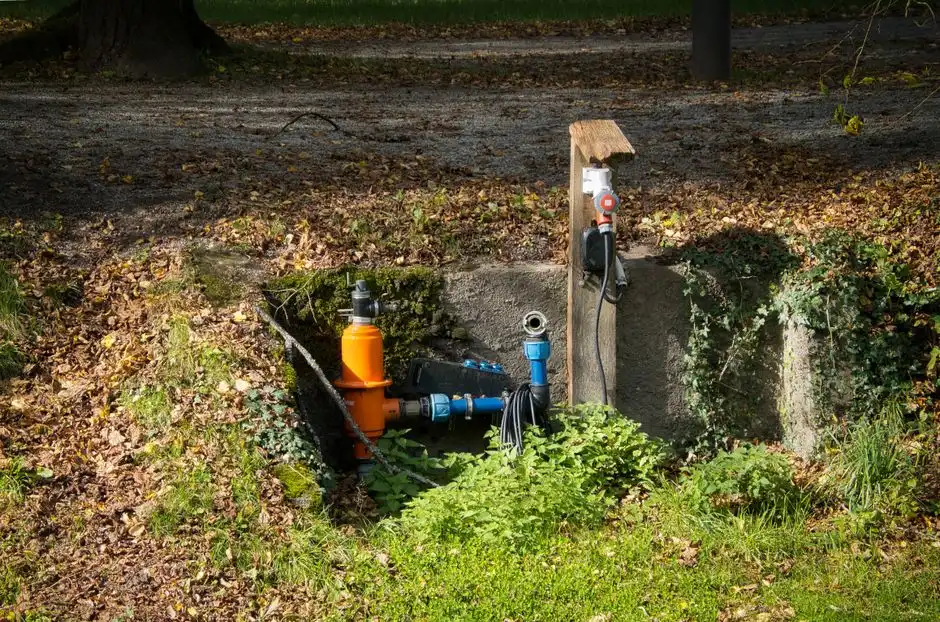
| WSZ underground package plant (A/O contact oxidation) | 1–80 m³/h | Municipal discharge (BOD ≤20 mg/L, SS ≤30 mg/L) | 60–70% smaller than CAS; buried, zero surface footprint | None on-site; remote SCADA | Residential clusters, resorts, small commercial parks, remote townships |
| MBR skid (PVDF flat-sheet) | 10–2,000 m³/day | Reuse-quality (TSS ≤5 mg/L, turbidity ≤1 NTU) | ~60% smaller than CAS at equivalent load | Quarterly membrane CIP, weekly inspection | Industrial reuse loops, semiconductor / pharma / F&B, water-scarce sites |
| DAF pre-treatment | 4–300 m³/h across 13 models | TSS and FOG removal; upstream of biological or MBR stage | Compact skid; 8–15 m² per unit | Daily skimmer check; weekly polymer calibration | High-strength industrial front-end (food processing, slaughterhouse, refinery, dairy) |
| Constructed wetland | 0.5–5,000 m³/day | Non-potable reuse or polishing | 5–10 m² per m³/day | Vegetation management, quarterly inspection | Rural communities, agro-industrial polishing, low-O&M remote sites |
For municipal-like influent at small flows, the WSZ underground package sewage treatment plant is the lowest-CAPEX, no-operator option. For any site with a reuse target — cooling-tower make-up, process water, irrigation — the integrated MBR membrane bioreactor system paired with the DF-series flat-sheet module is the standard 2026 selection. For high-strength industrial waste, the dissolved air flotation system is the standard front-end that protects downstream biology or membranes from TSS and FOG shock loads. Constructed wetlands set the OPEX floor for low-rate natural decentralized systems, with operating costs in the $0.026–$0.08/m³ band (constructed wetland operating cost in 2026) — useful as a polishing stage or where land is cheap and labor is the binding constraint.
2026 CAPEX and OPEX Benchmarks for Decentralized Plants
Procurement managers rank options on OPEX per cubic metre, because that number survives a flow change. The 2026 benchmarks below put the technology matrix into budget-sheet form.
| System | Indicative CAPEX envelope (USD, 2026) | Dominant OPEX driver | OPEX reference range |
|---|---|---|---|
| WSZ underground package plant (1–80 m³/h) | $3,000–$12,000 per m³/day capacity | Aeration energy; minimal chemicals | $0.10–$0.25/m³ (typical small-community band) |
| MBR decentralized skid (10–2,000 m³/day) | $8,000–$25,000 per m³/day capacity | Membrane CIP chemicals + replacement; aeration energy | $0.20–$0.55/m³ (reuse-quality band) |
| DAF front-end (4–300 m³/h) | $25,000–$180,000 per unit | Polymer consumption; sludge hauling | $0.05–$0.15/m³ (added to downstream stage) |
| Constructed wetland | $50–$200 per m² of wetland area | Vegetation and media replacement | $0.026–$0.08/m³ (source) |
The MBR CAPEX premium versus a WSZ package plant is real and is recouped only when the site has a reuse loop that displaces purchased water or that avoids a sewer discharge surcharge. MBBR carriers used in the biological stage typically replace at $800–$2,500 per m³ of media with a 7–10 year service life, which belongs in the lifecycle-cost layer rather than the year-1 CAPEX line. Routine DAF maintenance — polymer pump calibration, skimmer wiper replacement, and saturator inspection — is the largest controllable OPEX line on a high-strength industrial train. The 2026 predictive maintenance guide for wastewater plants shows that SCADA-fed condition monitoring typically compresses decentralized OPEX by 10–18% over a five-year horizon by catching aerator and membrane failures before they trigger a bypass event.
2026 Engineering Checklist Before You Spec a Decentralized System
- Define the influent envelope. Quantify average and peak flow (m³/day), peak factor (1.5–2.5× typical for industrial), BOD/COD ratio, TSS, FOG, temperature range, pH, and any site-specific contaminants — PFAS, heavy metals, or specific solvents. Without this envelope, every downstream equipment choice is guesswork.
- Match the envelope to the technology matrix. Municipal-like influent below 80 m³/h → WSZ package plant. Reuse target or sub-1 NTU polishing → MBR skid. High-strength industrial (FOG > 200 mg/L or TSS > 1,000 mg/L) → DAF pre-treatment in front of either biological option.
- Confirm the discharge or reuse target against local standards. Compare effluent limits to the 2026 oil and grease discharge limits across EPA, EU, and China, and check PFAS trends against the 2026 PFAS removal technology buyer guide before locking the equipment list.
- Verify footprint, power, and operator availability. Buried WSZ units need no operator. MBR skids need membrane CIP access, a clean-water supply, and at minimum a weekly site visit. Containerized skids need stable three-phase power and a forklift-rated access route.
- Plan SCADA and predictive monitoring from day one. Reference the 2026 SCADA buyer guide and the predictive maintenance guide. Skid-level analytics are now the differentiator between a 2026 decentralized plant and a 2015-era one.
Frequently Asked Questions
What is the decentralized wastewater treatment trend in 2026?
It is the shift from large centralized interceptor-and-plant networks to modular, on-site package systems and MBR skids serving industrial sites, remote communities, and water-reuse applications. Growth is driven by aging centralized infrastructure, industrial reuse pressure, and 30–60% footprint reductions versus conventional activated sludge (HydropureWater field data, 2026).
When should a site choose a package plant over an MBR skid?
Choose a package plant when the effluent target is municipal discharge (BOD ≤20 mg/L, SS ≤30 mg/L) and there is no on-site reuse loop. Choose an MBR skid when the site needs reuse-quality effluent (TSS ≤5 mg/L, turbidity ≤1 NTU) or faces a tight reuse framework such as EU 2020/741.
What flow range do decentralized package plants cover?
The combined 2026 envelope runs from 1 m³/h residential WSZ units to 2,000 m³/day industrial MBR skids, with DAF pre-treatment available in 4–300 m³/h increments for high-strength industrial front-ends.
How much does decentralized wastewater treatment cost per m³ in 2026?
Constructed wetlands set the floor at $0.026–$0.08/m³ OPEX. Mechanical package plants run $0.10–$0.25/m³, and MBR skids run $0.20–$0.55/m³ for reuse-quality effluent. CAPEX ranges from $3,000 per m³/day (WSZ) to $25,000 per m³/day (MBR) depending on effluent target.
Is decentralized treatment compliant with EU and EPA standards?
Yes — decentralized systems can be designed to meet the EU Urban Waste Water Treatment Directive (91/271/EEC) for discharge and EU 2020/741 for reuse, plus EPA discharge and reuse guidelines. For contaminant-specific compliance, see the 2026 oil and grease discharge limit comparison and the 2026 PFAS removal technology trends.
Related Equipment
- WSZ underground package sewage treatment plant — specifications, capacity range, and technical data
- integrated MBR membrane bioreactor system — specifications, capacity range, and technical data
- Dissolved air flotation system — specifications, capacity range, and technical data