Why Mining and Metals Wastewater Changes the MBR vs CAS Decision
Mining and metals wastewater routinely delivers 2,000–15,000 mg/L total dissolved solids, 500–3,000 mg/L sulfate, hardness above 1,000 mg/L as CaCO₃, suspended metal hydroxides, and pH swings from 2 to 11 during mill upsets or acid-mine drainage (AMD) episodes (HydropureWater field data, 2026). These characteristics break the assumptions built into most municipal MBR-vs-CAS content. A conventional activated sludge (CAS) clarifier depends on floc settling; when sulfate pushes the system toward Thiothrix-type bulking or a metal spike poisons floc-forming biomass, the clarifier loses solids and the effluent TSS limit is exceeded in a single shift. A submerged membrane bioreactor mining train does not rely on gravity settling — it retains all biomass on a 0.04–0.2 µm membrane cut-off, achieving "higher SRT than CAS, which allow degrading even recalcitrant pollutants; low cell yield, thus leading to a low sludge production" (Mannina et al., 2019, S2).
The binding US regulation is 40 CFR Part 440 — Ore Mining and Dressing Point Source Category — which sets daily-maximum TSS, settleable solids, and pH 6.0–9.0 limits for discharges from active mining operations (per EPA 40 CFR Part 440). In Arkansas, an ADEQ-issued NPDES individual permit overlays site-specific metal limits (typically Cu, Pb, Zn, Fe, Mn, As) and instream flow requirements for sites discharging to Ouachita Mountain tributaries near Grannis. For a plant chasing reuse-quality water for mill process loops, membrane retention also provides complete bacteria and virus rejection at the 0.04–0.2 µm cut-off band, which is meaningful for remote camps where downstream contact is plausible (S3 thesis, theses.fr/2012MON20265).
Conventional Activated Sludge: How It Works in a Mining Plant
A CAS train for a mining site typically runs: equalization basin → pH adjustment (lime or NaOH) → lamella clarifier for mining primary treatment → aeration basin → secondary clarifier → optional sand filter or DAF polish → disinfection. Design parameters commonly seen in 2026 industrial practice: MLSS 2,000–4,000 mg/L, SRT 3–10 days, F/M 0.2–0.5 kg BOD/kg MLSS·d, SVI target 80–150 mL/g, dissolved oxygen 1.5–2.5 mg/L, and waste activated sludge dewatered on a plate-and-frame filter press or drying beds.
The failure modes specific to mining are predictable. A clarifier's job is to settle floc, and metal-laden floc has a higher density but a lower strength — it shatters under hydraulic surges from stormwater or mill startup. Sludge washout follows, and the daily-max TSS limit under 40 CFR Part 440 is breached within hours. Toxic metal spikes (Cu²⁺ above ~5 mg/L or Cr⁶⁺ above ~2 mg/L in mixed liquor) inhibit nitrifiers and floc formers, dropping SVI and pushing the system toward pinpoint or dispersed floc that never settles cleanly. CAS also generates 0.3–0.5 kg TSS per kg BOD removed as waste activated sludge — a significant hauling and disposal burden at remote sites.
Membrane Bioreactor: How It Works in a Mining Plant
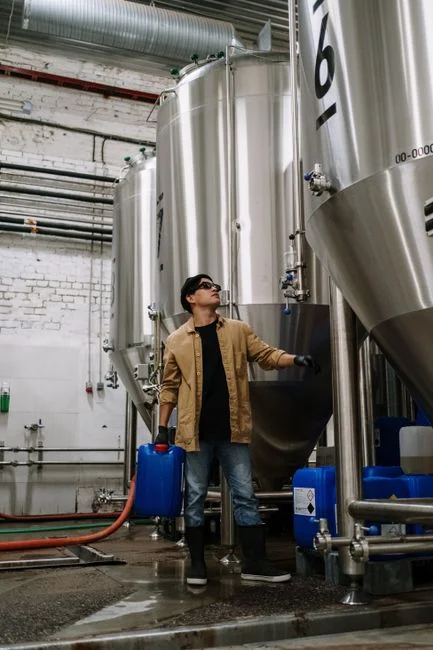
An MBR train compresses the whole biological step into one tank-cassette combination: equalization → pH adjustment → coarse screening through a rotary bar screen → biological reactor (MLSS 8,000–12,000 mg/L, SRT 20–40 days) → submerged PVDF membrane cassette (0.1 µm nominal pore) → permeate pump → optional RO or reuse disinfection. The reactor eliminates the secondary clarifier entirely; solid/liquid separation is done by the membrane, so all biomass is retained regardless of floc condition.
Anti-fouling design choices have matured sharply by 2026. PVDF flat-sheet modules have largely displaced early-generation hollow-fiber at metal-laden sites because flat sheets tolerate air-scour abrasion and back-pulsing without fiber breakage, with air-scour rates of 0.3–0.6 m³/m²·h and intermittent relaxation cycles (typically 9 min on / 1 min off) now standard. In-situ chemical cleaning with NaOCl (300–500 mg/L free chlorine) and citric acid (1–2% w/w) on a maintenance-clean interval of 1–4 weeks keeps transmembrane pressure in the 0.1–0.4 bar band; recovery cleans are scheduled every 6–12 months. The DF series PVDF flat-sheet membrane cassettes illustrate current spec practice: 0.1 µm PVDF, 80–225 m² per cassette, producing 32–135 m³/day each, with individually replaceable elements and an integrated aeration box for continuous scouring. Upstream, a rotary bar screen protects the membranes from lint, scale chips, and plastic media fragments common in mining process water.
| Parameter | Typical 2026 Operating Value | Design Note |
|---|---|---|
| Membrane material | PVDF (flat-sheet preferred for mining) | Chlorine-tolerant; abrasion-resistant |
| Nominal pore size | 0.1 µm | Cut-off band 0.04–0.2 µm (S3) |
| MLSS | 8,000–12,000 mg/L | 2–3× CAS loading |
| SRT | 20–40 days | Enables recalcitrant degradation (S2) |
| Flux (mining design) | 15–25 L/m²·h | Lower than municipal to control fouling |
| Air-scour rate | 0.3–0.6 m³/m²·h | Continuous below membrane cassette |
| Maintenance CIP | NaOCl 300–500 mg/L + citric acid 1–2% | Every 1–4 weeks in-situ |
| Recovery clean | Same chemistry, soak 4–6 h | Every 6–12 months |
For a 200–500 m³/day mining plant, a skid-packaged integrated MBR system with submerged PVDF membranes typically arrives with bioreactor, cassette frame, permeate pump skid, air-scour blower, and cleaning chemistries pre-piped — shortening field installation to 4–8 weeks versus 12–20 weeks for an equivalent CAS buildout (HydropureWater field data, 2026).
Head-to-Head Engineering Comparison for a Grannis-Sized Mining Plant
The mechanism differences above translate into hard, defensible numbers for a justification memo. Footprint is often the decisive constraint on a small mining lease; a 300 m³/day plant needing biological treatment for roughly 150 m³/day (after equalization and recycle) occupies about 80–120 m² with an MBR versus 180–260 m² with CAS, because the secondary clarifier, most of the RAS pumping, and the sludge-wasting buffer all collapse into the membrane cassette. Energy runs the other way: MBR typically uses 0.6–0.9 kWh/m³ treated versus CAS at 0.4–0.6 kWh/m³ (2026 industrial planning estimates, not source-cited).
Effluent quality favors MBR decisively. MBR permeate routinely hits TSS <5 mg/L and turbidity <1 NTU because the membrane physically excludes suspended solids, while CAS depends on floc settling and typically lands at 10–30 mg/L TSS with intermittent excursions during upset conditions. MBR also removes microplastics more effectively — 0.4 MP/L in MBR effluent versus 1 MP/L in CAS effluent (Lares et al., 2018, cited in S2) — a relevant point for mining camps where synthetic media wear, conveyor belt abrasion, and stormwater carry plastic fragments into the wastewater stream. On greenhouse gases, MBR direct emissions run 0.91 kgCO₂eq/m³ versus CAS at 0.85 kgCO₂eq/m³; MBR's higher indirect emissions from membrane aeration and cleaning offset its lower sludge-handling footprint (Mannina et al., 2019, S2). The GHG gap is small enough to be a tie-breaker, not a driver.
| Criterion | Conventional Activated Sludge | Membrane Bioreactor (MBR) | Notes / Source |
|---|---|---|---|
| Effluent TSS (typical) | 10–30 mg/L | <5 mg/L | 40 CFR Part 440 daily-max applies |
| Effluent turbidity | 5–20 NTU | <1 NTU | Membrane barrier exclusion |
| BOD/COD removal | 85–95% | 95–99% | Higher SRT helps refractory organics (S2) |
| MLSS | 2,000–4,000 mg/L | 8,000–12,000 mg/L | 2–3× CAS concentration |
| SRT | 3–10 days | 20–40 days | MBR decouples SRT from clarifier (S2) |
| Sludge yield | 0.3–0.5 kg TSS/kg BOD | 0.15–0.30 kg TSS/kg BOD | Lower yield = lower hauling cost |
| Footprint (300 m³/d plant, 150 m³/d bio step) | 180–260 m² | 80–120 m² | 50–60% MBR reduction (S5; HydropureWater 2026) |
| Energy demand | 0.4–0.6 kWh/m³ | 0.6–0.9 kWh/m³ | 2026 industrial planning estimate |
| Direct GHG | 0.85 kgCO₂eq/m³ | 0.91 kgCO₂eq/m³ | Mannina et al., 2019 (S2) |
| Microplastics in effluent | ~1 MP/L | ~0.4 MP/L | Lares et al., 2018, cited in S2 |
| Reuse suitability | Marginal (needs tertiary) | Direct to RO or process loop | TSS <5 enables reuse |
| Shock-load tolerance | Low (washout risk) | High (complete solids retention) | AMD and stormwater events |
| Operator skill required | Standard | Higher (membrane CIP, TMP) | Training program needed |
CAPEX and OPEX in 2026 Dollars for a 200–500 m³/day Plant
The numbers below are 2026 planning-order-of-magnitude (Class 5) envelopes, not bids. They assume a packaged turnkey scope — bioreactor, secondary separation, RAS/WAS pumping, basic controls — installed on a prepared pad with utility tie-ins within 50 m. Regional factors for rural Arkansas, freight to Grannis, and mining-grade alloy trim are included. Treat each band as ±25%.
| Flow (m³/day) | CAS Turnkey CAPEX (USD) | MBR Turnkey CAPEX (USD) | MBR Premium |
|---|---|---|---|
| 200 | $360,000–$900,000 | $600,000–$1,200,000 | ~1.3–1.7× CAS |
| 350 | $630,000–$1,575,000 | $1,050,000–$2,100,000 | ~1.3–1.7× CAS |
| 500 | $900,000–$2,100,000 | $1,500,000–$2,800,000 | ~1.3–1.7× CAS |
OPEX drivers split differently. MBR membrane replacement runs every 5–8 years (budget roughly 10–15% of initial MBR CAPEX per replacement event); cleaning chemicals — NaOCl and citric acid — add $0.02–0.05/m³ treated; energy runs 15–30% above CAS due to air-scour blowers and permeate pumps (HydropureWater field data, 2026). Offsetting these, MBR's lower sludge yield cuts sludge hauling and landfill cost by roughly 30–50% versus CAS, and the smaller footprint avoids land-clearing and longer pipe-run costs that often tip the 4–7 year payback in favor of MBR on remote Grannis-area sites.
Decision Framework: When to Pick MBR, CAS, or a Hybrid
Score each line 0 or 1 based on the site. Two or more "1"s in the MBR column should drive an MBR recommendation; two or more in the CAS column point to CAS; otherwise evaluate hybrid.
| Site Condition | Favors MBR | Favors CAS | Hybrid Hint |
|---|---|---|---|
| Footprint available | <200 m² for biological step | >400 m² and low land cost | 200–400 m² → MBBR polish |
| Effluent target | Reuse / RO feed / TSS <10 mg/L | Discharge to large POTW or pond | DAF pre-stage if TSS high |
| Influent variability | Frequent shock loads, AMD upsets | Steady diurnal pattern | Equalization basin + MBR |
| Metals limit strictness | Daily-max Pb, As, Hg near detection | Limits well above typical effluent | Chemical precipitation + MBR polish |
| Operator skill | Membrane CIP, TMP, SCADA literate | Conventional activated sludge trades | OEM service contract on membranes |
| CAPEX ceiling | Owner willing to pay 30–70% premium | Lowest first cost required | Phased build: CAS now, MBR retrofit |
| OPEX tolerance | Energy + chemicals acceptable | Minimize consumables | Hybrid splits the difference |
Hybrid trains pair a CAS or MBBR roughing stage with a polishing MBR or DAF step. For mid-size plants (300–500 m³/day) with strict metal limits, a DAF system for high-TSS mining influent ahead of a smaller MBR cassette handles the bulk of metal-hydroxide solids and cuts membrane fouling load. Tighten the upstream with a automatic chemical dosing system for lime, coagulant, and polymer feed. For copper-specific reuse trains, the engineering choices shift further — see our MBBR configuration for copper concentrator water reuse and discharge guide. For a parallel comparison at a different Arkansas site, the sibling MBR vs CAS guide for a Springdale, US mining plant is a useful cross-check; for pretreatment-limit context, see how mining and metals plants near Brandon meet 2026 pretreatment limits.
Frequently Asked Questions
Is MBR more expensive than CAS for a 200–500 m³/day mining plant?
Yes. In 2026 dollars, MBR turnkey CAPEX runs roughly 1.3–1.7× CAS for the biological step at 200, 350, and 500 m³/day flows. OPEX is also 15–30% higher due to membrane cleaning, air-scour energy, and periodic membrane replacement, but avoided land cost and lower sludge hauling can close the gap within 4–7 years on remote sites.
Can MBR tolerate heavy metals and shock loads from mining influent?
Yes, better than CAS. MBR retains 100% of biomass on a 0.1 µm PVDF membrane regardless of floc condition, so a Cu, Zn, or Cr spike that washes out a clarifier does not wash out the MBR. The 20–40 day SRT also supports more diverse, slow-growing biomass capable of degrading metal-chelating organic complexes from milling reagents (Mannina et al., 2019).
What does 40 CFR Part 440 require for TSS and pH in mining discharges?
Part 440 sets daily-maximum TSS, settleable solids, and pH within 6.0–9.0 for the Ore Mining and Dressing category. Arkansas ADEQ NPDES permits overlay site-specific metal limits (Cu, Pb, Zn, Fe, Mn, As). MBR permeate at <5 mg/L TSS and <1 NTU turbidity comfortably meets daily-max TSS and gives margin on metals capture.
How long do MBR membranes last in mining service?
5–8 years is the typical replacement interval for PVDF flat-sheet membranes in metal-laden mining service, assuming disciplined maintenance CIP (NaOCl 300–500 mg/L and citric acid 1–2% w/w) and recovery cleans every 6–12 months. Flux decline, transmembrane pressure creep, and fiber integrity tests are the leading indicators.
Does the Grannis, Arkansas climate affect MBR performance?
Cold winters (lows near –7 °C) reduce biological activity and increase mixed-liquor viscosity, which lowers sustainable flux by 10–20% from December through February. Insulating the bioreactor or burying it partially, combined with a covered cassette enclosure, holds flux stable. Summer humidity does not materially affect membrane performance.
Can MBR polish mining pit water for reuse?
Yes. MBR permeate at TSS <5 mg/L, turbidity <1 NTU, and BOD <5 mg/L is suitable feed for downstream RO or ultrafiltration, producing reuse-quality water for mill process loops, dust suppression, or camp supply. For pit water with high TDS, pair MBR with a brackish-water RO stage sized to the recovery target.