
Why the $100,000 River-Spill Fine Matters
A single $100,000 river-spill fine against a Nine Dragons subsidiary in 2023 (per resource-recycling.com, 2023-07) is the right place to start any process review because it isolates the weakest link in a paper-mill wastewater train. The fine did not stem from inadequate biological treatment or poor DAF performance — it followed a containment failure upstream of those unit operations. For an engineer benchmarking their own mill, the regulatory cost of bypassing equalization, secondary containment, or spill routing is now quantified: roughly $100K per event, and that is before cleanup, lost production, and reputational damage are tallied.
Scale matters here. Nine Dragons operates 9 mills in China plus one each in Malaysia and Vietnam (per ND Paper Sustainability Matters, 2024-10), and its U.S. subsidiary ND Paper runs a 200-acre kraft pulp mill in Old Town, Maine, ramping to 425 metric tons of pulp per day with more than $46M in private investment and 130 full-time plus 300 contract workers (per EPA Brownfields Success Story, 2019-11). A process error or a bypass event at any one of these sites is not a one-off line item; it is a global-network event that auditors, lenders, and NPDES permit writers will scrutinize. The fine, therefore, frames the rest of this article: the engineering question is not "does the train work on a normal day" but "does the train fail safely on the abnormal day, and is the documentation there to prove it."
Most coverage of this fine stops at the legal record. The harder question — what was the unit operation doing, or not doing, on the day of the spill — is the bridge this article walks the reader across, from corporate sustainability language down to clarifier sizing and coagulant dose.
What Nine Dragons and ND Paper Actually Make
Influent characteristics vary sharply across the Nine Dragons / ND Paper footprint, and any benchmarking exercise has to start with the fiber mix. The parent's nine Chinese mills plus Malaysia and Vietnam run almost entirely on recovered paper — more than 95% of total fiber use, with more than 14 million metric tons of recovered paper recycled annually (per ND Paper Sustainability Matters, 2024-10). That is a high-COD, high-TSS, color-variable effluent driven by de-inking, stickies, ink residues, and short-fiber fines.
ND Paper's U.S. footprint is a different beast. Rumford, Maine and Biron, Wisconsin are integrated pulp-and-paper facilities, meaning they digest wood on-site. Fairmont, West Virginia is one of only three mills worldwide that produces air-dried recycled pulp, and Old Town, Maine produces unbleached softwood kraft pulp (per ND Paper Sustainability Matters, 2024-10). Old Town's effluent is therefore high-BOD, high-TSS, and kraft-lignin-rich rather than ink-and-fines-rich — a fundamentally different treatment problem from the parent company's containerboard lines. The unbleached cook does avoid chlorinated organics, but the dissolved-lignin fraction is what drives color and residual COD after biology.
All ND Paper fiber is 100% responsibly sourced under the Sustainable Forestry Initiative, and suppliers must hold FSC, SFI, or American Tree Farm System certification (per ND Paper Sustainability Matters, 2024-10). That certification chain also defines what can and cannot appear in the mill's influent: no recycled-fiber load, no de-inking chemistry, no stickies. The implication for the engineer is that the unit operations at Old Town are sized for a more uniform, less spiky influent than a recycled-containerboard line, but with a tougher residual-lignin polishing problem.
Inside the Old Town, Maine Mill: A Case Study in Reuse
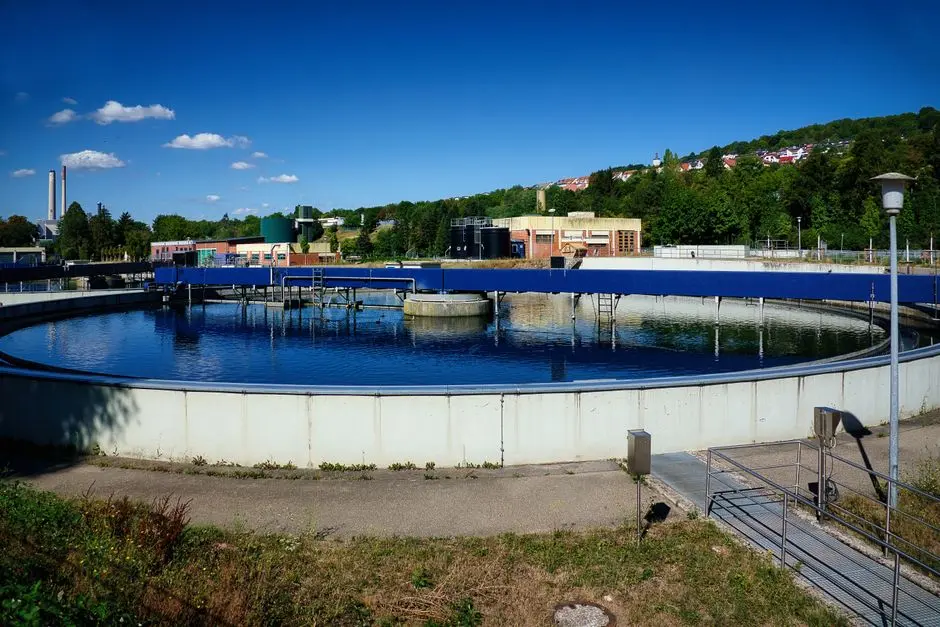
Old Town is the most useful U.S. site to anchor a treatment-train discussion because the public record is unusually specific. ND Paper purchased the 200-acre former MFGR Paper Mill site on the Penobscot River in 2018 and restarted the 150-year-old facility in August 2019, after a 2015 shutdown that left the property contaminated with asbestos, petroleum, and heavy-metal-impacted soils (per EPA Brownfields Success Story, 2019-11). The City of Old Town's EPA Brownfields assessment grant of $175,000 and ND Paper's roughly $46M in private investment brought the mill back online with 130 full-time and 300 contract workers.
On-site assets include a pulp mill, pulp driers, a lime kiln, a tissue mill, wood rooms, atlas silos, water pump stations, warehouses, and a wastewater treatment plant (per EPA Brownfields Success Story, 2019-11). The lime kiln in particular signals a kraft-mill recovery cycle: calcium-based white liquor is regenerated from the cook, and the kiln is a substantial combustion source that the wastewater plant has to handle in its stormwater and process-water routing. Production is ramping to a preliminary target of 425 metric tons of pulp per day, with planned further expansion.
What the public record does not give the reader is the specific clarifier diameter, aeration basin volume, DAF model, or hydraulic residence time. Treat those as hard gaps. To fill them, request the Maine DEP NPDES permit and the EPA Form 2A (the application form for the pulp, paper, and paperboard effluent guidelines at 40 CFR 430) directly from the agency. For a benchmarking exercise, the equipment classes are well understood; the site-specific sizing is what a permit records.
The Unit Operations Behind Paper-Mill Wastewater Treatment
Every paper-mill wastewater train — including those at Nine Dragons and ND Paper sites — runs a recognizable five-step sequence. Walking through it line by line is how a process engineer decides whether their own plant can match the Old Town benchmark.
Step 1 — Screening. A rotary mechanical bar screen for paper-mill headworks removes fibers, rags, plastics, and debris that would otherwise rag up pumps and aerators. Typical clear openings run 3–10 mm; finer screening trades head loss for downstream protection.
Step 2 — Primary clarification and equalization. Flow and load equalization ahead of the biological stage is non-negotiable. The $100,000 fine exists because something bypassed this step (per resource-recycling.com, 2023-07). A high-efficiency lamella clarifier for primary clarification is the equipment class most plants install here for settleable-solids removal ahead of biology.
Step 3 — Biological treatment. Activated sludge — often aerobic followed by anaerobic for high-strength streams — drives BOD removal, with paper-mill effluent typically targeting more than 90% BOD reduction. Aeration basin dissolved oxygen at 1.5–2.5 mg/L and F/M ratios of 0.2–0.5 lb BOD/lb MLVSS·day are the standard operating envelope.
Step 4 — Coagulation, flocculation, and DAF. Tertiary polishing removes residual TSS, color, and refractory organics. The publicly cited benchmark is the alum-plus-chitosan system evaluated on a medium-scale paper-mill effluent: alum 0.04 g/L optimized by zeta-potential adjustment to near zero, paired with chitosan at 0.1–0.5 g/L for flocculation of suspended impurities (per Doorma Journals, JETT 9(1):163). A dissolved air flotation (DAF) system for paper-mill TSS and color removal delivers the flotation step, fed by an automatic chemical dosing system for coagulant and flocculant injection.
Step 5 — Disinfection and reuse. Final polishing before discharge or recycle to the mill's process water system. UV is increasingly preferred for chemical-free operation, while chlorine dioxide is the standard where residual disinfection is required by the NPDES permit.
Process Flow and Parameter Snapshot
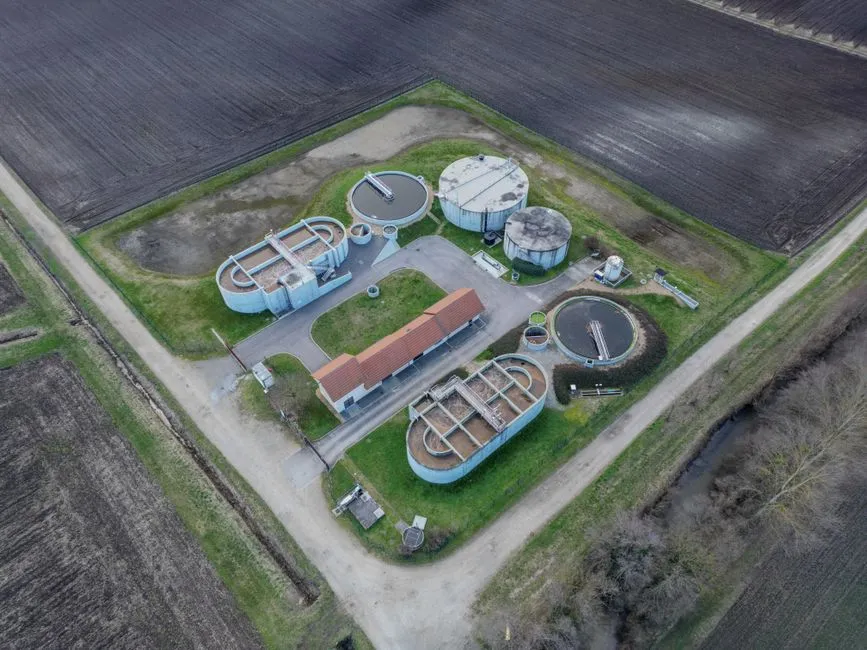
The table below is a template a process engineer can lift directly into a P&ID or a CAPEX justification memo. Exact Old Town parameters are not in the public record; for those, the Maine DEP NPDES permit and the EPA ECHO database are the right sources.
| Unit Operation | Purpose | Typical Target / Range | Equipment Class |
|---|---|---|---|
| Screening | Remove fibers, rags, debris >3–10 mm | >90% capture of visible solids | Rotary mechanical bar screen |
| Primary clarification / equalization | Settleable solids, flow/load dampening | 50–70% TSS removal; HRT 2–4 h equalization | High-efficiency lamella clarifier |
| Biological treatment | BOD, partial COD removal | >90% BOD reduction; MLSS 2,500–4,000 mg/L | Aeration basin + secondary clarifier |
| Coagulation / flocculation / DAF | Residual TSS, color, lignin | Alum 0.04 g/L + chitosan 0.1–0.5 g/L benchmark (JETT 9(1):163); >80% color removal | DAF system with automatic chemical dosing |
| Disinfection and reuse | Pathogen kill, process-water recycle | ClO₂ 1–2 mg/L or UV 30–40 mJ/cm² | Chlorine dioxide generator / UV sterilizer |
Two non-water parameters anchor why this train is also an energy/carbon asset. Across Biron, Fairmont, and Rumford, 53% of energy is self-generated and 49% is drawn from renewable resources, with combined 2018 emissions of 2,646 metric tons NOx, 742,133 metric tons CO₂e, and 1,178 metric tons SO₂ (per ND Paper Sustainability Matters, 2024-10). Every cubic meter of clarified effluent that is reused instead of discharged cuts both freshwater intake and the heating/cooling load on the mill's water loop.
How the Parent-Company Sustainability Targets Shape the Train
ND Paper joined the U.S. DOE Better Plants program with a 25% energy-intensity reduction commitment over 10 years (per ND Paper Sustainability Matters, 2024-10). That target is not abstract: aeration blowers in the biological stage and air-scour blowers on a DAF are the first places to chase it. High-efficiency blowers with VFD control, dissolved-oxygen trim, and side-stream DO probes are now standard on retrofit projects of this size.
The energy mix itself is a kraft-mill-specific advantage. Across the three reporting mills, 16% of energy is coal, 12% natural gas, 11% purchased electricity, 12% biomass, 35% black liquor, 12% tire-derived fuel, 1% other solid, and 1% other fossil fuels (per ND Paper Sustainability Matters, 2024-10). Black-liquor combustion is a kraft-recovery-boiler advantage that small mills cannot replicate; it is also why lime-kiln and digester blowdowns are part of the wastewater envelope at Old Town rather than at a recycled-fiber mill.
The Fairmont, West Virginia site has diverted nearly 5.5 million tons of recyclable paper from landfill since 1995, equivalent to over 16.5 million cubic yards of landfill space (per ND Paper Sustainability Matters, 2024-10). That same closed-loop logic is what drives Old Town's water-reuse targets: every liter of biologically treated, DAF-polished, disinfected effluent that can be returned to pulp washing or showers reduces both freshwater intake and thermal load. The wastewater train, in other words, is the operational interface with the parent's ESG narrative — not a separate compliance asset bolted on at the back of the mill.
Designing a Comparable Train: A 2026 Engineer's Checklist
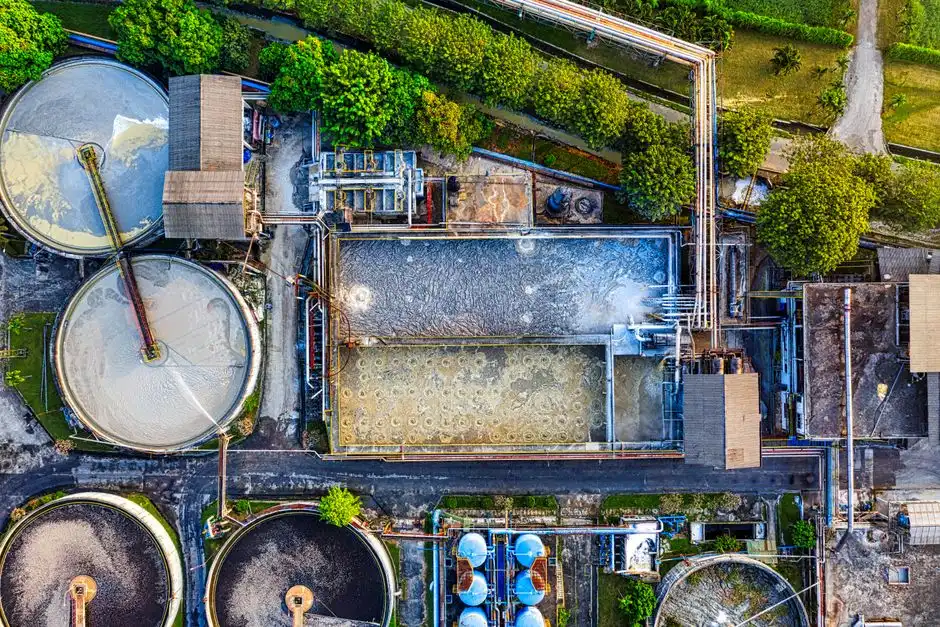
The Old Town case converts into a five-step design template that any process engineer can apply to their own mill. A useful peer reference for adjacent pretreatment work is the 2026 pretreatment compliance guide for food and beverage plants, and for CAPEX-scale hybrid systems, the hybrid DAF-RO-MBR equipment specs and CAPEX breakdown for 2026 gives a sizing framework.
- Define the influent envelope first. Fiber mix (recycled vs virgin), BOD/COD/TSS, color, and temperature. Do not copy a peer mill's train without matching it to your fiber. A recycled-containerboard influent and a kraft pulp influent will diverge by 30–50% on COD load and by an order of magnitude on color.
- Treat spill containment and equalization as their own unit operation. The $100K fine is the proof that bypassing them is the single most expensive shortcut. Sized equalization at 2–4 hours of hydraulic residence time and routed secondary containment around every chemical and stock tank.
- Specify a DAF with automatic chemical dosing. Use the alum 0.04 g/L + chitosan 0.1–0.5 g/L chemistry as a defensible starting point (per JETT 9(1):163), and tune via jar tests on the actual effluent. A dosing system tied to streaming-current or zeta-potential feedback cuts coagulant use 15–25% relative to manual dosing.
- Close the loop with disinfection and reuse. ClO₂ or UV on the final effluent, with side-stream RO/UF polishing where the reuse point is boiler makeup, shower water, or seal water. The more closed the loop, the smaller the raw-water intake and the smaller the NPDES discharge volume.
- Instrument for compliance. Online COD, TSS, pH, temperature, and flow on every effluent stream; pH and conductivity on every reuse stream; and tie it all to plant SCADA with a 5-minute historian. Permit writers will ask for the trend data; a process engineer should not have to rebuild it after an event.
Frequently Asked Questions
Why was Nine Dragons fined $100,000 for a river spill?
A 2023 ruling fined a Nine Dragons subsidiary $100,000 after a river-spill incident tied to a containment failure at one of its mill sites (per resource-recycling.com, 2023-07). The fine is the single most cited compliance event in the company's recent record and is the reason this article treats equalization and spill routing as standalone unit operations rather than as a footnote to primary clarification.
What does the Old Town, Maine wastewater plant treat?
The Old Town plant treats effluent from a 425-metric-ton-per-day unbleached softwood kraft pulp mill that restarted in August 2019 after a $46M+ private investment by ND Paper (per EPA Brownfields Success Story, 2019-11). The treatment train includes screening, primary clarification, biological treatment, and tertiary polishing before discharge or reuse to the Penobscot River watershed.
How much recycled fiber does Nine Dragons use globally?
Recovered paper accounts for more than 95% of Nine Dragons' total fiber use across 9 Chinese mills plus one each in Malaysia and Vietnam, with more than 14 million metric tons of recovered paper recycled annually (per ND Paper Sustainability Matters, 2024-10). For U.S. sites, ND Paper's footprint is weighted toward virgin fiber — Rumford, Biron, and Old Town are integrated pulp and paper lines, while only Fairmont runs as a 100% recycled-pulp operation.
What is the alum and chitosan dose for paper-mill wastewater?
Published bench-scale work on a medium-scale paper-mill effluent identified alum at 0.04 g/L (optimized by zeta-potential adjustment to near zero) plus chitosan at 0.1–0.5 g/L as the operating window for coagulation and flocculation of suspended impurities (per Doorma Journals, JETT 9(1):163). That pair is the most defensible publicly cited starting point for tertiary polishing ahead of a DAF.
How does a peer pharma site handle its wastewater train by comparison?
The peer-engineering case study of how AstraZeneca treats pharma wastewater walks through an analogous screening-to-discharge train but with solvent recovery and API-specific activated-carbon polishing layered in. The unit operations are similar; the influent envelope and the consent-decision limits are what diverge between kraft pulp and API synthesis.