
Why Seafood Processing Sludge Is a Special Case
Seafood processing wastewater sludge carries 4–8% crude protein, 0.3–0.9 kg N/m³·d in the influent stream, and process-water chlorides that routinely push conductivity above 5,000 µS/cm — a load profile that defeats any sludge train copied from municipal works. Solids arrive as a mix of flesh particles, shells, scales, oils, and emulsified FOG, and they hydrolyze within hours, releasing ammonia and volatile sulfides that make the sludge both putrescible and odorous. Bound water content in fresh biological sludge routinely sits at 8–12 g water/g DS, which is the reason mechanical dewatering underperforms when biology upstream is wrong. Operating data on aerobic granular sludge show that simultaneous COD and TKN removal only holds inside a tight window: 94–96% COD at OLR 2.6–4.8 kg COD/m³·d and NLR 0.3–0.6 kg N/m³·d (Penerbit UTM Press, 2025). Outside that envelope, TKN removal collapses to 66% at NLR 0.9 kg N/m³·d, and equalization stops being optional. Two handling pathways follow from this: waste activated sludge (WAS) routes to thickening, dewatering, and disposal, while the centrate — rich in NH₄⁺ and PO₄³⁻ — routes to struvite crystallization as a sidestream recovery step.
Process Train Overview: From DAF to Dewatered Cake
A standard 2026 fish or shrimp plant process train begins with rotary screening for shells and large debris, followed by DAF pre-clarification for FOG and colloidal solids. The full train runs as follows: rotary screening, DAF pre-clarification, equalization for hydraulic and load smoothing, biological treatment (granular sludge, AAO+GS, or AS/PN+Anammox), sludge thickening, sidestream struvite crystallization on the centrate, and mechanical dewatering to a stackable cake. DAF sits ahead of the biology because FOG, shells, and colloidal protein would otherwise blind membranes, upset granule selection pressure in SBRs, and short-circuit nitrification. DAF pre-clarification and sludge thickening units sized at 20–40 m/h hydraulic loading typically lift removal of FOG to >90% and TSS to 60–80% in a single stage, and rotary mechanical bar screens upstream protect the DAF from ragging. Struvite recovery is positioned as a sidestream because the centrate from the dewatering press is far richer in NH₄⁺ and PO₄³⁻ than raw wastewater — pushing struvite precipitation into the mainstream stream dilutes the feed and wastes reagent. Two control levers change the whole train's economics: (a) the blend ratio of primary sludge to WAS, and (b) the WAS thickening target before the struvite/digestion step. A thickening target of 3–5% DS versus 1% DS cuts press volume demand roughly threefold and reduces polymer dose per tonne of cake.
Biological Stage Options for the Liquor Stream
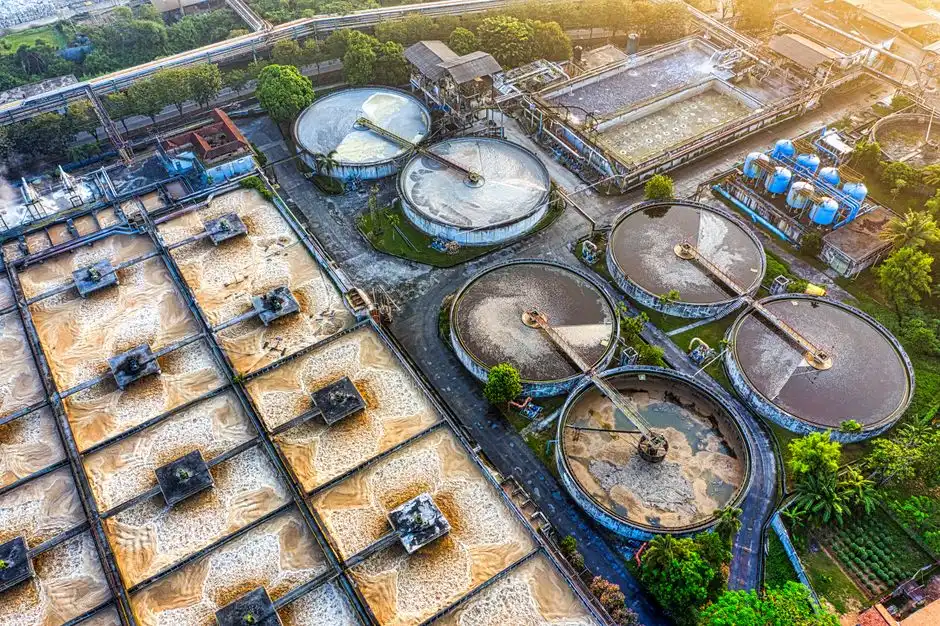
Three configurations dominate seafood processor decisions in 2026, with the right choice depending on influent strength, footprint, and the discharge nitrogen target. Aerobic granular sludge in an SBR/SBAR configuration delivers 94–96% COD removal across OLR 2.6–7.2 kg COD/m³·d, with TKN removal at 95% when NLR stays at 0.3–0.6 kg N/m³·d; full nitrification only holds when OLR < 4.8 kg COD/m³·d (Penerbit UTM Press, 2025). The AAO process with granular sludge — Anaerobic-Anoxic-Oxic — leverages endogenous carbon for denitrification in the anoxic zone, then completes nitrification in the oxic zone, and is the documented enhanced route for seafood wastewater where simultaneous C/N removal is required (Water Environ Res, 2026). AS/PN + Anammox hits >85% COD removal at pH 7.7–8.2 and DO 0.5–0.9 mg/L, with the partial-nitrification step engineered to leave near-equal NH₄⁺ and NO₂⁻ in the effluent so the downstream Anammox reactor runs autotrophically and cuts aeration duty by 40–60% versus full nitrification/denitrification (J. Environ. Sci. Health A, 2024). The rule of thumb: high-strength, high-N, variable influent → AAO+GS or aerobic granules; tight footprint and autotrophic N target → AS/PN+Anammox; existing CAS retrofit → start with PN, then evaluate Anammox capacity. Only the anaerobic/granular routes yield a centrate concentrated enough to feed struvite crystallization — aerobic routes dilute ammonia into the mainstream and kill the struvite mass balance. Integrated MBR systems and MBR membrane modules are the option for reuse-grade effluent or sites where discharge limits on SS are below 10 mg/L.
| Configuration | OLR window (kg COD/m³·d) | COD removal | TKN/N removal | Aeration duty | Centrate N/P fit for struvite |
|---|---|---|---|---|---|
| Aerobic Granular Sludge (SBR/SBAR) | 2.6–4.8 (full nitrification); up to 7.2 (COD only) | 94–96% | 95% at NLR 0.3–0.6; collapses to 66% at NLR 0.9 | High | Weak |
| AAO + Granular Sludge | 2.6–5.0 | 90–95% | 85–92% | Moderate–high | Moderate |
| AS/PN + Anammox | 2.0–4.0 | >85% | >85% (autotrophic) | Low (40–60% saving) | Strong (NH₄⁺/NO₂⁻ balance) |
| MBR (membrane-CAS) | 1.5–3.0 | 95–98% | 90–95% (with pre-ANX) | High | Weak |
Sidestream Struvite Recovery from Sludge Effluent
Struvite (MgNH₄PO₄·6H₂O) precipitates at a 1:1:1 Mg²⁺:NH₄⁺:PO₄³⁻ molar ratio, 25°C, 200 rpm stirring, and a combined 2.5 h reaction-plus-settling window — these are the optimized conditions reported for anaerobic granular sludge centrate from a seafood plant (Water Environ Res, May 2026). Sonication in degas mode accelerates nucleation, improves crystal size distribution, and avoids the localized supersaturation that mechanical stirring alone produces, so a sonicated crystallizer outperforms a stirred reactor on both recovery efficiency and crystal purity. The crystals are prismatic and high-purity, suitable as a slow-release fertilizer, which allows the value side of the ledger to offset chemical costs and avoid the ammonia return load seen if centrate were recycled to headworks. Position this stage as a sidestream after sludge thickening or dewatering, not as a mainstream polishing step — the feed is the centrate from the anaerobic granular sludge train, not raw wastewater. Three risks to flag in a 2026 design: magnesium reagent cost (typically MgCl₂ or MgO at 1.0–1.2× stoichiometric dose), residual ammonia that does not precipitate and may need a downstream polishing step, and chloride load from seafood brine that lowers crystal purity if it carries through to the reactor. PLC-controlled chemical dosing skids are the standard delivery package for the Mg²⁺ feed because the molar ratio must be held inside ±5% to keep recovery above 80%.
Thickening and Dewatering: Closing the Loop
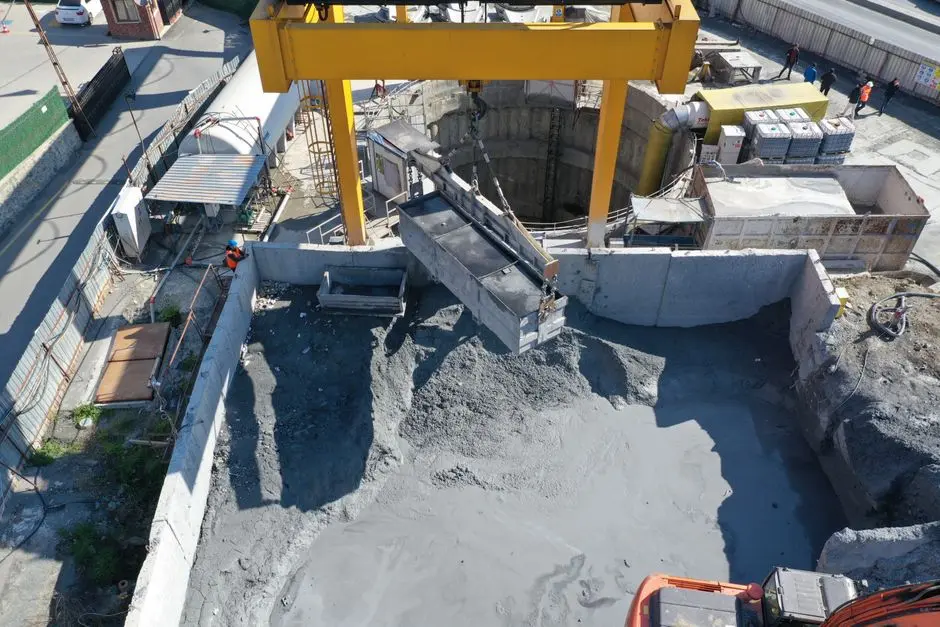
The thickening stage before mechanical dewatering sets the press's true capacity requirement, and the wrong choice here is the most common reason a press underperforms. DAF as a sludge thickener is the fastest path from ~1% feed DS to 3–5% DS, and at that range polymer-conditioned biological sludge will reach cake dryness of 22–28% DS in a plate and frame press — roughly double what you get feeding the press at 1% DS. Lamella clarifier thickeners are the compact alternative for smaller plants, and the typical 20–40 m/h surface loading range sets the hydraulic envelope for the lamella area calculation. Plate and frame filter presses remain the workhorse for fish and shrimp processors, available from 1 m² to 500 m² filtration area, and supplied in manual, hydraulic, and PLC-operated modes — PLC operation matters once cycle count per shift exceeds 6. Polymer conditioning uses cationic polyacrylamide (CPAM), with charge density and molecular weight matched to the sludge origin; the dose itself is a parameter to optimize on-site via jar testing, as it tracks tightly with the upstream biological configuration and the thickening DS% achieved. Lamella clarifier thickeners sized for 10–200 m³/h cover most seafood plant hydraulic envelopes. Pressate returns to headworks; dewatered cake is a candidate for composting where characterization supports it (ResearchGate, 2025), otherwise landfill or incineration.
| Thickening / dewatering step | Feed DS% | Cake DS% achievable | Capacity range | Polymer (CPAM) dose | Notes |
|---|---|---|---|---|---|
| DAF thickener | 0.5–1.5% | 3–5% (as thickener output) | >20 m³/h | Not required (air flotation) | Feeds press or struvite reactor |
| Lamella clarifier thickener | 0.5–1.0% | 2–4% | 10–200 m³/h | 1–3 g/kg DS if used as thickener | Compact footprint; lower capex than DAF |
| Plate and frame filter press (polymer-conditioned) | 3–5% | 22–28% | 1–500 m² filtration area | 3–8 kg CPAM/t DS (jar-test optimized) | Batch duty; PLC for >6 cycles/shift |
Selecting the Right Equipment for a 2026 Retrofit or Greenfield
Procurement decisions collapse to three numbers: target effluent COD/N, sludge volume to dewater per day (m³/d), and required cake dryness (% DS). Footprint and operator profile then narrow the biology: granular sludge SBR or AAO+GS for higher load and smaller footprint where skilled operators are available; MBR for tightest space, reuse-grade effluent, and sites where SS discharge limits are <10 mg/L. The dewatering side maps by capacity — DAF thickening for >20 m³/h, lamella for the 10–200 m³/h band, plate and frame filter press for batch dewatering duty from 1 m² to 500 m² filtration area. In 2026 a credible supplier should deliver a P&ID, a control narrative, a polymer consumption curve, a struvite mass balance if the centrate step is in scope, and an O&M cost per m³ of effluent. For parallel food-industry reference, the DAF for food processing engineering guide covers sizing and cost models across the same hydraulic envelope, and the sludge dewatering equipment selection guide extends the procurement framework to UK plant retrofits. For plants where ammonia discharge is the binding constraint, the ammonia nitrogen removal technology comparison pairs with this train at the biological-stage decision point.
Frequently Asked Questions
What is the best biological process for fish and shrimp processing wastewater in 2026?
For high-strength, high-N, variable influent, AAO+GS or aerobic granular sludge in an SBR delivers 94–96% COD removal and 85–95%
Frequently Asked Questions
What is the best biological process for seafood processing wastewater in 2026?
As of 2026, Membrane Bioreactor (MBR) systems combined with Upflow Anaerobic Sludge Blanket (UASB) reactors are considered the gold standard for high-strength seafood wastewater. This hybrid approach effectively manages high concentrations of proteins and fats, with UASB systems achieving chemical oxygen demand (COD) removal efficiencies of 70-85% while simultaneously generating biogas for energy recovery.
For facilities prioritizing nitrogen removal, Integrated Fixed-Film Activated Sludge (IFAS) systems are increasingly preferred due to their ability to handle fluctuating organic loads and seasonal variations in production volume without the risk of biomass washout common in conventional activated sludge processes.
How do you recover struvite from seafood sludge centrate?
Struvite recovery from seafood sludge centrate is achieved through controlled precipitation in fluidized bed reactors, where magnesium and phosphate ions are crystallized into magnesium ammonium phosphate (MgNH4PO4·6H2O). By adjusting the pH to between 8.5 and 9.5 and maintaining a molar ratio of 1:1:1 for Mg, NH4, and PO4, facilities can recover up to 80-90% of phosphorus from the centrate stream.
This process not only mitigates downstream scaling issues in piping and heat exchangers but also produces a high-value, slow-release fertilizer byproduct that complies with circular economy standards for nutrient recycling in industrial wastewater management.
Why is DAF used before biological treatment in seafood plants?
Dissolved Air Flotation (DAF) is essential as a primary pretreatment step because seafood processing wastewater typically contains high concentrations of fats, oils, and grease (FOG) and suspended solids that are recalcitrant to biological degradation. By injecting micro-bubbles, DAF systems can reduce total suspended solids (TSS) by 70-90% and FOG by up to 95% before the water reaches secondary treatment.
Removing these constituents early prevents the formation of scum blankets, protects downstream membranes from fouling in MBR systems, and lowers the organic loading rate to levels that prevent biomass inhibition or bulking in aerobic basins.
What cake dryness can a filter press achieve on seafood biological sludge?
When processing seafood biological sludge, modern high-pressure filter presses can typically achieve a cake dryness ranging from 25% to 35% total solids. This performance is highly dependent on the use of effective polymer conditioning, typically requiring 5-10 kg of dry polymer per dry ton of solids to destabilize protein-rich extracellular polymeric substances.
In cases where sludge contains high concentrations of mineral-based coagulants from primary treatment, dryness levels may reach the higher end of this range, significantly reducing sludge volume and associated disposal or incineration costs compared to traditional centrifuge dewatering, which often caps out at 20-22% dryness.
How do you choose between MBR and granular sludge for a seafood effluent retrofit?
The choice between Membrane Bioreactor (MBR) and Aerobic Granular Sludge (AGS) for a retrofit depends primarily on the facility's footprint and effluent quality requirements. MBR is the superior choice when the site is severely space-constrained and the facility must meet stringent discharge limits for turbidity and pathogens, as membranes provide a physical barrier that ensures consistent high-quality effluent regardless of sludge settleability.
Conversely, AGS is preferred for retrofits where energy efficiency and operational simplicity are prioritized. AGS systems eliminate the need for membrane cleaning chemicals and energy-intensive aeration for membrane scouring, offering a lower lifecycle cost. However, AGS requires a more stable incoming organic load, making it less suitable for facilities with extreme, unpredictable fluctuations in daily processing volumes.