What "best" actually means for ammonia nitrogen removal in 2026
The "best" process for ammonia nitrogen removal in 2026 is not a single technology — it is the technology that matches the influent envelope, the discharge limit, and the 10-year life-cycle cost of the specific site. Ammonia nitrogen (NH3-N, the unionized form of NH4+-N) is the species plants actually remove biologically, and 2026 compliance bands sit at 1.5–10 mg/L for most municipal permits (per EPA secondary treatment standards and EU UWWTD) and 5–30 mg/L for industrial discharges, with China's GB 18918-2002 Class 1A at 8 mg/L NH3-N as a common benchmark.
Four axes should drive every evaluation: removal efficiency against design winter temperature, footprint (m² per m³/d), energy intensity (kWh/m³), and 10-year CAPEX + OPEX. Before any process is selected, confirm the universal nitrification envelope: dissolved oxygen >2 mg/L, pH 7.5–8.5, temperature >10°C, and alkalinity of at least 7.14 mg CaCO3 per mg NH3-N oxidized to neutralize the H+ produced. A design that violates any of these four constraints will fail its discharge limit in winter, regardless of which "best" technology is chosen.
How to pick the right process: a 2-minute decision tree
Before reading technology deep-dives, route the project through four binary checks. The first is influent NH3-N: low (<50 mg/L, typical municipal), mid (50–500 mg/L, mixed industrial or septage), or high (>500 mg/L, landfill leachate, anaerobic digester reject, fertilizer condensate). The second is C/N ratio: below 4 favors autotrophic shortcut routes (partial nitritation/anammox), above 6 favors conventional nitrification–denitrification with methanol or acetate dosing. The third is the discharge total-nitrogen limit: <15 mg/L TN needs a denitrification step; <10 mg/L TN usually requires a polishing or tertiary stage such as MBR, BAF, or a denitrifying filter. The fourth is winter temperature: if the basin drops below 10°C, specify MBBR, MBR, or MABR with insulated or heated tanks, or plan a heated sidestream for PN/A.
| Step | Question | If Yes | If No |
|---|---|---|---|
| 1 | Influent NH3-N > 500 mg/L? | Shortcut biology or chemistry | Conventional biological train |
| 2 | C/N ratio < 4? | Partial nitritation / anammox | Standard nitrification–denitrification |
| 3 | Discharge TN < 10 mg/L? | Add MBR or denitrifying filter | Two-stage BNR is sufficient |
| 4 | Winter mixed liquor < 10°C? | MBBR, MBR, or heated MABR | Any mainstream BNR process |
Biological processes: A/O, A2O, SBR, MBBR, MBR, and MABR compared
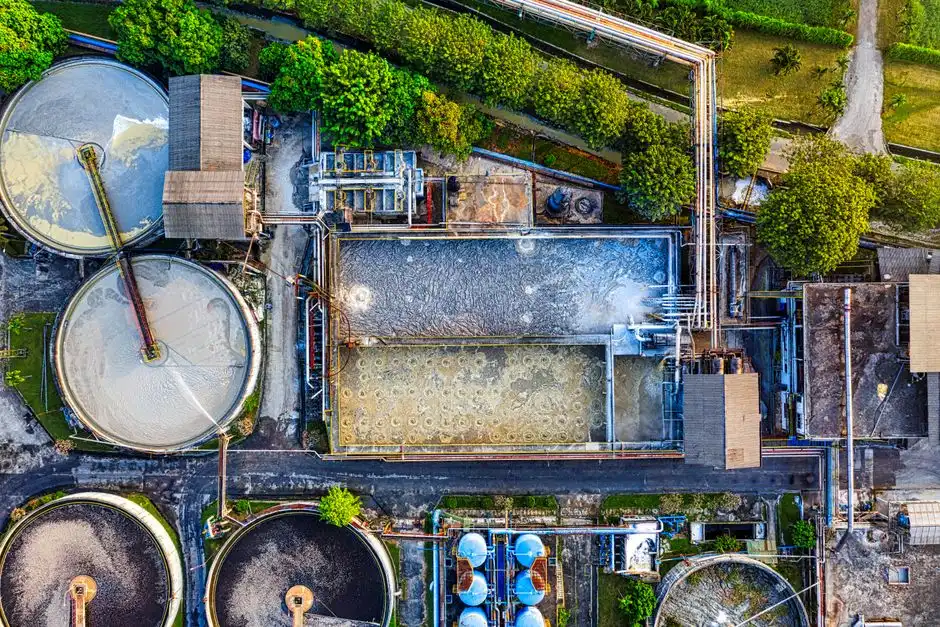
Biological nitrification–denitrification is the workhorse for 95% of municipal and light-industrial ammonia removal projects in 2026. The following scorecard reflects typical design parameters for mid-strength influents (100–300 mg/L NH3-N) and a 10–25°C operating envelope.
A/O (anoxic + aerobic): 80–95% NH3-N removal at HRT 6–10 h and a footprint near 0.4 m² per m³/d. The lowest CAPEX option, and the default for 50–300 mg/L flows. SRT 10–20 d, MLSS 2,500–4,000 mg/L, temperature coefficient θ ≈ 1.08. Tolerates modest toxicity but loses efficiency below 10°C.
A2O (anaerobic/anoxic/aerobic): 85–95% NH3-N removal with simultaneous biological phosphorus removal, SRT 15–25 d, footprint 0.45 m² per m³/d. The mainstream choice for combined N+P plants; CAPEX runs 30–40% above A/O due to the anaerobic stage and internal recycle.
SBR (sequencing batch reactor): 90–95% NH3-N removal in a single tank operating in time rather than space, HRT 12–24 h, footprint 0.25–0.35 m² per m³/d for flows under 5,000 m³/d. Flexible cycle programming compensates well for shock loads.
MBBR (moving bed biofilm reactor): 0.5–1.5 kg NH3-N/m³·d of carrier loading and 80–90% NH3-N removal. Biofilm carriers handle toxicity and cold better than suspended growth, with SRT effectively decoupled from HRT.
MBR (membrane bioreactor, 0.1 µm submerged): 95–99% NH3-N removal at SRT 20–40 d, near-reuse effluent, and roughly 60% smaller footprint than conventional activated sludge for the same load. The high MLSS (8,000–12,000 mg/L) decouples nitrification from washout, an integrated MBR wastewater treatment system typically delivers in practice. A two-stage nitrification–denitrification MBR holds NH3-N to 1–2 mg/L and TN to 8–12 mg/L in 2026 municipal retrofits.
MABR (membrane-aerated biofilm reactor): 2024–2026 pilots report 90–97% NH3-N removal with 30–50% lower aeration energy than fine-bubble CAS, because oxygen diffuses directly into the biofilm at 100% utilization efficiency. The technology is a strong fit for retrofits of overloaded aeration tanks and for high-strength streams where conventional aeration cannot meet demand. Winter SOTE stability is its main design risk.
| Process | NH3-N Removal | HRT (h) | SRT (d) | MLSS (mg/L) | Footprint (m²/m³/d) | CAPEX 2026 (USD/m³/d) |
|---|---|---|---|---|---|---|
| A/O | 80–95% | 6–10 | 10–20 | 2,500–4,000 | 0.40 | 120–220 |
| A2O | 85–95% | 8–12 | 15–25 | 3,000–5,000 | 0.45 | 180–280 |
| SBR | 90–95% | 12–24 | 15–30 | 3,000–5,000 | 0.30 | 220–320 |
| MBBR | 80–90% | 4–8 | n/a (biofilm) | 2,000–4,000 (suspended) | 0.20 | 260–360 |
| MBR | 95–99% | 6–10 | 20–40 | 8,000–12,000 | 0.15 | 380–550 |
| MABR | 90–97% | 6–12 | n/a (biofilm) | 3,000–6,000 | 0.18 | 420–600 |
Shortcut and emerging routes: partial nitritation/anammox, MABR hybrids, bioelectrochemical
For high-strength sidestreams and tight energy budgets, shortcut biology cuts OPEX 40–60% versus a fully aerobic train. The dominant 2024–2026 commercial option is partial nitritation/anammox (PN/A), which oxidizes only ~57% of NH3-N to NO2- and then converts the remaining NH3-N plus NO2- to N2 anaerobically. The trade is operational: PN/A needs DO 0.3–0.8 mg/L, 30–35°C, and influent NH3-N >200 mg/L — conditions that fit reject water from sludge dewatering, not mainstream municipal flow. The Springer 2023 RSM biofilter study confirms the achievable efficiency band: 91.9% removal at C/N 18.95, pH 7.78, and hydraulic load 1.04 d⁻¹, matching the 80–95% biological envelope.
MABR + post-denitrification is the emerging reference configuration for plants that need >95% TN at 40% lower energy than CAS; the MABR handles nitrification while a small anoxic polishing zone removes the residual NO3-. A dual-chamber microbial electrolysis cell published in 2023 (ScienceDirect, S0013935123002682) demonstrated simultaneous nitrification–denitrification with low applied voltage, but the technology remains pre-commercial — track it for 2026–2028 deployment. For NH3-N above 1,000 mg/L, ammonia stripping at pH 10.5 followed by acid absorption recovers ammonia as ammonium sulfate, with a total nitrogen removal technologies 2026 guide providing the cross-process reference.
Chemical and polishing options: breakpoint chlorination, ion exchange, membrane stripping
Chemistry is the right answer when biology is the wrong answer: high-strength, toxic, or polishing duty. Breakpoint chlorination adds Cl2 at an 8:1 to 10:1 weight ratio to NH3-N, achieving 95–99% removal with a reaction window of pH 6.5–7.5; the trade is the cost of dechlorination (SBS or SO2) before discharge, which limits the technology to flows under 10,000 m³/d with NH3-N under 100 mg/L. An automatic chemical dosing system is the practical way to hold the Cl2:N ratio within ±5% of setpoint across load swings.
Natural and synthetic zeolite ion exchange is the preferred polishing step for low-strength streams targeting below 1 mg/L NH3-N, regenerable with 3–6% NaCl brine. Air stripping at pH 10.5–11.5 removes 80–95% of NH3-N from high-strength streams; tower height, packing surface, and cold-weather fouling are the main design constraints. MAP (magnesium ammonium phosphate) precipitation hits 80–90% removal and produces a sellable slow-release fertilizer when influent NH3-N exceeds 500 mg/L and phosphate is present. A hybrid biological-chemical train typical of high-strength semiconductor fab wastewater is documented in a 2025 chip-fab ammonia treatment engineering specification covering 99% removal designs.
| Process | NH3-N Removal | Best Fit Influent | Operating pH | Main Trade-off |
|---|---|---|---|---|
| Breakpoint chlorination | 95–99% | < 100 mg/L, small flows | 6.5–7.5 | Dechlorination required |
| Ion exchange (zeolite) | 90–99% | < 50 mg/L, polishing | 6.0–8.0 | Brine regeneration waste |
| Air stripping | 80–95% | > 500 mg/L | 10.5–11.5 | Cold-weather efficiency drop |
| MAP precipitation | 80–90% | > 500 mg/L + P | 8.5–9.5 | Mg and reagent cost |
2026 cost benchmarks: CAPEX, OPEX, and a worked ROI
Cost is where most technology debates are actually won or lost. The 2026 turnkey CAPEX bands below are USD per m³/d of design flow and include civil, mechanical, and instrumentation but exclude land:
| Process | CAPEX (USD/m³/d) | OPEX (USD/m³ treated) | Energy (kWh/m³) |
|---|---|---|---|
| A/O | 120–220 | 0.05–0.12 | 0.25–0.45 |
| A2O | 180–280 | 0.06–0.14 | 0.30–0.50 |
| SBR | 220–320 | 0.08–0.16 | 0.35–0.55 |
| MBBR | 260–360 | 0.10–0.18 | 0.30–0.55 |
| MBR | 380–550 | 0.14–0.25 | 0.50–0.80 |
| MABR | 420–600 | 0.07–0.15 | 0.15–0.30 |
| PN/A (sidestream) | 500–800 | 0.05–0.12 | 0.15–0.30 |
Worked example: 5,000 m³/d landfill leachate at influent NH3-N 800 mg/L and a 10 mg/L NH3-N / 40 mg/L TN discharge limit. A two-stage A2O + MBR polish train has a turnkey CAPEX of approximately $2.0M, OPEX around $0.18/m³, and energy at 0.65 kWh/m³. Against a baseline of tankering the leachate off-site at $2.50/m³ (2026 industrial disposal rates), the on-site train pays back in roughly 7 years before residual equipment life. Energy is 45–60% of OPEX in aerobic processes, and sludge handling is 15–25% — a detailed SBR operating cost 2026 breakdown quantifies the energy line item for sequence-driven systems. For MBBR-heavy trains, the consumables line is a meaningful second-order effect, captured in the MBBR spare parts and consumables cost 2026 reference.
Vendor selection checklist for ammonia nitrogen systems
A short procurement checklist catches most over-specs before contract signature. (1) Demand a guaranteed NH3-N removal at design winter temperature with conservative SRT and HRT — not summer-conditions efficiency. (2) For biological systems, require the full nitrification kinetics curve: μmax, Ks, Kn, and the temperature coefficient θ, not a single efficiency number. (3) Require a 12-month process warranty tied to the stated influent envelope, and a written upgrade path to PN/A or MABR if load grows. (4) Insist on a factory acceptance test for the MBR or MABR module before shipment, with documented integrity and flux test results — the acceptance criteria for a DF series MBR flat sheet membrane module should be appended to the purchase order. (5) For decentralized or small municipal plants, the WSZ underground integrated sewage treatment plant is a useful pre-engineered reference for sub-500 m³/d projects.
Frequently Asked Questions
Why does ammonia removal efficiency drop in cold weather? Nitrification rate halves for every 10°C drop (Q10 ≈ 2), so at 5°C the rate is roughly 25% of the 25°C value; designs should hold SRT above 20 days or use biofilm carriers that retain biomass in cold conditions.
What is the most cost-effective process for 200 mg/L NH3-N in 2026? A2O with denitrification, at $180–280/m³/d CAPEX and 0.30–0.50 kWh/m³, is the default choice for flows above 5,000 m³/d with a discharge limit of 10–15 mg/L TN.
What is the correct chlorine-to-ammonia ratio for breakpoint chlorination? Hold Cl2:N at 8:1 to 10:1 by weight at pH 6.5–7.5; the breakpoint curve shows a free chlorine residual rise after all combined chlorine is destroyed, which is the operational target.
When should an MABR be specified over a fine-bubble CAS retrofit? Specify MABR when the existing aeration tank is hydraulically constrained, when influent NH3-N exceeds 100 mg/L, or when a 30–50% aeration energy cut is needed to meet an OPEX cap; reference plant data is compiled in the MABR hotel wastewater ROI 2026 guide.
What discharge limit applies to ammonia nitrogen in 2026? U.S. municipal permits typically require NH3-N below 1.5–10 mg/L under EPA secondary treatment standards, while industrial permits in China and the EU commonly hold NH3-N under 8–10 mg/L year-round.