In 2025 a 300 m³/day MBR for package wastewater treatment plants in Algeria, including a desert camp for 2,500 people, is budgeted at €250,000–€400,000 and is specified to deliver <10 mg/L BOD. The same buyer note cites 30 mg/L COD for industrial effluents. The Decree 06-141 column later in this guide lists COD at ≤ 125 mg/L and BOD5 at ≤ 30 mg/L.
Why Package Wastewater Treatment Plants in Algeria Are Being Specified
Package wastewater treatment plants in Algeria are specified when a numeric effluent is required and a civil plant would miss the production start. FAO AQUASTAT (2022) reports 11.67 km³/year of renewable water and prints TRWR per capita as 256.55, against an older figure of 500 m³/capita/year. Water stress on that sheet is 144.81%.
The per-capita cell is labeled km³/year on the fact sheet, which fights the 11.67 km³/year total and the withdrawal row labeled 241.02 m³/inhab/year. Read 256.55 as cubic metres per person per year, because direct use of treated municipal wastewater for irrigation was 0.01 km³ in 2022, against 0.63 km³ of desalinated production (FAO AQUASTAT, 2022).
Earlier planning text put available renewable water at 500 m³/capita/year, below a United Nations scarcity threshold of 1,000 m³. Nearly 80% of surface water is described as polluted in the World Bank 2023 note carried in this guide. A factory manager in Oran or Algiers now treats a discharge breach as a shutdown risk, because enforcement is tighter than it was a few years ago.
The drivers for a modular plant, rather than a multi-year civil works, are load, permits, and the price of replacement water.
- Industrial Expansion: The oil and gas sector (representing 40% of GDP) and the growing mining and agri-food processing sectors in provinces like Laghouat and Oran require rapid deployment of treatment facilities.
- Regulatory Pressure: 2024 updates to the Algerian Water Law (Law No. 05-12) have introduced a roadmap mandating zero liquid discharge (ZLD) for high-risk industries by 2027.
- Economic Necessity: Large-scale infrastructure projects, such as the El-Kerma plant investment of 2 billion Algerian dinars (~€14 million), demonstrate the state's focus on reclaiming wastewater for irrigation in the Mleta plain. Smaller enterprises are following suit with package plants to avoid fines and secure their own water supply.
Compact skids skip the long civil programme of a conventional yard. That matters for desert camps and remote mines where no sewer exists. Most camps we size sit near the 300 m³/day mark above, not at a city-works scale.
MBR vs MBBR Package Plant Algeria Supplier
An MBR versus MBBR decision on an Algerian supplier bid is a footprint and power choice. MBR is the row this guide uses when BOD must land below 10 mg/L and TSS below 5 mg/L. MBBR is the row when agri-food COD swings from 500 to 2,000 mg/L and 85–95% removal is enough.
HydropureWater’s MBR systems for Algerian industrial and municipal projects are designed to deliver BOD levels below 10 mg/L and TSS below 5 mg/L. The 300 m³/day camp case for 2,500 people, cited here as a MENA-Water desert project, is credited with 99.9% pathogen removal without a large clarifier. Most hospital and camp duties we review pick this route when reuse, not only discharge, is the real spec.
MBBR fits Algerian agri-food plants whose load moves with the season. Removal of 85–95% on that COD band is the figure used here. The tank is larger than an MBR, and the power draw is lower, which is why remote towns still ask for it. Most agri-food plants we size run near 500 mg/L COD outside the campaign peak.
For refineries and slaughterhouses, explore DAF systems for Algerian oil/gas and food processing wastewater to take off 90–98% of oil and grease before biology. Learn how to select the right DAF system for Algerian industrial applications when a membrane follows, because oil carry-over is what blinds the sheet. DAF in this guide is pretreatment, at 0.3 – 0.5 kWh/m³, not a final BOD process.
| Technology Type | Best Use Case in Algeria | Effluent Quality (BOD) | Energy Use (kWh/m³) | Footprint Requirement |
|---|---|---|---|---|
| MBR (Membrane Bioreactor) | Hospitals, Urban Reuse, Desert Camps | < 10 mg/L | 0.8 – 1.2 | Very Low (0.5 m²/m³/d) |
| MBBR (Biofilm Reactor) | Food Processing, Rural Sewage | 15 – 25 mg/L | 0.4 – 0.6 | Medium (1.0 m²/m³/d) |
| DAF (Dissolved Air Flotation) | Oil/Gas, Slaughterhouses | Pretreatment only | 0.3 – 0.5 | Low (0.3 m²/m³/h) |
| Integrated A/O | Small Municipalities | 20 – 30 mg/L | 0.3 – 0.4 | High (1.5 m²/m³/d) |
Integrated A/O remains the small-municipality row: BOD of 20 – 30 mg/L, energy of 0.3 – 0.4 kWh/m³, and a high footprint of 1.5 m²/m³/d. Most small towns we see accept that land take only when the permit does not demand reuse-level BOD. Where the shell must sit below grade, an Underground Package Sewage Treatment Plant (WSZ Series) puts the process in one buried body on a tight urban yard.
Technical Specifications for Algerian Package Plants: Influent, Effluent, and Footprint
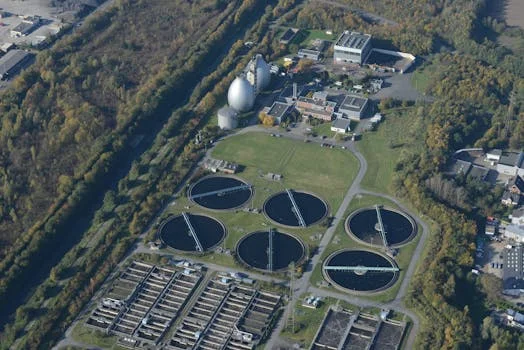
Technical specifications for Algerian wastewater systems in this guide follow the 2020–2030 National Water Plan for influent shape and effluent polish. Coastal aquifers bring salinity. Mediterranean domestic sewage and industrial peaks bring a concentrated organic load. Size the skid to those two facts before you freeze a model.
Municipal influent BOD typically sits between 200 and 400 mg/L. Oil and gas COD can peak at 3,000 mg/L. Hospital wastewater in provinces like Algiers can reach 10^6–10^8 MPN/100mL of fecal coliform, so disinfection is not optional. When designing for the Algerian market, you should compare Algeria’s requirements with Portugal’s package plant standards to understand the differences in nutrient removal priorities (nitrogen vs. phosphorus).
| Parameter | Municipal Influent (Avg) | Industrial Influent (Oil/Gas) | Algerian Discharge Limit (Decree 06-141) | Reuse Standards (Irrigation 2024) |
|---|---|---|---|---|
| BOD5 (mg/L) | 200 – 400 | 300 – 800 | ≤ 30 | ≤ 10 |
| COD (mg/L) | 400 – 600 | 1,500 – 3,000 | ≤ 125 | ≤ 90 |
| TSS (mg/L) | 250 – 500 | 200 – 600 | ≤ 30 | ≤ 5 |
| Oil & Grease (mg/L) | < 50 | 200 – 500 | ≤ 10 | ≤ 5 |
| Fecal Coliform (MPN/100mL) | 10^6 | N/A | ≤ 1,000 | ≤ 100 |
Space in Algiers is the usual constraint. An MBR treating 300 m³/day typically needs 150 m², while an equivalent activated-sludge plant needs more than 450 m². Energy for that MBR is about 240 kWh/day, and an MBBR can run at roughly half that intensity when the effluent spec is looser (HydropureWater field data, 2025). Most Algiers yards we lay out only close if the 150 m² figure is real on the survey.
MBR Package Plant Cost Algeria 2025
MBR package plant cost on the 2025 FOB band in this guide is €800–€1,200 per m³/day. A 300 m³/day MBR therefore lands at €240,000–€360,000 before duty, which is the same band as €240,000 and €360,000 written out. MBBR is €500–€800 per m³/day, so a 500 m³/day MBBR spans €250,000 to €400,000. DAF for 100 m³/h is €30,000–€60,000, and the spread is mostly 304 vs 316L stainless steel.
Ownership cost also carries a 17% import duty on environmental equipment and the local civil bill. You may see how Algeria’s costs compare to Iraq’s wastewater treatment market to gauge regional pricing trends. Most 300 m³/day MBR budgets we build sit in that equipment band until duty and concrete are added.
OPEX sits in a different place from the skid price. Membrane replacement every 5 to 8 years costs €100–€150/m². Fines under Law No. 05-12 are quoted at 1 to 5 million dinars (€6,500–€32,500) per violation. With irrigation water at €1.00/m³ in some regions, reuse is a hedge, and the El-Kerma €14 million case is projected to save €2.5 million a year, a payback of less than 6 years.
What Does an MBR Package Plant Cost?
A 300 m³/day MBR on this 2025 band costs €240,000 to €360,000 before the 17% Algerian import duty, equal to €800–€1,200 per m³/day. Add duty on the imported portion before you compare it with an MBBR. Annual OPEX in the table is €50 – €80 per m³/d of capacity for MBR, against €30 – €50 for MBBR and €20 – €40 for DAF. Membranes, not power, are the line that moves a five-year cost.
| Cost Component | MBR (300 m³/d) | MBBR (500 m³/d) | DAF (100 m³/h) |
|---|---|---|---|
| Estimated CAPEX | €240k – €360k | €250k – €400k | €30k – €60k |
| Annual OPEX (per m³/d) | €50 – €80 | €30 – €50 | €20 – €40 |
| Major Maintenance | Membranes (5-8 yrs) | Media (10 yrs) | Chemicals (Daily) |
| Import Duty (Algeria) | 17% | 17% | 17% |
Algeria Wastewater Discharge Limits Decree 06-141
Decree 06-141 sets the industrial liquid-effluent limits that this guide tables for Algeria. The table keeps BOD5 at ≤ 30 mg/L, COD at ≤ 125 mg/L, TSS at ≤ 30 mg/L, and oil and grease at ≤ 10 mg/L. Fecal coliform in that discharge column is ≤ 1,000 MPN/100mL, and the irrigation reuse column is tighter still.
According to the ECOLEX record, Decree 06-141 implements Article 10 of Law No. 03-10 and requires self-monitoring against the annex limits. The decree repealed Executive Decree 93-160. The 19 April 2006 date is the date printed on the citation inside the 6 January 2013 order. That order appeared in Journal officiel No. 30 of 9 June 2013.
Article 2 of the 2013 order states that its caps apply in addition to Annex 1 of Decree 06-141, for non-toxic discharges to the public hydraulic domain. They do not replace the COD and BOD cells in the table above. The compliance table in this guide still labels industrial COD as Decree 06-141 / 2023 Update at ≤ 125 mg/L. Most files we review quote only that COD line and miss the 2013 list.
Read from that 2013 annex, the decision values for a package plant are chloride at 700 mg/L, nitrate at 50 mg/L, nitrite at 0.1 mg/L, and sulfides at 1 mg/L. Active chlorine is capped at 1 mg/L and chlorine dioxide at 0.5 mg/L. Fecal coliforms are capped at 2,000 per 100 mL, fecal streptococci at 1,000 per 100 mL, with Salmonella and Vibrio cholerae absent in 5,000 mL. A reuse residual of ≥ 1 mg/L chlorine can therefore sit on the same number as the discharge ceiling.
Phenols in the same annex are capped at 0.3 mg/L, and settleable matter at 0.3 mg/L. A PVDF MBR that tolerates 10,000 mg/L TDS can still fail the 700 mg/L chloride cap if the outfall is the public hydraulic domain. Split reuse from discharge before you set the chlorine dose. Most coastal plants we check pass the membrane data sheet and miss the chloride line.
| 2013 Hydraulic-Domain Parameter | Maximum Value | Unit |
|---|---|---|
| Chloride (Cl) | 700 | mg/L |
| Nitrate (NO3) | 50 | mg/L |
| Nitrite (NO2) | 0.1 | mg/L |
| Active chlorine (Cl2) | 1 | mg/L |
| Chlorine dioxide (ClO2) | 0.5 | mg/L |
| Sulfides (S) | 1 | mg/L |
| Phenols and phenolic compounds | 0.3 | mg/L |
| Settleable matter | 0.3 | mg/L |
| Fecal coliforms | 2000 | per 100 mL |
| Fecal streptococci | 1000 | per 100 mL |
| Salmonella | Absence | per 5000 mL |
| Vibrio cholerae | Absence | per 5000 mL |
Which Limits Does Decree 06-141 Set?
Decree 06-141 sets the annex limits for industrial liquid effluent. This guide keeps the working cells at BOD5 ≤ 30 mg/L, COD ≤ 125 mg/L, TSS ≤ 30 mg/L, and oil and grease ≤ 10 mg/L. The 6 January 2013 order does not rewrite those cells; it adds chloride at 700 mg/L and fecal coliforms at 2,000 per 100 mL on top of Annex 1. Ask which pipe you discharge to before you lock the guarantee.
Algerian Industrial Wastewater Compliance Checklist

An Algerian industrial wastewater compliance checklist starts with the discharge point, because Decree 06-141 and the 2013 hydraulic-domain annex do not govern every pipe the same way. Any wastewater plant above 100 m³/day needs an environmental impact assessment. The permit path often takes 6 to 12 months before construction. Project managers coordinate the Ministry of Environment and the local water agency, ADE.
To meet reuse coliform limits, many projects add disinfection. Discover ClO₂ generators for Algerian wastewater reuse compliance to meet the strict fecal coliform limits of <100 MPN/100mL for unrestricted irrigation. Dose with the 0.5 mg/L chlorine-dioxide ceiling in view if any flow still reaches the hydraulic domain.
Step-by-step compliance roadmap:
- EIA Submission: Submit a detailed environmental impact study to the Ministry of Environment. This must include sludge management plans.
- Discharge Permit: Apply to the local ADE for a permit. This requires 3 months of baseline influent data and 3 months of effluent testing post-commissioning.
- Operational Licensing: Secure an annual license, which is subject to unannounced compliance audits by the National Observatory of Environment and Sustainable Development (ONEDD).
| Requirement | Regulation Reference | Threshold/Limit |
|---|---|---|
| Industrial COD | Decree 06-141 / 2023 Update | ≤ 125 mg/L |
| Irrigation Turbidity | Algerian Reuse Guidelines 2024 | ≤ 2 NTU |
| Mandatory EIA | Ministry of Environment Decree | > 100 m³/day capacity |
| Residual Chlorine | Reuse Standard | ≥ 1 mg/L |
Run these seven checks before you freeze a vendor. Most industrial files we walk through lose a month because the outfall was named only as a wadi, with no domain class.
- Name the outfall: sewer, irrigation reuse, or public hydraulic domain.
- Attach the Decree 06-141 cells and, if the domain applies, the 2013 caps.
- Show 3 months of influent data, including oil and grease and TDS.
- State the EIA threshold test at > 100 m³/day capacity.
- Set the reuse checks: BOD ≤ 10 mg/L, turbidity ≤ 2 NTU, residual chlorine ≥ 1 mg/L, and coliforms <100 MPN/100mL.
- Write the self-monitoring plan the decree calls autocontrôle.
- File the sludge route inside the EIA, not as a later note.
Supplier Selection Checklist for Algerian Buyers
Supplier selection for an Algerian package plant turns on proof against the effluent limits the buyer must sign, including Decree 06-141 and Law No. 05-12. Risk is highest when there is no service presence in the heat, where biology and cooling both drift. A data sheet that cites only a vague international standard, without Law 05-12, is the red flag in the table below.
A solvent-heavy fab waste is a different specification from a camp or a dairy. The engineering frame for that duty is Chip Fab Wastewater Treatment Supplier: 2027 Engineering Specs, Zero-Fouling Design, Fab-Ready System Selection. Keep that page for fab water. Do not copy its limits into an Algerian municipal or agri-food guarantee.
Technical checks:
- Local references: Ask for operating units in Algeria. Keppel Seghers’ 2-year manning in Laghouat and MENA-Water’s desert projects are the benchmarks named in this guide.
- Materials: Coastal salinity calls for 316L stainless steel or FRP, not bare carbon steel.
- Salinity tolerance: For brackish waste, confirm cultures and PVDF membranes up to 10,000 mg/L TDS, then check the 700 mg/L chloride cap separately.
Commercial checks:
- Payment: Algerian industrial contracts in this guide often use 30% down, 60% at the port of Algiers or Oran, and 10% after commissioning.
- Warranty: Ask for a minimum 2-year warranty on mechanical parts and a 5-year pro-rated warranty on MBR membranes.
- Training: Put on-site operator training in the contract. Remote 24/7 cover is weak at remote mines.
| Selection Factor | Priority | Warning Red Flag |
|---|---|---|
| Local Support | Critical | No local distributor or service partner in Algiers/Oran. |
| Regulatory Proof | High | Vague "international standards" without citing Law 05-12. |
| Spare Parts | High | Lead times for critical sensors exceed 4 weeks. |
| Customization | Medium | Fixed "one-size-fits-all" container designs. |
Spare-parts lead time over 4 weeks is the practical failure mode, not the brochure finish. Most coastal skids we open that were built in 304 need a 316L or FRP repair within the first hot season. A service partner in Algiers or Oran matters more than a fixed container outline.
Who Should Specify a Package Plant Next
A package plant is the right tool for a factory, hospital, agri-food site, desert camp, or small town in Algeria that must hit a numeric effluent on a tight plot. The El-Kerma investment of 2 billion Algerian dinars (~€14 million) is a regional irrigation scheme for the Mleta plain, and it is the wrong template for a skid. Buyers who only need oil removal should stop at DAF.
Freeze BOD, COD, TSS, oil and grease, TDS, fecal coliform, and the outfall class on one page. Price the skid, the 17% duty, and membrane replacement at €100–€150/m² on that same page. Send the page with the Algerian package plant quote before the EIA slot is booked. Most late redesigns we see start from a missing outfall class, not from a wrong blower.
Frequently Asked Questions
What is the typical lead time for a package wastewater treatment plant in Algeria?
Standard modular systems such as MBBR or DAF need 4–6 months from order to delivery, and a custom MBR needs 6–9 months. Shipping to Algiers or Oran adds 30–45 days. An EIA above 100 m³/day can add another 6–12 months before civil work starts. Most Algerian schedules we build lose more weeks in the permit file than in the factory, so name the outfall before you order.
How do Algerian discharge limits compare to EU standards?
Algerian municipal BOD is listed at ≤ 30 mg/L in this guide, set beside the EU Urban Waste Water Directive value of BOD ≤ 25 mg/L. Industrial COD stays at ≤ 125 mg/L in the Decree 06-141 column, and irrigation reuse is ≤ 10 mg/L BOD. On an Algerian file the tighter practical test is often the 2013 hydraulic-domain annex, which adds nitrate, chloride, and coliform caps on top of Annex 1.
Can package plants handle Algeria’s high salinity wastewater?
Yes, salt-adapted biology plus 316L stainless steel or FRP lets a package plant treat brackish Algerian wastewater. PVDF membranes are specified here up to 10,000 mg/L TDS without structural damage. The 6 January 2013 annex still caps chloride at 700 mg/L, and most coastal plants we review pass the membrane check and still miss that cap.
What are the maintenance requirements for an MBR system in Algeria?
Daily work is a permeability check with Trans-Membrane Pressure < 0.5 bar, plus an aeration-flow check. Each week the membranes take a maintenance clean with citric acid or sodium hypochlorite. Once a year the audit covers sensor calibration and the air diffusers. In Algerian summer, most plants we watch foul faster if scour air is cut, so keep the 240 kWh/day allowance for a 300 m³/day MBR.
How can I reduce the cost of a wastewater treatment plant in Algeria?
Containerized modules can cut civil works by up to 30% versus a cast-in-place tank farm. Import the process core and pour non-critical concrete locally when the spec allows it. An MBBR at €500–€800 per m³/day costs less to run than an MBR at €800–€1,200 per m³/day when 15–25 mg/L BOD is acceptable. The 17% import duty still hits the imported skid, and membrane replacement at €100–€150/m² every 5 to 8 years is the line most MBR budgets omit.