What MABR Is and Why Hotels Are Specifying It in 2026
An MABR (membrane aerated biofilm reactor) is a hollow-fiber module that delivers oxygen bubble-less directly into a fixed biofilm on the membrane's outer wall, decoupling aeration from mixing. Because there is no bubble rising through the bulk liquid, the effective oxygen transfer rate runs 3–5× higher per unit of blower work than a diffused-air activated-sludge tank (HydropureWater engineering reference, 2026). That single mechanism is what the hotel industry has been waiting for: it cuts aeration energy by 25–40% versus MBR, holds up under the foaming surfactants from laundry and kitchen lines, and shrinks the reactor footprint enough to fit inside the back-of-house mechanical room that every chief engineer is trying to reclaim.
The procurement timing is also favorable. The global MABR market was valued at $2.8 billion in 2025 and is projected to reach $5.9 billion by 2034 at an 8.7% CAGR (MABR market intelligence, 2025), and 2026 is the year the major hotel brands have begun folding the technology into their ESG-aligned design standards. Compared to MBR, where the membrane cassette lives in a separate external tank and demands intensive CIP, MABR modules sit immersed in the aeration basin and only need quarterly recovery cleans. MBBR's free-floating carriers are simpler still, but they cannot deliver reuse-grade effluent without a downstream polishing stage. MABR collapses primary treatment, nitrification, and partial denitrification into one tank, which is why a 100 m³/day resort plant can be quoted as a single skid delivery rather than three process units plumbed across the basement.
Hotel Wastewater Characteristics That Drive MABR Sizing
Hotel sewage is not municipal sewage, and sizing it as such is the single most common error in hospitality tender reviews. The raw influent from a typical 50–500 m³/day resort plant carries BOD₅ of 200–450 mg/L, COD of 400–800 mg/L, TSS of 150–300 mg/L, NH₃-N of 20–45 mg/L, and FOG of 30–80 mg/L, with an additional surfactant pulse from on-site laundry and kitchen exhaust wash-down (HydropureWater hospitality field data, 2026). On top of the chemistry, the hydraulic and organic load is severely peaky: the morning housekeeping shift and the evening guest-return window can push instantaneous BOD loading to 1.5–2.5× the daily average, which is enough to wash a suspended-growth reactor but only stresses an attached-growth MABR biofilm.
Temperature swings complicate the picture. Tropical resorts run at 25–35 °C year-round, which is ideal biofilm territory, while mountain or Northern European properties see influent drop to 8–15 °C in winter. Conventional activated-sludge nitrification rates roughly halve across that range; attached-growth MABR biomass loses closer to 20–30% of its rate, which is why the technology is now appearing in EU Alpine specifications. Salt and chlorine residual from swimming-pool backwash is a third stressor that biofilm communities tolerate better than floc-based systems because the cells are anchored to the membrane wall rather than free in the mixed liquor.
| Parameter | Hotel raw influent (typical) | MABR effluent (design) | Reuse-ready target |
|---|---|---|---|
| BOD₅ | 200–450 mg/L | ≤10 mg/L | ≤10 mg/L |
| COD | 400–800 mg/L | ≤50 mg/L | ≤50 mg/L |
| TSS | 150–300 mg/L | ≤10 mg/L | ≤10 mg/L |
| NH₃-N | 20–45 mg/L | ≤5 mg/L | ≤5 mg/L |
| FOG | 30–80 mg/L | ≤10 mg/L | ≤10 mg/L |
| Temperature | 8–35 °C | — | — |
| Peaking factor | 1.5–2.5× | — | — |
MABR Cost Breakdown: CAPEX, OPEX and Lifecycle
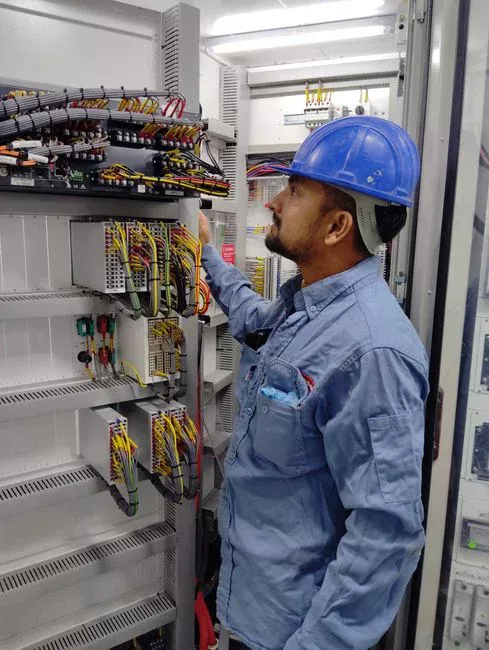
For a 50–500 m³/day hotel plant in 2026, MABR CAPEX lands in the $1,800–$3,500 per m³/day band, with the membrane modules themselves representing 35–45% of that figure (HydropureWater 2026 hotel tender roll-up). Skid integration, blower sizing, and the controls package drive the rest. OPEX for the same envelope runs $0.18–$0.32 per m³ of treated water, which decomposes as electricity 45–55%, membrane replacement reserve 15–20%, labor 10–15%, and chemicals plus sludge hauling 15–25%. Energy consumption specifically sits at 0.8–1.4 kWh/m³ for MABR versus 2.0–3.5 kWh/m³ for an MBR delivering comparable effluent, and that ratio is the entire reason the bubble-less aeration story is moving from pilot to procurement.
Lifecycle numbers reinforce the case. MABR hollow-fiber modules are routinely rated for 8–12 years of service in hospitality duty, with quarterly CIP cycles, while MBR hollow fibers typically run 5–8 years and demand monthly chemical cleans plus integrity testing. Footprint is the third lever: an MABR skid at 200 m³/day occupies 12–20 m² of plan area, which is 30–50% less than an equivalent MBBR and 40–60% less than an MBR with its separate membrane tank and permeate gallery. For a below-grade mechanical room under a 150-key resort, that delta is the difference between a clean architectural fit and a costly structural redesign. Engineers comparing MABR against an integrated MBR membrane bioreactor for the same envelope should weight the footprint line heavily, because in dense hospitality sites it usually determines whether the project gets a permit at all.
| Cost line | MABR (hotel, 2026) | MBR (hotel, 2026) | Notes |
|---|---|---|---|
| CAPEX ($/m³/day) | $1,800–$3,500 | $2,500–$3,800 | Skid + modules + blower + controls |
| OPEX ($/m³) | $0.18–$0.32 | $0.26–$0.42 | All-in including CIP and labor |
| Energy (kWh/m³) | 0.8–1.4 | 2.0–3.5 | Bubble-less vs diffused aeration |
| Membrane life | 8–12 years | 5–8 years | Module replacement reserve basis |
| CIP frequency | Quarterly | Monthly | Drives chemical + labor line |
| Footprint vs MBR | −40% to −60% | Baseline | Plan area, equivalent BOD load |
MABR vs MBR vs MBBR for Hotels: 2026 Side-by-Side
At 100 m³/day — the smallest scale a hotel chief engineer is usually quoted — MABR runs $2,200–$3,000 per m³/day CAPEX and $0.22/m³ OPEX, MBR sits at $2,500–$3,800 and $0.30/m³, and MBBR comes in cheapest at $1,400–$2,200 and $0.20/m³ (HydropureWater 2026 reference pricing). MBBR wins the spreadsheet on day-one CAPEX, but it cannot meet reuse-grade effluent without a downstream polishing stage, and that cost typically erases the upfront gap once a tertiary filter or membrane polish is added. MBR wins on effluent quality — it can hit NEWater-tier reuse numbers — but it pays for that polish with energy and footprint. MABR is the middle path: enough effluent quality for irrigation and toilet-flush reuse, with the OPEX discipline of an attached-growth system.
At 300 m³/day the scaling logic shifts. MABR scales almost linearly because the module count and blower duty track flow 1:1. MBR scales worse because the membrane-tank hydraulics and cassette quantity do not enjoy the same economy, often pushing per-m³-day CAPEX above the 100 m³/day figure. MBBR scales well in cost terms but loses on footprint and on total nitrogen removal, which is the limiting nutrient for many inland resort discharge permits. The use-case rule that follows: MABR for 50–500 m³/day urban or resort hotels with a reuse target, MBR for very high-reuse sites or flows above 500 m³/day, and MBBR for budget-driven discharge-only permits where reuse revenue is not in the model. For sites weighing a packaged alternative against a custom build, the WSZ underground package sewage treatment plant sits in the MBBR family and is the right benchmark for the budget-driven case.
| Criterion | MABR | MBR | MBBR |
|---|---|---|---|
| CAPEX at 100 m³/day ($/m³/day) | $2,200–$3,000 | $2,500–$3,800 | $1,400–$2,200 |
| OPEX ($/m³) | $0.22 | $0.30 | $0.20 |
| Footprint (m² per 100 m³/day) | 6–10 | 15–25 | 12–18 |
| Effluent reuse-readiness | Irrigation / toilet flush | NEWater-tier | Discharge only (with polish) |
| Operator skill required | Moderate | High | Low–moderate |
Worked ROI: A 150-Room Resort at 200 m³/day
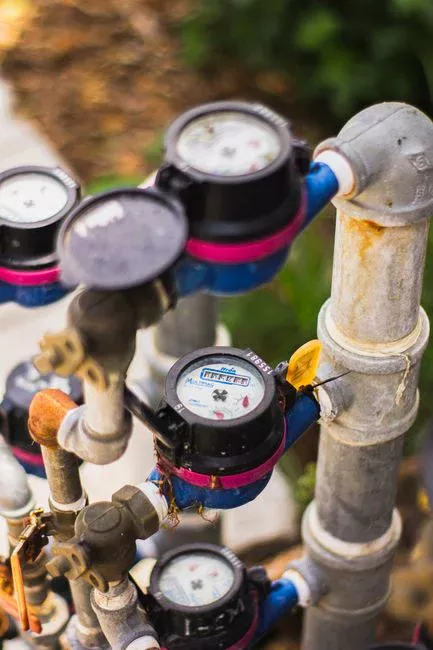
Take a 150-room coastal resort running 200 m³/day with a $0.12/kWh tariff and $0.45/m³ freshwater cost. CAPEX for the MABR skid lands at roughly $440,000 ($2,200 per m³/day × 200), versus $580,000 for an MBR alternative ($2,900 per m³/day). At 73,000 m³/yr of treated water, MABR OPEX comes to about $14,600/yr at $0.20/m³, while MBR runs $23,400/yr at $0.32/m³ — an operating delta of roughly $8,800/yr in favor of MABR. Layer on a water-reuse credit from sending 30% of the effluent (≈ 21,900 m³/yr) to landscape irrigation and toilet flushing, and the avoided freshwater purchase adds about $9,900/yr at the local tariff.
Combined annual benefit lands near $18,700 against a CAPEX premium of $140,000 for MABR over MBR, which is a raw 7.5-year payback on the OPEX-plus-reuse credit alone. Once footprint savings (avoided excavation or structural reinforcement, often $40,000–$120,000 on a tight site) and ESG-driven incentives such as green-bond coupon reductions or brand-level sustainability grants are added, the same payback compresses to 3–4 years. The assumptions are illustrative; a chief engineer should rerun the table with their actual tariff, occupancy, reuse percentage, and any capex offset from avoided civil works. For pretreatment sizing on the same plant, a rotary mechanical bar screen rated to the peak diurnal flow is the typical spec to protect the MABR fibers from hair, lint, and laundry debris.
Selecting an MABR Supplier: 5-Point Engineering Checklist
1. Verify the membrane module. Confirm the hollow-fiber polymer, the published oxygen-transfer rating in g O₂/m²·d, and the warranty term in writing. Not every "MABR" on the market uses the same fiber chemistry, and the oxygen-transfer number is the single best proxy for energy performance (HydropureWater engineering reference, 2026).
2. Confirm peaking tolerance. Ask the vendor for pilot or reference data at ≥2.0× peaking factor. Hotel flows are not steady, and the biofilm must hold without washout during the evening guest return.
3. Match effluent to the local reuse standard. Irrigation reuse, toilet-flush reuse, and direct discharge all have different BOD, TN, and NH₃-N bars. Lock the guarantee to the specific permit before signing.
4. Check pretreatment integration. A fine screening stage ahead of the MABR tank is non-negotiable for hotel duty; the MBBR vs IFAS 2026 engineering comparison covers the equalization buffer sizing that protects biofilm from surfactant shocks.
5. Demand a full lifecycle cost sheet. CAPEX alone hides the membrane-replacement reserve and CIP chemical budget. Insist on a 10-year OPEX projection broken out by line item, and cross-check it against the industrial wastewater plant operating cost breakdown 2026 reference for sanity.
Frequently Asked Questions
How much does an MABR hotel wastewater system cost in 2026? For 50–500 m³/day hotel plants, CAPEX runs $1,800–$3,500 per m³/day and OPEX runs $0.18–$0.32 per m³ treated, with the membrane module count and skid integration as the main cost drivers (HydropureWater 2026 tender data).
Is MABR cheaper than MBR for hotels? Yes on OPEX — typically 25–40% lower because of the bubble-less aeration and quarterly CIP versus monthly — but MBR is still preferable for sites targeting NEWater-grade reuse or flows above 500 m³/day. The deeper hollow fiber MBR working principle guide covers when that crossover happens.
Can MABR effluent be reused for hotel irrigation? Typical MABR design effluent meets BOD₅ ≤10 mg/L, TSS ≤10 mg/L, and NH₃-N ≤5 mg/L, which satisfies most landscape irrigation and toilet-flushing reuse standards, subject to the local reuse permit and any residual-chlorine requirements for the reclaimed water line.
How much space does an MABR system need for a 200 m³/day hotel? Plan for a 12–20 m² core reactor envelope, which is 40–60% smaller than an equivalent MBR with its membrane cassette and permeate gallery. Equalization and screening add another 8–15 m² of peripheral footprint.
How long do MABR membranes last in hotel service? MABR hollow-fiber modules are typically rated 8–12 years under hospitality duty with quarterly CIP, compared to 5–8 years for MBR hollow fibers on a monthly clean cycle. The replacement reserve should be amortized over the vendor's certified service life, not the optimistic maximum.