Best Sludge Thickener for Industrial Use: Engineering Specs, Cost Data & Selection Guide 2026
Rotary drum thickeners lead for industrial sludge thickening, delivering 5–12% solids at 92–98% capture. Gravity belt thickeners suit enclosed, odor-sensitive sites. Multi-disk units typically handle 5–100 m³/h; centrifuges cover high-volume trains up to 1,200 m³/h. Selection turns on sludge type (biological vs. chemical), flow rate, polymer budget, and the downstream disposal route.
Why Sludge Thickening Is the Bottleneck in Industrial Wastewater Treatment
Sludge management is typically 30% to 50% of total plant OPEX in industrial wastewater treatment. EPA's Handbook Estimating Sludge Management Costs (EPA/625/6-85/010; cost curves based on the last quarter of 1984 and updateable by cost indexes) frames how moisture and toxicity drive disposal economics. Planning bands of $50 to $200 per ton remain useful when site quotes are not yet available. A mid-sized textile plant producing 100 tons of wet sludge monthly can see hauling costs alone exceed $25,000; without effective thickening, most of that payment transports water rather than solids.
Compliance pressure compounds the cost problem. EPA 40 CFR Part 503 and the EU Sewage Sludge Directive 86/278/EEC set strict land-application limits—Part 503 on pathogens and pollutants, and 86/278/EEC on heavy metals in sludge and soil. Thickening equipment that reduces sludge volume by 50–80% cuts hauling costs and makes downstream stabilization—lime addition or thermal drying—more cost-effective. According to EPA's Lime Use in Wastewater Treatment design data, lime dosing economics improve sharply at higher feed solids. Failure to hold consistent solids capture (typically requiring >95%) recycles fines to the headworks and drives organic overloading.
Operational inefficiency in the thickening stage propagates through the whole treatment train. Raising primary sludge concentration from 1% to 5% reduces required anaerobic digester volume by 80%, with HRT falling by 20% or more. That gain matters for sludge management in electroplating wastewater and other heavy industrial sectors where chemical sludge volumes are high and dewatering is difficult.
How Industrial Sludge Thickeners Work: Engineering Mechanisms Explained
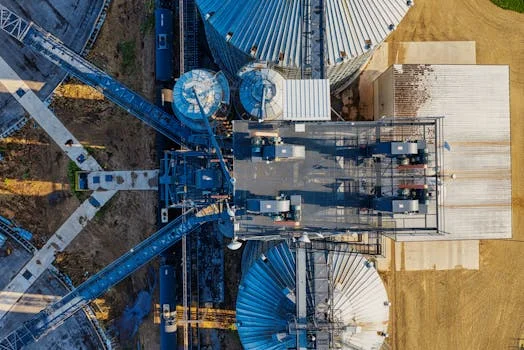
Understanding the physics of solids separation is essential for selecting sludge thickener equipment. Most industrial thickeners rely on three primary mechanisms: gravity settling, mechanical filtration, and centrifugal force. Mechanism choice depends on particle settling velocity (Stokes' Law) and influent TSS, typically 0.5–5%.
Gravity Thickening and Multi-Disk Systems: Gravity thickeners exploit the density difference between solids and water. Modern multi-disk thickeners apply the lamella principle, using inclined plates set at 45–60° to raise effective settling area without enlarging the footprint. Settling capacity reaches 20–40 m²/m³ where space is tight and flow is high.
Rotary Drum Thickeners: These systems use a rotating cylinder lined with a filter medium. The distinction between woven wire mesh and perforated plates drives OPEX. Woven mesh, with pore sizes of 0.1–1 mm, gives a capture rate of 92–98% and reduces polymer demand to 0.5–2 kg/ton of dry solids (HydropureWater field data, 2025). Sludge enters an internal headbox where polymer is injected, flocs form, and the mass tumbles over the mesh while filtrate drains.
Gravity Belt Thickeners: These systems rely on a moving permeable belt. Success depends on polymer flocculation timing—too aggressive mixing shears flocs; too slow mixing traps water. Operators tune belt speeds (typically 0.5–3 m/min) to reach 4–8% solids. Belt units are preferred for highly compressible biological sludges.
| Mechanism | Primary Force | Typical Influent TSS | Target Solids Output | Key Engineering Metric |
|---|---|---|---|---|
| Gravity/Lamella | Sedimentation | 0.5% – 2.0% | 3% – 5% | Surface Overflow Rate (m³/m²/d) |
| Rotary Drum | Filtration/Tumbling | 0.5% – 3.0% | 5% – 12% | Drum RPM & Mesh Pore Size |
| Gravity Belt | Filtration/Drainage | 0.5% – 4.0% | 4% – 8% | Belt Tension & Speed (m/min) |
| Multi-Disk | Compression/Shear | 1.0% – 5.0% | 6% – 10% | Disk Gap & Screw Torque |
Thickener Comparison Matrix: Performance by Sludge Type and Plant Size
Selecting the best sludge thickener for industrial use requires matching performance specs to your sludge profile. Biological WAS from food processing or pulp and paper is often light and needs gentle handling. Chemical sludge from metal finishing is denser but can be abrasive. Most plants we size for biological WAS run at the lower end of the polymer range because floc strength limits performance, not drum speed.
| Thickener Type | Best Sludge Type | Flow Rate (m³/h) | Solids Output (%) | Polymer Use (kg/t DS) | CAPEX ($/m³/h) | OPEX ($/t DS) |
|---|---|---|---|---|---|---|
| Rotary Drum (Mesh) | Biological / WAS | 10 – 150 | 5% – 12% | 0.8 – 1.5 | $1,500 – $3,500 | $5 – $12 |
| Gravity Belt | Mixed / Digested | 50 – 300 | 4% – 8% | 1.5 – 3.0 | $2,000 – $4,500 | $8 – $15 |
| Multi-Disk | Oily / Chemical | 5 – 100 | 6% – 10% | 2.0 – 4.0 | $4,000 – $8,000 | $6 – $10 |
| Centrifuge | All (High Volume) | 100 – 1,200 | 10% – 15% | 3.0 – 6.0 | $10,000+ | $15 – $30 |
For food plants with high FOG and flows of 100–500 m³/h, gravity belt thickeners often cut polymer use by 30% versus older rotary drums that use perforated plates. Centrifuges can reach 15% solids but consume three times the energy (0.8–1.2 kWh/m³) and need skilled maintenance staff. For most mid-sized industrial projects, a rotary drum thickener balances CAPEX and solids capture.
Step-by-Step Selection Framework: Matching Equipment to Your Plant's Needs

Engineers should follow a five-step evaluation so the thickener matches long-term plant goals.
- Step 1: Characterize Sludge: Determine TSS, viscosity, FOG content, and pH. Biological sludge from pulp mills (TSS 1–3%) thickens most efficiently on rotary drums, while high-FOG sludge may need the continuous washing of a gravity belt.
- Step 2: Define Flow Rate and Variability: If daily flow varies by more than 20%, multi-disk thickeners offer flexibility because speed and torque can change without losing solids capture.
- Step 3: Calculate Polymer Budget: Polymer is the primary OPEX driver. Using polymer dosing optimization for sludge thickening can save up to $0.80 per ton of dry solids when paired with woven mesh rotary drums.
- Step 4: Assess Space Constraints: Gravity belt thickeners generally need 30% less footprint than large multi-disk systems at the same throughput, but they often need more vertical clearance for maintenance.
- Step 5: Align with Downstream Processes: For incineration, target 10–15% solids to cut auxiliary fuel costs by up to 25% (per EPA's Fuel-Efficient Sewage Sludge Incineration data). For landfilling, 5–8% may suffice when hauling distance is short.
A simple decision tree applies: if sludge is biological and flow is under 500 m³/h, evaluate a rotary drum first. If the sludge is oily or the plant runs cold enough that polymer activation is slow, a multi-disk system is the safer technical bet.
2025 Cost Breakdown: CAPEX, OPEX, and ROI for Industrial Sludge Thickeners
Building a business case for a sludge thickener upgrade needs clear CAPEX and long-term savings data. CAPEX for industrial thickeners in 2025 ranges from $15,000 for small rotary drums to over $200,000 for high-capacity multi-disk systems. Installation typically adds 10–20% to equipment cost, plus civil works such as concrete pads for gravity belts.
OPEX is where ROI usually appears. Average thickener operating cost is $5 to $20 per ton of dry solids: polymer ($3–$12/ton), energy ($0.20–$1.50/ton), and maintenance ($0.50–$3/ton). According to HydropureWater field data, polymer savings of $0.80/ton can pay back a $50,000 rotary drum in about 18 months at 200 m³/h.
| Cost Component | Rotary Drum (200 m³/h) | Gravity Belt (200 m³/h) | Multi-Disk (200 m³/h) |
|---|---|---|---|
| Equipment CAPEX | $45,000 – $60,000 | $55,000 – $80,000 | $90,000 – $130,000 |
| Annual Polymer Cost | $18,000 | $24,000 | $22,000 |
| Annual Energy Cost | $1,200 | $2,500 | $1,800 |
| Estimated ROI | 14 – 18 Months | 20 – 24 Months | 30 – 36 Months |
Hidden costs often include odor control. Enclosed systems, including certain gravity belts, may add $10,000–$30,000 for integrated scrubbers to manage VOCs, but they can cut overall emissions by 90%, supporting compliance with EPA 40 CFR Part 60 standards.
Compliance and Operational Checklist: Avoiding Common Pitfalls
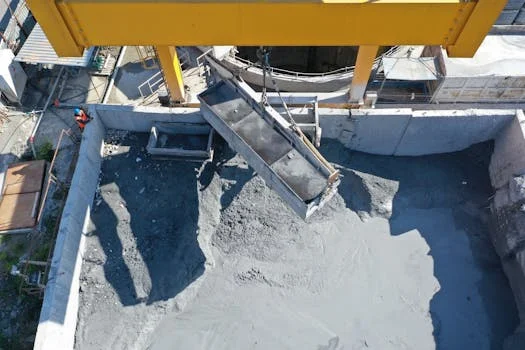
Before procurement closes, engineers should vet the unit against compliance and maintenance benchmarks. The most common pitfall is underestimating filter-media maintenance.
- Permitting: Confirm the equipment supports Class A or Class B biosolids production if land application is the goal. EPA 40 CFR Part 503 requires pathogen testing; thickening to >10% solids reduces the volume of material tested and lowers annual lab fees.
- Odor Control: Plants near residential areas typically need enclosed systems. Consider an integrated flue gas desulfurization scrubber or similar VOC control for high-sulfur sludges.
- Maintenance: Woven mesh panels typically last 2–3 years, while perforated plates can last 5+ years. The $0.80/ton polymer savings from mesh usually outweighs the higher replacement cost.
- Troubleshooting: Foaming in rotary drums is a classic sign of polymer overdose. Cutting the dose by 10–20% often restores drainage and improves solids capture.
- Vendor Vetting: Request three references from plants processing similar sludge. A unit that works on municipal sewage may fail on high-viscosity chemical sludge.
Who this is for: plant engineers and procurement managers sizing thickeners for industrial WAS or chemical sludge at roughly 10–500 m³/h. Who should look elsewhere: facilities that already dewater to cake without a thickening stage, or sites that need only a sludge thickener tank for equalization. Next step: send flow, TSS, and disposal route data through our sludge thickener inquiry form for a sized shortlist within two business days.
Frequently Asked Questions
What is the difference between a sludge thickener and a dewatering press?
Thickeners raise solids from 0.5–5% to a pumpable 5–12% concentration. Dewatering presses, such as a Plate and Frame Filter Press for Sludge Dewatering, take that thickened sludge and push it to 15–30% solids cake. Thickening is the prerequisite for cost-effective dewatering and cuts the hydraulic load on presses, digesters, and dryers downstream.
How much polymer does a rotary drum thickener use?
On average, rotary drum thickeners use 0.5–2 kg of polymer per ton of dry solids. Woven wire mesh panels instead of perforated plates can cut polymer use by 20–30% through better initial drainage. Actual dose still depends on sludge type, floc strength, and mixing intensity at the headbox.
Can I use a gravity belt thickener for chemical sludge?
Yes, but polymer demand for chemical sludge on a belt typically rises 40–60% compared with biological sludge. Rotary drums are generally more efficient for chemical flocs because mesh capture holds fine precipitates better. Pilot a side-by-side polymer curve before locking CAPEX on either technology.
What is the energy consumption of a multi-disk thickener?
Multi-disk systems consume about 0.1–0.3 kWh/m³, roughly three times lower than the 0.8–1.2 kWh/m³ required by a centrifuge. Energy is rarely the dominant OPEX line versus polymer, but it matters on high-volume trains where continuous duty multiplies kilowatt-hours across the year.
How do I size a sludge thickener for my plant?
Use Thickener Area (m²) = Flow Rate (m³/h) / Solids Loading Rate (kg/m²/h). For biological sludge, typical loading rates are 20–40 kg/m²/h. Confirm with jar tests and vendor hydraulic curves before purchase. For the next process step, see our guide on sludge dewatering after thickening.