Why chemicals wastewater in Pearlington is a DAF problem, not a clarifier problem
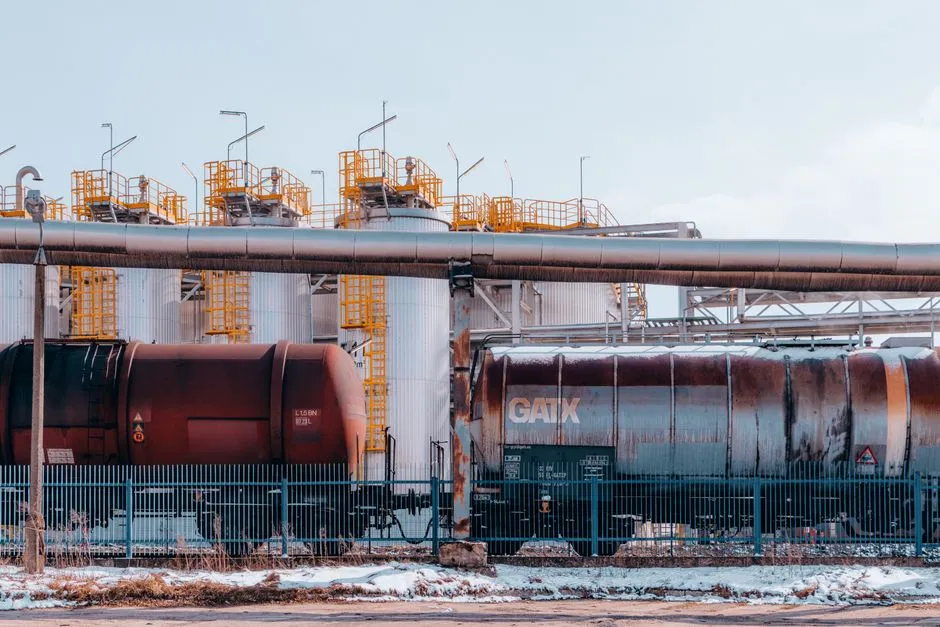
Chemicals wastewater from Pearlington-area plants—Hancock County, Mississippi, across the Stennis corridor from Port Bienville Industrial Park—is dominated by emulsified oils, surfactant-bearing rinses, polymer emulsions, solvent extraction residues, and Gulf Coast brine dilution water. Density-driven gravity clarification underperforms on these streams because the light floc and sub-100 µm oil droplets do not settle within the 2–4 hour retention time of a conventional clarifier. In a food/chemical-style stream benchmarked by Ecologix (2026), dissolved air flotation reaches 95% FOG removal against roughly 70% for a clarifier on the same feed. The mechanism behind that gap is the 30–50 µm microbubble (per SigmaDAF, 2026): the bubble attaches to a floc particle, lowering its effective density below that of water and lifting it to the surface in 15–30 minutes. Pearlington's petrochemical-adjacent context—specialty chemical formulators, adhesives producers, and Port Bienville tenants—discharges into sensitive coastal waters under strict local pretreatment oversight, so a primary clarifier that misses 25–30% of FOG and a comparable fraction of TSS forces costly biological polishing downstream. The default primary clarifier for a 2026 chemicals plant in this region is a DAF, with a gravity clarifier reserved for heavy inorganic settleables or deployed downstream of a DAF as a polishing step.
How a DAF system and a clarifier actually work in a chemicals plant
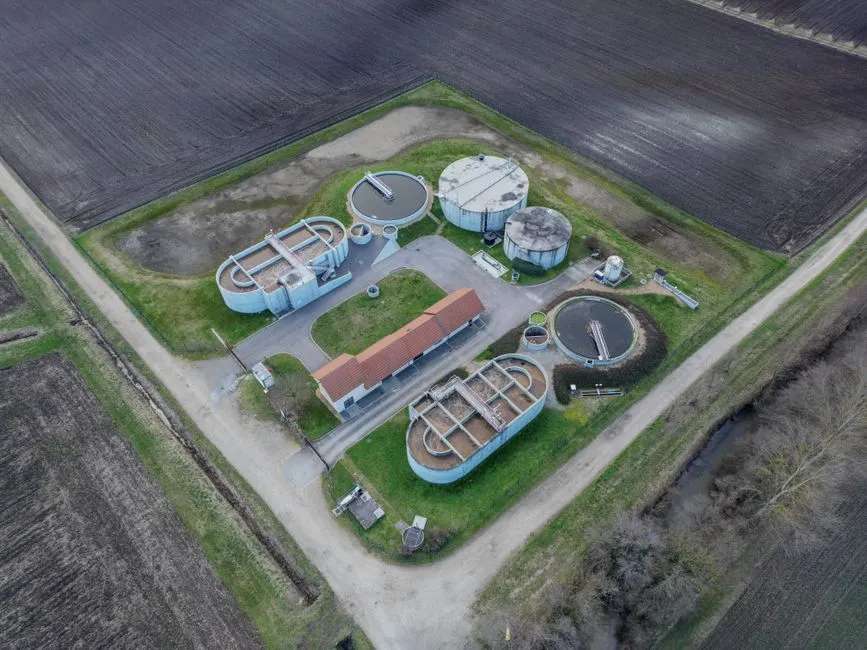
The DAF process flow in a chemicals plant runs in five steps: (1) pH adjustment with caustic or sulfuric acid; (2) coagulant dosing—typically ferric chloride, alum, or PAC; (3) flocculation with cationic polymer at 1–10 mg/L for oil emulsions, with anionic polymer or blends for mineral flocs (per ALAR chemical-conditioning guidance, 2026); (4) saturation tank pressurization with dissolved air at 60–80 psig; (5) release into the flotation chamber where 30–50 µm bubbles attach to floc and float it to a paddle skimmer, while a bottom auger removes heavy settleables (per SigmaDAF, 2026). A conventional gravity clarifier runs coagulant and polymer dosing into a flocculation basin, then into a rectangular or circular tank with 2–4 h hydraulic retention, where settled sludge is scraped to a hopper and clarified overflow exits over a weir. A typical chemical plant stream sits in the 500–2,000 mg/L COD band for light rinses and 5,000–20,000+ mg/L COD for heavy process wastewater—FOG loads commonly exceed 100 mg/L on the emulsified lines that defeat clarifiers. The compact DAF 'plug-and-play' configuration packages chemical conditioning, the flotation chamber, and a PLC control panel on a single skid rated for flows up to 66 GPM (per SigmaDAF, 2026), while field-built lamella clarifiers require on-site concrete or steel tankage. Because the same DAF influent that takes 15–30 minutes of flotation retention needs 2–4 hours of gravity retention, the DAF footprint for a given flow is typically a quarter to a tenth of an equivalent clarifier. These mechanical differences dictate the optimal solution for specific wastewater profiles.
For a typical Pearlington chemicals line, the DAF system for chemicals wastewater pairs coagulation, flocculation, and flotation in a skid that drops in next to an existing equalization tank.
DAF vs clarifier: head-to-head on the parameters that matter in 2026
The table below provides a decision tool for procurement managers, with numbers anchored to Ecologix (2026) and SigmaDAF (2026) field data.
| Parameter | DAF system | Gravity / lamella clarifier |
|---|---|---|
| TSS removal | 85–95% | 60–80% (heavy settleables only) |
| FOG removal | 90–95% | 50–70% |
| COD reduction | 40–70% (with coagulation) | 20–40% (without biological stage) |
| Footprint per 10 m³/h | ~2–4 m² | ~10–25 m² |
| Hydraulic retention time | 15–30 min | 2–4 h |
| Polymer / chemical demand | 1–10 mg/L cationic (oils), anionic (minerals) | 5–25 mg/L (often higher to make floc settleable) |
| Sensitivity to flow surges | Higher (low buffer volume) | Lower (large buffer) |
| Sensitivity to emulsified oils | Low — designed for emulsions | High — emulsions do not settle |
| Sensitivity to high TDS / brine | Moderate (coagulant tuning required) | High (density/current upset) |
| CAPEX band (50 m³/h) | Low-to-mid six figures USD (skid) | Similar installed cost for field-built tank |
| OPEX band | $0.005–$0.05 per liter treated (chemistry-dependent) | Lower $/m³ at low chemistry, higher at heavy polymer dose |
| Materials of construction | 304SS standard; 316SS, PP optional | Concrete, carbon steel with epoxy liner |
The 66 GPM skid breakpoint (per SigmaDAF, 2026) serves as the practical sizing line: at or below that flow, a single-skid compact DAF is faster to install and easier to automate than a field-built lamella. Above 66 GPM, a modular two-skid DAF or a hybrid DAF → lamella train is the more reliable configuration.
Pearlington-specific site and regulatory drivers in 2026
Pearlington chemical plants in 2026 operate under the U.S. EPA pretreatment framework for organic and inorganic chemicals—40 CFR Part 414 and 40 CFR Part 415—which set categorical pretreatment standards for facilities discharging to a POTW. Direct discharges route through Mississippi DEQ under NPDES; indirect discharges negotiate local POTW limits that often mirror the categorical standards. DAF effluent quality usually determines whether the plant still needs a downstream biological polishing stage (MBR, SBR, or moving-bed biofilm) to meet BOD/COD limits, as a well-run DAF removes the FOG and most TSS load that would otherwise shock a biological system. Material selection on the Gulf Coast is chloride-driven: 316SS or polypropylene wetted parts are the practical baseline for any DAF or lamella wetted component, because 304SS will pit within a few years in a Hancock County salt-air environment. Hurricane-season redundancy matters operationally; a second DAF train or a mobile DAF unit (47'-6" or 51'-7" trailer, online within a single day per WesTech, 2026) lets a plant keep pretreatment online through a storm-surge event or scheduled maintenance. The Stennis Space Center / Port Bienville Industrial Park cluster—a concentration of specialty chemical, adhesives, and formulated-product facilities—pretreats to local POTWs whose surcharge triggers activate well above what a clarifier can reliably deliver on emulsified feeds.
How to choose for your chemicals stream: a 2026 decision framework
The framework below translates influent parameters into a primary unit selection in three steps.
| Stream profile | Influent indicator | Recommended primary | Rationale |
|---|---|---|---|
| Emulsified oils / FOG > 100 mg/L | Surfactant-stabilized, sub-100 µm droplets | DAF (compact skid) | Bubble-flotation captures what gravity cannot |
| Light TSS, non-settleable, < 2,000 mg/L | Polymer emulsions, fine catalyst fines | DAF (compact skid) | Short retention suits batch / variable flow |
| Soluble COD-dominated, coagulation-responsive | High soluble fraction, low settleables | DAF + downstream biological | DAF removes FOG/TSS that would shock bio |
| Heavy inorganic TSS > 5,000 mg/L | Metal hydroxides, calcium salts, grit | Gravity / lamella clarifier | Dense settleables, low FOG |
| Both FOG and heavy settleables | Mixed stream, > 66 GPM | Hybrid DAF → lamella | DAF strips FOG; lamella polishes settleables |
For the typical Pearlington chemicals line, a DAF skid sized in the DAF range of 4–300 m³/h, paired with an automatic coagulant and polymer dosing system, handles the FOG and TSS load. A lamella clarifier for hybrid DAF trains is the right add-on when the same plant also generates heavy inorganic settleables, or when redundancy above 66 GPM is required.
2026 CAPEX, OPEX, and ROI for a Pearlington chemicals plant
Capital cost for a mid-sized chemicals plant DAF in 2026 sits in the low-to-mid six figures USD per 50 m³/h of treatment capacity when specified as a containerized or skid unit (HydropureWater DAF family, 4–300 m³/h, 13 model sizes). Field-built lamella clarifiers of equivalent flow land in a comparable installed-cost band once civil works, epoxy-lined tankage, and rake mechanisms are included; the gap described as 'higher DAF upfront' is largely a packaged-vs-field-built artifact. OPEX for a DAF is dominated by polymer and coagulant at $0.005–$0.05 per liter treated depending on influent chemistry, with compressed air, skimmer and auger maintenance, and periodic bubble-nozzle inspection as the secondary lines. A clarifier's OPEX per cubic meter is generally lower at minimal chemistry, but on a chemical-industry stream that needs heavy polymer dosing to make flocs settleable, clarifier OPEX can overtake DAF OPEX because the polymer dose and the sludge hauling cost both rise. A plate and frame filter press for DAF float dewatering, paired with the DAF, cuts float volume for disposal and converts a hauling liability into a filter-cake output. ROI is built from pretreatment fine avoidance, reduced POTW surcharges on FOG and TSS, and avoided haul-off cost; for context on the broader Gulf Coast CAPEX envelope, see this Gulf Coast chemical plant pretreatment compliance guide and a parallel Nashville chemicals DAF vs clarifier guide for comparison. This industrial rinse wastewater treatment cost 2026 breakdown carries the same polymer/energy assumptions.
Frequently Asked Questions
Should a chemical plant in Pearlington use a DAF or a clarifier in 2026?
The selection depends primarily on the density and particle size of the suspended solids in your effluent. In 2026, Dissolved Air Flotation (DAF) is preferred for chemical facilities handling oil-in-water emulsions, light organic solids, or particles with a specific gravity near 1.0, as these often fail to settle effectively in gravity-based systems.
Conversely, a clarifier is the standard choice for high-density inorganic solids, heavy metal precipitates, or large-scale sludge production where solids have a specific gravity significantly greater than 1.2. For Pearlington facilities with variable influent, a pilot study comparing the Total Suspended Solids (TSS) removal efficiency of a DAF versus a secondary clarifier is recommended to ensure compliance with local discharge limits.
How much does a DAF system cost for a small Mississippi chemical plant?
For a small-scale chemical operation in Mississippi, a complete DAF system typically ranges from $85,000 to $250,000, depending on the required hydraulic loading rate and metallurgical requirements. This estimate covers the flotation tank, air saturation system, recycling pump, and chemical dosing skid.
Operational costs must also be factored into the 2026 budget, including polymer consumption, sludge dewatering requirements, and electricity for high-pressure air saturation. Facilities should account for an additional 15% to 25% of the capital cost for site-specific installation, piping integration, and local permitting fees required by state environmental authorities.
What is the best wastewater treatment for emulsified oils in a chemical facility?
Dissolved Air Flotation (DAF) is the industry standard for removing emulsified oils in chemical wastewater. By injecting micro-bubbles—typically 10 to 100 microns in diameter—into the wastewater stream, the system attaches air to oil droplets, forcing them to the surface for mechanical skimming.
To achieve high removal efficiency, chemical facilities must utilize an upstream coagulation and flocculation process. Adjusting the pH to the optimal range for the specific emulsion and applying cationic polymers can increase oil and grease removal rates from 60% to over 95%, ensuring the effluent meets stringent pretreatment standards before reaching municipal sewers.
Can a DAF and a lamella clarifier be used together in a chemical plant?
Yes, a DAF and a lamella clarifier are frequently used in series as a robust multi-stage treatment train. In this configuration, the lamella clarifier is typically placed upstream to perform primary sedimentation, removing heavier, settleable solids that would otherwise overload the DAF’s skimming mechanism.
The DAF then acts as a polishing stage, targeting the remaining emulsified oils, lighter suspended solids, and colloidal particles that the clarifier cannot capture. This tandem approach is highly effective in chemical plants with complex, variable waste streams, as it optimizes chemical usage and significantly reduces the solids loading rate on downstream biological treatment units.
What pretreatment rules apply to chemical plants discharging in Mississippi?
Chemical plants in Mississippi must comply with the Mississippi Department of Environmental Quality (MDEQ) regulations and the federal Categorical Pretreatment Standards (40 CFR Parts 405-471) if they discharge into a Publicly Owned Treatment Works (POTW). These rules mandate strict limits on parameters such as pH (typically 5.0–10.0), heavy metals, oil and grease, and volatile organic compounds.
Facilities are required to perform routine self-monitoring and submit Discharge Monitoring Reports (DMRs) to ensure their effluent does not cause interference or pass-through at the municipal treatment plant. Failure to meet these pretreatment standards can result in significant fines or revocation of discharge permits under the National Pollutant Discharge Elimination System (NPDES) framework.