Why Mount Hope Plastics and Rubber Plants Are Revisiting CAS in 2026
Sub-50 μm polymer fines and 20 μm polymer fibers are overflowing the secondary clarifier at Hampshire County injection-molding, extrusion, and rubber-compounding plants, and the daily self-monitoring report at a typical Mount Hope facility now shows TSS excursions every time a polymerization washwater dump hits the equalization basin. The pain is concrete: a clarifier overflow rate of 2.5 m/h cannot retain a 40 μm rubber crumb or a 20 μm polymer fiber, and those particles are exactly the size fraction that lands in residual-microplastics language on a DMR (per West Virginia DEP 47 CSR 10 industrial discharge rules, 2026). A 2026 retrofit decision is no longer a generic CAS-versus-MBR academic exercise; it is a CAPEX memo that has to be defensible under WV DEP and any Romney or Capon Bridge POTW pretreatment limits.
The typical Mount Hope plastics and rubber envelope is a wide one. Influent TSS swings between 200 and 1,200 mg/L on the back of polymer fines and rubber crumb, intermittent COD spikes to 3,500 mg/L when polymerization washwater dumps land in equalization, oil and grease (O&G) up to 400 mg/L from mold-release agents and slip compounds, and temperature excursions of 25–45 °C that walk activated-sludge flocs to the edge of bulking. The regulatory frame is West Virginia DEP 47 CSR 10 for direct discharge and any applicable Romney or Capon Bridge POTW pretreatment program where the receiving plant imposes local limits, not the TCEQ TPDES language that Fort Worth-flavored top-ranking pages cite. Where FOG or rubber crumb is heavy, the dissolved air flotation system is the typical first-stage polish ahead of either train, because it strips the floatable fraction that a clarifier would otherwise have to handle.
How MBR and CAS Actually Differ in a Plastics-Line Aeration Basin
CAS is a two-stage process: an aeration tank where heterotrophic biomass converts BOD into new cells and CO₂, followed by a secondary clarifier that separates the mixed liquor from the clarified effluent by gravity settling. The clarifier is the single point of failure. Settleability depends on sludge volume index, not on a defined pore size, which means a 20 μm polymer fiber, a bulking floc, or a hydraulic surge collapses the system (Mannina et al., 2020). MBR eliminates the clarifier entirely. Mixed liquor is drawn through a submerged PVDF ultrafiltration module with a pore size of 0.03–0.4 μm (most commonly 0.1 μm), and the rejected biomass is held inside the aeration basin at MLSS concentrations 2–4× higher than CAS (per HydropureWater product spec, 2026).
The membrane unlocks three mechanical levers that a clarifier cannot. First, HRT is decoupled from SRT, so the reactor can run at 20–60 d SRT while the hydraulic side turns over in hours. Second, MLSS runs at 8,000–12,000 mg/L, which lets the basin absorb shock loads that would wash out a clarifier at 2,000–5,000 mg/L. Third, the membrane provides a defined physical barrier: a 0.1 μm cutoff retains sub-50 μm polymer fines and rubber crumb on size exclusion, not on floc behavior. The Banu et al. (2009) A2O-MBR study demonstrated this stability at industrial scale, running a designed flux of 77 LMH for 270 days at two MLSS ranges with no loss of permeability control. For a Mount Hope reader comparing packaged supply, an integrated MBR membrane bioreactor system built around the DF series PVDF flat sheet membrane module at 0.1 μm cutoff is the typical 2026 reference design.
Plastics and Rubber Influent Characteristics That Decide the Question
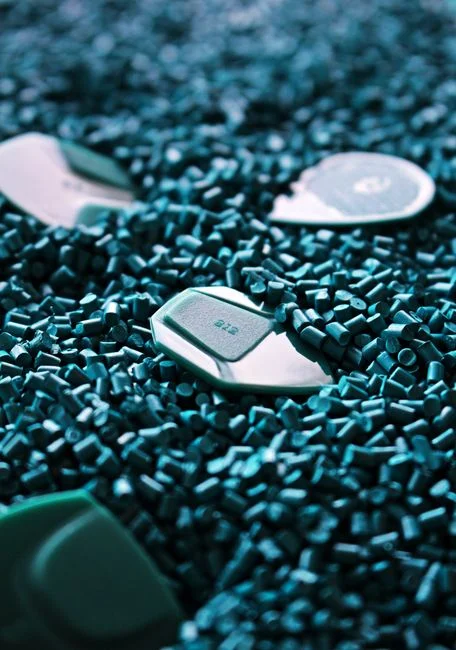
Influent variability is the single biggest driver of technology choice on a Mount Hope plastics line, and the top-ranking Fort Worth pages do not break it out by line type. The table below summarizes a typical Hampshire County plastics or rubber facility envelope, with values drawn from field surveys of injection-molding, extrusion, rubber-compounding, and polymer-recycling facilities.
| Parameter | Typical range | Behavior / implication |
|---|---|---|
| TSS | 200–1,200 mg/L | Polymer fines <50 μm overflow clarifier; MBR retains them on 0.1 μm cutoff |
| COD | 500–3,500 mg/L (spikes) | Polymerization washwater drives spikes; long MBR SRT mineralizes plasticizers |
| BOD | 250–1,800 mg/L | Pushes CAS F/M ratio; MBR handles at 0.05–0.15 d⁻¹ with high MLSS |
| O&G | 50–400 mg/L | Mold-release and slip agents; needs DAF pre-treatment before either train when >150 mg/L |
| Temperature | 25–45 °C | Upper end triggers CAS floc bulking; MBR is decoupled from settling |
| pH | 6.0–9.0 | Acid washwater from extrusion lines swings the equalization basin |
| Sub-50 μm fines fraction | 10–35% of TSS | Maps directly to residual-microplastics language in WV DEP DMRs |
| Residual monomers / stabilizers | Variable | Slow-growing nitrifiers required for amine catalysts; MBR SRT 20–60 d supports them |
Line-by-line behavior is the detail the Fort Worth pages miss. Injection molding produces molding-compound fines that float as well as sink, so a clarifier alone rarely retains them. Extrusion lines carry polymer dust and slip agents that arrive at the headworks already emulsified. Rubber compounding adds crumb in the 30–80 μm range plus zinc and amine accelerators that suppress nitrification at low SRT. Polymer recycling brings washwater COD spikes to 3,000+ mg/L and short bursts of surfactant that break floc. Polymer fines below 50 μm will overflow any clarifier regardless of floc conditioning, and that single fact biases the answer toward MBR for extrusion and recycling lines. A dissolved air flotation system ahead of either train is the standard recommendation when FOG exceeds 150 mg/L.
Operating Envelope: MLSS, SRT, F/M, and Footprint Side by Side
The numbers below are the design basis a Mount Hope engineer will paste into a process memo. They are the same operating parameters a procurement counterpart will use to size blowers, pumps, and sludge handling, so the side-by-side format matters.
| Parameter | CAS | MBR | Source / note |
|---|---|---|---|
| MLSS | 2,000–5,000 mg/L | 8,000–12,000 mg/L | HydropureWater product spec, 2026 |
| SRT | 5–15 d | 20–60 d | Mannina et al., 2020 |
| HRT | 6–12 h | 4–8 h | Typical aeration basin sizing |
| F/M | 0.2–0.5 d⁻¹ | 0.05–0.15 d⁻¹ | High-MLSS MBR runs low F/M at matched load |
| Footprint vs equivalent CAS | 1.0× (baseline) | 0.40–0.60× | DF series module rated at ~60% smaller |
| WAS yield (kg/kg COD removed) | 0.30–0.45 | 0.18–0.30 | 20–40% lower WAS at matched SRT |
| Effluent TSS target | 10–30 mg/L | <5 mg/L | Reuse-ready from a single step |
The 20–60 d SRT window is the lever that makes MBR the right call for amine catalyst residues from rubber compounding and for the slow-growing heterotrophs that mineralize plasticizers and phenol-type antioxidants. A 5–15 d CAS SRT does not retain those organisms. The 20–40% lower waste-activated-sludge volume at matched SRT (per HydropureWater field data, 2025-Q4) is a direct OPEX line on the downstream plate and frame filter press, where polymer-rich WAS dewateres poorly and hauling cost is the single largest sludge line item.
Effluent Quality: Microplastics, TSS, and Reuse Readiness
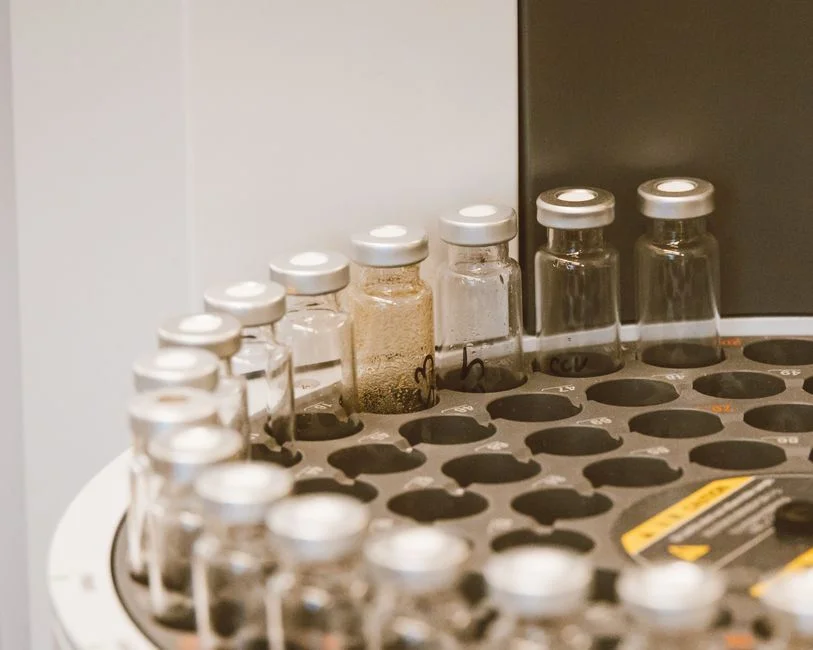
The microplastics tiebreaker is the plastics-industry-specific reason an MBR is worth a premium. MBR permeate runs approximately 0.4 MP/L versus approximately 1.0 MP/L for CAS (Lares et al., 2018, as cited in Mannina et al., 2020). No clarifier upgrade, no DAF polish step, and no sand filter add-on matches an absolute 0.1 μm membrane cutoff on sub-50 μm polymer fines and rubber crumb; the membrane retains those particles on physical size exclusion, not on floc behavior. For a Mount Hope plant whose DMR language is starting to mention residual plastics, that number alone is enough to bias the decision.
On conventional parameters, a properly operated submerged MBR delivers TSS under 5 mg/L, BOD under 5 mg/L, turbidity under 1 NTU, and a Silt Density Index typically below 3. The SDI figure is what makes MBR the default RO pre-treatment for industrial reuse, because RO membranes cannot be fed from a clarifier without additional media filtration (per HydropureWater product spec, 2026). CAS effluent typically needs tertiary filtration, sand filters, or a DAF polish step to reach reuse criteria, and that is a hidden CAPEX line that should be priced into any CAS baseline before declaring MBR "more expensive." A combined MBR-RO/NF train delivers more than 95% removal of pharmaceuticals and personal care products and approximately 90% COD/BOD removal (Eng, 2024). For a Mount Hope plant considering cooling-tower makeup, the MBR permeate generally meets conductivity, silica, and biological control targets with minor polishing ahead of the RO unit.
CAPEX, OPEX, and the 10-Year Ledger for a Mount Hope Retrofit
The 2026 turnkey CAPEX range for skid-integrated, EPC-scope plants runs $80–$220 per m³/d for CAS and $180–$420 per m³/d for MBR; OPEX lands at $0.10–$0.22/m³ for CAS and $0.18–$0.42/m³ for MBR (per HydropureWater 2026 engineering comparison). For a 50–500 m³/d Mount Hope plastics-line MBR retrofit on top of an existing CAS train, engineering estimates sit at roughly $350–$900 per m³/d of added MBR capacity, depending on cassette area, frame material (SS304 versus SS316), and CIP skid scope.
| Cost line | CAS (50–500 m³/d) | MBR (50–500 m³/d) | Notes |
|---|---|---|---|
| Turnkey CAPEX ($/m³/d) | $80–$220 | $180–$420 | Skid-integrated, EPC scope, 2026 |
| Retrofit delta on existing CAS ($/m³/d) | — | $350–$900 | Repurpose aeration basin, add cassettes |
| OPEX ($/m³) | $0.10–$0.22 | $0.18–$0.42 | Higher MBR energy for scour air and CIP |
| Membrane scour air share of MBR energy | — | 30–50% | Independent of biological oxygen demand |
| CIP frequency | — | Every 1–4 weeks | NaOCl 300–500 mg/L + citric/oxalic acid |
| Membrane replacement amortization | — | 5–8 years | PVDF flat sheet, per HydropureWater field data |
| WAS volume offset | Baseline | 20–40% lower | Direct haul savings on plate and frame dewatering |
| 10-year OPEX delta vs CAS | — | +15–30% | Offset partially by reuse and lower haul |
The long-run framing is the part procurement teams need to hear: Karim and Mark (2017) found MBR is the long-term optimum on a more than 67-year horizon because the initial CAPEX premium is amortized by sustained effluent quality, while Bertanza et al. (2017) showed CAS wins on pure OPEX over realistic 10–20 year plant horizons. A 2026 retrofit memo should sit closer to the Bertanza side and treat the Lares et al. microplastics number as the differentiator, not the carbon number (direct GHG is essentially a wash at 0.91 versus 0.85 kgCO₂eq/m³ per Mannina et al., 2020).
Decision Framework: When MBR Wins and When CAS Still Wins in Mount Hope
CAS still wins when the existing aeration basin has 8–10+ years of structural life, WV DEP effluent limits are moderate (TSS above 30 mg/L monthly average is acceptable), there is no water-reuse target, plot area is not constrained, and the influent microplastic load sits below approximately 1.0 MP/L. MBR wins when WV DEP permit language is tightening on residual microplastics or sub-50 μm TSS, the plant has a cooling-tower or scrubber makeup reuse target, available plot area is under roughly 400 m², or fines are visible in the clarifier overflow on a regular basis. The matrix below is the engineering call, sized to a Mount Hope retrofit, and it should be read alongside the 2026 Casa Grande plastics and rubber comparison and the broader aerobic vs anaerobic wastewater treatment decision framework for context on where each technology fits a 2027–2030 permit cycle.
| Site trigger | CAS + DAF polish | CAS + lamella polish | MBR cassette retrofit |
|---|---|---|---|
| Aeration basin life < 8 yr or constrained plot | Marginal | Marginal | Preferred |
| WV DEP TSS limit tightening toward 10 mg/L or residual MP language | Marginal | Insufficient | Preferred |
| Cooling-tower or scrubber reuse on 5-yr roadmap | Marginal | Insufficient | Preferred |
| Visible fines in clarifier overflow > 1× / month | Partial | Partial | Preferred |
| Moderate limits, > 10 yr basin life, no reuse target | Preferred | Acceptable | Over-spec |
| Footprint > 800 m² available, greenfield-style | Acceptable | Preferred | Over-spec |
For a tight 2026 CAPEX window at a Mount Hope facility with visible fines but no reuse target, the defensible call is CAS with a DAF ahead of it and a high-efficiency sedimentation tank polish step. For the same site with a 5-year cooling-tower reuse project on the roadmap, the defensible call is an MBR cassette retrofit that repurposes the existing aeration basin. The 1-line rule to put at the bottom of the CAPEX memo: choose the technology that the most binding 2027–2030 constraint forces, not the technology with the lowest sticker price.
Frequently Asked Questions
What is the 2026 turnkey CAPEX for MBR versus CAS on a Mount Hope plastics line?
For skid-integrated, EPC-scope plants, 2026 turnkey CAPEX runs $80–$220 per m³/d for CAS and $180–$420 per m³/d for MBR. For a 50–500 m³/d retrofit on top of an existing CAS train, the engineering estimate for added MBR capacity is $350–$900 per m³/d, depending on cassette area, frame material, and CIP scope (per HydropureWater 2026 engineering comparison).
Why does MBR win on microplastics when both systems run activated sludge?
Both systems run the same biology, but the membrane provides a defined 0.1 μm physical barrier that retains sub-50 μm polymer fines and 20 μm polymer fibers on size exclusion. A CAS clarifier depends on floc settling velocity, which cannot hold those particles at a 2.5 m/h overflow rate. Measured permeate counts run approximately 0.4 MP/L for MBR versus approximately 1.0 MP/L for CAS (Lares et al., 2018, via Mannina et al., 2020), and no DAF polish or sand-filter step matches an absolute membrane cutoff.
Can the MBR permeate feed an RO unit for cooling-tower reuse without extra clarification?
Yes. A submerged MBR typically delivers TSS under 5 mg/L, turbidity under 1 NTU, and a Silt Density Index below 3, which is the threshold for feeding RO membranes without additional clarification (per HydropureWater product spec, 2026). The combined MBR-RO train delivers more than 95% PPCP removal and roughly 90% COD/BOD removal, and the MBR permeate generally meets cooling-tower makeup conductivity, silica, and biological control targets with minor polishing.
What does a typical 2026 MBR retrofit look like at a Mount Hope plastics plant?
The common 2026 pattern is to repurpose the existing aeration basin as the membrane tank, decommission the secondary clarifier, and install an integrated MBR membrane bioreactor system with DF series PVDF flat sheet modules, a cassette rack, a CIP skid, and an upgraded blower inside the existing footprint. Expect a 40–60% smaller process footprint than an equivalent CAS train and roughly $350–$900 per m³/d of added MBR capacity for a 50–500 m³/d project.