What a Santa Fe Springs Chemical Plant Is Actually Choosing Between
For a Santa Fe Springs chemical plant in 2026, choose a DAF when the stream carries oils, greases, or slowly settling suspended solids — DAF typically removes 95% of FOG versus 70% for a clarifier (Ecologix 2026) — and choose a lamella clarifier when the load is heavy, fast-settling inorganic TSS where a 90% reduction is acceptable at lower chemical cost. Verify both selections against 40 CFR 414 (organic chemicals) or 40 CFR 415 (inorganic chemicals) and the LA County Sanitation Districts' local limits before final sizing.
A dissolved air flotation (DAF) unit injects microbubbles — typically 10–100 μm in diameter (Komline-Sanderson) — that attach to light particles, emulsified oils, and free FOG, lifting them to the surface where a top-mounted skimmer removes the float. A clarifier does the opposite: it lets gravity pull denser particles to the bottom of a tank, where a sludge pump or scraper removes the underflow. The DAF system is engineered for the first case; the HydropureWater lamella clarifier handles the second.
Komline-Sanderson states that DAF is "best applied to remove materials that normally settle slowly, persist by remaining in suspension, or have a tendency to float" — a description that maps directly onto the wash waters, reactor cleanouts, and batch dumps common in chemical manufacturing. Inclined-plate (lamella) clarifiers, by contrast, use stacked plates at 55–60° to achieve surface loading rates of 20–40 m/h, dramatically shrinking footprint versus a conventional clarifier. If the contaminant floats, float it; if it sinks, settle it.
Why Chemical Wastewater in Santa Fe Springs Is Its Own Decision
Santa Fe Springs hosts one of the densest concentrations of chemical manufacturers in Los Angeles County, and the receiving POTW for most of the city is the LA County Sanitation Districts' San Jose Creek Water Quality Control Plant, whose local limits are typically tighter than the federal categorical standards. The 2024–2026 industrial pretreatment program updates tightened monitoring for hexavalent chromium, sulfates, and total toxic organics, so any primary-treatment decision made in 2026 must be benchmarked against the current local discharge limitations letter, not a 2022 vendor brochure.
The federal framework comes from two U.S. EPA categorical pretreatment standards. 40 CFR Part 414 covers Organic Chemicals, Plastics, and Synthetic Fibers; 40 CFR Part 415 covers Inorganic Chemicals Manufacturing. The plant's SIC/NAICS subcategory — for example 414.40 or 415.130 — determines which pollutant ceilings apply (BOD, TSS, O&G, metals, pH). A plant mixing both organic and inorganic chemistries will often be subject to both parts and must meet the stricter of the two where they overlap.
Chemical streams rarely behave like a single textbook case. A typical Santa Fe Springs batch-formulation or specialty-chemical plant will see FOG or emulsified oils combined with heavy metals, high TDS, pH swings of 2–12 between batches, and intermittent slug discharges rather than steady flow. The DAF's chemical-conditioning flexibility — coagulant + flocculant + pH adjustment — absorbs that variability far better than a passive gravity clarifier (WesTech field guidance). A continuous neutralized metal-finishing rinse, however, is the lamella clarifier's ideal workload: heavy, fast-settling, low-oil. For a deeper pretreatment-context read, the chemical plant pretreatment compliance guide and the El Dorado chemicals wastewater DAF-vs-clarifier guide walk through comparable industrial cases.
Head-to-Head: DAF vs Clarifier on the Parameters That Matter
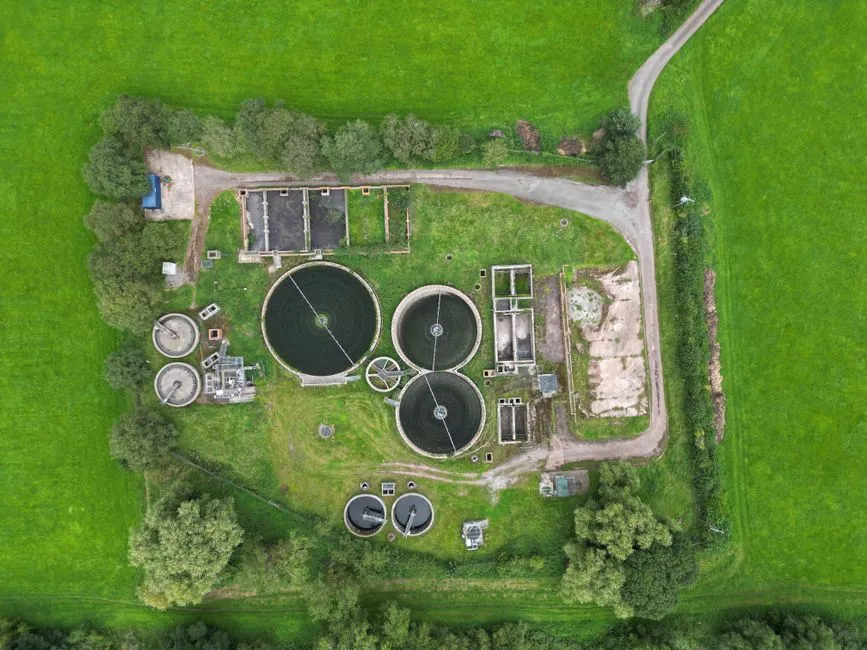
The table below summarizes the parameters that drive a CAPEX-grade decision. The "see pilot test" rows mark the variables no engineer should assume; those come from jar and on-site pilot work, not from a brochure.
| Parameter | DAF | Lamella Clarifier |
|---|---|---|
| Removal mechanism | Microbubble flotation of light/oily particles | Gravity settling of dense solids on inclined plates |
| Best for | FOG, emulsified oils, colloids, low-density TSS | Heavy inorganic TSS, metal hydroxides, precipitated salts |
| FOG removal efficiency | ~95% (Ecologix 2026, food-processing case) | ~70% (Ecologix 2026) |
| TSS removal efficiency | 85–95% on light/colloidal solids | ~90% on heavy mineral/inorganic solids (Ecologix 2026, mining case) |
| Footprint at same flow | Compact skid; moderate footprint | 4–8× smaller than a conventional clarifier (lamella 20–40 m/h loading) |
| Hydraulic retention time | 20–40 min typical | 60–120 min typical, shortened by plate spacing |
| Chemical demand | Coagulant + flocculant; pH-adjusted; higher dose | Polymer only; up to 30% lower than conventional clarifier |
| Utility demand | Compressed air + recycle pump + skimmer drive (Komline-Sanderson) | Sludge pump + skimmer drive only |
| CAPEX band | Higher; sized by flow + air system + materials of construction | Lower; mostly tankage and plates |
| OPEX band | Higher chemicals + compressed air + float handling | Lower chemical + pumping energy; sludge pumping dominates |
| Operator skill needed | Moderate; chemistry tuning required | Lower; mostly mechanical |
| Batch vs continuous suitability | Both — Komline confirms batch-mode operation | Best on continuous, steady flow |
| Actual FOG/TSS on your stream | See pilot test | See pilot test |
The 4–8× footprint advantage for the lamella clarifier versus a conventional settling tank is decisive in space-constrained Santa Fe Springs plants where indoor retrofit is the trigger for the whole project. The DAF's higher CAPEX is usually recovered in FOG-heavy streams through reduced sewer surcharges and lower downstream biological-loading penalties. Sizing for a DAF system versus a HydropureWater lamella clarifier is the practical expression of those numbers.
CAPEX, OPEX, and Payback: The 2026 Numbers a Buyer Needs
CAPEX in 2026 scales primarily with three drivers: design flow (typically 5–50 m³/h for skid units in this segment), influent loading (FOG and TSS concentrations set tank volume and air system size), and materials of construction (304/316 stainless for corrosive chemical streams adds a measurable premium over carbon steel with lining). For procurement-grade pricing, request a quote tied to your flow, loading, and chemistry — published list prices for either technology are not reliable indicators of project cost.
OPEX tells a clearer story. DAF OPEX is dominated by coagulant and flocculant dose, compressed-air energy for the saturator and recycle pump, and float handling downstream. Clarifier OPEX is dominated by polymer dose and sludge pumping energy. The lamella design from HydropureWater can cut chemical consumption by up to 30% versus a conventional clarifier, which directly reduces the largest variable OPEX line. On FOG-heavy streams, the incremental DAF CAPEX is typically paid back in 18–36 months through lower sewer surcharges, lower FOG hauling costs, and reduced load on downstream biological treatment; on heavy-inorganic streams with low oil, a lamella clarifier is usually the lower-total-cost answer.
Pilot and jar testing is the standard pre-spec step. Both WesTech and Komline-Sanderson explicitly offer rental pilot units and on-site jar testing, and the test cost is normally a small fraction of the equipment CAPEX. Skipping it is the single most expensive mistake buyers make, because the "see pilot test" cells in the comparison table are where the project either holds schedule or slips six months. Pair the primary unit with a PLC-controlled coagulant and flocculant dosing system and a plate-and-frame filter press for float or underflow sludge to close the OPEX loop on solids handling.
Decision Framework: Pick the Right Primary Treatment in Five Steps
A defensible 2026 selection runs through five repeatable steps. Document each one — auditors will ask for the file.
| Step | Action | Output |
|---|---|---|
| 1 | Pull 40 CFR 414 or 415 subcategory limits and current LA County Sanitation Districts local limits for your SIC/NAICS code | Numeric effluent targets (BOD, TSS, O&G, metals, pH) |
| 2 | Characterize a 24-hour composite wastewater — FOG, TSS, metals, pH range, temperature, flow variability, batch vs continuous | Design basis memo with peak and average loading |
| 3 | Run a jar test (coagulant + flocculant screen) and, if shortlisted, a DAF pilot (WesTech and Komline both rent units) | Pilot report with removal efficiencies and chemical doses |
| 4 | Score the two options on FOG removal, TSS removal, footprint, chemical use, operator skill, CAPEX, OPEX | Weighted scoring matrix |
| 5 | Decide DAF, clarifier, or hybrid (DAF for oil/emulsion removal, lamella clarifier for heavy-solids polishing) | Signed equipment specification |
Hybrid DAF + clarifier systems are explicitly recommended by Ecologix (2026) for complex streams, and that guidance fits a Santa Fe Springs chemical plant almost exactly: DAF first to lift FOG and light colloids, then a lamella clarifier to polish the heavy-inorganic underflow that the DAF pass leaves behind. For a deeper look at the cost-efficiency side of the same logic, the DAF vs sedimentation engineering comparison lays out the numbers in more detail.
2026 Compliance Checklist Before You Sign the PO
Before releasing the purchase order, work through this 2026-specific compliance to-do list. The San Jose Creek WQCP pretreatment audit cycle for 2026 has already begun, and incomplete documentation is the most common cause of a notice of violation.
- Confirm the applicable 40 CFR Part — 414 for organic chemicals, 415 for inorganic — and identify the subcategory (e.g., 414.40, 415.130) that sets the effluent ceiling for your operations.
- Request the latest LA County Sanitation Districts local discharge limitations letter; local limits are typically stricter than the federal categorical standards and are updated periodically through 2026.
- Document the pilot or jar test report, the design basis (flow, loading, materials of construction), and the operating SOP. Auditors will request these in the first information request.
- Plan downstream solids handling: a plate-and-frame filter press for float or underflow sludge sized to your dry-solids throughput, fed by a rotary mechanical bar screen on the inlet to protect downstream equipment.
- Schedule the first compliance self-audit for the quarter after commissioning, sampling for the same parameters your local limits letter specifies, and verify the chosen technology meets its design removal efficiency in real operating conditions.
Frequently Asked Questions
Which technology removes more FOG from chemical
Frequently Asked Questions
Is a DAF or a clarifier better for chemical plant wastewater in Santa Fe Springs?
For chemical wastewater in Santa Fe Springs, the choice depends on the density and particle size of the contaminants. Dissolved Air Flotation (DAF) is generally superior for chemical waste streams containing oils, fats, grease, and low-density suspended solids that do not settle readily. If the wastewater contains heavy inorganic precipitates or high-density solids, a clarifier is typically more effective for gravity-based sedimentation.
Local discharge requirements set by the Sanitation Districts of Los Angeles County often mandate strict limits on Oil and Grease (O&G). Because DAF units utilize micro-bubbles to float light contaminants to the surface, they are often preferred in industrial zones to meet stringent pretreatment standards before discharging to the local sewer infrastructure.
What removal efficiency does a DAF achieve on oils and grease compared to a clarifier?
A properly operated DAF system typically achieves 85% to 95% removal efficiency for emulsified oils and grease. In contrast, a conventional clarifier often struggles with these contaminants, typically achieving only 30% to 50% removal because oils and grease often have a specific gravity lower than water, preventing them from settling by gravity.
To reach these high efficiency levels, DAF units require precise chemical coagulation and flocculation upstream. When optimized with polymer dosing, DAF systems can reduce influent O&G concentrations from 500 mg/L to below 50 mg/L, whereas a clarifier would require significant chemical demulsification and potentially secondary filtration to reach similar effluent quality.
Which EPA regulation applies to organic vs inorganic chemical manufacturers — 40 CFR 414 or 415?
40 CFR 414 is the regulation that applies to the Organic Chemicals, Plastics, and Synthetic Fibers (OCPSF) category. This includes manufacturing processes for organic chemicals, resins, and fibers, which often produce complex wastewater streams requiring advanced separation technologies like DAF.
40 CFR 415 applies to the Inorganic Chemicals Manufacturing Point Source Category. This covers facilities producing inorganic substances such as chlor-alkali, pigments, and inorganic salts. These facilities often deal with heavy metal precipitation and solids loading that typically necessitate clarifiers or lamella settlers for effective primary treatment.
Can a DAF and a clarifier be used together in a chemical plant treatment train?
Yes, a DAF and a clarifier are frequently used in series as part of a robust multi-stage treatment train. In this configuration, the clarifier is typically placed first to remove heavy, settleable inorganic solids and large debris, which protects downstream equipment from abrasion and clogging.
The DAF unit follows the clarifier to handle the remaining lighter fractions, such as emulsified oils, surfactants, and fine suspended solids. This combination allows the plant to handle a wider range of pollutant densities and ensures the final effluent consistently meets regulatory discharge limits, even during fluctuations in chemical wastewater composition.
What is the typical CAPEX and OPEX difference between a DAF and a lamella clarifier in 2026?
In 2026, a lamella clarifier generally has a lower CAPEX than a DAF unit of equivalent capacity due to the lack of pressurized air systems, saturation pumps, and complex recycle loops required by DAF technology. However, the footprint of a DAF is significantly smaller, which can reduce site preparation and construction costs in space-constrained industrial areas like Santa Fe Springs.
Regarding OPEX, DAF units are more expensive to operate, typically costing 30% to 50% more than lamella clarifiers due to high energy consumption by air compressors and saturation pumps, as well as the ongoing cost of coagulants and flocculants. Conversely, lamella clarifiers have very low energy demands but may incur higher sludge handling costs if the sludge dewatering characteristics are inferior to those produced by a DAF float.