
Why South Gate Petroleum Bulk Terminals Are Re-evaluating Oil/Water Separation in 2026
South Gate sits inside the Los Angeles Sanitation Districts (LASAN) service area, where petroleum bulk terminals, lube-oil blenders, and small refineries discharge under an industrial pretreatment permit enforced jointly with the Los Angeles RWQCB (Region 4). Legacy API separators and plain gravity clarifiers built in the 1970s–80s were sized for a different influent — predominantly free oil from a single crude slate with modest throughput. In 2026, those same units are failing on emulsified oil and sheen limits because the wastewater profile has shifted: biofuel blending introduces stabilizers that resist coalescence, modern crude slates carry more naphthenic acids, and rail-to-terminal throughput along the LA River corridor delivers slug loads that scour clarifier blankets. The academic literature has moved with the problem: combined dissolved air flotation (DAF) followed by modified moving-bed biofilm reactors (MMBBR) is the active research direction for oily wastewater (Elsevier/SSRN, 2024), which signals a clear industry shift from clarifier-only trains to flotation-led trains. The 2026 decision question for a South Gate plant engineer is therefore no longer "API separator or nothing" but rather which primary step — DAF, clarifier, or a hybrid — actually holds the line on 40 CFR Part 419 pretreatment limits under real influent variability.
DAF vs. Clarifier: How Each Technology Actually Treats Oily Wastewater
A dissolved air flotation system pressurizes a recycle stream with air in a saturation vessel; when that stream is released through a pressure-relief valve at atmospheric pressure, the dissolved air comes out of solution as micro-bubbles (typically 10–100 µm) that attach to oil droplets and float them to the skim surface, where a mechanical scraper removes the floated layer (per ClearStream's DAF mechanism description). A gravity clarifier relies on Stokes-law settling of heavier solids to a sludge blanket at the bottom of a basin, with limited ability to capture oil droplets below roughly 60 µm or with specific gravity close to water. On the four dimensions that matter for petroleum service — free oil capture, emulsified oil capture, TSS removal, and footprint — the two technologies behave very differently.
The Ecologix benchmark for the same high-FOG stream is 95% oil and grease removal for a DAF versus 70% for a clarifier, while a clarifier on a heavy-sediment mining stream delivered 90% TSS reduction at lower cost (Ecologix, 2026 update). Neither unit is universally superior; the winner depends on which contaminant dominates the influent. Rectangular DAFs ship fully shop-assembled and can include integral coagulation and flocculation chambers, which gives them a footprint advantage over large concrete clarifier basins on space-constrained retrofits (per ClearStream).
| Parameter | Dissolved Air Flotation (DAF) | Gravity Clarifier |
|---|---|---|
| Primary mechanism | Micro-bubble attachment floats oil & light solids to surface | Gravity settling of heavy solids to sludge blanket |
| Free oil removal | ~95% (Ecologix, 2026) | ~70% on same high-FOG stream (Ecologix, 2026) |
| Emulsified oil capture | Effective for droplets > ~10–20 µm with chemical aid | Poor; droplets < 60 µm generally pass through |
| Heavy TSS removal | Effective for TSS up to ~1% with proper floc | 90% on heavy-sediment streams (Ecologix, 2026) |
| Hydraulic footprint | Compact rectangular unit, integral coag/floc chambers | Large concrete basin (10–12 m dia typical for 25 m³/h) |
| Best-fit wastewater | Free & emulsified oil, FOG, light TSS | Heavy sediment, low FOG, mine drainage |
Petroleum Bulk Wastewater Characteristics That Drive the Decision
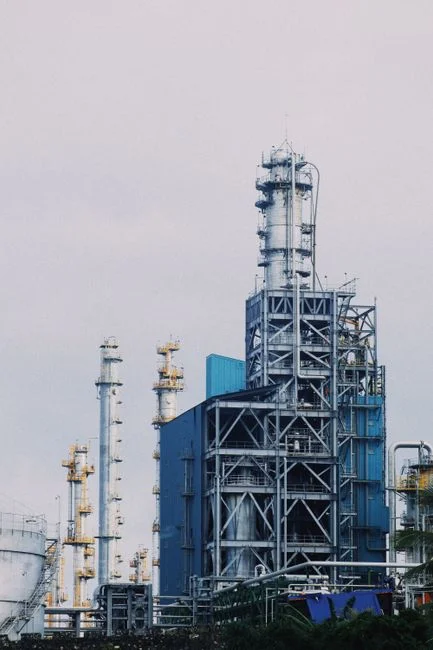
South Gate petroleum bulk terminals and small refineries generate a wastewater envelope that sits well outside the municipal average. Typical operating ranges drawn from refinery and produced-water characterization: free oil 50–500 mg/L, emulsified oil 100–1,000 mg/L, TSS 100–800 mg/L, COD 300–2,000 mg/L, and sulfides 1–20 mg/L (per the Ecologix oil & gas wastewater characterization, 2026). Within that envelope, emulsified oil is the disqualifier for a stand-alone clarifier: droplets smaller than 20 µm and chemical stabilizers introduced by biofuel blending prevent gravity settling regardless of retention time.
Bulk terminals that unload via rail also see slug loads — a full tank truck of hydrocarbon can arrive in minutes — and a DAF responds inside one hydraulic residence time, while a clarifier's sludge blanket can be scoured out, sending a sheen straight to the sewer. Produced water remains the largest waste stream in oil and gas (per Ecologix), and the same hydraulic principle applies: a primary separation step must hold up under both steady-state and slug conditions before any downstream reuse or polishing train can be sized with confidence.
| Parameter | Petroleum bulk terminal / refinery range (typical) | 40 CFR Part 419 daily maximum (refinery category) |
|---|---|---|
| Free oil | 50–500 mg/L | Counted within total O&G |
| Emulsified oil (contributes to O&G) | 100–1,000 mg/L | 100 mg/L O&G daily max |
| Total suspended solids (TSS) | 100–800 mg/L | 30 mg/L daily max |
| Chemical oxygen demand (COD) | 300–2,000 mg/L | Site-specific (varies by subcategory) |
| Sulfides | 1–20 mg/L | Site-specific; LASAN may impose stricter local cap |
2026 Cost, Footprint, and Operating Comparison for South Gate Plants
Packaged DAF systems in 2026 run roughly $80,000–$300,000 USD for 10–50 m³/h hydraulic capacity, scaling with stainless versus carbon-steel construction and whether integral coagulation/flocculation chambers are included; the HydropureWater dissolved air flotation system spans 4–300 m³/h across 13 models for sites at either end of that range. An equivalent-capacity clarifier typically costs 20–40% less on the unit itself, but the real South Gate cost driver is civil work: a concrete basin, sludge hopper, and bridge scraper add significantly to installed cost on a tight industrial land parcel.
Operating expense flips the picture. A DAF runs 20–35% higher than a clarifier on the same hydraulic load because it consumes power for an air compressor and recycle pump and consumes polymer for emulsion breaking (typical polymer dose is described qualitatively in the research as a few mg/L for oily streams, with no single vendor number published). A clarifier saves on chemicals but spends on sludge hauling and basin maintenance. On footprint, a rectangular DAF with an integral coag/floc chamber fits a roughly 4 m × 8 m pad for ~25 m³/h, while an equivalent clarifier needs a 10–12 m diameter concrete tank — a major retrofit constraint inside an existing South Gate terminal. Ecologix (2026) frames the trade directly: DAF systems are ideal for removing oils, greases, and fine solids in compact, high-efficiency setups, while clarifiers suit heavy solids and cost-conscious operations.
| Cost / footprint dimension | DAF (packaged, 10–50 m³/h) | Gravity clarifier (equivalent hydraulic load) |
|---|---|---|
| 2026 CAPEX range (USD) | ~$80,000–$300,000 | ~20–40% lower on unit; civil work closes the gap |
| OPEX vs. each other | ~20–35% higher (air compressor, recycle pump, polymer) | Lower chemical cost; higher sludge-hauling cost |
| Footprint for ~25 m³/h | ~4 m × 8 m rectangular pad, integral coag/floc | 10–12 m dia concrete tank plus sludge hopper |
| Civil / permitting complexity | Lower; shop-assembled skid | Higher; new concrete basin, longer permit cycle |
| Best fit | Free & emulsified oil, FOG, tight sites | Heavy sediment, low FOG, greenfield sites |
Compliance Check: 40 CFR Part 419, NPDES, and the LA Sanitation Districts
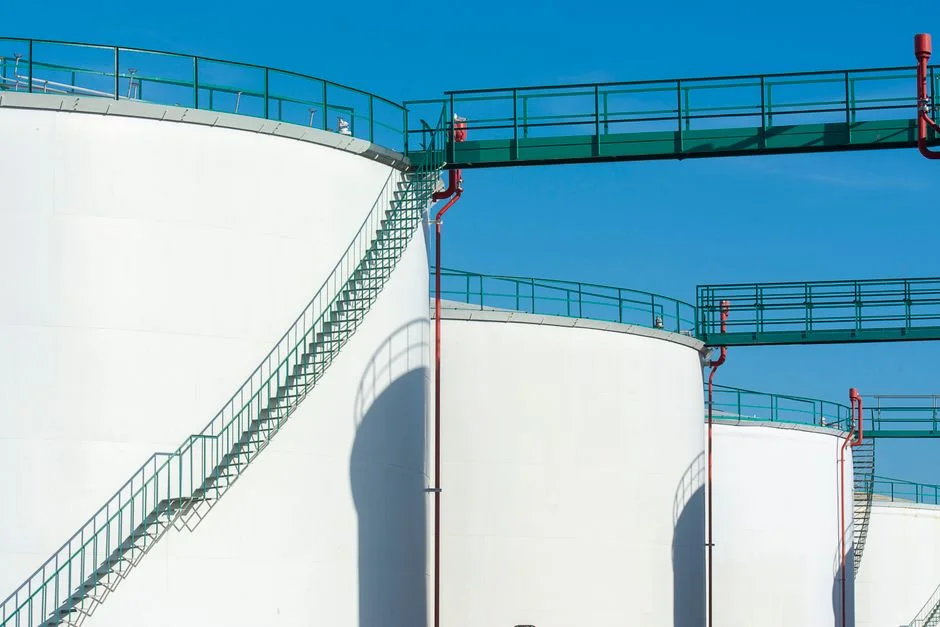
40 CFR Part 419 — the petroleum refining point-source category — sets the federal pretreatment envelope that any South Gate terminal discharging to a POTW must hit. The category's daily maximum limits for oil and grease sit at 100 mg/L and for total suspended solids at 30 mg/L; refineries and bulk terminals should verify the current Subpart text at 40 CFR 419 because subcategory limits (subpart A through N) vary by process. The LA Sanitation Districts' industrial waste ordinance layers local limits on top of 40 CFR 419, and 2026 inspector sampling in the South Gate area is composite-based — not the older free-oil grab — which means a clarifier-only train that historically passed on a sheen-free bucket sample can fail a 24-hour composite for emulsified oil.
This is the single most common compliance gap cited in recent pretreatment enforcement actions: a unit that is "in spec" on a free-oil basis but ships emulsified oil downstream, where it breaks out as a sheen in the receiving POTW. The practical response is to document influent characterization and run bench-scale jar tests on actual terminal wastewater before sizing any DAF; generic refinery data overstates free oil and understates the chemical oxygen demand of stabilizer-laden biofuel-blend streams. A 2026 pretreatment compliance program for petroleum plants along this corridor should treat the bench test as a permit-readiness deliverable, not an optional step; the approach used in 2026 pretreatment compliance for petroleum plants is a useful reference for the documentation structure.
The Hybrid That Actually Works: DAF Primary + Lamella Clarifier Polish
The configuration most South Gate refineries and bulk terminals actually run in 2026 is a hybrid train: rotary bar screen → equalization → DAF as the primary oil and TSS step (80–90% O&G removal in well-tuned service) → lamella clarifier as a polish for residual TSS and pin floc → disinfection or reverse osmosis depending on whether the target is sewer discharge or cooling-tower reuse. The DAF does the work that a clarifier physically cannot — capturing emulsified oil and floating it before it can break out as sheen downstream — and the lamella polish takes the DAF effluent from a comfortably-passing value to one with margin against a 30 mg/L TSS daily maximum.
The next research step on the reuse side is the DAF + MMBBR train documented in the Elsevier/SSRN 2024 oily-wastewater study, which is relevant for sites targeting refinery cooling-tower make-up or frac-water blending rather than simple sewer discharge. For a South Gate bulk terminal whose 2026 priority is a clean sewer permit, the DAF + lamella polish is the safest specification; a stand-alone clarifier is acceptable only for sidestreams with primarily sediment and minimal emulsified oil, such as a tank-farm stormwater run — not an active loading rack. The polish hardware is well represented by the HydropureWater high-efficiency lamella clarifier (20–40 m/h surface loading, up to 30% chemical reduction versus a conventional basin), and the upstream screen by the HydropureWater rotary mechanical bar screen.
Decision Framework: DAF, Clarifier, or Hybrid for Your South Gate Plant
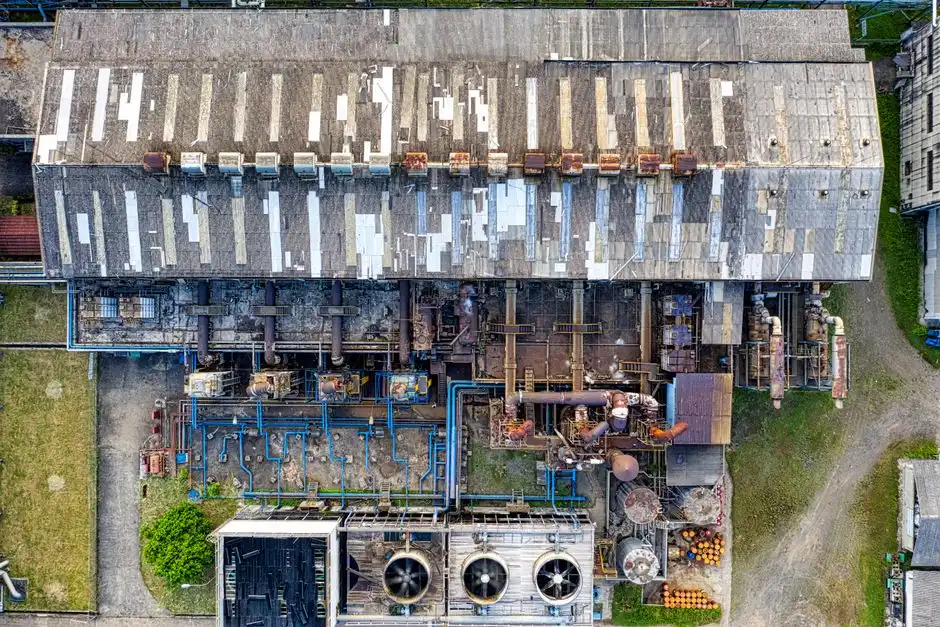
Translate the article into an actionable rule. If free oil and emulsified oil are both above 100 mg/L and TSS is below 500 mg/L, spec a DAF as primary and a lamella clarifier as polish — that is the default 2026 South Gate train. If TSS exceeds 800 mg/L with low emulsified oil (a tank-farm stormwater or firewater test sidestream), a clarifier is acceptable as primary, and a DAF is added only if sheen recurs in the effluent. If the project is a space-constrained retrofit inside an existing terminal, a rectangular shop-assembled DAF with integral coag/floc chambers is almost always faster to permit and install than a new concrete clarifier basin (per ClearStream's rectangular-DAF description). If the project is targeting water reuse for refinery cooling or frac-water blending, size the DAF for 50% turndown and add lamella polishing, with MBR or RO downstream.
For plants still running an API separator from the 1970s, the upgrade path in 2026 is rarely "replace with a single unit" — it is "add a DAF upstream of the existing basin, then add a lamella polish" — and that staged retrofit keeps the terminal on permit during construction. A useful cross-check is how comparable facilities in nearby jurisdictions made the same call, including the analysis in DAF vs clarifier for petroleum wastewater in Newport and the Gulf-coast perspective in DAF vs clarifier for petroleum wastewater in Mobile.
| Influent / site condition | Recommended primary | Recommended polish | Rationale |
|---|---|---|---|
| Free & emulsified oil > 100 mg/L, TSS < 500 mg/L | DAF | Lamella clarifier | Default 2026 South Gate spec; meets 40 CFR 419 with margin |
| TSS > 800 mg/L, low emulsified oil (stormwater / firewater) | Gravity clarifier | DAF only if sheen recurs | Clarifier handles sediment economically; DAF added reactively |
| Space-constrained retrofit, existing concrete basin | Rectangular shop-assembled DAF | Lamella or reuse existing basin | Faster permit cycle; integral coag/floc chambers (ClearStream) |
| Water-reuse target (cooling tower, frac blending) | DAF sized for 50% turndown | Lamella → MBR / RO | Aligns with DAF + MMBBR research direction (Elsevier/SSRN, 2024) |
Frequently Asked Questions
Can a gravity clarifier replace a DAF in petroleum service?
No, not where emulsified oil is a meaningful fraction of the influent. A clarifier physically cannot capture oil droplets below ~60 µm in size, and biofuel-blend stabilizers keep those droplets dispersed. A stand-alone clarifier is acceptable only for sediment-dominated sidestreams such as tank-farm stormwater, where emulsified oil is minimal and TSS drives the design.
How much does a DAF system cost in 2026?
Packaged DAF units run roughly $80,000–$300,000 USD in 2026 for 10–50 m³/h hydraulic capacity, scaling with stainless versus carbon-steel construction and the inclusion of integral coagulation and flocculation chambers. The HydropureWater DAF line covers 4–300 m³/h across 13 models for plants at either end of that capacity range. Civil work, polymer dosing, and downstream dewatering are separate line items.
Does a DAF meet 40 CFR Part 419 oil and grease limits by itself?
For most South Gate petroleum bulk terminals, yes — a well-tuned DAF at ~95% O&G removal on a 50–500 mg/L free-oil and 100–1,000 mg/L emulsified-oil envelope will land comfortably under the 100 mg/L daily maximum. A lamella clarifier polish is still recommended for margin, particularly against the 30 mg/L TSS daily maximum, and the HydropureWater high-efficiency lamella clarifier is a standard polish stage.
How often does a DAF need sludge removal?
Skimmed oil and floated solids are typically removed continuously by the surface skimmer, with a thicker underflow sludge purged daily to weekly depending on hydraulic load and upstream equalization. Downstream dewatering is commonly handled by a plate-and-frame filter press such as the HydropureWater plate-and-frame filter press for cake dryness above 35% solids.
What chemical program does a DAF need for petroleum wastewater?
An emulsion-breaking polymer is the standard chemistry, dosed to break the biofuel and surfactant stabilizers before the air-bubble attachment step. Polymer selection and dose should be confirmed by jar test on actual terminal wastewater rather than supplier defaults. A packaged polymer make-up and dosing skid, such as the HydropureWater automatic chemical dosing skid, keeps the program reproducible and audit-ready for 2026 LA Sanitation Districts inspections.