The Compliance Letter and the 40 CFR Part 403 Chain That Drives Every Permit Number
The compliance letter arrives without warning: a Notice of Violation citing a hexane-extractable material (HEM) exceedance, a 30-day cure window, and a footnote flagging Significant Noncompliance (SNC) if the next two reports miss the mark. That letter is arriving at more U.S. petroleum bulk plants in 2026 than at any point in the last decade, driven by aging POTW infrastructure, more aggressive EPA pretreatment audits under the 2024–2026 National Pretreatment Program review cycle, and intensifying water-reuse demand in water-stressed basins (per ACS ES&T Engineering, 2021). The citation chain a terminal engineer hands a regulator runs Clean Water Act of 1972 (33 U.S.C. § 1251 et seq.) → EPA General Pretreatment Regulations at 40 CFR Part 403 → POTW-adopted Technically-Based Local Limits (TBLL) derived using the EPA's Maximum Allowable Headworks Loading (MAHL) method, as documented in the 2020 St. Joseph, MO TBLL evaluation by Black & Veatch (final report adopted 2020-12).
Under 40 CFR Part 403, any discharger that meets the Industrial User (IU) criteria — facilities that discharge process wastewater to a POTW, or that contribute ≥25,000 gpd of non-domestic waste — is an IU. Most petroleum bulk plants fall under noncategorical Significant Industrial User (SIU) status once the POTW issues a permit; the 25,000 gpd threshold is the trigger. Four MAHL inputs drive every local limit a terminal sees: POTW NPDES permit limits on the receiving stream, state water quality standards, Part 503 biosolids numerical limits on metals and organics, and NIOSH/ecosystem worker protection factors. The POTW converts each MAHL into a Maximum Allowable Industrial Loading (MAIL), allocates mass to each IU, and prints the resulting daily maximum and monthly average numbers on the discharge permit. A SNC can carry administrative orders, surcharges, mandated zero-discharge status, or permit termination — so the equipment decision made this quarter is the enforcement decision.
What the Permit Actually Says: HEM, TSS, BTEX, and TPH as Lead Parameters
Hexane Extractable Material is the federal O&G surrogate per 40 CFR § 401.16, measured by EPA Method 1664A (n-hexane extraction), and is what most 2026 permits cite as "O&G." Typical ceilings on a Sardis-area petroleum discharge permit in 2026 are 100–200 mg/L HEM as a daily maximum, ~250 mg/L TSS, and BTEX (benzene, toluene, ethylbenzene, xylene) plus total petroleum hydrocarbons (TPH) sized to the local MAHL allocation. The analytical surrogate matters as much as the number on the page — the n-hexane extraction step in Method 1664A is what defines what the permit counts as oil.
Engineers should treat benzene and TPH as the lead parameters during permit negotiation, because the MAHL each generates often constrains daily flow more than O&G does. Water-reuse POTWs and stressed basins push daily maximum HEM toward 50 mg/L; the polish step then moves from biological (MBBR) to adsorption (GAC) to hit <20 mg/L in a reuse loop. The federal floor a local limit cannot relax sits at 40 CFR 403.5(b)(6): petroleum oil, nonbiodegradable cutting oil, or products of mineral oil origin in amounts that will cause interference or pass-through — a prohibition a terminal near Sardis can be cited under even if the HEM number on the permit looks compliant. For comparison, the Hillview, KY code (Ord. 2003-08, passed 2004-06-21) sets a 50 mg/L ceiling on petroleum oil/mineral-origin waste at the point of discharge to the municipal sewer.
| Parameter | Federal definition | 2026 typical range (Sardis-area permit) | Analytical method |
|---|---|---|---|
| HEM (reported as "O&G") | 40 CFR § 401.16; n-hexane extractable | 100–200 mg/L daily max; 50 mg/L in reuse basins | EPA Method 1664A |
| TSS | Total suspended solids, dried at 103–105 °C | ~250 mg/L daily max | EPA Method 160.2 / SM 2540D |
| Benzene | BTEX component; carcinogen | Set by local MAHL; often sub-mg/L | EPA Method 624 / 8260 |
| TPH | Total petroleum hydrocarbons (C8–C40 range band) | Set by local MAHL allocation | EPA Method 8015 (GC/FID) |
| pH | 40 CFR 403.5(b)(2) floor at 5.0 | 6.5–7.5 ahead of DAF chemistry | SM 4500-H⁺ |
The Four-Stage Pretreatment Train and Why the Order Is Non-Negotiable
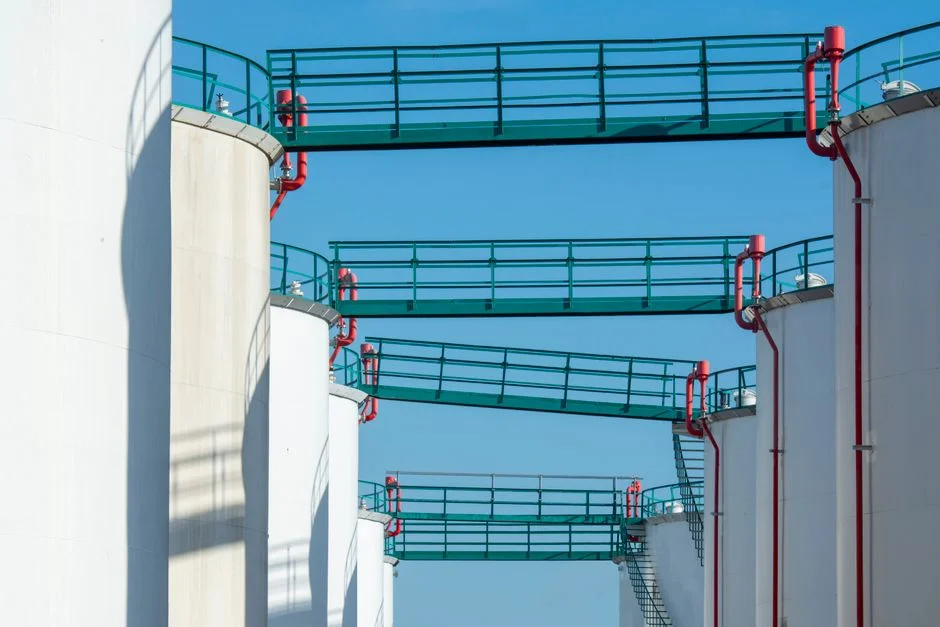
A bulk plant pretreatment train has four stages, and the order is non-negotiable. Stage 1 is source segregation: covered dump valves, segregated laterals for product-handling pads, and dedicated oil/water sewering on truck loading islands. This is the cheapest control available, reducing the volume hitting the treatment train by 40–70% in field retrofits (HydropureWater field data, 2025–2026) and converting most of the remaining flow from a design problem into a design choice. It also keeps hydrocarbon-contaminated streams out of clean stormwater, avoiding EPA Multi-Sector General Permit (MSGP) thresholds for stormwater contact.
Stage 2 is primary oil/water separation: an API gravity separator, a CPI corrugated plate interceptor, or a plate/multimedia coalescer. These units handle the free-oil fraction down to ~60–150 µm droplets; a CPI with 1–2 inch plate spacing and ~45° corrugation is the standard reference design. Stage 3 is emulsified-oil polishing with a Dissolved Air Flotation (DAF) system, where micro-bubbles generated at 60–90 psig float oil droplets down to roughly 10–25 µm. Chemistry closes the gap: pH 6.5–7.5 ahead of the DAF and a 50–200 mg/L coagulant or demulsifier dose delivered through an automatic chemical dosing system is what unlocks residual <50 mg/L HEM. Stage 4 — biological (MBBR, activated sludge) or adsorption (granular activated carbon) — is applied only where the local limit demands ammonia, sulfide, or dissolved hydrocarbon reductions a physical train cannot deliver.
The principal waste streams a bulk plant must feed into this train are tank-bottom water (free oil plus sludge), API/coalescer dumps (slug of free oil), truck and rail loading drip (free oil), wash rack (emulsified, sub-50 µm with surfactants), hydrostatic test water, and stormwater contacting product-handling areas. Each stream carries a different droplet-size distribution, which is why a single-technology approach fails — a CPI alone cannot break emulsions, and a DAF alone is overwhelmed by a slug of free oil during a coalescer dump. Engineers designing a 2026 retrofit near Sardis should also review How Petroleum Plants Near Kalispell Meet 2026 Pretreatment Limits and the regional reference How Petroleum Plants Near Hoquiam Meet Pretreatment Limits (2026 Guide) for parallel permit environments.
Choosing the Primary Separator: API, CPI, Coalescer, and Where DAF Fits
The four technologies — API gravity separator, CPI corrugated plate interceptor, plate or multimedia coalescer, and DAF — sit in different droplet-size and hydraulic-loading bands and are not interchangeable. The table below maps droplet-size cutoff, surface loading, strengths, and limitations side by side; the numbers an engineer needs to defend a selection are surface loading rate (gpm/ft²) and the air-to-solids ratio (ASR) for DAF, defined as the mass of dissolved air released per unit of solids-plus-oil load, with a 20–30% safety margin standard practice to absorb slug loads.
| Technology | Droplet-size cutoff | Surface loading | Strengths | Limitations | Ideal fit |
|---|---|---|---|---|---|
| API gravity separator | ≥150 µm (free oil) | ≤0.5 gpm/ft² (large footprint) | Simple, no chemicals, handles slugs | Cannot break emulsions; large footprint | Refinery ballast; large flow swings |
| CPI (corrugated plate interceptor) | ≥60 µm | 1–2 gpm/ft² | Compact; standard reference design | Cannot break emulsions; sensitive to turbulence | High-throughput terminal; large flow swings |
| Coalescer (plate or multimedia) | ≥20–30 µm | 2–5 gpm/ft² | Compact; drops droplet size ahead of DAF | Media replacement 1–3 yr; higher O&M | Truck-loading rack with emulsified oils; pre-DAF |
| DAF (Dissolved Air Flotation) | 10–25 µm (emulsified/colloidal) | 2–5 gpm/ft²; ASR 0.02–0.05 | Handles emulsions; polished effluent | Slug-sensitive without upstream primary; needs air saturation system | Polishing stage; sites with strict <50 mg/L needs |
Field guidance (HydropureWater field data, 2026) is unambiguous on the DAF slug-load failure mode: free oil from coalescer dumps and tank drops blankets the micro-bubbles and crashes the air-to-solids ratio, so a Dissolved Air Flotation (DAF) system deployed without a primary gravity stage fails under slug loads. A CPI alone rarely meets a 100 mg/L HEM limit on emulsified wash-rack water — it removes free oil efficiently but does not address sub-60 µm droplets. The robust path for a petroleum bulk plant is CPI or API as primary, DAF as the emulsified-oil polisher, sized with a 20–30% safety margin on both ASR and hydraulic loading. Undersizing surface hydraulic loading is the most common cause of carryover in field retrofits, so the design report should reference the manufacturer's confirmed droplet-size curve rather than a generic number. For worked examples in similar basins, see How Petroleum Plants Near Lynchburg Meet 2026 Pretreatment Limits.
Three Numbers That Make a Pretreatment Design Defensible
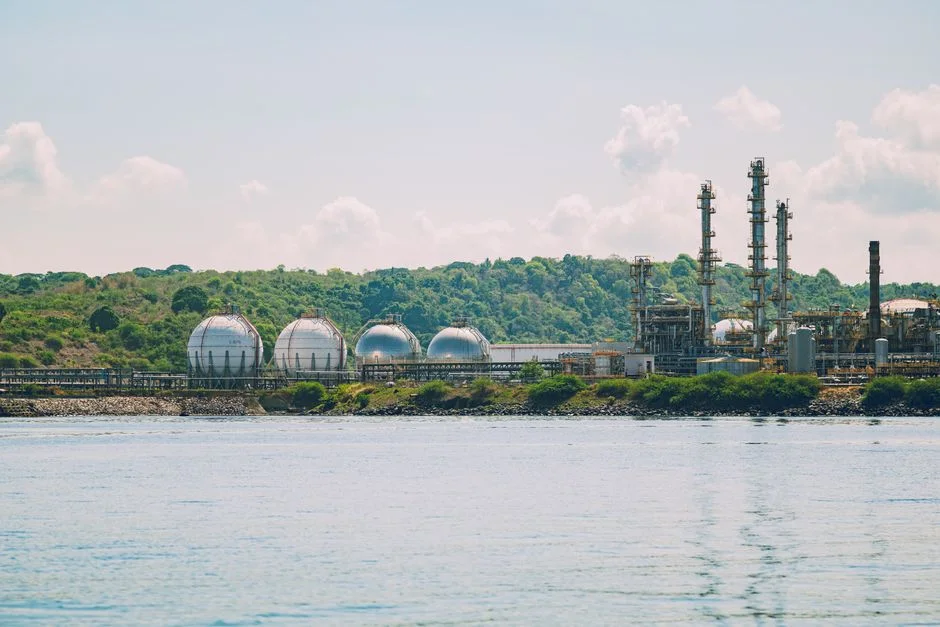
Three sizing inputs must appear on every design report a vendor hands back, or the proposal cannot be defended in a 2026 audit. Number 1 is peak instantaneous flow in gpm or m³/h — not the daily average. Slug loads during a coalescer dump or tank drop can spike 3–5× the daily mean, and a tank sized on average flow will be overwhelmed at the moment a regulator is most likely to be onsite. Number 2 is daily O&G load in lb/day or kg/day, calculated from tank turnover, wash-rack volume, and drip rates, then converted to a mass the DAF can size against. Number 3 is target residual O&G in mg/L, taken from the local permit ceiling or, ideally, set 20–30% below it to leave a defensible margin against SNC.
For API units, a residence time of at least 30 minutes at peak flow is the standard reference; CPI plate spacing typically falls in the 1–2 inch range with corrugation near 45°. The exact Reynolds-number cap and Froude-number floor depend on the vendor's plate pack, so the design report should reference the manufacturer's confirmed droplet-size curve rather than a generic number. For DAF, ASR is the governing parameter — a 20–30% safety margin is standard practice to absorb slug loads — and surface hydraulic loading at 2–5 gpm/ft² in oilfield service sets the unit footprint. The full worked example for a worked biological polish appears in the MBBR sizing guide for oily condensate referenced earlier.
Self-Monitoring and BMPs: What Stops an SNC Before It Starts
Equipment only matters if the data sheet behind it stays clean. The minimum self-monitoring cadence most POTWs expect from a petroleum bulk plant in 2026: daily visual free-oil inspection at the outlet weir (logged on a paper or digital sheet, dated and initialed), weekly TSS grab, monthly HEM composite (EPA Method 1664A, 24-hour flow-proportional where the permit specifies), and 24-hour flow-proportional composite for BTEX/TPH where the local limit is non-zero. Sampling taps must be accessible, the flow meter calibrated annually, and the chain-of-custody defensible — most SNC findings originate from sampling-procedure deficiencies, not from the underlying treatment performance.
Best Management Practices are the cheapest compliance insurance a terminal can buy. POTW pretreatment coordinators look for spill containment around all aboveground storage tanks, drip pans under truck loading arms, covered and locked dump valves on coalescers, segregated sewer laterals that keep product-handling pads out of the clean stormwater system, visible tagging of all sample points, and an SPCC plan (40 CFR Part 112) tied to the sewer map. A written SPCC plan tied to the sewer map eliminates roughly half of common audit findings (HydropureWater field data, 2025). The Monday-morning BMP checklist any junior operator can run is short: verify the outlet-weir log is signed, confirm the dump valves are locked, walk the loading islands for drip-pan compliance, and check that the BTEX/TPH composite for the prior month is on file with chain-of-custody intact.
The SNC Trigger Math and the Consequence Matrix

SNC is a mechanical, arithmetic finding — not a judgment call — and the three federal triggers are precise. Trigger 1: violation of a numerical limit by ≥1.5× for any single day. Trigger 2: violation of a numerical limit for more than 5% of measurement days in a six-month period. Trigger 3: failure to provide required reports within 30 days of the due date. The consequence chain runs one late monthly report → Notice of Violation; two in twelve months → SNC; SNC → Show Cause hearing and potential permit action, including surcharges, mandated zero-discharge status, or permit termination. A terminal that runs the BMP list, files on the 15th of every month, and keeps a pre-audit file using the EPA National Pretreatment Program audit checklist categories will not see an SNC finding in 2026.
| Trigger | Federal threshold | What counts | Operator action |
|---|---|---|---|
| Single-day exceedance | ≥1.5× the permit numerical limit | Any single day's measured value | Resample within 24 h; root-cause the slug |
| Chronic exceedance | >5% of measurement days in 6 months | Aggregated across a rolling six-month window | Re-evaluate DAF chemistry and ASR margin |
| Reporting failure | Report >30 days past due | Monthly HEM/BTEX/TPH reports | Calendar-driven; file on the 15th without exception |
| Resulting status | SNC = any of the above | Public record; published in the POTW annual report | Show Cause hearing; potential permit action |
Frequently Asked Questions
What are typical 2026 HEM and TSS permit ceilings for a petroleum bulk plant near Sardis?
Most 2026 permits set HEM (oil and grease) at 100–200 mg/L daily maximum and approximately 250 mg/L TSS, derived using EPA's MAHL method under 40 CFR Part 403 (per the 2020 St. Joseph, MO TBLL evaluation by Black & Veatch). Stricter POTWs in water-reuse basins push daily maximum HEM toward 50 mg/L, and the polish step then shifts from biological (MBBR) to adsorption (GAC) to hit <20 mg/L in a reuse loop.
Can a DAF system alone meet a 100–200 mg/L HEM permit at a petroleum terminal?
Yes, in most cases — but only when sized with a 20–30% safety margin on ASR and on hydraulic loading, and only when a primary gravity stage sits ahead of it. Free oil from coalescer dumps and tank drops blankets DAF micro-bubbles and crashes the air-to-solids ratio; a DAF alone fails under slug loads (HydropureWater field data, 2026). A CPI or API primary stage ahead of the DAF is standard practice.
What triggers a Significant Noncompliance (SNC) finding under 40 CFR Part 403?
Under EPA's National Pretreatment Program, SNC is triggered by any of the following: violation of a numerical limit by ≥1.5× for any single day, violation of a numerical limit for more than 5% of measurement days in a six-month period, or failure to provide required reports within 30 days of the due date. An SNC can lead to enforcement action, surcharges, or permit termination.
What analytical method defines "O&G" on a U.S. petroleum discharge permit?
EPA Method 1664A, which uses n-hexane extraction and is reported as Hexane Extractable Material (HEM). HEM is the federally used surrogate for fats, oils, and grease under 40 CFR § 401.16 and is the parameter most U.S. POTW permits cite as "O&G" (per the 2020 St. Joseph, MO TBLL by Black & Veatch). When negotiating a permit, lead with benzene and TPH — the MAHL they generate often constrains daily flow more than O&G does.