Why chemical wastewater in Elgin is not a food or mining case
For Elgin, Illinois chemical factories in 2026, choose a DAF as the primary clarifier when wastewater contains emulsified oils, surfactants, or floatable organics — DAF systems achieve 95% oil and grease removal versus about 70% for gravity clarifiers on the same stream. Add a lamella clarifier as a polishing step for heavy TSS and to reduce chemical consumption by up to 30% before discharge to the Fox River Water Reclamation District under 40 CFR 403.
Elgin's chemical manufacturing base — specialty and batch chemicals, paints and coatings, agrochemical formulation, and contract blending — produces a wastewater signature that the generic selection guides miss. Batch neutralization steps swing pH across the 1–13 range inside a single shift. Process rinses carry emulsified oils, surfactant residues, and solvent traces, while periodic metal-bearing washes add nickel, chromium, zinc, or copper hydroxides to the same equalization basin. Typical Elgin chemical influent runs 200–3,000 mg/L TSS, 50–800 mg/L FOG, and 500–10,000 mg/L COD, with sporadic heavy-metal excursions above 10 mg/L (HydropureWater field data, 2026).
Ecologix's 2026 update anchors its DAF-vs-clarifier decision in two case studies that do not map to this profile: a food plant with 95% DAF FOG removal versus 70% on a clarifier, and a mining facility that cuts solids 90% with a clarifier. Food streams are warm, low-TDS, and surfactant-light. Mining streams are abrasive, high-density, and FOG-free. Elgin chemical plants sit in the messy middle: FOG and dense precipitates co-exist in the same influent, pH swings invalidate simple jar-test results, and surfactants stabilize emulsions that defeat gravity settling. ChemREADy's influent characterization panel — TSS, FOG, BOD, COD, pH, metals, sulfides, and foam — is the baseline any Elgin plant should run before equipment selection rather than borrowing a food or mining benchmark.
The implication is that DAF-first, with a lamella clarifier polishing step, is the dominant 2026 configuration for Elgin chemical plants discharging to the Fox River WRD. The rest of this article shows why, with a chemical-specific decision matrix, a process flow the buyer can drop into an RFQ, and a CAPEX/OPEX range sized for chemical service. A DAF system handles the FOG and surfactant load; a downstream lamella clarifier takes out the dense TSS that slips through the float layer.
DAF vs clarifier: how each technology actually works on a chemical stream
A dissolved air flotation unit removes contaminants by attaching micro-bubbles to suspended particles and floating them to the surface for skimming. Air is dissolved under pressure into a recycle stream taken from the clarified effluent, then released at atmospheric pressure inside the flotation tank, generating bubbles typically in the 10–100 micron range. The bubble-particle agglomerate "reduces" the effective density of the particle, which is the mechanism Komline identifies as the basis of flotation separation. For chemical wastewater this matters: emulsified oils, surfactant-stabilized droplets, and fine suspended solids all have slow settling velocities and either float naturally or are easily attached to rising bubbles.
A gravity clarifier does the opposite. It provides a large quiescent volume where heavier-than-water solids settle under gravity to a sludge bed at the bottom, and clarified water overflows a peripheral weir. Ecologix frames this as the workhorse for heavy inorganics — metal hydroxides, catalyst fines, mineral precipitates — where density and particle size make settling fast and efficient. On a chemical stream with pH 1–13 swings, however, the long hydraulic residence time (typically 2–4 hours) means the clarifier sees the full range of influent conditions, and shifts in coagulant speciation across that pH window destabilize the floc bed.
Surfactants are the deciding factor. Even at 10–50 mg/L, surfactants stabilize oil-in-water emulsions and prevent droplet coalescence, so gravity settling under-removes FOG by 20–30 percentage points compared with non-surfactant streams. DAF's bubble attachment is largely indifferent to emulsion stability because the bubble drags the droplet upward regardless of whether it would coalesce on its own. pH tolerance also favors DAF when paired with a dosing skid: the short contact time (15–30 minutes) means pH excursions pass through the float cell before they can disrupt floc structure, while a clarifier carries the same upset through several turnovers of the sludge blanket.
Ecologix explicitly confirms that hybrid DAF plus clarifier trains address complex wastewater streams. For Elgin chemical plants, this is the default rather than an edge case: DAF for FOG, surfactants, and floatable organics; clarifier for the dense TSS that escapes the float layer. The two technologies do not compete in this application — they complement each other.
Side-by-side comparison: DAF versus clarifier on chemical-plant criteria
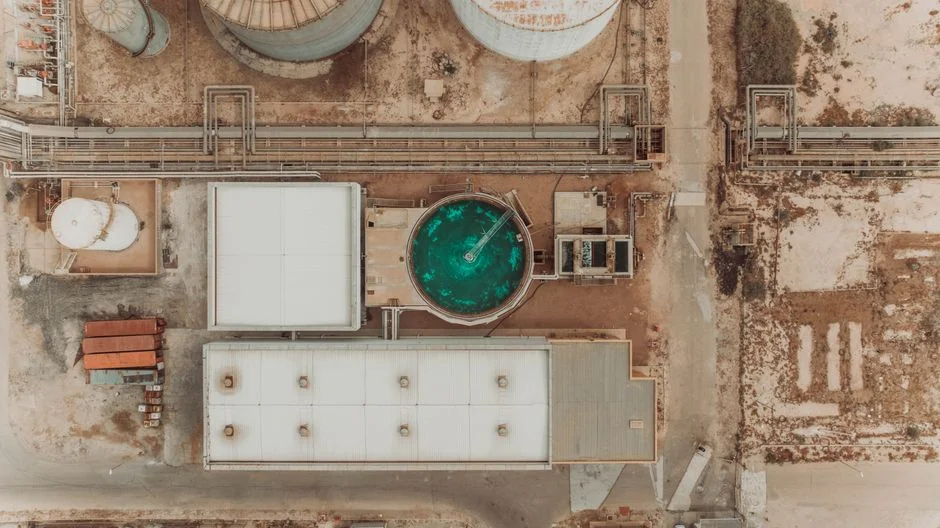
The matrix below scores each technology against the parameters an Elgin chemical buyer actually cares about. Scores are 1 (poor) to 5 (excellent) for a typical Elgin chemical stream carrying emulsified oils, surfactants, variable pH, and periodic metal-bearing rinses. Weighting reflects that FOG/surfactant removal and pH tolerance matter more than raw heavy-solids capacity in this segment.
| Criterion | DAF | Gravity Clarifier | Lamella Clarifier | Weight (chemical plant) |
|---|---|---|---|---|
| Oil/FOG removal | ~95% (Ecologix 2026) — score 5 | ~70% — score 2 | ~75% — score 2 | High |
| Heavy TSS removal (metal hydroxides) | 60–80% — score 3 | ~90% on dense inorganics — score 5 | 85–95% — score 5 | Medium |
| Surfactant-laden streams | High — score 5 | Low — score 2 | Low–medium — score 2 | High |
| pH tolerance 1–13 | Tolerant with dosing skid — score 4 | Sensitive over long residence — score 2 | Sensitive — score 2 | High |
| Footprint (same flow) | Compact — score 5 | Largest — score 2 | 40–60% of circular — score 4 | Medium |
| Polymer/coagulant demand | Higher — score 3 | Lower — score 4 | ~30% lower than circular — score 4 | Medium |
| Skid-mountability | Excellent — score 5 | Poor — score 1 | Fair — score 3 | Medium |
| CAPEX (chemical service) | $50K–$400K — score 3 | $40K–$300K — score 4 | $30K–$200K — score 4 | Medium |
| OPEX ($/m³) | $3–$8 — score 3 | $1–$3 — score 5 | $1.5–$4 — score 4 | Medium |
| Operator attention (per Komline) | Hands-off — score 5 | Moderate — score 3 | Moderate — score 3 | Low |
On a weighted basis, DAF wins 7 of 10 criteria for the typical Elgin chemical stream, with a lamella clarifier adding value specifically on heavy-solids polishing and chemical consumption. The two ancillaries that flip the math are the PLC-controlled chemical dosing skid upstream of the DAF and the lamella downstream. Without a dosing skid, pH swings erode DAF performance. Without the lamella polish, residual TSS drives polymer consumption up and pushes effluent quality against the Fox River WRD's 30-day-average limits.
For plants whose stream is dominated by metal-hydroxide sludge with negligible FOG (e.g., a dedicated inorganic precipitation line), a clarifier alone is defensible. For the broader Elgin chemical base — paints, coatings, surfactants, contract blending — the DAF-primary train is the better default.
The recommended 2026 train: DAF primary, lamella clarifier polish
The process flow below is sized for a 4–300 m³/h Elgin chemical plant and uses HydropureWater reference equipment so a buyer can drop specifications straight into an RFQ. Each step answers a specific chemical-stream failure mode the comparison table identified.
- pH adjust / equalization: Batch neutralization to pH 6.5–8.5 using a PLC-controlled dosing skid. This protects downstream equipment and locks in the coagulant speciation window.
- Coagulant + flocculant injection: A PLC-controlled chemical dosing skid doses ferric chloride or PAC (50–300 mg/L) followed by anionic polymer (1–5 mg/L). Jar-test-validated setpoints, with trim on TSS and charge demand.
- DAF primary: The DAF system removes 90–95% of FOG, 60–80% of TSS, and the bulk of surfactant-stabilized emulsions. Hydraulic retention time 15–30 minutes; recycle ratio 20–40%. Auto-skim drives float to a discharge hopper.
- Lamella clarifier polish: Inclined-plate design at 20–40 m/h surface loading (HydropureWater catalog spec) takes residual TSS down to 20–40 mg/L and cuts coagulant consumption by up to 30% on the polishing step. Sludge recirculation maintains a stable blanket.
- Sludge dewatering: Combined DAF float and lamella underflow route to a plate-and-frame filter press (1–500 m²) to minimize hauling cost and produce a 25–35% dry-solids cake.
- Effluent discharge: Clarified effluent to the Fox River WRD sewer under 40 CFR 403.
Lamella beats a conventional circular clarifier on chemical service for three reasons: higher surface loading rate in a smaller footprint (typically 40–60% of the equivalent circular area), better performance on variable solids loading because the inclined plates shed sludge continuously, and the catalog-confirmed 30% reduction in chemical consumption that compounds the DAF's polymer dose. Komline notes that DAF tank design can be tailored — flat or v-bottom, with bottom collectors for streams that carry both floatable oils and dense catalyst fines. For Elgin chemical plants, specifying a v-bottom with bottom collectors covers the case where one batch is mostly FOG and the next is mostly catalyst rinse water.
Elgin-specific compliance: 40 CFR 403, Fox River WRD, and 2026 pretreatment limits
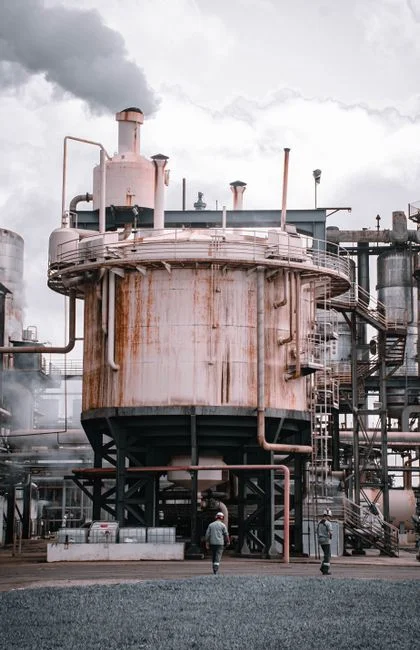
Elgin chemical manufacturers discharging to the Fox River Water Reclamation District operate under EPA 40 CFR 403 General Pretreatment Regulations, with categorical standards applied based on SIC/NAICS code. Organic chemicals, plastics, and synthetic fibers fall under 40 CFR 414; inorganic chemicals manufacturing under 40 CFR 415. Both categories impose numerical limits on TSS, FOG, COD, pH, and priority pollutants including metals, and both require sampling at prescribed monitoring points.
The ChemREADY influent panel — TSS, FOG, BOD, COD, pH, metals, sulfides, foam, and odor — is the practical monitoring basis for any Elgin plant's pretreatment program. DAF-first is compliance-friendly because FOG and surfactant control directly addresses the oil/grease and COD parameters that drive the majority of categorical violations in paints/coatings and contract-blending operations. A well-operated DAF holding 95% FOG removal typically drops influent FOG from 200–800 mg/L to 10–40 mg/L, comfortably below the categorical 100 mg/L monthly-average ceiling most Elgin plants face. The downstream lamella polish then takes TSS from 30–60 mg/L post-DAF to 15–30 mg/L, inside typical 30-day average limits.
pH control is where chemical plants most often fail. Batch operations produce slug discharges of pH 1–2 or pH 12–13, and the Fox River WRD's 6.0–10.0 instantaneous limit means each slug must be neutralized in equalization before it reaches the sewer. The dosing skid's role is therefore both treatment (coagulation) and compliance (pH lock) — a single control system that protects the DAF, the clarifier, and the discharge permit at the same time. Local service coverage across Aurora, Schaumburg, St. Charles, and Geneva matters for jar-test validation, probe calibration, and dosing optimization, all of which are part of the OPEX line a procurement manager should price into the contract.
For permit renewal in 2026, the Fox River WRD has continued to enforce zero-discharge of foam and visible sheen to the receiving sewer. A properly skimmed DAF with an automatic float discharge hopper eliminates the sheen pathway; a clarifier alone does not.
CAPEX and OPEX ranges a chemical plant should put in an RFQ
Komline explicitly states that a specific DAF cost is difficult to publish because of the range of sizes and designs, so the bands below are typical 2026 industrial ranges for chemical service rather than list prices. Stainless or FRP construction for pH 1–13 compatibility is assumed.
| Equipment | Flow range | Typical CAPEX (2026) | Typical OPEX drivers | Notes |
|---|---|---|---|---|
| DAF system (chemical service) | 4–50 m³/h | $50K–$250K | Electricity (recycle pump, compressor, skimmer), polymer/coagulant, compressed air | Skid-mounted; stainless or FRP |
| DAF system (chemical service) | 100–300 m³/h | $200K–$400K | Same as above at larger scale | Multiple-cell designs common |
| Lamella clarifier (chemical service) | 10–300 m³/h | $30K–$200K | Minimal electricity; 30% lower chemical use than circular | Inclined plates, FRP/stainless |
| PLC chemical dosing skid | All flows | $15K–$80K | Coagulant, polymer, pH adjuster | Includes probes, pumps, controller |
| Plate-and-frame filter press | 1–500 m² | $40K–$350K | Power, cloth replacement, wash water | Reduces hauling 70–80% |
| Combined OPEX (DAF + lamella) | — | — | $3–$8 per m³ treated | Lower end with lamella polish and good sludge handling |
OPEX for chemical DAF service typically runs $3–$8 per cubic meter treated, dominated by polymer/coagulant dose (40–55% of OPEX), electricity for the recycle pump and air compressor (20–30%), and sludge hauling (15–25%). Adding the lamella polish lowers total chemical consumption by up to 30% because the DAF handles the FOG load and the lamella only needs to drop residual TSS, where polymer demand is lower per unit of contaminant removed. For a 50 m³/h plant running two shifts, that puts annual OPEX in the $1.0M–$2.9M range before sludge disposal.
Maintenance is the line item buyers most often underestimate. Per Komline, the DAF itself is essentially hands-off — lubrication of drives and bearings plus occasional wear-part replacement. The dosing skid and the filter press are where the maintenance hours actually sit, so a single service contract that bundles all three is usually cheaper than three separate vendor calls. For Elgin plants running lean EHS crews, that bundling decision matters as much as the equipment selection.
Frequently Asked Questions
Is a DAF alone enough for an Elgin chemical plant, or do I need a clarifier too?
Usually no. A DAF handles 90–95% of FOG and 60–80% of TSS but leaves residual TSS in the 30–60 mg/L range, which is borderline for the Fox River WRD's 30-day average limits. A downstream lamella clarifier polishes that to 15–30 mg/L and cuts chemical consumption by up to 30% on the polishing step. For most paints/coatings, surfactant, and contract-blending operations, the hybrid DAF → lamella train is the defensible 2026 configuration.
When is a clarifier alone acceptable for a chemical plant?
When the stream is dominated by metal-hydroxide sludge or other dense inorganics and FOG is consistently below 50 mg/L. Examples include a dedicated inorganic precipitation line, a catalyst-recovery washwater stream, or a process water with high TSS and no surfactants. A lamella clarifier in this duty delivers 85–95% TSS removal at lower OPEX than a DAF, and the FOG problem simply does not exist on that stream.
What materials of construction handle pH 1–13 chemical wastewater?
Stainless steel (typically 304L or 316L) for tanks, piping, and skimmer components; FRP for larger vessels where weight and cost matter; PTFE or EPDM-lined valves and fittings; and a chemical dosing skid with chemical-resistant metering pumps (PVC, PP, or PVDF heads). For pH below 2 or above 12, specify alloy upgrades (Hastelloy, duplex) on wetted parts. Most DAF and lamella suppliers offer these as standard options for chemical service.
How do I pilot a DAF before committing to a CAPEX decision?
Per Komline, lab or pilot testing is the most reliable way to determine separation characteristics for a specific waste stream. Many vendors — including Komline — rent pilot DAF units for on-site trials, and a 2–4 week rental typically generates the design data, polymer dose curve, and air-to-solids ratio needed to size the full-scale unit. The poor sludge settling field guide covers the bench-test protocols that should run in parallel.
What is the typical Fox River WRD permit timeline and how does jar testing fit in?
Industrial discharge permits in the Fox River WRD service area typically run on a 3–5 year renewal cycle, with categorical pretreatment standards applied at renewal based on the plant's SIC/NAICS code and monitoring history. Jar testing is the lab-scale simulation used to validate coagulant and polymer selection before the dosing skid is commissioned; ChemREADy's local service team across Aurora, Schaumburg, St. Charles, and Geneva runs these as part of program startup. Building the jar-test campaign into the engineering schedule — typically 4–8 weeks before commissioning — prevents permit-side surprises at startup.