Why Plastics and Rubber Wastewater in Oxford Behaves Differently
Plastics molding (NAICS 3261) and rubber products (NAICS 3262) facilities in and around Oxford, Mississippi generate a stream that defeats generic DAF-vs-clarifier advice because the dominant contaminants are buoyant, not settleable. Unreacted PVC slurry, SBR and nitrile latex overspray, EPDM release emulsions, phthalate and adipate plasticizer droplets, silicone mold-release agents, and carbon black fines produce 200–1,500 mg/L TSS and 100–800 mg/L FOG while BOD and COD stay low at 50–400 mg/L (HydropureWater field data, 2026). Most particles have a specific gravity at or below 1.0 g/mL — latex emulsions register 0.95–1.02 g/mL and phthalate plasticizers sit near 0.96–1.05 g/mL — while a conventional clarifier is designed to settle particles at 1.2–1.5 g/mL. The result is a floating scum blanket, not a settled sludge bed.
Oxford's hot, humid summers accelerate polymer stringing, biofilm fouling, and biological oxidation of plasticizer esters, which change floc characteristics hour by hour. Local pretreatment is anchored to 40 CFR Part 437 — the EPA's Plastics Molding and Forming Point Source Category — which defines BPT, BAT, and NSPS effluent limits for plastics subcategories and is the binding federal framework Oxford POTW enforcement ladders up to. Mississippi DEQ administers the state NPDES program on top of that. A polymer-rich stream is process wastewater whose TSS and FOG fractions are dominated by synthetic polymer particles, oligomers, plasticizers, or release agents rather than by food-grade oil, grit, or biological solids.
| Parameter | Typical Range (Plastics Molding) | Typical Range (Rubber Products) | Conventional Clarifier Design |
|---|---|---|---|
| TSS | 200–1,200 mg/L | 300–1,500 mg/L | Assumes settleable fraction |
| FOG / O&G | 100–500 mg/L | 200–800 mg/L | Designed for 1.2–1.5 g/mL |
| Particle density | 0.95–1.10 g/mL | 0.98–1.15 g/mL (carbon black up to 1.3) | 1.2–1.5 g/mL |
| BOD₅ / COD | 50–300 / 100–400 mg/L | 80–400 / 150–500 mg/L | n/a |
| Dominant species | PVC, ABS, polyurethane, plasticizer | Latex, carbon black, silicone release | Inorganic grit, biological floc |
DAF vs Clarifier: How Each Technology Treats Polymer-Rich Streams
A dissolved air flotation unit generates 30–50 µm microbubbles that nucleate on buoyant latex, plasticizer, and oil droplets, lifting them to the surface in 3–5 minutes where a paddle skimmer removes the float (per SigmaDAF microbubble specification, 2026). This mechanism is purpose-built for sub-1.0 g/mL plastics contaminants. A lamella clarifier relies on gravity sedimentation of heavier carbon black, cured-rubber fines, and inorganic grit; a conventional clarifier runs at 1–2 gpm/ft² surface loading, but inclined lamella plates raise that to 20–40 m/h by shortening the effective settling path (per HydropureWater lamella clarifier specification, 2026).
These two technologies address different phases of the wastewater stream. On a food-grade FOG stream, Ecologix (2026) reports 95% oil removal with DAF versus 70% with a clarifier. On a polymer-rich stream, expect 85–95% FOG removal with a properly sized DAF and only 60–75% with a clarifier — the reduction is driven by plasticizer droplets that resist coalescence and form a stable scum rather than a settleable floc. DAF struggles when total solids exceed roughly 5% and when fines are mostly sub-10 µm carbon black. A clarifier struggles with anything buoyant, which on a polymer line is most of the load. For DAF sizing, the EPA Process Design Manual for Suspended Solids Removal (1975), Table 7-4, remains the conservative reference for hydraulic loading and air-to-solids ratio; modern DAF designs achieve 3–5× the surface loading of the 1970s units the manual documented.
A DAF front-end captures the buoyant fraction, while a lamella polish captures the residual fine TSS and any carryover carbon black. This is the hybrid Ecologix selection guide (2026 FAQ) recommends for complex streams.
Decision Matrix: When an Oxford Plastics or Rubber Plant Should Pick DAF, Clarifier, or Both
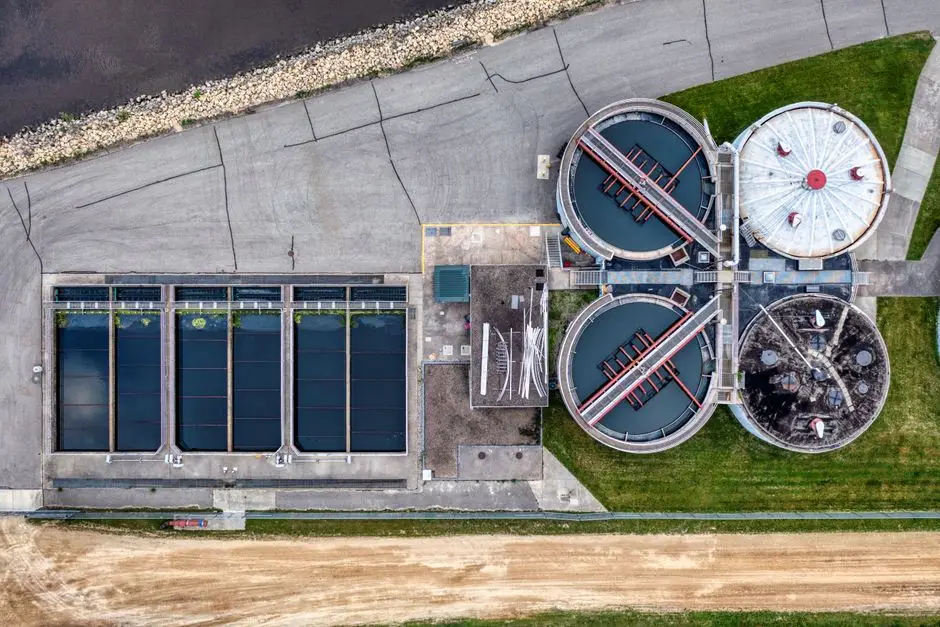
The following matrix provides a fast lookup for facility selection. If the buoyant fraction exceeds 40% of measured TSS, start with DAF; if the settleable fraction exceeds 60%, start with a lamella clarifier; for the mixed stream that describes most polymer finishing lines, specify a DAF system as primary followed by a HydropureWater lamella clarifier for polish. Oxford-area plant footprints typically run 0.5–2 acres; a single DAF skid up to 66 GPM fits existing headworks without civil expansion, and modular DAFs scale above that (per SigmaDAF Compact DAF specification, 2026).
| Primary Contaminant | DAF Only | Clarifier Only | DAF + Lamella Hybrid (Recommended) |
|---|---|---|---|
| FOG / latex (buoyant >60% of TSS) | 85–95% removal, 1.0–1.5 m³/h·m², OPEX medium | 60–70% removal, 1–2 gpm/ft², OPEX low — underperforms on floatables | 92–97% combined, polymer recovery enabled, OPEX offset by recovered solids |
| Carbon black / cured fines (settleable >60%) | 60–75% removal — bubble attachment poor on fine black | 85–90% removal, lamella at 20–40 m/h, OPEX low | DAF captures oil-coated fines, lamella captures residual black — 90–95% |
| Plasticizer droplets (stable emulsion) | 80–90% removal with proper coagulant | 50–65% removal — droplets resist settling | 88–94% combined, recovered plasticizer recoverable for reuse |
| Washwater fines + mold-release silicone | 75–85% FOG, 60–70% TSS | 55–70% FOG, 70–80% TSS | 85–92% FOG, 80–88% TSS — meets 40 CFR Part 437 daily max |
| Footprint (typical 50 m³/h line) | ~6–10 m² skid | ~25–40 m² circular or rectangular basin | ~35–50 m² total — fits most Oxford headworks |
2026 Pretreatment Compliance for Oxford Plastics and Rubber Dischargers
EPA 40 CFR Part 437 sets BPT, BAT, and NSPS limits for the Plastics Molding and Forming point source category. For many subcategories relevant to Oxford-area facilities the binding 2026 numbers are a daily maximum TSS of 41 mg/L and O&G of 13 mg/L (confirm current subcategory applicability in 2026). Mississippi DEQ administers the state NPDES program and routinely layers local POTW pretreatment limits on top of the federal category limits — Oxford-area non-categorical discharges typically must meet 250 mg/L TSS and 100 mg/L O&G at the POTW headworks. A correctly sized DAF (4–300 m³/h coverage across 13 models) paired with coagulant and flocculant dosing routinely hits the 41 mg/L TSS daily max on a typical plastics molding stream (HydropureWater field data, 2026). Confirm the latest Mississippi DEQ permit and any Oxford POTW ordinance revisions before final design, as state enforcement and local limits move more frequently than federal 40 CFR Part 437 standards.
Recommended 2026 Process Flow for an Oxford Plastics or Rubber Plant

The recommended train consists of a rotary bar screen, equalization basin, automatic chemical dosing (coagulant plus flocculant), DAF primary, lamella clarifier polish, and sludge to plate-and-frame filter press. Start with a rotary mechanical bar screen to remove pellets and overspray solids, equalize for 8–24 hours to dampen the batch surges typical of mold-change and rubber-cure cycles, dose coagulant and flocculant through an automatic chemical dosing system, then send the conditioned stream to a DAF system rated 4–300 m³/h (13 models) for primary flotation, polish residual TSS through a HydropureWater lamella clarifier at 20–40 m/h surface loading, and dewater the combined sludge in a plate-and-frame filter press producing a 25–35% dry cake.
2026 OPEX ballpark in US dollars: DAF electricity $0.08–$0.15 per m³ treated, polymer dosing $0.04–$0.10 per m³, and sludge haul-off $30–$80 per wet ton (HydropureWater field data, 2026). The line item that usually swings the CAPEX conversation is polymer recovery: 40 CFR Part 437 explicitly recognizes in-process recycling of process wastewater, and recovered polymer or plasticizer returned to the compounding line can offset $0.20–$0.60 per m³ in virgin-material cost. That recovery credit is the dominant economic argument for the DAF+clarifier hybrid over either technology alone. The 2026 cost breakdown for primary vs secondary treatment provides per-kg-BOD-removed benchmarks that translate well to polymer-line economics. For plants in adjacent sectors, the chemicals wastewater DAF vs clarifier 2026 guide and the fabricated metals DAF vs clarifier 2026 guide show how the decision matrix shifts when the buoyant fraction changes.
Frequently Asked Questions
Should an Oxford plastics or rubber plant choose a DAF or a clarifier in 2026?
For the polymer-rich, FOG-laden stream typical of NAICS 3261 and 3262 facilities, a DAF system is the correct primary clarifier because 30–50 µm microbubbles lift the buoyant latex, plasticizer, and oil fraction that defeats a gravity clarifier (85–95% FOG removal on a polymer stream versus 60–75% for a clarifier alone).
What removal efficiency can a DAF realistically hit on polymer-rich wastewater?
On a properly conditioned polymer-rich stream a DAF achieves 85–95% F
Frequently Asked Questions
Should a plastics or rubber factory in Oxford, Mississippi choose a DAF or a clarifier in 2026?
For most plastics and rubber manufacturing facilities in Oxford, a Dissolved Air Flotation (DAF) system is the superior choice for primary treatment compared to a conventional clarifier. Because rubber particles, latex, and many plastic resins have a specific gravity close to or lower than water, they resist natural sedimentation and often require the buoyancy-driven separation provided by micro-bubble aeration.
While a clarifier is effective for heavy, inorganic solids, it typically fails to capture the emulsified oils and lightweight polymers common in 2026-era production processes. DAF systems provide a smaller footprint, which is critical for industrial sites in Lafayette County, and offer faster hydraulic retention times (HRT) of 30 to 60 minutes, compared to the 2 to 4 hours often required for effective settling in a clarifier.
What FOG and TSS removal rates can a DAF achieve on latex and plasticizer wastewater?
When properly dosed with cationic polymers or coagulants, a well-maintained DAF system can achieve Total Suspended Solids (TSS) removal rates between 85% and 98%. For latex-heavy waste streams, the DAF effectively breaks the emulsion, allowing for the mechanical skimming of coagulated solids that would otherwise pass through a traditional gravity system.
For Fats, Oils, and Grease (FOG) and plasticizer concentrations, DAF units typically achieve removal efficiencies exceeding 90%. Success in this application is highly dependent on the pH adjustment and the specific charge neutralization of the wastewater, as plasticizers often exist in a colloidal state that requires precise chemical precipitation to float to the surface for removal.
Is a DAF plus clarifier hybrid better than either alone for polymer manufacturing wastewater?
A hybrid configuration—often utilizing a clarifier as a primary settling tank followed by a DAF as a polishing stage—is the industry standard for high-load polymer manufacturing. The clarifier removes heavy, abrasive grit and dense metallic particulates that could damage DAF scraper mechanisms, while the DAF removes the lighter, non-settleable organic pollutants.
This tiered approach reduces the chemical demand in the DAF stage, as the clarifier handles the bulk solids loading. By utilizing both, facilities can consistently meet stringent discharge limits, even when production throughput fluctuates or when high-strength "slug" loads of polymer-rich wastewater are discharged into the treatment system.
What are the EPA 40 CFR Part 437 daily max limits for plastics molding wastewater in 2026?
Under 40 CFR Part 437 (The Centralized Waste Treatment Point Source Category), the daily maximum effluent limitations for plastics molding and forming facilities are strictly monitored. While limits can vary based on the specific subcategory of plastic, the daily maximum for Total Suspended Solids (TSS) is typically capped at 60 mg/L, and Oil and Grease (O&G) is limited to 26 mg/L.
Additionally, facilities must adhere to strict pH requirements, typically maintaining discharge within the 6.0 to 9.0 standard unit range. In 2026, many local POTWs in Oxford may impose even more stringent local limits on chemical oxygen demand (COD) and total nitrogen to protect the local watershed, necessitating robust pretreatment performance that meets or exceeds these federal baselines.
How much does a DAF system cost for a mid-sized Oxford rubber products plant in 2026?
For a mid-sized rubber products facility in Oxford, the capital expenditure for a turnkey DAF system—including the equalization tank, flocculation chamber, DAF unit, and sludge dewatering equipment—typically ranges from $180,000 to $450,000. This price variance is driven by the required flow capacity, materials of construction (typically 304 or 316 stainless steel), and the level of automation required for 2026 standards.
Operational costs must also be factored into the budget, including ongoing electricity for the air saturation pump, polymer chemical consumption, and sludge disposal fees. Plants should expect to budget an additional 10% to 15% of the initial capital cost annually for preventative maintenance and parts replacement to ensure compliance with local discharge ordinances.