Primary vs Secondary Wastewater Treatment Costs: 2025 Engineering Breakdown with Cost per kg BOD Removed
Primary wastewater treatment costs $0.80–$1.50 per kg BOD removed. Secondary treatment costs $0.30–$0.60 per kg BOD removed. Secondary plants need higher capital ($2,000–$5,000 per m³/day vs. $500–$1,200 for primary) and higher O&M ($0.15–$0.40/m³ vs. $0.05–$0.15/m³). Secondary systems still remove 85–95% of BOD versus 30–40% for primary. That lower cost per kg removed usually wins when discharge limits are strict.
Why Primary vs Secondary Treatment Costs Matter: A Plant Manager's Dilemma
A municipal plant at 5 MGD (18,927 m³/day) that runs primary-only treatment can face large Clean Water Act civil penalties when BOD limits are missed. Under 40 CFR Part 19, CWA judicial civil penalties assessed from December 27, 2023 through January 7, 2025 reached a statutory maximum of $66,712 per day of violation. Earlier plant-level examples often cited annual exposure above $500,000 when violations continue across many days. Primary systems cost less to build and run per cubic meter, but 30–40% BOD removal rarely meets modern permits. Secondary upgrades raise capital and O&M, yet deliver 85–95% BOD removal, support compliance, and can open reuse credits that offset part of the operating bill. Cost per kg BOD removed is the metric that captures that trade-off for plant managers and procurement teams.
Primary vs Secondary Treatment: Process Mechanisms and Removal Efficiencies
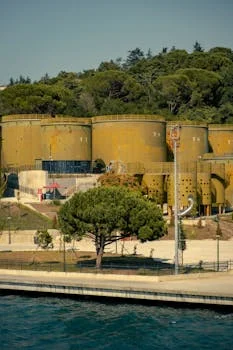
Primary and secondary stages remove pollutants by different mechanisms, so their efficiencies diverge. Primary treatment uses physical separation: screening (for example a rotary mechanical bar screen), grit removal, then sedimentation in primary clarifiers. Typical results are 30–40% BOD removal and 50–70% TSS removal at 1–3 hours hydraulic retention time (HRT). Most plants we size for primary clarifiers run at the lower end of that HRT band when solids loading is high.
Secondary treatment uses biology to break down dissolved and colloidal organics left after primary treatment. Common trains include activated sludge, membrane bioreactors (MBR), and trickling filters. These systems rely on microorganisms under controlled aeration or fixed-film conditions. Activated sludge usually reaches 85–95% BOD removal and 80–90% TSS removal at sludge retention times (SRT) of 5–15 days. An MBR membrane bioreactor for near-reuse-quality effluent with 60% smaller footprint further improves solids and pathogen removal. Secondary trains use about 0.3–0.6 kWh/m³, mainly for aeration, and often need chemicals for nutrient control or pH. Primary-only effluent rarely meets limits such as EU Urban Waste Water Directive 91/271/EEC or China's GB 18918-2002, which typically require BOD concentrations below 25 mg/L.
| Parameter | Primary Treatment | Secondary Treatment (e.g., Activated Sludge) |
|---|---|---|
| Main Process | Physical separation (screening, sedimentation) | Biological degradation (aerobic/anaerobic) |
| BOD Removal Efficiency | 30–40% | 85–95% |
| TSS Removal Efficiency | 50–70% | 80–90% |
| Nutrient Removal | Minimal | Significant (with specific processes for N/P) |
| Typical HRT | 1–3 hours | 4–8 hours (for biological reactor) |
| Typical SRT | N/A (physical process) | 5–15 days |
| Energy Use | 0.05–0.1 kWh/m³ | 0.3–0.6 kWh/m³ (mainly for aeration) |
| Chemical Needs | Minimal (e.g., pH adjustment, coagulants for enhanced primary) | Moderate (nutrients, disinfectants, coagulants for P removal) |
Capital Costs: Primary Clarifiers vs Secondary Treatment Systems (2025 Data)
Secondary treatment needs a larger capital outlay than primary clarification because of biological reactors and mechanical systems. Adjusted 2025 capital for primary clarifiers runs about $638–$1,532 per m³/day of capacity, based on a 5% annual inflation rate applied to 2020 data. Material choice (concrete vs. steel), tank depth, and sludge handling drive that range. Design packages that integrate sludge scrapers and thickeners sit toward the high end of the band.
Secondary systems land at $2,000–$5,000 per m³/day in 2025. Technology choice sets where a bid falls:
- Activated Sludge Systems: Typically $2,500–$4,000 per m³/day for aeration basins, secondary clarifiers, and return sludge lines.
- Membrane Bioreactors (MBR): $4,000–$5,000 per m³/day. An MBR membrane bioreactor for near-reuse-quality effluent cuts footprint and raises effluent quality, but membranes and cleaning packages raise capital.
- Trickling Filters: $2,000–$3,500 per m³/day. Energy use is often lower than activated sludge, but media beds need more land.
Key secondary cost drivers are aeration (blowers, diffusers), membrane replacement for MBRs, and civil works for larger reactors. For a 10 MGD (37,854 m³/day) plant, primary capital typically falls between $3.8M–$9.1M, while full secondary can reach $15M–$38M. A compact secondary treatment system combining A/O biological contact oxidation and sedimentation, like a WSZ series underground integrated sewage treatment plant saves space, though its unit cost still tracks secondary benchmarks.
| Treatment Stage/System Type | 2025 Capital Cost (per m³/day capacity) | Key Cost Drivers | Example 10 MGD Total Capital Cost |
|---|---|---|---|
| Primary Clarifiers | $638–$1,532 | Civil works, materials (concrete/steel), sludge handling | $3.8M–$9.1M |
| Secondary Treatment (General) | $2,000–$5,000 | Biological reactors, aeration, secondary clarification, sludge management | $15M–$38M |
| Activated Sludge | $2,500–$4,000 | Aeration blowers, basin construction, clarifiers | $9.5M–$15.2M (calculated from per m³/day) |
| MBR (Membrane Bioreactor) | $4,000–$5,000 | Membranes, membrane cleaning systems, specialized controls | $15.2M–$19.0M (calculated from per m³/day) |
| Trickling Filters | $2,000–$3,500 | Media, large footprint, distribution systems | $7.6M–$13.3M (calculated from per m³/day) |
Operational Costs: Energy, Chemicals, and Labor for Primary vs Secondary Treatment
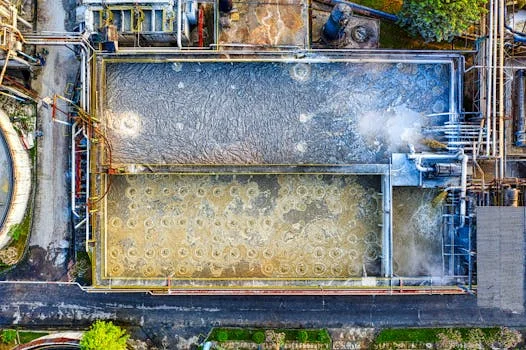
O&M costs dominate life-cycle spend for both trains. Secondary plants usually pay more for energy, chemicals, and skilled labor than primary plants across every major line item.
Energy is the largest gap. Primary plants typically use 0.05–0.1 kWh/m³ for pumping and screening, or $0.005–$0.02/m³ at $0.10/kWh. Activated sludge aeration needs 0.3–0.6 kWh/m³, or $0.03–$0.06/m³. That aeration gap alone pushes secondary O&M higher on every monthly power bill.
Chemical spend also rises with biological treatment. Primary trains may use $0.01–$0.03/m³ for occasional coagulants or pH control. Secondary trains often need $0.05–$0.15/m³ for nutrients, disinfectants (for example chlorine dioxide), and MBR cleaning chemicals. Normalized chemical cost for secondary can reach $0.10–$0.20 per kg BOD removed.
Labor follows process complexity. A 1 MGD primary plant may need 0.1–0.3 full-time equivalent (FTE) staff for routine checks. A 1 MGD secondary plant, especially with MBR, typically needs 0.5–1.5 FTEs for process control, biological monitoring, and membrane care.
For a 5 MGD (18,927 m³/day) plant, annual primary O&M usually sits between $90K–$270K. Secondary O&M rises to $270K–$720K. That gap should appear in any payback model before a primary-only bid is locked.
| O&M Cost Component | Primary Treatment (per m³) | Secondary Treatment (per m³) | Primary Treatment (5 MGD Annual) | Secondary Treatment (5 MGD Annual) |
|---|---|---|---|---|
| Energy (kWh/m³) | 0.05–0.1 kWh/m³ | 0.3–0.6 kWh/m³ | $34.5K–$69K | $207K–$414K |
| Energy Cost ($/m³ at $0.10/kWh) | $0.005–$0.01 | $0.03–$0.06 | $34.5K–$69K | $207K–$414K |
| Chemicals ($/m³) | $0.01–$0.03 | $0.05–$0.15 | $69K–$207K | $345K–$1.03M |
| Labor (FTE for 5 MGD) | 0.5–1.5 FTE | 2.5–7.5 FTE | $50K–$150K (estimated at $100K/FTE) | $250K–$750K (estimated at $100K/FTE) |
| Total O&M Cost (per m³) | $0.05–$0.15 | $0.15–$0.40 | $90K–$270K (Total Annual) | $270K–$720K (Total Annual) |
Cost per kg BOD Removed: The True Measure of Treatment Efficiency
Cost per kg BOD removed divides amortized capital plus annual O&M by kilograms of BOD removed each year. Primary treatment typically costs $0.80–$1.50 per kg BOD removed. Secondary treatment lands at $0.30–$0.60 per kg BOD removed despite higher absolute spend. Higher removal (85–95% vs. 30–40%) spreads fixed and variable costs over more mass removed, which is why secondary often wins on true treatment efficiency.
Worked example for a 1 MGD (3,785 m³/day) plant at 200 mg/L influent BOD:
- Calculate Influent BOD Load: 3,785 m³/day × 200 mg/L × (1 kg / 1,000,000 mg) = 757 kg BOD/day.
- Calculate Annual BOD Removed (Primary Treatment):
- Assume 35% BOD removal efficiency: 757 kg/day × 0.35 = 265 kg BOD/day.
- Annual BOD removed: 265 kg/day × 365 days/year = 96,725 kg BOD/year.
- If the cost per kg BOD removed is $1.20 (within the $0.80–$1.50 range), then the estimated total annual cost for primary treatment is $1.20/kg × 96,725 kg = $116,070/year.
- Calculate Annual BOD Removed (Secondary Treatment):
- Assume 90% BOD removal efficiency: 757 kg/day × 0.90 = 681 kg BOD/day.
- Annual BOD removed: 681 kg/day × 365 days/year = 248,565 kg BOD/year.
- If the cost per kg BOD removed is $0.45 (within the $0.30–$0.60 range), then the estimated total annual cost for secondary treatment is $0.45/kg × 248,565 kg = $111,854/year.
Secondary treatment can show higher nominal capital and O&M yet a lower cost per kg BOD removed. Avoided fines and reuse revenue are extra credits this metric does not include, so add them separately when you present the case to finance.
| Influent BOD (mg/L) | Primary Treatment Cost per kg BOD Removed | Secondary Treatment Cost per kg BOD Removed |
|---|---|---|
| 100 | $1.50 | $0.60 |
| 200 | $1.20 | $0.45 |
| 300 | $1.00 | $0.38 |
| 400 | $0.90 | $0.35 |
| 500 | $0.80 | $0.30 |
When to Choose Primary-Only Treatment: Use Cases and Cost Trade-Offs

Secondary treatment usually wins on pollutant removal and cost per kg BOD. Primary-only still fits some plants when influent is weak, permits are loose, or capital is tight.
Primary treatment can serve low-strength wastewater with BOD below 150 mg/L and TSS below 200 mg/L. Physical separation may then meet the permit without a biological train. Primary is also common pre-treatment before industrial reuse, such as cooling or process water that only needs solids and partial organics cut before a polishing step.
Discharge limits decide the rest. In some rural regions with looser rules (for example parts of India or Africa), permits may allow BOD < 100 mg/L and TSS < 60 mg/L. Primary-only can meet those limits without the capital load of a biological plant.
Budget pressure matters for many mid-size sites. Primary systems are typically 30–50% cheaper in capital and 50–70% cheaper in O&M than full secondary. For a 1 MGD plant, that is roughly $1.2M capital and $50K/year O&M for primary versus $3M capital and $200K/year O&M for secondary. When capital is scarce and limits are lenient, primary is a workable first step.
Enhanced primary treatment sits in the middle. Chemical coagulation and flocculation followed by a high-efficiency DAF system for enhanced primary treatment or pre-treatment can reach 60–70% BOD removal. That approaches the low end of secondary performance at about 50–60% of full secondary cost. Industrial pre-treatment plants and municipalities with moderate limits often use this hybrid when a full secondary plant is not yet justified.
Decision Framework: Selecting the Right Treatment Level for Your Plant
Pick the treatment level with a structured check of influent quality, permit limits, cost, and compliance risk:
- Step 1: Assess Influent Quality and Discharge Limits.
- Characterize raw influent for BOD, TSS, COD, ammonia-N, total nitrogen, and total phosphorus.
- Map local and national discharge rules against that load. EU Urban Waste Water Directive 91/271/EEC typically mandates BOD below 25 mg/L. Some US EPA NPDES permits for sensitive waters require BOD below 10 mg/L.
- Step 2: Estimate Capital and O&M Costs for Each Option.
- Use the primary, enhanced primary, and secondary benchmarks above (activated sludge or MBR).
- Screen capital as Flow (m³/day) × Cost per m³/day, then estimate annual O&M the same way.
- Leave room for later expansion in the capital plan so a primary or hybrid train can accept a secondary add-on.
- Step 3: Calculate Cost per kg BOD Removed and Evaluate Compliance Risk.
- Run cost per kg BOD removed for each option with the method above.
- Price non-compliance risk: fines, legal fees, and reputational damage if a cheaper train misses the limit.
- Credit reuse value that can offset secondary O&M when effluent quality supports irrigation or process makeup.
- Step 4: Consider Non-Cost Factors and Develop a Decision Matrix.
- Footprint: MBR systems use less land but cost more than conventional activated sludge.
- Odor Control: Biological processes can need extra odor mitigation hardware.
- Sludge Handling: Higher treatment levels raise sludge mass and dewatering cost.
- Operator Skill Level: Secondary treatment needs more skilled operators than primary clarification.
- Future Expansion: Prefer modular layouts that accept later upgrades without rebuilding the headworks.
Case Study: A 2 MGD textile plant in Bangladesh faced moderate discharge limits and chose enhanced primary treatment with chemical coagulation plus high-efficiency DAF instead of full secondary biology. The hybrid reached 65% BOD removal, met the permit, and cut project cost by about 40% versus conventional activated sludge while leaving a path for later expansion if limits tighten.
| Decision Factor | Primary Treatment | Enhanced Primary (Primary + Chemical/DAF) | Secondary Treatment |
|---|---|---|---|
| Influent BOD (mg/L) | <150 | 150–300 | >200 |
| Discharge BOD Limit (mg/L) | >80 | 30–80 | <30 (or for reuse) |
| Capital Cost (Relative) | Lowest | Moderate (50-60% of Secondary) | Highest |
| O&M Cost (Relative) | Lowest | Moderate (60-70% of Secondary) | Highest |
| Cost per kg BOD Removed | Highest ($0.80–$1.50) | Moderate ($0.50–$0.90) | Lowest ($0.30–$0.60) |
| Compliance Risk | High (for modern limits) | Moderate | Low |
| Footprint | Small | Small to Medium | Medium to Large (MBR smaller) |
| Operator Skill | Basic | Intermediate | Advanced |
Who This Is For, Who Should Look Elsewhere, and Next Step
This breakdown is for plant engineers and procurement managers comparing primary versus secondary upgrades at municipal or industrial sites above 1 MGD (3,785 m³/day) with BOD loads above 100 mg/L. If you are sizing a greenfield plant under 0.5 MGD or need full nutrient (N/P) removal below 5 mg/L, treat this as a screening tool and request a tertiary package from the design team.
Selection checklist for moving from study to procurement:
- Confirm influent BOD, TSS, COD, ammonia-N, and total-P from at least 12 months of composite sampling.
- Pin down the binding discharge limit (BOD, TSS, nitrogen, phosphorus) from your NPDES or local permit.
- Size aeration and HRT against the coldest-month wastewater temperature (most plants we size for biological reactors run at the lower end of SRT at 12–15 °C).
- Budget 15–25% contingency on capital and 10–15% on annual O&M for secondary or MBR systems.
- Quantify the avoided non-compliance fine, reuse revenue, and sludge hauling cost separately so they show up in the payback calculation.
- Verify available footprint and operator skill level before choosing between activated sludge, MBR, or trickling filters.
Need a costed proposal for your flow rate and discharge limits? Request a free quote and our engineers will return a sized primary/secondary option within 2 business days.
Frequently Asked Questions
Why is secondary treatment more expensive than primary?
Secondary treatment costs more than primary treatment because of higher energy, chemical, and labor demand. Biological aeration typically uses 0.3–0.6 kWh/m³ for blowers and diffusers, versus 0.05–0.1 kWh/m³ for primary treatment. Secondary trains also need more specialty chemicals for nutrient control or disinfection and more skilled staff for process control and maintenance.
Can primary treatment meet EPA discharge limits?
No. Primary treatment alone rarely meets modern EPA secondary treatment standards for municipal wastewater. Primary treatment typically removes only 30–40% of BOD and 50–70% of TSS. Under 40 CFR 133.102, the 30-day average BOD5 shall not exceed 30 mg/L, which primary treatment cannot consistently achieve from typical influent wastewater.
What's the payback period for upgrading from primary to secondary treatment?
Payback for a primary-to-secondary upgrade typically ranges from 3 to 7 years. The range depends on non-compliance fines avoided, continuous penalty exposure, reuse revenue (irrigation or process water), and the O&M gap for energy, chemicals, and labor. A simple screen is: Payback = (Capital Cost Difference) / (Annual Savings from Fines + Annual Reuse Value – Annual O&M Cost Difference).
Is there a middle-ground option between primary and secondary treatment?
Yes. Enhanced primary treatment is the usual middle path. It pairs primary clarification with chemical coagulation/flocculation and separators such as dissolved air flotation (DAF). The train can reach 60–70% BOD removal at about 50–60% of full secondary capital and O&M. That fits moderate discharge limits or robust industrial pre-treatment ahead of a later secondary stage.
How do MBR systems compare to conventional activated sludge in cost?
MBR systems generally carry 20–30% higher capital than conventional activated sludge because of membranes and related hardware. Long-run O&M is often 10–20% lower due to a smaller footprint, higher effluent quality, and lower sludge production. Plants pay the capital premium when they need reuse-ready effluent, tight land, or stable solids control.