
Why Unilever's FMCG Expansion Is Reshaping the ZLD Question
Unilever-class FMCG factory expansion does not automatically trigger full zero liquid discharge; it triggers a layered response. Capacity growth combined with Unilever's phosphate-free and biodegradable ingredient commitments pushes plants first into high-recovery RO at 80–90% recovery, with PESA-based anti-scalants replacing phosphonates. Full ZLD is reserved for water-stressed sites or where discharge permits are revoked, and is then implemented as MLD plus thermal polishing on the residual 5–10% brine.
The macro case is straightforward. The global ZLD market sat at roughly $8.2 billion in 2025 and is growing at over 9% annually (DataIntelo, 2025), which signals that capacity expansion across heavy industry is now driving sustained ZLD-adjacent capex rather than one-off pilot projects. Inside FMCG specifically, Henkel, Unilever, and Procter & Gamble have all committed publicly to phosphate-free and biodegradable ingredient sourcing in their detergent portfolios for the 2025–2034 window (DataIntelo, 2025), and that procurement signal translates directly into a wastewater chemistry consequence: phosphonate anti-scalants upstream of RO are no longer a default specification.
On the siting side, the United Nations estimates that roughly 40% of the global population is affected by seasonal water scarcity (per UN data, cited in DataIntelo, 2025), which is concentrating regulatory and community pressure on new FMCG capacity in India, China, the Middle East, and the U.S. Southwest. The practical distinction a process engineer needs to make is between a trigger and a mandate. Expansion raises the recovery bar and forces a chemistry rethink, but it rarely forces full ZLD unless the site is water-stressed, the discharge permit has been revoked, or corporate water-positive targets have been written into a binding plant-level commitment. Most Unilever-class greenfield and brownfield expansions stop at high-recovery RO with PESA dosing, not at evaporation.
FMCG Effluent Chemistry: Why the ZLD Decision Is Not Generic
FMCG wastewater is not textile brine, not power-plant cooling-tower blowdown, and not refinery desalter effluent. The ZLD-versus-HRRO decision cannot be lifted from a generic process-general article because the upstream chemistry is fundamentally different. FMCG effluent runs high in BOD and COD, carries fats-oils-grease (FOG) and surfactant loads from cleaning-in-place (CIP) operations, contains suspended solids from product changeovers, and is discharged intermittently as batch rather than as a steady stream (per HydropureWater field data, 2026).
That profile forces two pre-treatment gates before any RO membrane sees the stream. First, FOG and floating solids must come out via DAF pre-treatment for FMCG effluent; surfactant-stabilized emulsions will foul RO elements within hours if left in the feed. Second, residual organics and colloidal solids need to be driven down with an MBR pre-treatment stage for FMCG wastewater so that SDI15 stays inside the RO membrane manufacturer's envelope. Conventional RO operates between 50–80% recovery on industrial feeds (per wcponline.com, 2026), and FMCG streams sit at the lower end of that band without these gates.
The second consequence is chemical, not mechanical. Unilever's phosphate-free formulation commitment removes phosphonates from the detergent product itself, and that signal propagates upstream to plant water chemistry. Procurement and EHS teams that once accepted phosphonate-based anti-scalants as a commodity are now being asked to justify the phosphorus discharge load in the RO concentrate. This is the lever that opens the PESA conversation, and it is a constraint that most generic ZLD articles never surface.
Recovery-Rate Decision Framework: HRRO, MLD, or Full ZLD
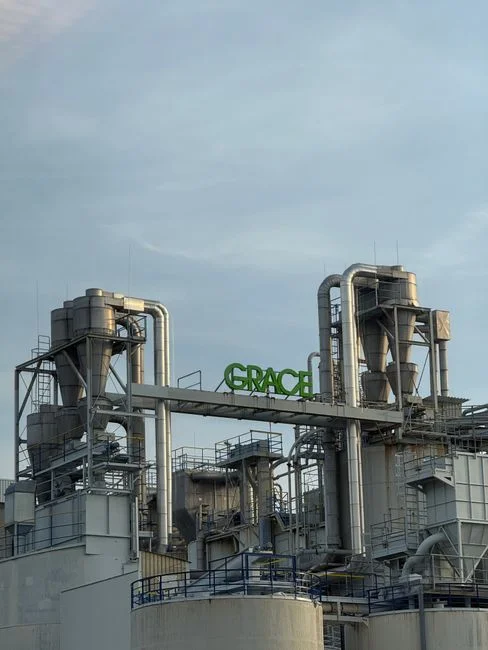
The boundary question reduces to a recovery-rate band, and the bands are well-defined. Conventional RO recovers 50–80% of feedwater, leaving 20–50% as concentrated brine (per wcponline.com, 2026). High-recovery RO (HRRO) is the 80–90% band, achieved with PESA anti-scalants, advanced feed-spacer design, and tighter scaling-index control (per DataIntelo, 2025). Above 90%, fluidized-bed crystallization reactors and cyclic or pulsed-flow RO operation carry the system to the saturation limit while purging scale-forming ions in a separate vessel (per wcponline.com, 2026). Full ZLD is the 95–99% regime, with only solid residue leaving the site.
Minimum liquid discharge (MLD) is the intermediate layer between HRRO and full ZLD, and it is where most 2026 FMCG designs are landing. MLD combines membrane and selective thermal steps to shrink the residual brine by 60–90%, after which only 5–10% of the original feed is routed to evaporators or crystallizers (per wcponline.com, 2026). The boundary that matters to procurement is therefore not "RO or ZLD" but "where does the 5–10% thermal fraction get defined."
| Site / Permit Driver | Effluent Profile | Freshwater Cost / Scarcity | Specifiable Boundary |
|---|---|---|---|
| Low water stress, standard discharge permit | Moderate BOD/COD, FOG managed by DAF+MBR | Below ~$2/m³ freshwater | HRRO at 80–90% recovery, PESA dosed upstream; brine to sewer under permit |
| Moderate water stress or sustainability KPI | High organics, surfactant pulses, variable TSS | Water-positive corporate target in force | HRRO + brine concentrator; residual 10–20% of feed to MLD thermal stage |
| Severely water-stressed grid or zero-discharge permit | Aggressive FOG and salt cycles; high silica | Aquifer depletion or community opposition | HRRO + MLD + crystallizer; 5–10% of feed to thermal polishing |
| Permit revoked or expansion blocked without ZLD | Any FMCG profile | Regulatory non-negotiable | Full ZLD with fluidized-bed reactor and cyclic RO upstream of evaporator train |
The threshold insight for a 2026 specifier: a Unilever-class expansion in a non-water-stressed grid typically stops at HRRO, because the recovery bar is met, the phosphorus constraint is satisfied by PESA, and the brine remains dischargeable. Water-stressed or zero-discharge-permit sites escalate to MLD or full ZLD, and that decision should be made before the RO feed-spacer design is frozen, not after. The reference architecture for high-recovery design is laid out in more detail in the RO specification reference for high-recovery designs, and brackish-feed cost context is covered in the brackish RO system cost and manufacturer comparison. For the RO core itself, the process envelope is consistent with an industrial RO system for high-recovery operation.
PESA and the Green-Chemistry Constraint: Replacing Phosphonates at 80–90% Recovery
PESA (polyepoxysuccinic acid) is no longer a specialty chemical; for FMCG plants aligned with Unilever's green-chemistry sourcing, it is becoming the default anti-scalant upstream of HRRO. The water-treatment dosage band runs 1–5 mg/L for cooling-tower and RO service, scaling to 5–50 ppm in oilfield scale-squeeze applications (per DataIntelo, 2025). The 80–90% recovery band is exactly where PESA outperforms phosphonates on threshold inhibition for calcium carbonate at pH above 9.0, which is the operating window HRRO concentrate streams slide into as recovery climbs (per DataIntelo, 2025).
The procurement-relevant number is the phosphorus load reduction: 60–80% per treatment cycle is achievable when PESA replaces phosphonate in a properly designed program, with a small phosphonate complement retained only where iron stabilization or high-temperature corrosion inhibition is required (per DataIntelo, 2025). For an FMCG plant that has committed publicly to phosphate-free formulations, that 60–80% reduction is the line item an environmental engineer can defend to procurement and to EHS. The water-treatment PESA market sat at 51.2% of total PESA demand in 2025 with a 5.9% CAGR through 2034 (per DataIntelo, 2025), which is the supply-chain signal that specifiers need: PESA is not a constrained or single-source chemistry.
| Parameter | Phosphonate (HEDP, ATMP) | PESA | Engineering Implication |
|---|---|---|---|
| Phosphorus discharge in concentrate | Baseline (full P load) | 60–80% lower per treatment cycle | Aligns RO chemistry with phosphate-free product sourcing |
| Threshold inhibition for CaCO₃ at pH > 9.0 | Degrades, calcium reprecipitates | Stable; outperforms at equal dose | Required for HRRO 80–90% recovery band |
| Dosage range (water treatment) | 2–10 mg/L typical | 1–5 mg/L | PESA is dose-efficient at HRRO operating points |
| Thermal stability limit | Above 120 °C for corrosion inhibition | Modified grades stable above 200 °C | PESA opens HPHT adjacent use; FMCG remains the volume driver |
| Iron stabilization | Strong | Weaker | Retain small-dose phosphonate complement where Fe is high |
For dosing hardware, the engineering expectation is a PLC-controlled PESA dosing skid with flow-paced injection on the RO feed line and a redundancy loop so that feedwater interruption cannot leave the membranes unprotected. Broader chemical-program context, including compatibility with downstream cleaners and CIP return streams, is covered in the wastewater chemical selection guide including PESA.
Equipment Boundary for a 2026 Unilever-Class FMCG Plant
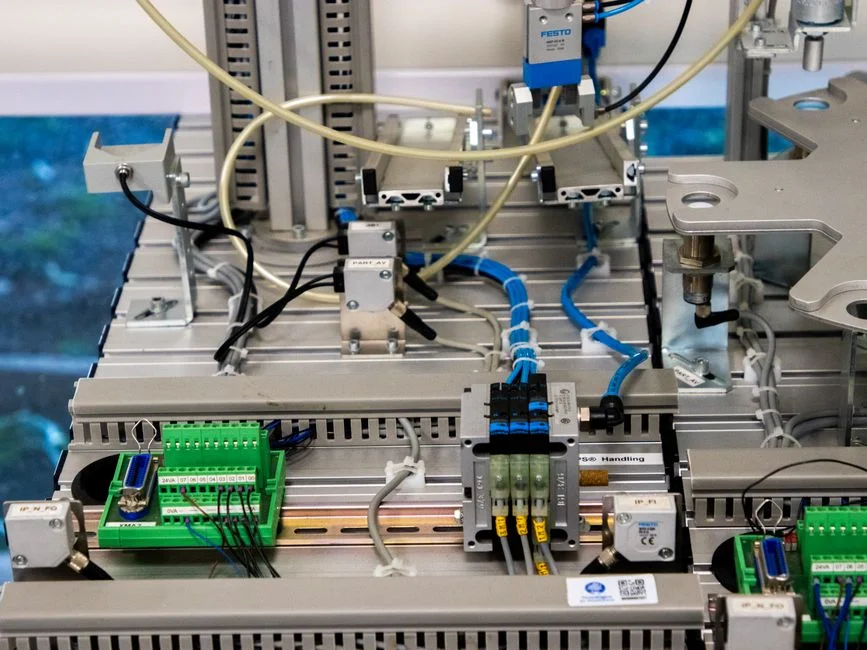
The process line a procurement or EPC reader can lift into a 2026 specification runs as follows: coarse screening via a rotary mechanical bar screen for rags and packaging debris; DAF pre-treatment for FMCG effluent to remove FOG and floatables; an MBR pre-treatment stage for FMCG wastewater that delivers sub-micron clarified water; a multi-media filter as RO feed guard; HRRO with PESA anti-scalant dosing at 80–90% recovery; a membrane brine concentrator for the MLD step; and thermal polishing of the residual 5–10% via evaporator or crystallizer if the site is water-stressed or zero-discharge-permitted.
On operating ceilings, the MBR stage is expected to deliver effluent filtered below 1 μm (per HydropureWater DF/WSZ process data, 2026), which gives the RO membranes a feed SDI inside the warranty envelope. The HRRO core can run up to 95% permeate recovery in optimized configurations (per wcponline.com, 2026, and HydropureWater JY/RO system spec, 2026), but the practical operating point for FMCG streams is the 80–90% band, where PESA chemistry holds calcium carbonate in solution without pushing the concentrate past the saturation index that cyclic or pulsed-flow RO is designed to manage. Downstream of the thermal stage, a high-efficiency sedimentation tank handles residual solids clarification, and a plate-and-frame filter press dewaters the crystallizer slurry to a handleable cake for offsite disposal or, where permitted, beneficial reuse.
The boundary is therefore not a single piece of equipment. It is the envelope: DAF plus MBR plus multi-media plus HRRO plus PESA dosing plus MLD brine concentrator, with thermal polishing applied only to the 5–10% residual when siting and permits demand it.
Capex, Opex, and Risk: What the Decision Actually Costs in 2026
HRRO plus PESA chemistry typically delivers 60–80% of the reuse benefit at a fraction of thermal ZLD capex (per HydropureWater field data, 2026). The reason is mechanical: a hybrid membrane-thermal design routes only 5–10% of total feed to evaporators or crystallizers (per wcponline.com, 2026), so the thermal-stage capex is bounded by that small fraction rather than the full plant flow. The HRRO core carries the volume; the thermal stage carries the residual.
Market signals reinforce that compliance-driven capex is escalating, not flattening. The ZLD market is growing at over 9% annually (per DataIntelo, 2025), and the PESA water-treatment segment alone is expanding at 5.9% CAGR through 2034 (per DataIntelo, 2025). For a buyer-side engineer defending the HRRO-versus-ZLD choice internally, the question is not whether to invest in higher recovery, but how far up the recovery curve to climb before thermal polishing becomes the cheaper marginal step versus further membrane optimization.
Two procurement risks should be flagged. First, quality inconsistency among smaller Chinese PESA manufacturers creates technical reliability concerns for demanding end-users (per DataIntelo, 2025); specifiers should pin molecular-weight distribution and impurity profile in the procurement document, not just active content. Second, the MLD brine concentrator is the single most specification-sensitive piece in the chain: feedwater variability will determine whether it runs at the 60% or the 90% brine-reduction end of its band, and that range is where the capex difference between MLD and full ZLD actually lives.
2026 Outlook: Where Unilever's Expansion Pushes the Technology Next
Three engineering frontiers will define the next 18–24 months for FMCG water reuse. First, cyclic and pulsed-flow RO operation, paired with fluidized-bed crystallization reactors, is replacing full evaporation as the default path past 90% recovery (per wcponline.com, 2026). Second, AI-driven scaling-index control and predictive maintenance are becoming standard on HRRO skids, which stabilizes operation closer to the saturation limit without unplanned downtime (per wcponline.com, 2026). Third, modified PESA grades with thermal stability above 200 °C are opening adjacent HPHT applications, but FMCG remains the volume driver and the segment where supply-chain security matters most (per DataIntelo, 2025). For Unilever-class plants, the 2026 spec is converging on HRRO plus PESA plus MLD, with full ZLD held in reserve for the sites that have no choice.
Frequently Asked Questions
Does FMCG factory expansion automatically trigger ZLD?
No. A Unilever-class FMCG expansion triggers a layered response, not a ZLD mandate. The default boundary is high-recovery RO at 80–90% recovery with PESA-based anti-scalants. Full ZLD is siting- and permit-driven: it applies when the site is water-stressed, when the discharge permit has been revoked, or when a binding water-positive target leaves no other option (per DataIntelo, 2025; per wcponline.com, 2026).
What recovery rate defines 'high-recovery RO' for FMCG?
High-recovery RO for FMCG is the 80–90% recovery band, achieved with PESA anti-scalant chemistry, advanced feed-spacer design, and tight scaling-index control (per DataIntelo, 2025). Above 90%, fluidized-bed crystallization reactors and cyclic or pulsed-flow RO carry the system toward the saturation limit (per wcponline.com, 2026).
Why does Unilever's phosphate-free commitment matter for RO anti-scalant selection?
Unilever's phosphate-free detergent commitment propagates upstream to plant water chemistry: phosphonate anti-scalants carry a phosphorus discharge load in the RO concentrate, and that load becomes harder to defend when the finished product is phosphate-free. PESA replaces phosphonate for calcium carbonate threshold inhibition at pH above 9.0, and a properly designed PESA program cuts phosphorus load by 60–80% per treatment cycle (per DataIntelo, 2025).
How much of FMCG wastewater goes to a thermal ZLD stage in modern designs?
In modern hybrid designs, only 5–10% of the total feed reaches the thermal evaporator or crystallizer, because the MLD step has already reduced the brine volume by 60–90% upstream (per wcponline.com, 2026). This is the line item that keeps thermal-stage capex bounded and that makes ZLD economically defensible at the sites where it is required.
What is the MLD intermediate step between HRRO and full ZLD?
Minimum liquid discharge (MLD) is the hybrid stage between HRRO and full ZLD. It combines membrane brine concentrators with selective thermal steps to reduce the residual brine volume by 60–90%, after which only a small fraction of the original feed is routed to evaporators or crystallizers (per wcponline.com, 2026). MLD is the boundary most 2026 Unilever-class FMCG plants are specifying when siting or permit pressure stops short of full ZLD.